

The pitch sounds almost too neat: puzzle games that learn from you as you play, adapting storylines and difficulty on the fly using artificial intelligence. Yet Airoclip, a Bengaluru startup barely six months old, just convinced three venture firms to write checks totaling $2.75 million on exactly that premise.
The October 14 seed round—led by T-Accelerate Capital and joined by Centre Court Capital and BITKRAFT Ventures—reflects a broader bet on India as the next frontier for mobile gaming innovation. It also signals investor appetite for AI applications beyond chatbots and image generators, even in categories as well-trodden as mobile puzzles.
Naga Rohith Anisetty and Pruthvi Sai Y, both IIM Calcutta graduates, incorporated Airoclip on April 9 of this year. By their own accounting, they've already pushed two titles past 300,000 combined installs—modest by blockbuster standards, but enough traction to draw serious money in a market where timing matters as much as technology.
"We're not just building games," Anisetty said in a statement. "We're crafting experiences that evolve with every player." Whether that vision survives contact with the notoriously fickle mobile gaming audience remains an open question.
Three Investors, One Thesis
T-Accelerate Capital, which operates out of Singapore, Bangalore, Hong Kong, and Ho Chi Minh City, focuses squarely on gaming, consumer tech, and AI convergence. Carol Wong, the firm's founding general partner, praised the founders for what she called "analytical depth and creative ambition"—venture-speak that suggests both technical chops and storytelling instincts caught her attention.
Centre Court Capital came in as co-lead. The India-focused fund, which announced a roughly $42 million vehicle last year targeting sports tech and gaming, has been hunting for local breakouts in a market that's added more than 250 million gamers over the past five years, according to research firm Niko Partners.
BITKRAFT Ventures rounds out the trio. With around $1 billion under management, the firm has been quietly expanding its India presence through partner Anuj Tandon. BITKRAFT's internal projections anticipate five to six Indian mobile games crossing $100 million in annual in-app purchases by year-end—a benchmark that would mark a coming-of-age moment for the local industry.
Tandon and Mustafa Ghouse from Centre Court Capital both emphasized AI personalization as a differentiator, though neither investor spoke in specifics about how Airoclip's technology stacks up against rivals integrating similar capabilities.
Hexagons All the Way Down
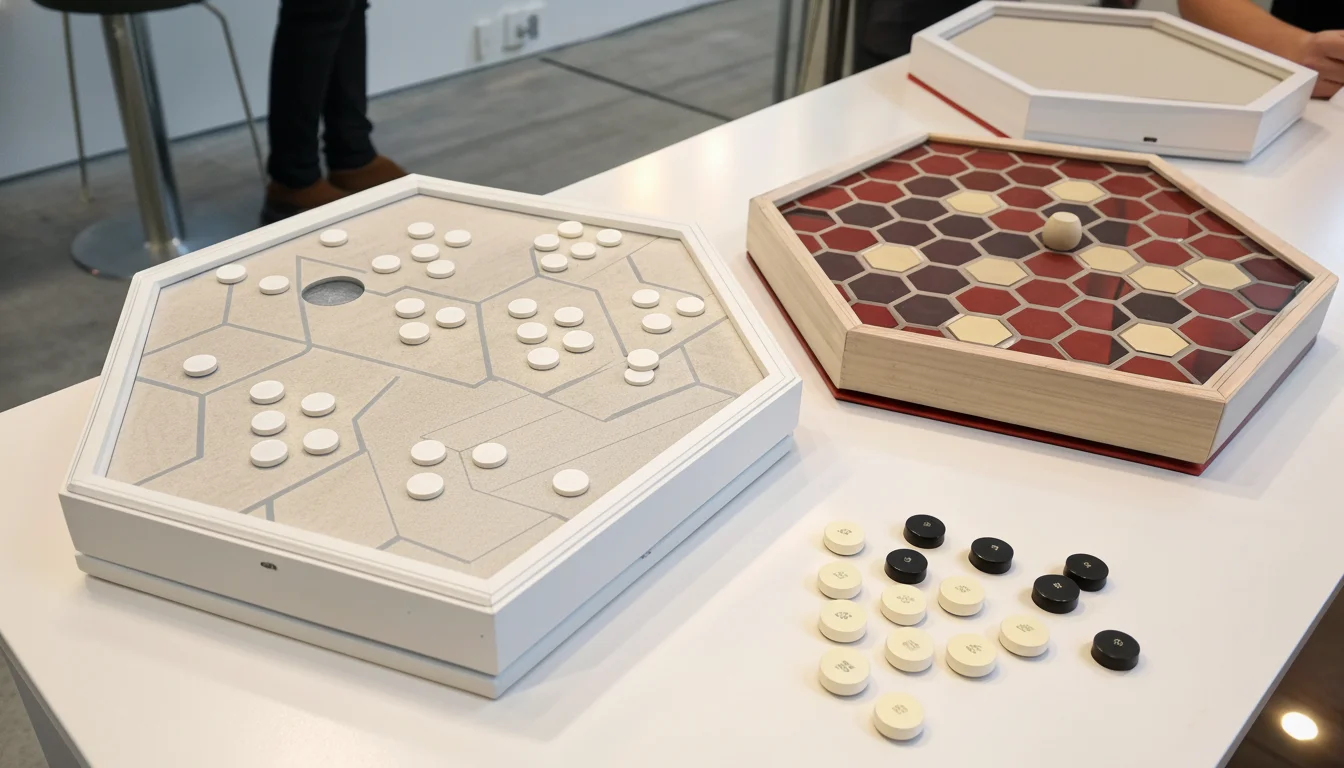
So what exactly are players downloading? Two puzzle titles, both centered on hexagon-based mechanics: Hexa Dreams and Tap Hexa. The former is available on Google Play under the developer name "Airo Puzzle Games" and has surpassed 100,000 installs. The latter lives on both Apple's App Store and Android.
Both games revolve around sorting, matching, and tapping hexagonal tiles—familiar enough mechanics in a genre that's produced everything from Candy Crush to Toon Blast. What Airoclip claims as novel is the AI engine underneath: software that supposedly tailors gameplay difficulty and narrative beats to individual player behavior in real time.
Pruthvi, the co-founder handling much of the technical vision, describes the approach as marrying "strong game design principles with innovative content formats that generative AI now enables." That's a careful phrasing. It suggests the AI isn't inventing puzzles from whole cloth so much as remixing and personalizing existing templates—a more plausible technical claim than fully autonomous game generation, which remains largely science fiction.
Still, even incremental AI-driven personalization could matter in a category where retention often hinges on keeping players in what designers call "the flow state"—challenged but not frustrated, engaged but not bored.
A $42 Billion Sandbox

The mobile puzzle market isn't exactly uncharted territory. According to Sensor Tower data covering 2012 through mid-2023, puzzle games have generated $42 billion in lifetime revenue and racked up 50 billion downloads worldwide. That makes it one of the largest and most competitive categories in all of gaming.
Recent consolidation reflects the space's maturity. Last year, Tripledot acquired AppLovin's gaming business—including Matchington Mansion and other puzzle franchises—for $800 million, a transaction that underscored both the category's cash-generating potential and the premium acquirers will pay for proven hits.
For Airoclip, the challenge isn't just building a better puzzle game. It's breaking through in an environment where user acquisition costs have climbed steadily and where a handful of entrenched titles command outsized attention. The founders are wagering that AI-driven personalization can boost engagement metrics enough to matter—higher retention, longer sessions, better monetization.
Whether that thesis holds will become clearer as the company deploys its fresh capital toward hiring in game development, data science, design, and marketing. The team remains small, perhaps by design. Early-stage gaming studios often prefer lean operations until they've proven a repeatable formula.
India's Moment, Maybe
Airoclip's funding arrives amid growing optimism—or hype, depending on whom you ask—around India as a gaming development hub. BITKRAFT's Tandon has spoken publicly about regulatory clarity and a maturing talent base creating conditions for breakout success. Niko Partners has labeled India the fastest-growing gaming market across Asia and the Middle East.
Yet history suggests caution. India has produced mobile gaming success stories before, but few have scaled to the heights of Chinese or South Korean studios. Infrastructure challenges, fragmented payment systems, and lower average revenue per user have all constrained growth.
What's different now, investors argue, is a combination of improved infrastructure, a generation of developers who've worked at global studios, and AI tools that can reduce content production costs. Airoclip fits neatly into that narrative—two well-credentialed founders using generative AI to punch above their weight in content creation.
The company's registered address in Bangalore South and its official corporate description—"publishing of computer games for all platforms"—offer few hints about where this goes next. The founders haven't disclosed user retention figures, monetization rates, or how their AI personalization performs in A/B tests against traditional approaches.
For now, the $2.75 million gives them runway to find out. In venture-backed gaming, that's often all you can ask for: enough capital and time to prove that the pitch wasn't just a pitch.


