

A Los Angeles startup claims it can inspect energy corridors at a fraction of traditional helicopter costs, part of a broader shift in how America monitors its vast pipeline network.
Aviern, a four-person company that emerged from Y Combinator's Fall 2026 cohort, says its autonomous fixed-wing aircraft can deliver aerial imagery of pipeline routes for $5 per mile—a claim the company makes on its website. The drones launch, fly predetermined paths, and land at unattended docking stations without human pilots at the controls, according to the company's website. Whether that pricing holds up at scale remains to be seen, but the promise alone illustrates how rapidly the economics of infrastructure inspection are being rewritten.
For decades, the job belonged to helicopters. Federal pipeline safety rules require operators to patrol hazardous-liquid and CO₂ lines at least 26 times each calendar year, with gaps no longer than three weeks, under Title 49 of the Code of Federal Regulations. A 2019 forecast by Pacific Gas & Electric pegged hourly rates for fixed-wing inspection aircraft at $1,568, according to California Public Utilities Commission filings—a recurring expense baseline that adds up fast when you're covering more than 120,000 annual row miles, though those figures are now several years old.
Now the regulatory ground is shifting beneath that model. In April 2026, the Pipeline and Hazardous Materials Safety Administration clarified in a proposed rule that satellite and unmanned aircraft systems satisfy patrol requirements across gas, hazardous liquid, and CO₂ pipelines, according to the Federal Register. The language was technology-neutral but unambiguous: drones count.
A Market Taking Shape
The so-called drone-in-a-box segment reached an estimated $1.42 billion in 2025, according to a September 2026 report by Straits Research, which projects growth to $7.16 billion by 2034. MarketsandMarkets offered similar figures, forecasting the market at roughly $8.5 billion by 2035. Both firms peg compound annual growth around 19 to 20 percent, a rate driven as much by regulatory permission as by technological maturity.
Operators are already running long-corridor inspections under waivers from the Federal Aviation Administration. Censys, a drone service provider, completed a 77-mile transmission-line inspection in February 2026 using a fixed-wing vertical-takeoff-and-landing aircraft, according to Power magazine. "The most common misconception is that BVLOS operations aren't possible today under Part 107," Michelle Anastasio, a Censys executive, said in May 2026, referring to beyond-visual-line-of-sight flights under FAA rules.
Event 38 and Phoenix Air Unmanned ran a pipeline proof-of-concept for Shell in Louisiana in 2024 using a similar fixed-wing VTOL platform. The projects were one-offs, conducted under case-by-case approvals, but they sketched the outlines of what scaled operations might look like.
The FAA published a proposed rule for routine BVLOS operations in August 2025. That proposal has been under review at the White House Office of Information and Regulatory Affairs since July 2026, a stage that typically precedes final publication. "Today's NPRM is a bold, forward-looking step that helps unlock the full potential of BVLOS drone operations," the FAA said in a statement accompanying the proposal, ticking off use cases from infrastructure monitoring to emergency response. The language was bureaucratic but the signal was clear: the agency sees this coming.
Supply Chains and Procurement Politics

Regulatory tailwinds are only part of the story. Supply-chain politics have reshaped the vendor landscape in ways that matter for procurement officers at utilities and pipeline operators.
The Federal Communications Commission placed DJI, the dominant Chinese drone manufacturer, on its Covered List in December 2025, effectively blocking authorization of new DJI products in the United States, according to the Washington Post. Existing authorized models remain in service, but the move redirected procurement toward U.S. and allied manufacturers for new deployments. Separately, the Defense Department's restrictions on covered foreign unmanned aircraft systems under Section 848 of the National Defense Authorization Act remain in effect for federal and defense buyers. The Defense Contract Management Agency assumed oversight of the Blue UAS Cleared List—vetted American-made or allied systems—in December 2025.
The combined effect has been to narrow vendor choices for critical infrastructure buyers, particularly those with federal contracts or state utility commissions wary of foreign supply chains. A Deloitte survey published in August 2026 found that utilities report the highest AI deployment rates in asset inspections and condition monitoring, with growing use of geospatial data for resilience planning. The survey didn't break out drone adoption specifically, but the themes aligned: automate inspections, reduce costs, manage aging infrastructure.
Fixed-Wing Endurance as Differentiator
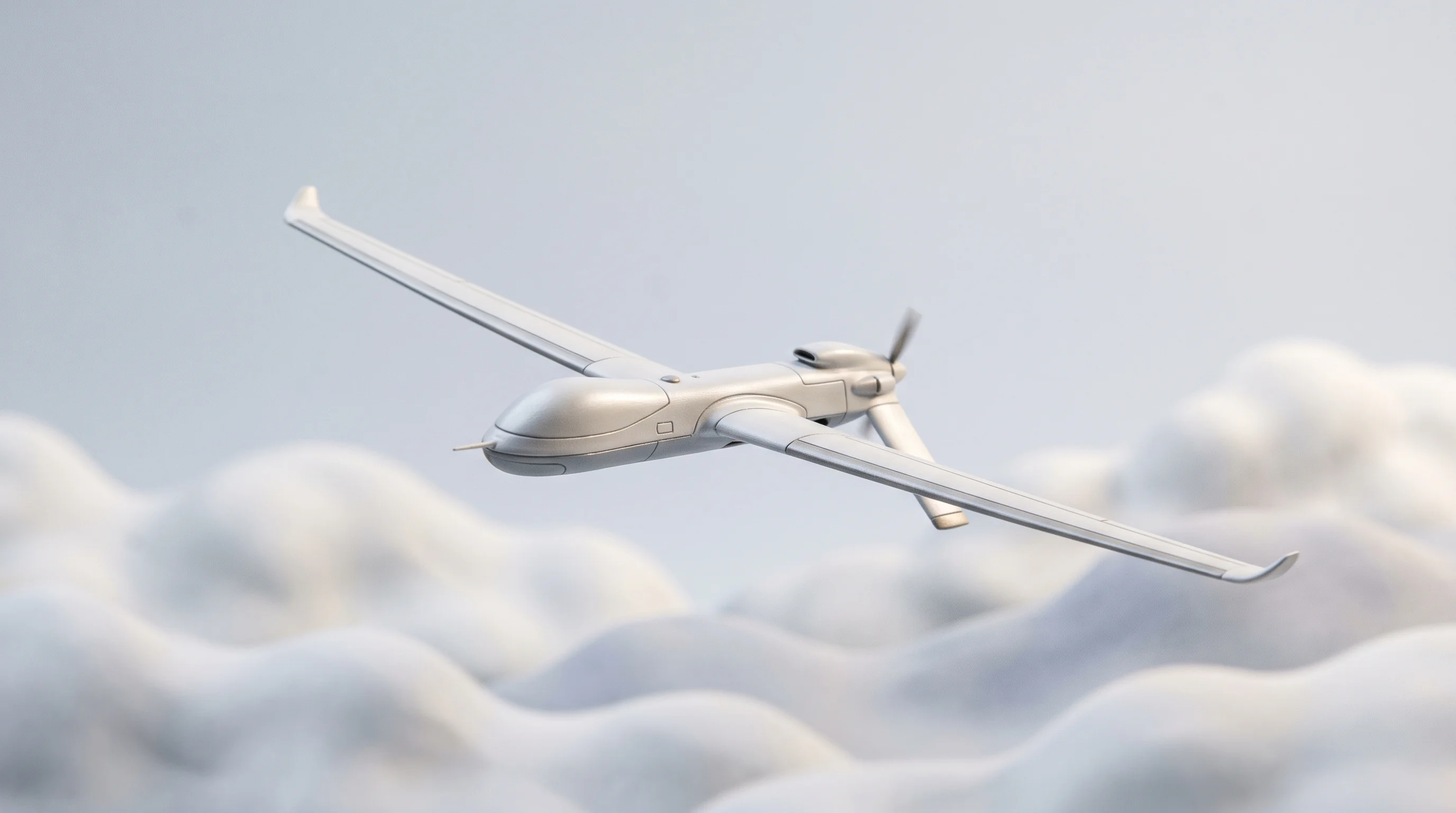
Aviern's pitch hinges on fixed-wing endurance. Multirotors—the quadcopters that dominate consumer and commercial drone fleets—typically cover tens of miles per flight. Aviern's founders, Kush Agarwal and Arvin Singh, both of whom taught drone and aircraft engineering at UCLA, claim their 50-pound fixed-wing platform can fly 500 miles on a single sortie with five-hour endurance, according to Y Combinator profiles and the startup's website. The system promises 30-second threat-to-notification alerting for immediate hazards and emphasizes NDAA compliance and U.S. manufacturing.
Whether those specifications translate to reliable unattended operations in varied weather and terrain is the open question for any early-stage vendor. Agarwal previously worked at Matter Intelligence and Fetch.ai; Singh led design-build-fly subteams at UCLA. The founders bring technical credentials from aerospace engineering backgrounds, though commercial traction at scale remains to be demonstrated.
They're not alone in betting on fixed wings. Skydio, the Redwood City–based Blue UAS vendor, unveiled MegaDock in 2026, a system designed to house up to five F10 Lightrunner fixed-wing aircraft with runway-independent takeoff and landing, HVAC, server racks, and cameras for unattended operations, according to Skydio documentation. The announcement marked a shift for docked systems, which had previously centered on multirotors. Skydio announced approvals for multi-drone operations—one pilot managing up to four drones—in March 2026 and operates BVLOS waivers with utilities including PG&E, Duke Energy, American Electric Power, and the New York Power Authority, according to company webinars.
Percepto, another established player, received a nationwide shielded BVLOS waiver in November 2022 and announced a pilot with Chevron in March 2025. "This groundbreaking approval enables Percepto to scale BVLOS operations at customer sites nationwide," Neta Gliksman, the company's vice president of policy and government affairs, said at the time. Airobotics secured FAA type certification for its Optimus-1EX drone-in-a-box system in September 2023, the first such certification, and won subsequent BVLOS waivers for U.S. and Dubai deployments.
Censys, Quantum-Systems, and Wingtra have all delivered corridor and digital-twin mapping case studies using fixed-wing VTOL platforms across transmission lines, pipelines, and highways from 2023 through 2026. PG&E deployed 12 Skydio Dock units at substations in a 2024 pilot and expanded the program in 2025. Caltrans and Alaska's Department of Transportation launched a $12.4 million program deploying solar-powered Skydio X10 docks for inspections and disaster response, funded by federal SMART grants.
What Comes Next

The timing may matter. If the FAA publishes its final BVLOS rule before year-end, scaled commercial operations could proceed without case-by-case waivers. PHMSA's technology-neutral clarification for right-of-way patrols, combined with the existing 26-times-per-year mandate, creates a concrete compliance budget that could favor per-mile pricing over hourly crewed-aircraft contracts.
The broader geospatial intelligence market reached an estimated $32.1 billion in 2025 and is projected to grow to $81 billion by 2033, according to a September 2026 Grand View Research report. Expansion of regulated CO₂ and hydrogen pipelines—driven by PHMSA activity following the 2020 Satartia pipeline rupture and Department of Energy hydrogen blending research—points to growth in linear assets requiring frequent patrol and leak detection, according to a U.S. Department of Transportation briefing.
Fixed-wing endurance offers a technical advantage for corridor operators: hundreds of miles per sortie versus tens of miles for multirotors. But proving unattended turnaround reliability and passing the cost-per-mile test against helicopters will determine which vendors survive the shakeout. Operators preparing compliance frameworks face decisions on maintenance, training, reporting, and supply-chain risk in an environment where NDAA and FCC restrictions have steered critical infrastructure buyers toward U.S.-built or Blue UAS–cleared systems.
The question isn't whether drones will displace crewed aircraft for at least some share of pipeline patrol. That much seems inevitable, perhaps more quickly than the incumbents would like. The question is which platforms and business models will capture the shift, and whether $5 per mile is a credible baseline or an early-stage founder's optimism. The answer will play out over the next few years as regulatory clarity arrives and the first scaled deployments move from pilot programs to procurement contracts.


