

A microwave-sized box launched to the International Space Station this spring. Inside it, a British startup's bet that manufacturing medicines in space has finally moved past science fiction.
On an evening in mid-May, tucked among the usual assortment of freeze-dried food and laboratory mice, a SpaceX Dragon capsule carried something BioOrbit's founders called Baby BOX-E to orbit. The protein crystallizer—about the size you'd fit on a kitchen counter—reached the ISS approximately two days later, on May 17. More remarkable than the hardware itself was the £9.8 million ($13.2 million) in seed funding the London-based company had announced on April 30, co-led by LocalGlobe and Breega. BioOrbit and its investors were quick to label it the world's largest seed round for in-space manufacturing, though such superlatives are hard to verify in a field this nascent.
Still, the money tells a story. So does what BioOrbit plans to do with it.
The company's pitch is deceptively simple: crystallize monoclonal antibody drugs in microgravity, where physics behaves differently than it does on Earth, and you can concentrate those proteins to levels impossible in a terrestrial lab. Get the formulation right, and a cancer treatment that currently requires hours-long IV infusions in hospitals could fit into a pre-filled syringe patients inject at home. Fewer hospital visits, lower healthcare costs, better quality of life.
Elegant on paper. The question—the always-present question with space manufacturing—is whether it can work at commercial scale.
When Science Projects Meet Venture Capital
Space biomanufacturing occupies an awkward spot in the industry maturity curve. The underlying science isn't new. Researchers have known for decades that microgravity produces larger, more uniform protein crystals than Earth-based methods can achieve. Diffusion dominates over convection up there; the physics are well understood. The regulatory frameworks exist too—the FDA expects space-manufactured drugs to meet the same current Good Manufacturing Practice standards as any pharmaceutical product made in New Jersey or Switzerland.
What's changed, perhaps more than the founders expected, is the infrastructure.
Regular cargo missions to the ISS now run with something approaching the reliability of a freight service. Redwire's PIL-BOX platform has completed multiple crystallization campaigns, returned samples on schedule, and secured successive rounds of NASA funding (March 2025, March 2026) to expand pharmaceutical investigations. When Aspera Biomedicines launched its second protein crystallization experiment aboard the same mission that carried Baby BOX-E, using Redwire's hardware, it signaled something beyond one-off academic curiosity.
The broader roster of players hints at an industry taking shape. LambdaVision has run multiple ISS missions testing layer-by-layer manufacturing of artificial retinas. Space Forge demonstrated an autonomous 1,000°C plasma furnace for semiconductor crystal growth in January. Flawless Photonics has produced and returned more than eleven kilometers of ZBLAN optical fiber from the station—a material notoriously difficult to make without defects in Earth's gravity.
The global monoclonal antibody market reached approximately $305 billion in 2025, according to Grand View Research, growing at roughly 8 percent annually. That's enough scale that even niche manufacturing approaches could matter, assuming they solve real formulation problems and not just theoretical ones.
The Merck Experiment and What It Proved
Sometimes a single experiment clarifies what's possible.
Between 2017 and 2019, Merck sent samples of Keytruda—its $25 billion cancer blockbuster—to the ISS. The microgravity environment produced smaller, more homogeneous suspended crystals compared to ground controls. The peer-reviewed results, published in npj Microgravity, demonstrated that diffusion-dominated crystal growth could yield properties useful for injectable formulations.
Merck never commercialized a space-manufactured drug. But the work established proof of concept for a product that dominates modern oncology. If Keytruda's formulation could be improved in orbit, the thinking went, what else might be possible?
Infrastructure has evolved from one-off experiment slots to something resembling repeatable manufacturing cadence. Varda Space Industries proved the complete loop in February 2024, securing an FAA Part 450 reentry license and landing a capsule carrying drug crystals grown in orbit. That wasn't just engineering; it was regulatory precedent. The FAA subsequently clarified that spacecraft intended to reenter must have licenses approved before launch—raising the bar but at least mapping the path.
On the ISS itself, platforms like PIL-BOX and Space Tango's bioprocessing units have moved from novel demonstrations to serial campaigns. The ISS National Lab's 2024 annual report noted efforts to clarify FDA-industry expectations for space-manufactured products. When regulatory bodies start that kind of dialogue, it usually means someone thinks commercialization is coming.
The Talent Follows the Money
Commercial momentum is hard to quantify precisely but easy enough to observe. BioOrbit's seed round included Auxxo, Seedcamp, Type One, 7percent, and several angels alongside the lead investors—a syndicate that suggests conviction beyond early-stage spray-and-pray strategies.
More telling: the company hired Ken Savin, who spent over two decades at Eli Lilly and served as Redwire's Chief Science Officer, to be its new CSO. Molly K. Mulligan, PhD, another Redwire veteran, joined as President to lead U.S. expansion and pharmaceutical partnerships.
You don't recruit that caliber of pharmaceutical talent for a science project. Or rather, you do, but only if you're trying to build something that scales.
Bristol Myers Squibb and Aspera Biomedicines have both run crystallization experiments using PIL-BOX. Aspera's decision to launch a second ADAR1p150 crystallization payload indicates sustained interest from biotech companies willing to commit real R&D budgets to microgravity work. These aren't cheap experiments. They require patience, too—launch delays, orbital schedules, sample return logistics. Companies don't tolerate that friction for curiosity projects.
What LambdaVision Is Actually Building

LambdaVision represents a different bet entirely.
The company has run nine ISS missions producing 200-layer protein films for artificial retinas. NASA awarded LambdaVision and Space Tango a Phase 2 In-Space Production Applications contract in September 2025 to scale up their manufacturing device. Five months later, LambdaVision announced a partnership with Helogen to run an orbital manufacturing mission outside the ISS—planning, in other words, for post-ISS infrastructure.
The artificial retina application is notable because it's not about efficiency. It's about impossibility. The product may simply be impossible to manufacture at scale on Earth due to gravity-induced defects in the layer-by-layer assembly process. If LambdaVision succeeds, it would validate space as essential rather than merely advantageous for certain therapeutics.
That's a crucial distinction. Most space manufacturing pitches argue for marginal improvements—better crystals, higher concentrations, lower viscosity. Fine. But marginal improvements face marginal economic cases. If the product can only be made in space? That's a different conversation.
The Regulatory Gauntlet
BioOrbit CEO Katie King framed Baby BOX-E as a "record-breaking protein crystallisation payload" and emphasized the shift from "experiment" to "manufacturing" in public statements around the launch. The distinction matters, even if early missions still function primarily as R&D.
The company's focus on subcutaneous formulations targets a specific pain point in oncology: patient preference and healthcare system costs. IV infusions require clinical infrastructure, nursing time, patient travel to treatment centers. Pre-filled syringes that patients self-administer at home reduce all three. If space-based crystallization enables formulations that can't be achieved terrestrially, the value proposition extends beyond novelty.
The FDA doesn't have space-specific manufacturing regulations, which is both good and bad. Good because companies don't need to navigate an entirely new regulatory framework. Bad because they must prove their orbital processes deliver consistent quality under existing rules designed for terrestrial facilities. That's non-trivial. How do you validate a manufacturing process when gravity is the variable?
The ISS National Lab's annual report highlighted ongoing work to clarify expectations between FDA and industry for space-manufactured products. That dialogue matters because ambiguity raises development costs. Pharmaceutical companies won't commit to space manufacturing partnerships without understanding the regulatory timeline and requirements.
The FAA's reentry licensing requirement adds another layer of friction. Any company planning to manufacture in space and return products to Earth must secure both launch and reentry approvals before flight. Varda proved it's possible, but the timelines involved create entry barriers that favor well-capitalized players. Which may be the point.
The Clock Is Ticking
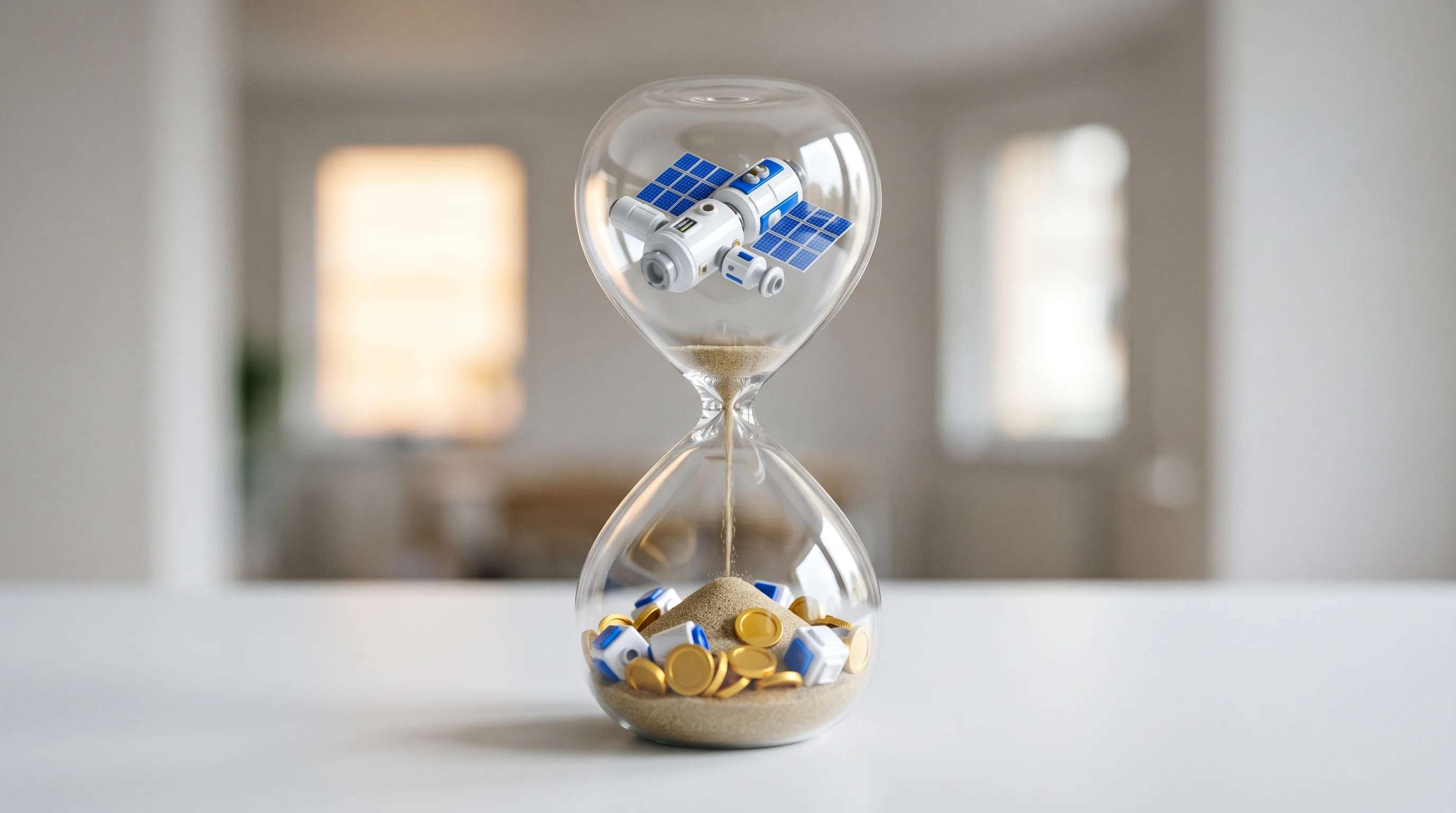
NASA plans to operate the ISS through 2030, then execute a controlled deorbit. That eight-year countdown—or less, depending on when exactly this happens—focuses attention on commercial station alternatives. NASA's Commercial Low Earth Orbit Development program awarded Phase 1 funding totaling $415.6 million in December 2021 to develop Orbital Reef, Starlab, and other concepts. Phase 2 awards are expected to determine which platforms actually get built.
The transition risk is real and immediate. If commercial stations aren't operational when the ISS retires, companies like BioOrbit, Redwire, and LambdaVision face a gap period with no destination for payloads. Manufacturing operations can't pause for three years while infrastructure catches up.
Conversely, purpose-built commercial platforms optimized for manufacturing could reduce costs and improve throughput compared to the ISS, which was designed for research, not production. Starlab Space signed an agreement with Rhodium Scientific on April 28 for space biotech services and payload integration—positioning for the post-ISS market before that market definitively exists. Optimism, or forward planning? Probably both.
The Economics That Matter
Launch costs have dropped dramatically over the past decade, but they remain material. Even with SpaceX cargo missions providing regular access, sending payloads to orbit and returning samples isn't cheap. The economic case for space manufacturing depends on producing high-value products where microgravity enables capabilities impossible on Earth.
Monoclonal antibodies fit that profile—blockbuster drugs with high unit prices and genuine formulation challenges. If BioOrbit and others can demonstrate that space-crystallized proteins enable subcutaneous versions of existing IV therapies, the market opportunity is substantial. If the quality or cost advantages prove marginal, the business case erodes quickly. There's not much middle ground.
The global protein crystallization market was valued at approximately $1.23 billion recently, projected to reach about $2.14 billion by decade's end. In-space manufacturing market forecasts range from roughly $2 billion to $6 billion in the mid-2020s, growing to $18 billion to $39 billion by the mid-2030s, depending on methodology and who's making the projection. Those are wide bands, reflecting genuine uncertainty about adoption curves.
More competition is arriving. SpacePharma runs autonomous labs on the ISS and free-flying spacecraft. Space LiinTech launched an automated protein crystallization module last October. The field remains fragmented, with different players pursuing platform, service, and vertically integrated models. Consolidation seems likely as the market matures—if the market matures.
For pharmaceutical executives evaluating space manufacturing partnerships, the decision framework involves risk-adjusted timelines and portfolio fit. Early adopters bear higher technical and regulatory uncertainty but could gain competitive advantages in formulation. Fast followers wait for validation but risk missing out on learning curves and IP positioning. The optimal strategy depends on portfolio needs, capital availability, and risk tolerance. In other words, the usual calculus, just with orbital mechanics added.
The Milestone That Matters
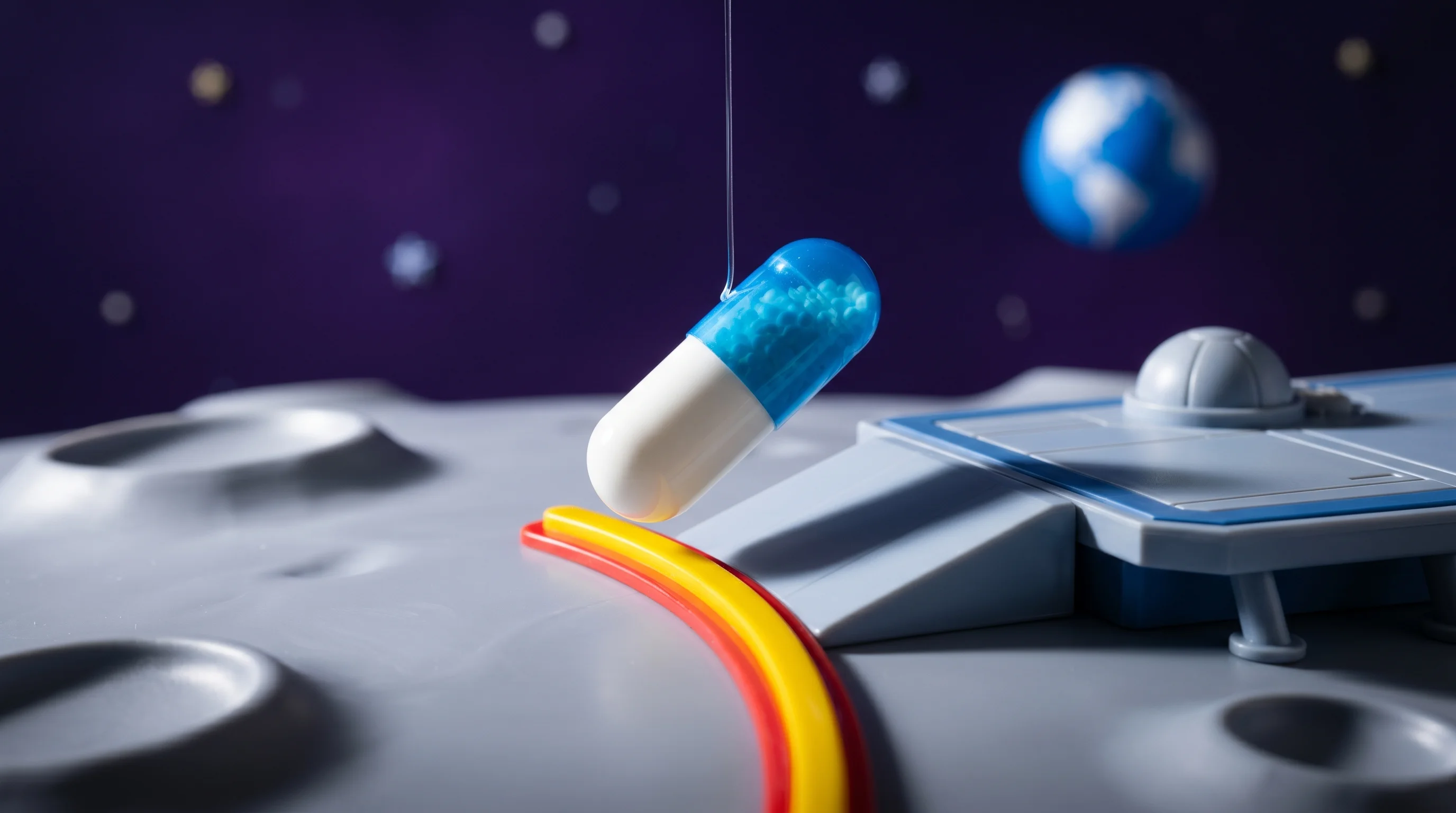
The next major inflection point—the one that would change the conversation entirely—is whether any space-manufactured drug candidate enters clinical trials with the space-made material designated for commercial production, not just preclinical research.
That hasn't happened yet.
When it does, the industry will have crossed from promising to proven. Until then, space biomanufacturing remains a high-stakes bet that the physics advantages of microgravity can overcome the logistical and economic challenges of orbital manufacturing. BioOrbit's Baby BOX-E, spinning around the planet at 17,500 miles per hour, crystallizing proteins in the silence of space, represents one version of that bet.
Whether it pays off may determine whether space becomes an essential part of pharmaceutical manufacturing or remains an expensive curiosity. The next few years will tell. NASA's ISS retirement deadline ensures we won't have to wait long.


