

Picture a canal boat captain in Amsterdam, throttle in hand, navigating tourists past centuries-old gabled houses. Now imagine that same captain glancing at a screen that whispers: ease back on the power here, adjust your speed there—all calibrated by an algorithm parsing engine data in real time.
That's the wager Cetasol is making.
The Gothenburg-based startup has secured framework agreements to install its iHelm platform on more than 260 vessels across Europe, including roughly 140 boats operated by Stromma Group—a tourist and passenger ferry company whose diesel-powered ships trace predictable routes through Amsterdam, Copenhagen, Stockholm, and a dozen other cities. A separate deal signed in February with Norwegian operator Aesen covers another 120 vessels. The commitments, while non-binding, represent the kind of scale that separates proof-of-concept from genuine market traction, particularly in maritime's unglamorous but essential short-sea segment: ferries, crew transfer boats, pilot vessels, even fishing trawlers.
What Cetasol promises sounds almost too tidy: Drop fuel consumption by 10 to 25 percent simply by coaching captains to drive smarter. Install an edge device, give the wheelhouse a dashboard, let the AI suggest adjustments. Early pilots with Volvo Penta—Cetasol spun out from the Swedish engine maker and autonomy specialist Qamcom in 2021—showed 17 percent savings. One ferry operator reported similar cuts. Another claimed 15 percent in two months.
But maritime is littered with overpromised efficiency gains, and captains are a famously stubborn lot. The real test isn't whether the technology works in controlled trials—it's whether it works in the messy reality of tight schedules, stubborn weather, and crews who've been running routes the same way for years.
The Machinery Behind the Pitch
iHelm operates through three interconnected pieces. The Cetasol Main Unit, a ruggedized edge computer bolted somewhere below deck, hoovers up data: engine controls, GPS positioning, speed-through-water sensors, weather feeds when available. Each night—or continuously, depending on configuration—it refreshes a digital twin of the vessel and its propulsion system, then calculates optimal speed and power settings for the route ahead.
Up in the wheelhouse, the Captain Display distills those calculations into actionable guidance. It's not autopilot; captains remain in full control. Think of it more as a running coach who knows your stride and the terrain, suggesting when to push and when to conserve energy. The screen shows fuel burn in real time, flags inefficiencies, nudges toward adjustments—always with an eye on making the schedule without wasting diesel.
Behind the scenes, everything flows to a cloud dashboard that fleet managers use to monitor performance across vessels, identify outliers, and track engine health. The October 2025 release of Cloud Dashboard 2.0 added voyage replay, live diagnostics, and early warnings for maintenance issues. Cetasol frames this as shifting from reactive repairs—fixing things after they break—to proactive upkeep.
The platform accommodates diesel, hybrid, and electric propulsion. For operators without expensive physical fuel flow meters, Cetasol offers CetaFuel, a virtual sensor that estimates consumption from engine signals. The company claims accuracy between 97 and 99.5 percent, though independent validation of that figure isn't publicly available. The Aesen agreement, announced in February, includes integration with motion reference units and onboard cameras, plus CetaFuel for fuel monitoring across the Norwegian operator's fleet.
A Market the Giants Overlooked
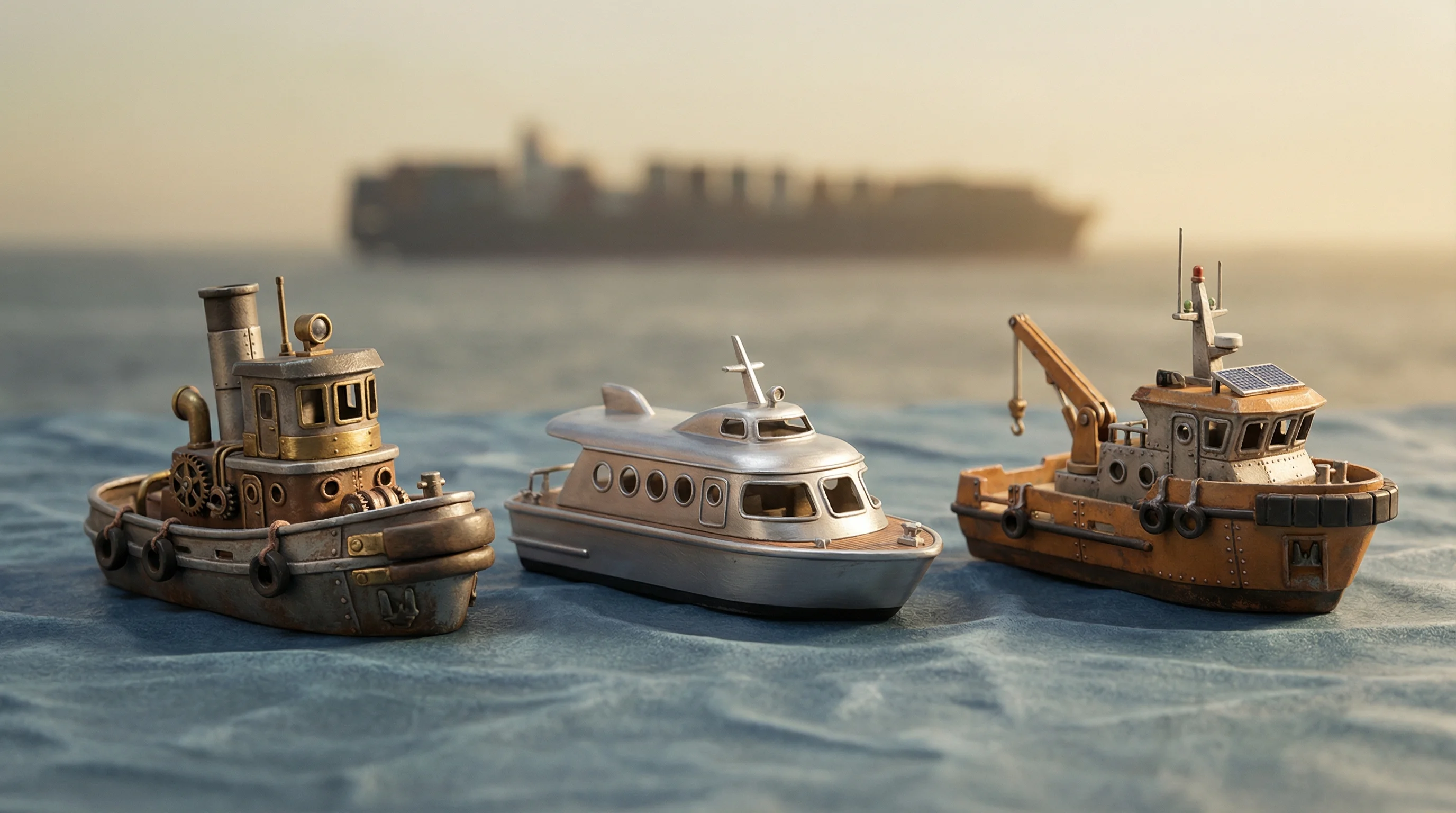
Cetasol's focus—ferries, offshore wind crew boats, pilot vessels, tugs—occupies a peculiar middle ground in maritime. These aren't the massive container ships that anchor global supply chains and attract enterprise-grade optimization platforms. But they're not small enough to ignore either, particularly as environmental regulations tighten.
According to the company's profile on Singapore's PIER71 accelerator site, it targets mid-sized vessels operating repeatable or semi-repeatable routes, a market often underserved by legacy tools built for deep-sea operations. The Swedish Maritime Administration selected iHelm for its pilot boats. Brim Explorer, a Norwegian operator running electric-hybrid tourism vessels, installed it across its fleet. Alilauro, an Italian ferry company, deployed the system on the Celestina; a captain quoted in Cetasol's case study praised the real-time guidance for meeting schedules without waste, though—unsurprisingly for a company-provided testimonial—the endorsement was unequivocally positive.
In September 2025, Cetasol launched a Ferry Program: a Q4 trial inviting operators to test the platform and co-develop ferry-specific features. Participants who complete the trial get discounted purchase options, a familiar software playbook that doubles as customer development and sales pipeline.
The timing isn't coincidental. The International Maritime Organization's Carbon Intensity Indicator and Energy Efficiency Existing Ship Index rules push operators toward compliance, creating a regulatory tailwind for tools that promise measurable emissions cuts. Cetasol's July 2025 Emission Report 2.0 release automates EU MRV and IMO DCS reporting, turning what's often a manual compliance headache into automated export files.
Funding, Product Cadence, and the Competitive Landscape
Cetasol raised €2 million in a seed round last June, then extended it by €2.3 million in September to accelerate AI development and expand its digital twin capabilities. The company employs between 11 and 50 people and maintains subsidiaries in Canada and Singapore alongside its Gothenburg headquarters—a geographic spread that suggests ambitions beyond Scandinavia.
Product updates have arrived at a steady clip. Captain Display 2.0, released earlier in 2025, introduced redesigned intelligent speed and fuel gauges that won a Maritime Sustainability Award at Seawork. The Emission Report 2.0 and Trip Log features followed in July, providing operational traceability and verified environmental data. Cloud Dashboard 2.0 landed in October with vessel replay, performance analytics, and predictive maintenance alerts.
Pricing follows a subscription model: a one-time activation fee plus monthly charges billed annually. A partner reseller in Australia markets it as a "hassle-free subscription" bundling eco-driving optimization and predictive maintenance, though Cetasol's own materials emphasize annual billing. Actual pricing remains undisclosed—perhaps a function of customization per vessel, perhaps a strategic choice to preserve negotiating flexibility.
The competitive landscape is crowded but fragmented. QTAGG's EcoPilot offers automated eco-driving for ferries and RoPax vessels, claiming baseline savings of 5 to 7 percent with potential for roughly 20 percent through broader operational changes. Kongsberg's EcoAdvisor, launched in 2022, optimizes power generation and propulsion with dynamic positioning integration. Wärtsilä bundles route planning, hull and machinery analytics, and 24/7 expert support in its Fleet Optimisation Solution.
Cetasol positions iHelm as more accessible than enterprise platforms—simpler to deploy, easier to use, aimed squarely at operators who find the big vendors too complex or expensive. Whether that positioning holds depends partly on whether "accessible" proves compatible with "effective" at scale.
The Human Variable

The Stromma and Aesen frameworks represent commitments, yes, but non-binding ones. Actual deployments will unfold over the coming months and years; first Stromma installations are scheduled for 2026, while Aesen's rollout timeline hasn't been detailed beyond the February announcement. In December, Cetasol joined Green Marine International as a partner, embedding itself in a voluntary environmental certification program that spans North American and European ports—useful for credibility, though voluntary programs carry less weight than mandatory compliance.
What matters most may be the quietest part of the story: whether captains actually follow the AI's guidance consistently, and whether promised fuel savings materialize across diverse vessel types and operating conditions. Short-sea operators run notoriously tight margins. A 17 percent fuel reduction is significant, but only if the system integrates smoothly and crews trust it enough to change decades-old habits.
Cetasol's messaging acknowledges this tension. A blog post on AI adoption delves into change management and crew training—recognition that technology alone won't shift behavior. An earlier project on hybrid and electric operations included formal eco-driving training to measure habit changes, a nod to the reality that even the smartest algorithm is useless if it sits ignored.
The company's early descriptor for iHelm—a "personal trainer" for captains—captures both the opportunity and the challenge. Personal trainers work when clients buy in. The question for Cetasol isn't whether its AI can calculate optimal throttle settings. It's whether a canal boat captain in Amsterdam, throttle in hand, will ease back when the screen says to.


