

The partnership with telehealth startup Sesame was supposed to democratize access to obesity medications. Instead, it became a lesson in retail healthcare economics.
The deal looked simple enough back in April 2024. Costco members could pay $179 for three months of virtual weight loss consultations through Sesame, a New York telehealth outfit, with potential access to prescriptions for Ozempic or Wegovy—the GLP-1 drugs that had become shorthand for America's newest weight loss obsession. Classic Costco: apply the bulk-discount ethos to healthcare, package it neatly, watch the memberships roll in.
Four months later, the program quietly stopped taking new patients. No press release. Just updated website copy and existing enrollees grandfathered in.
Now, as of October, Costco pharmacies are selling those same medications for $499 per four-week supply—no Sesame, no telehealth middleman, just a prescription and a membership card. The about-face offers more than a glimpse into one retailer's shifting strategy. It's a small but revealing window into how quickly the economics of obesity drugs are being rewritten, and how even savvy retail operators are still figuring out what actually works at the messy collision point of pharmaceutical pricing, regulatory constraints, and consumer desperation for affordable care.
When telehealth met wholesale
Sesame had approached Costco with a broader pitch in September 2023—discounted virtual care across multiple specialties. Primary care visits for $29. Health screenings with lab work for $72. Therapy sessions at $79. The weight loss program came seven months later, timed to capitalize on surging demand for GLP-1s.
David Goldhill, Sesame's CEO, positioned it as an access play. "We are witnessing important innovations in medically-supervised weight loss," he said at launch. "Sesame's unique model allows us to make high-quality specialty care like weight loss accessible and affordable."
The $179 fee covered three months of virtual check-ins, ongoing messaging with providers, nutritional counseling, and an individualized weight loss roadmap. But here's where the math turned punishing: medications and lab work weren't included. GLP-1 drugs were running $950 to $1,600 monthly without insurance coverage. Even armed with a Sesame prescription, Costco members confronted those figures at the pharmacy counter—a price tag that made the $179 consultation fee look like a rounding error.
Insurance coverage was inconsistent, to put it mildly. Wegovy, which carries FDA approval for chronic weight management, had better odds with insurers than Ozempic, approved only for type 2 diabetes. Patients seeking weight loss often found themselves paying full freight. The program may have been "accessible," but affordable was a different question entirely.
The quiet retreat
By late August 2024—just four months after launch—Sesame had pulled the plug on new Costco weight loss enrollments. Existing members could continue. Everyone else got redirected.
What prompted the reversal isn't entirely clear, and neither Costco nor Sesame publicized the shift. But industry dynamics offer clues. The compounded semaglutide market was booming—smaller pharmacies mixing their own versions of the active ingredient, exploiting FDA shortage designations that created legal cover for alternatives. In October 2024, Sesame launched its own nationwide compounded offering at $249 monthly, medication included. That undercut the entire premise of the Costco partnership, where consultation fees ran separate from medication costs that could blow past $1,000 a month.
At the same time, the regulatory ground was shifting beneath compounders' feet. By early 2025, the FDA declared GLP-1 shortages resolved, effectively eliminating the justification for compounded versions. Novo Nordisk, which manufactures both Ozempic and Wegovy, moved aggressively to reclaim market share—rolling out $499 cash-pay programs at major retailers, a calculated strike at compounders and counterfeit operations.
Sesame pivoted to its own standalone program, "Success by Sesame," at $99 monthly—care without Costco's branding or warehouse footprint. The subtext: we're still playing, just not through wholesale retail channels.
The pharmacy end-around
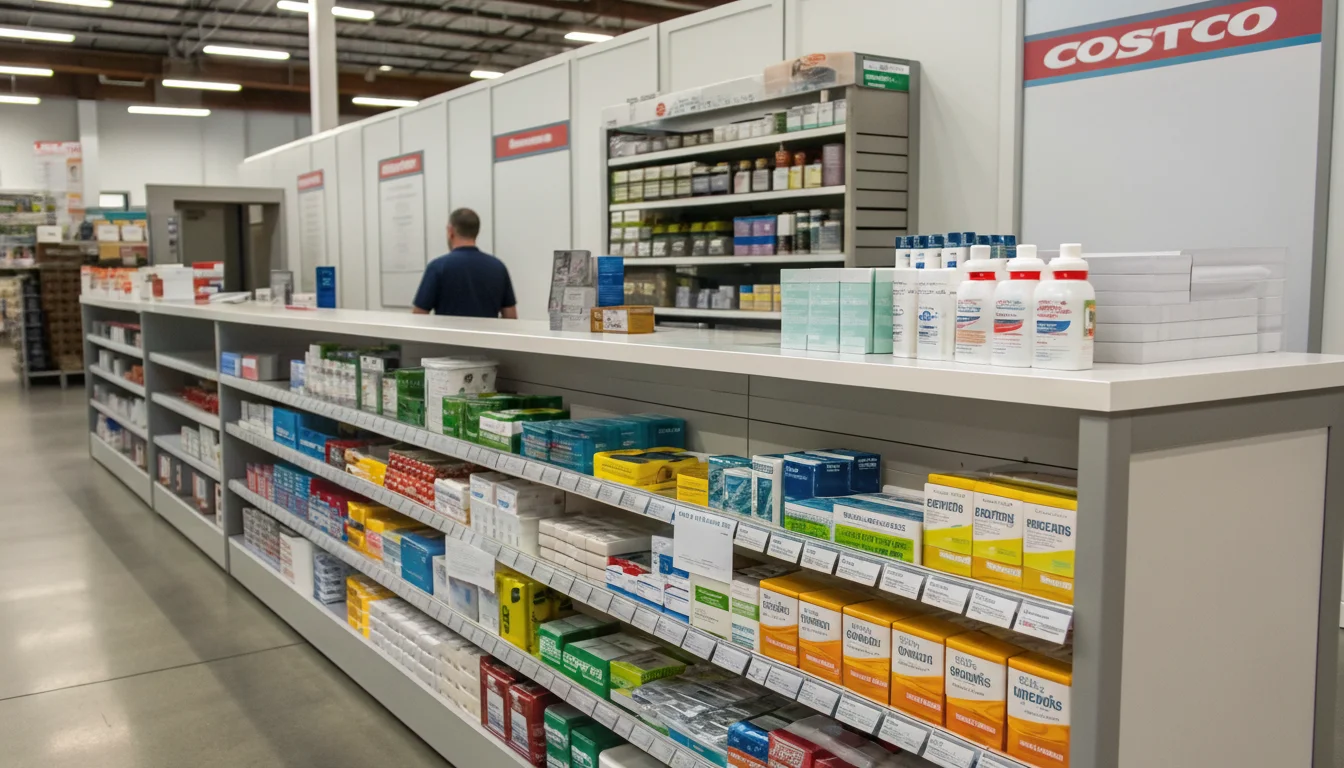
Fast forward to October. Costco pharmacies began stocking Ozempic and Wegovy at $499 for four weeks—part of Novo Nordisk's broader self-pay initiative spanning CVS, Walmart, and a GoodRx partnership. For members with a valid prescription from any provider (including, yes, Sesame's standalone program), the pricing represents roughly half of typical retail.
"We want to offer real, authentic Wegovy and Ozempic where people seek care," Dave Moore, Novo Nordisk's U.S. president, told reporters. Translation: branded is safer than compounded, and we'll price accordingly to defend our turf.
For Costco, the pharmacy approach solves the original program's central problem. Members can now obtain both prescription (from wherever) and medication at a predictable price. Executive members and Citi Visa cardholders pocket an additional 2% back. It's cleaner than the fragmented telehealth-plus-prescription model—and perhaps more honest about where the real economics lie.
Those grandfathered Costco-Sesame enrollees still pay $179 per quarter. But new members seeking weight loss support must assemble their own solution: Sesame's $99 monthly program or another provider, plus $499 at the Costco pharmacy counter each month. It works, after a fashion. Just not the way anyone initially envisioned.
The broader recalibration
The Costco-Sesame arc mirrors larger turbulence across digital health's GLP-1 gold rush. Hims & Hers launched compounded injectables starting around $199 monthly. Ro built an entire weight loss vertical. WW (formerly Weight Watchers) acquired telehealth firm Sequence, then underwent painful restructuring as GLP-1 drugs kneecapped its core business model—selling you a diet plan looks quaint when there's an injection for that.
Retailers, meanwhile, are positioning themselves as fulfillment and access nodes rather than care providers. CVS offers $499 Wegovy through Caremark. Walmart partnered with Eli Lilly's LillyDirect platform for Zepbound pickup. Sam's Club advertises same-day refrigerated prescription delivery, leaning into cold chain logistics as a differentiator.
Regulatory scrutiny is tightening. The FDA has issued multiple warnings about compounded semaglutide—dosing errors involving unit versus milligram confusion, variable concentrations, illegally marketed products masquerading as legitimate therapy. With supply constraints easing, the legal window for compounding is narrowing. That shift favors integrated players with pharmacy scale and regulatory compliance infrastructure.
For digital health startups, the lesson may sting: building a durable GLP-1 business requires either radical cost advantages (compounding at serious scale) or distribution muscle (retail partnerships, employer contracts, insurance networks). The middle ground—telehealth consultations bundled with third-party pharmacy fulfillment—proved hard to monetize when medication costs dwarf service fees by an order of magnitude.
Costco's revised bet is that pharmacy-level pricing, married to its membership model, generates enough margin and customer value to justify the pharmacy footprint investment. Members get predictable pricing on blockbuster drugs; Costco gets foot traffic and loyalty. Sesame retreats to direct-to-consumer territory, where it started.
The weight loss drug market continues evolving at a clip that makes six-month-old strategies look outdated. Eli Lilly's Zepbound self-pay pricing starts at $349 for certain doses, undercutting Novo on price. But the Costco story suggests a broader pattern: the telehealth-plus-prescription bundle is giving way to simpler models. Manufacturer cash-pay programs. Retailer fulfillment. Standalone care subscriptions that don't pretend to solve the medication cost problem.
For an industry that spent 2023 and much of 2024 stampeding into GLP-1 partnerships, that represents a meaningful recalibration—perhaps more meaningful than the participants expected. The drugs work. The demand is real. But connecting patients to medications at prices they can stomach? That's proving to be a different kind of weight loss challenge altogether.


