

A Washington defense startup spent two years working in silence. On Tuesday, Covenant disclosed what it had been building: a cruise missile called Anthem, backed by $250 million raised over three rounds from some of Silicon Valley's most prominent venture firms and tested live in the Moroccan desert with U.S. Army oversight last month.
The company announced it has already secured roughly $150 million in orders and opened a 105,000-square-foot factory in Dallas the same day it surfaced publicly. Founders Fund, Andreessen Horowitz, and Lux Capital led the financing across three rounds, according to Covenant's announcement. Serial production is slated to begin in the first quarter of 2027, the company said, with a target price in the mid-six-figure range per missile. Lt. Gen. Frank Lozano, the Army's program executive officer for missiles and space, mentioned $500,000 in remarks to reporters Tuesday, though Covenant declined to confirm that specific figure, DefenseScoop reported.
The live-fire demonstration took place between August 3 and 7 at the Africa Multidomain Training & Experimentation Center near Tan-Tan, Morocco, U.S. Army Europe and Africa said in an August 14 release. The Army confirmed the event supported "a U.S. defense industry partner in testing long-range precision-strike capabilities" under its Test Range Expansion Initiative but stopped short of naming the vendor. The Associated Press later identified Covenant as the company involved, and local Moroccan press reported the August 6 strike as AMTEC's first live munition fired.
"It demonstrated not only the performance of the Anthem missile but also a repeatable pathway now available to every company," Covenant President and Chief Growth Officer Abby Denburg told the AP.
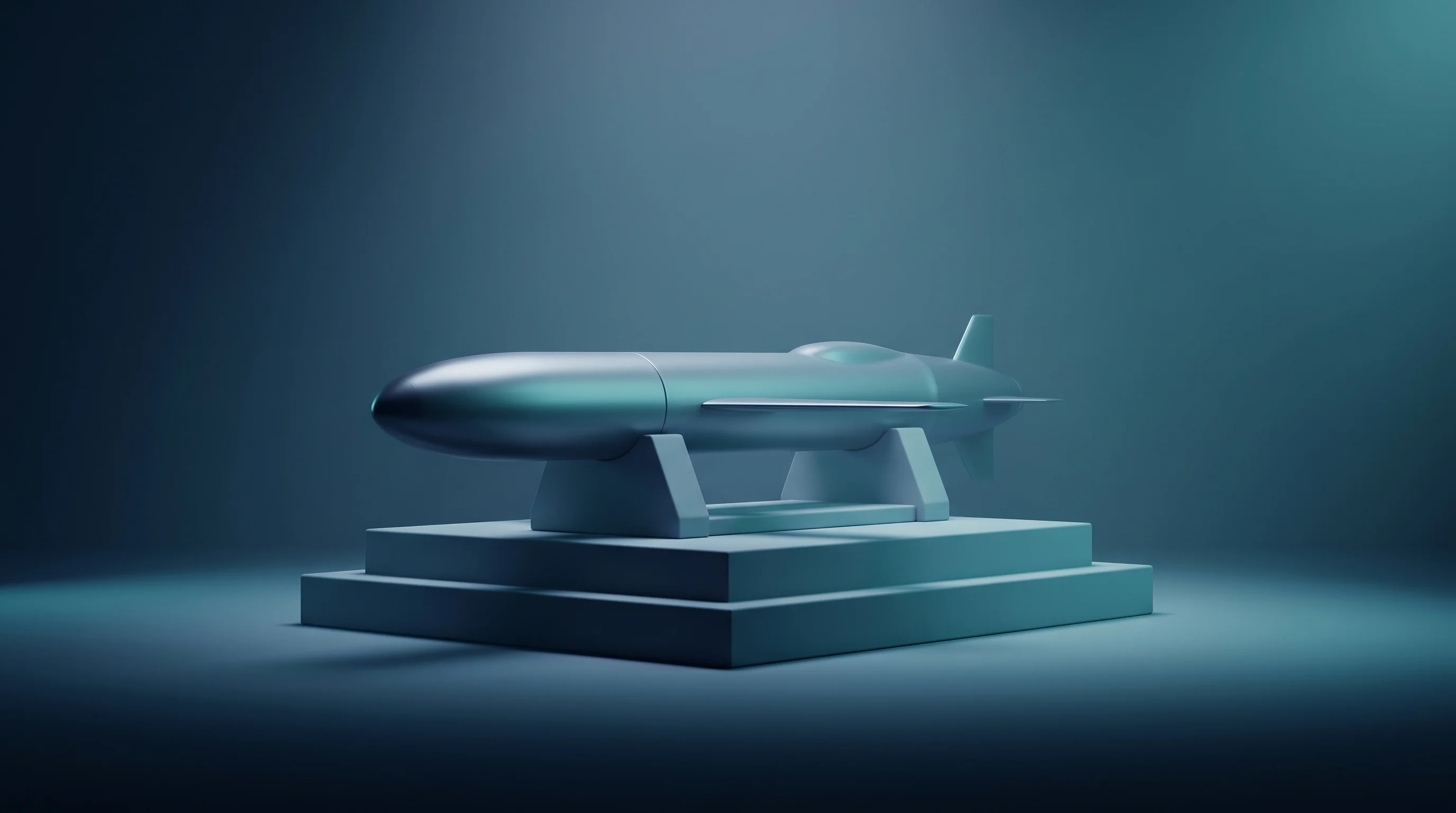
Anthem combines a solid rocket motor booster with a heavy-fuel jet engine for sustained cruise flight, Reuters reported Tuesday. The missile carries a warhead exceeding 200 kilograms, according to DefenseScoop. Covenant has not disclosed range, though The War Zone cited unconfirmed reporting near 1,200 kilometers. The company has not verified that number. The system launches from a proprietary ground launcher; Covenant said a naval variant is under development.
The guidance architecture is described as capable of "collaboratively homing on target," but the company released no technical detail, DefenseScoop reported. Anthem has reportedly completed more than 200 flights, according to Covenant's website and remarks to the press, though the timeline for those tests remains unclear. The War Zone reported the missile participated in Project Convergence Capstone 6 at Fort Irwin, California, in July.
Michael Kaufman and Ofir Dayan co-founded Covenant in 2024, emerging from stealth in September 2026, CTech reported. Kaufman previously worked with Peter Thiel-affiliated organizations, according to press accounts. "Deep precision strike is the biggest gap in the arsenal of the West," Kaufman told DefenseScoop on Tuesday. Denburg framed Anthem more directly. "We were designed for the China fight," she told Reuters.
The company's ambitions are global. Covenant announced facilities on three continents Tuesday. The Dallas plant targets 5,000 missiles per year at maturity, The War Zone said. A roughly 110,000-square-foot site near Leipzig, Germany, will produce for European customers starting in the first quarter of 2027, and the German Ministry of Defense confirmed it is in talks with Covenant about procurement, Defense News reported September 11. A 32,000-square-foot Israeli facility handles research and manufacturing, CTech said. Combined capacity across the three sites could reach 12,000 missiles annually, according to The War Zone.
Reuters reported one European contract is already secured, though the customer was not named. Covenant said deliveries to European buyers begin in the first quarter. "Our customers are demanding systems in 2027, and they want systems at scale in 2027," Denburg told DefenseScoop.

The investor roster reads like a who's who of venture capital with a geopolitical bent. Covenant raised roughly $250 million over three rounds, Axios Pro Rata reported September 9 and September 12. Named backers include Andreessen Horowitz's American Dynamism fund, Founders Fund, Lux Capital, 8VC, Lightspeed, and Aleph, CTech said. Dealroom News added Altimeter to the list. CTech estimated the company's valuation above $1 billion, though Covenant has not disclosed an official figure.
"American Dynamism is about backing founders taking on the missions that matter most to America's national security," Andreessen Horowitz General Partner David Ulevitch told CTech.
CTech and The War Zone reported a roughly $70 million U.S. Navy Rapid Capabilities Office effort to develop Maritime Anthem, a naval-launched variant with defense exportability features. No Navy press release has confirmed the contract, and the figure should be treated as reported but unverified.
Covenant enters a competitive landscape that is both crowded and hungry. The Pentagon awarded contracts in May to Anduril, Leidos, Zone 5, and CoAspire under frameworks to procure at least 10,000 low-cost cruise missiles within three years, DefenseScoop reported May 15. Those agreements target 2027 buys. Anduril's Barracuda family, unveiled last fall, emphasizes mass producibility and software-defined autonomy at a price roughly 30 percent below comparable systems, the company said.
Incumbent programs like Lockheed Martin's Precision Strike Missile and Raytheon's Tomahawk remain expensive reference points. A May 27 analysis from the Center for Strategic and International Studies noted that replenishing Tomahawk, Patriot, and THAAD stockpiles after the Iran conflict is a multiyear project, underscoring demand for cheaper alternatives at scale.
Lozano made clear the Army is shopping. "I don't want to just limit myself to a $500,000 Covenant cruise missile solution," he said Tuesday.
The company plans to begin serial production in Dallas and Germany during the first quarter of 2027, with initial customer deliveries scheduled for the same window. Whether Covenant can deliver on that timeline, and at scale, will determine whether Tuesday's announcement marks the arrival of a serious new player or just another ambitious pitch in a sector that has seen its share of both.


