

When Dominion Dynamics closed its Series A on June 30, the Ottawa startup set a record: C$139 million (roughly US$100 million), the largest first institutional round in Canadian defense history. Perhaps more notable than the size, though, was the thesis—that Canada's vast, inhospitable Arctic might finally become defensible through autonomous systems rather than sheer manpower.
Georgian, which led Dominion's C$21 million seed just five months earlier, doubled down. The firm's back-to-back votes of confidence signal something beyond typical venture appetite. This is about Arctic surveillance infrastructure where almost none exists, and about software that can function when satellites drop out and networks go dark.
The raise brings Dominion's total haul to C$164 million since launching in June 2025—an unusually compressed timeline, even by defense-tech standards. And the capital will stretch across an equally compressed roadmap: scaling production, expanding a manufacturing footprint in Kanata, opening a Toronto development hub, and pushing headcount past 100 by year's end.
A Syndicate That Spans Pension Funds and Venture Purists
Georgian didn't lead alone. The Series A pulled in Valor Equity Partners, Expeditions, Lakestar, OMERS, Business Development Bank of Canada, Royal Bank of Canada, and Deloitte Ventures Canada, alongside JDY Capital. Returning backers included Bessemer Venture Partners, British Columbia Investment Management Corporation, Garage Capital, Golden Ventures, and Silent Ventures.
It's a sprawling investor base—pension capital, corporate venture arms, and traditional VCs—that mirrors the peculiarities of defense. Hardware-intensive, regulatory-heavy, capital-hungry. The presence of BDC, confirmed in a Fasken law firm tombstone from June, underscores government alignment with domestic defense capacity building. Whether that translates to procurement contracts is another matter entirely.
Building for Environments Where Nothing Else Works

Dominion's flagship product, AuraNet, is a pan-domain data fusion platform designed to consolidate imagery, signals intelligence, telemetry, and field reports into one interface. The pitch: it works even when traditional infrastructure doesn't. And in the Arctic, traditional infrastructure mostly doesn't.
Then there's Scout, an autonomous collaborative platform that Dominion describes as a "robo-wingman" for crewed fighters. The company committed C$50 million internally on March 5 to kickstart Scout's development and later partnered with Denvr to create what they're calling Canada's first sovereign AI simulation environment for the platform. Whether Scout reaches production—and whether Canada's Air Force ultimately wants it—remains an open question.
Beyond AuraNet and Scout, Dominion has a sprawling portfolio in various stages of maturity: Taku, an autonomous surveillance tower; Echo (previously branded IceSpike), an under-ice acoustic sensor aimed at submarine detection; and three systems still in R&D—Flint (software-defined radio), Specter (a tethered aerostat), and Warden (an unmanned ground vehicle). It's an ambitious spread for a startup barely a year old.
A Winter in the High Arctic

Proof points matter in defense, and Dominion earned one this spring. From February through April 2026, the company deployed AuraNet during Operation NANOOK-NUNALIVUT, the Canadian Armed Forces' annual winter sovereignty exercise. It was a self-funded gambit—no contract, just a field trial to demonstrate resilience.
According to a case study Dominion published April 16, the system ran for eight weeks across 5,200 kilometers of patrol routes, enduring temperatures as low as -60°C. The company claims AuraNet replaced "four or five separate devices and paper maps" for Canadian Rangers operating in the High Arctic, and that software updates were pushed in hours rather than the days or weeks typical of legacy defense systems.
It wasn't a procurement win, not yet. But it was a signal: the technology can survive the environment. Whether it can navigate the procurement labyrinth is a separate test entirely.
Dominion has also flagged partnerships with the U.S. Army's Cold Regions Research and Engineering Laboratory, though details remain sparse.
Riding Canada's Defense-Industrial Moment
The timing isn't accidental. Prime Minister Mark Carney unveiled Canada's first Defence Industrial Strategy in February, setting targets that include channeling 70% of defense contracts to Canadian firms, boosting defense exports by half, and creating roughly 125,000 jobs. A month later, Canada announced it had hit NATO's 2% GDP spending floor and laid out a path to 5% by 2035—an aggressive target that would represent a wholesale reorientation of federal priorities.
For Dominion, this policy shift creates tailwinds. Or at least the promise of them.
Founder and CEO Eliot Pence, who spent four years scaling Anduril Industries' global footprint before returning to Canada, has framed Dominion explicitly as a sovereignty play. "Canada once built technology the rest of the world wanted," Pence said in a statement accompanying the Series A announcement. "We started Dominion to show the capability never left."
It's a compelling narrative. Whether it holds up depends less on sentiment and more on execution—on whether Canada follows through with sustained procurement, and whether Dominion can deliver systems that meet operational requirements at scale.
What Comes Next—and What Remains Uncertain
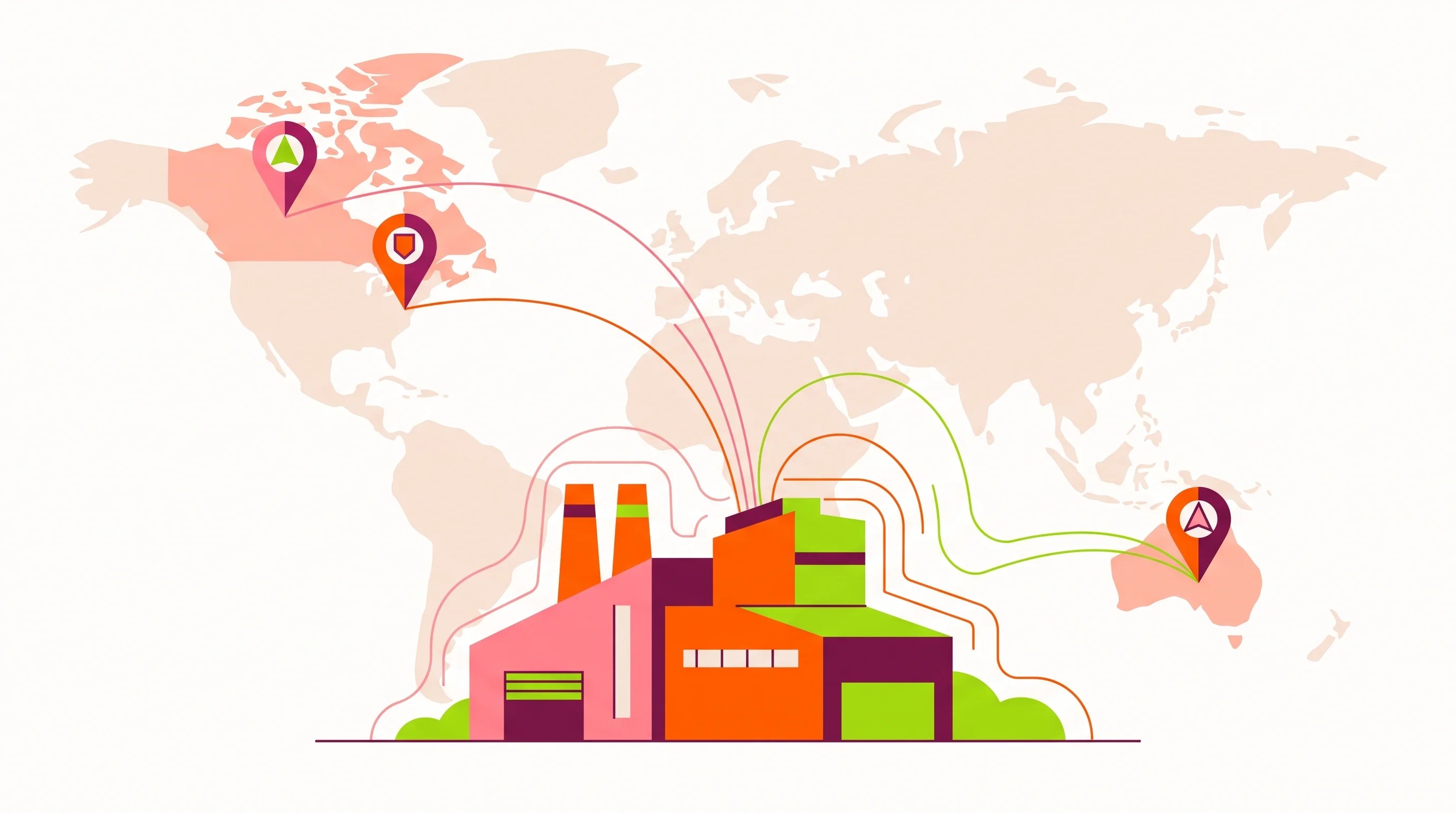
Dominion's expansion plans are aggressive. The company intends to open offices in British Columbia, Quebec, and Nova Scotia, with a Washington, D.C., presence planned for Q4 2026. It made its first international hire in Australia and is exploring a larger production facility to support Scout's potential scaling.
The immediate focus, though, is less about geographic footprint and more about proving the core technology: getting AuraNet into more field deployments, advancing Scout through development milestones, and converting early partnerships into binding contracts.
Defense tech fundraising has its own rhythm—big rounds on bold promises, followed by the slower, grinding work of certification, testing, and procurement. Dominion just closed the big round. Now comes the grind.
Whether the company can deliver on the scale implied by C$164 million in capital—and whether Canada's newly articulated defense ambitions survive budget cycles and political shifts—will determine if this moment marks a genuine inflection point or just another ambitious bet that couldn't quite bridge the gap between prototype and program of record.


