

Kenny Brown spent years staring into people's mouths. As an oral surgeon—a profession he still practices part-time—he saw patterns that went beyond cavities and gum disease. What if, he wondered, the mouth could serve as a diagnostic window into broader health? And what if you could collapse the tedious twice-daily tooth-brushing ritual into something closer to twenty seconds?
That question led to Feno, a Los Angeles startup that closed a $6 million seed round in September 2024. The financing, spearheaded by Bold Capital Partners, is backing what might be the most unusual toothbrush you've ever seen: a U-shaped device bristling with 18,000 nylon filaments, equipped with a camera, and paired with an AI-driven app that promises oral health insights alongside your morning scrub.
Whether consumers are ready to hand over their dental routines to an algorithm—and pay a premium to do so—remains an open question.
The Backers and the Bet
Bold Capital Partners led the round, with True Ventures, Upfront Ventures, and Share Ventures joining in, according to coverage from the Los Angeles Business Journal in early October 2024. The investor roster also included Jumpstart Nova, NIREMIA Collective, rapper-turned-entrepreneur Chamillionaire, and Black Capital, per a LinkedIn announcement from Share Ventures that same month. Axios broke the news on September 25, with regional outlets and dental trade publications picking up the story through October.
It's a varied group—venture traditionalists alongside hip-hop royalty—but the thesis seems consistent: oral health, long treated as separate from general wellness, is overdue for a technological rethink. Feno's pitch taps into mounting research linking oral conditions to cardiovascular disease, diabetes, even cognitive decline. The mouth, in other words, might tell you more than your dentist lets on.
Feno emerged from Share Ventures, the Los Angeles venture studio founded by Hamet Watt, and was formally incorporated as Feno Labs, Inc. in Delaware with California registration following in February 2023. Brown, who completed his undergraduate work at Stanford—where he played basketball and dabbled in regenerative medicine research—also worked with Texas A&M's tech transfer program during his dental education. The company operates out of Culver City with a skeleton crew; LinkedIn showed between two and ten employees as of late 2024.
The Smartbrush: Fast, Strange, and Watching
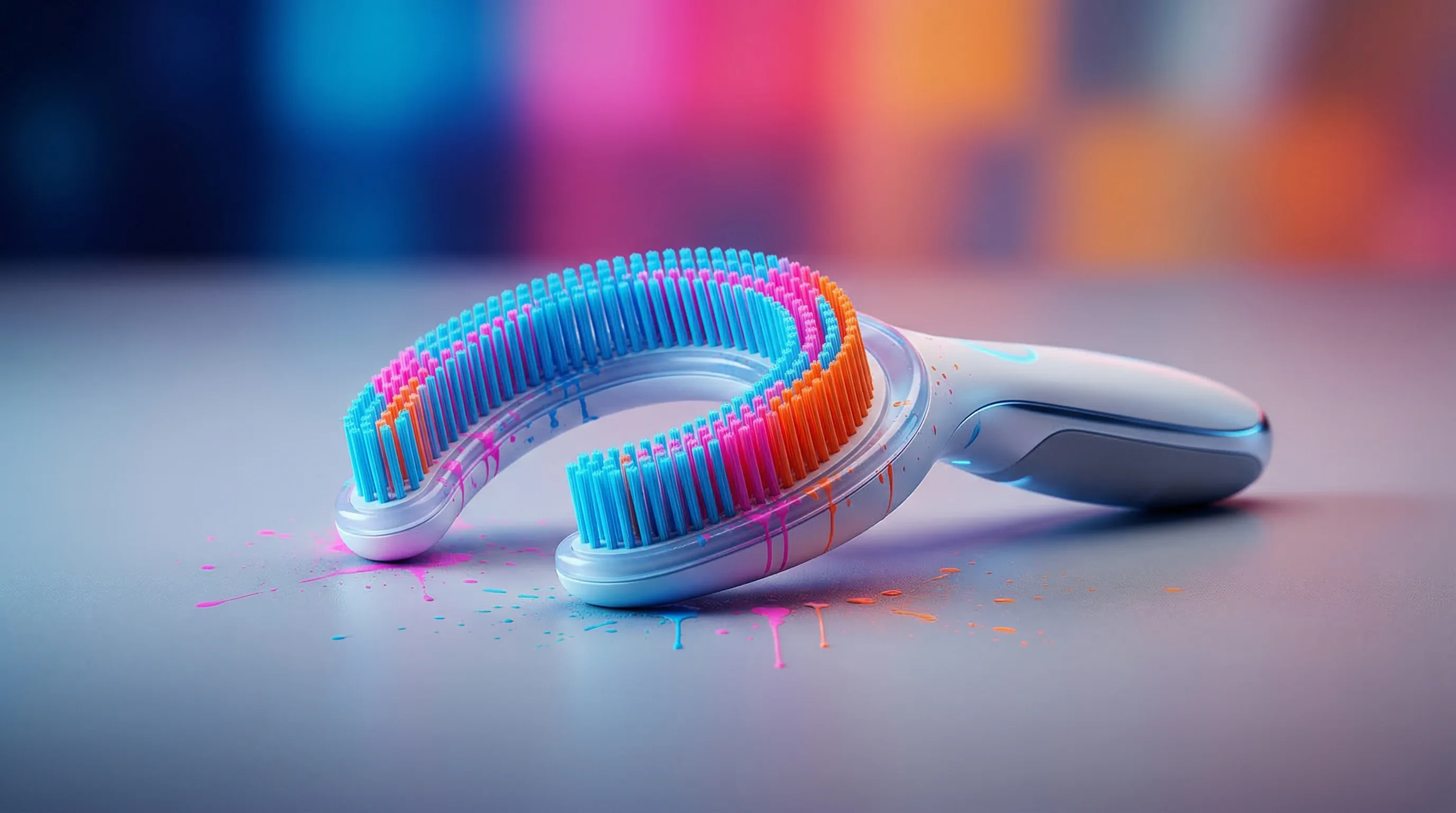
At the center of Feno's ambitions is the Smartbrush itself, a full-mouth contraption that looks vaguely like a mouthguard crossed with a power tool. The device's 18,000 bristles, arranged in that signature U-shape, promise a thorough clean in twenty seconds—though anyone who's spent two minutes dutifully brushing per ADA guidelines might reasonably raise an eyebrow.
The real innovation, Feno argues, isn't just speed. Embedded in what the company calls the "Smarthandle" is a camera and scanner. Paired with a mobile app, the system analyzes your oral landscape, flagging potential issues and tracking changes over time. It's powered by AI, naturally, though the company has been light on specifics about training data, accuracy benchmarks, or clinical validation studies.
The starter bundle—dubbed the Founders Edition—begins at $299 and includes a FitKit with multiple TrueFit mouthpiece sizes (because mouths, it turns out, come in different shapes). There's also proprietary Feno Foam toothpaste, because why not build a consumables business while you're at it? Founders Edition Plus variants stretch from $339 to $399, depending on configuration.
For the truly committed, Feno offers a $10-per-month membership tier—Feno+—that unlocks advanced health reports, chat access with licensed dental coaches, and premium app features. It's a familiar playbook: hardware as a gateway to recurring revenue.
A Crowded, Curious Market
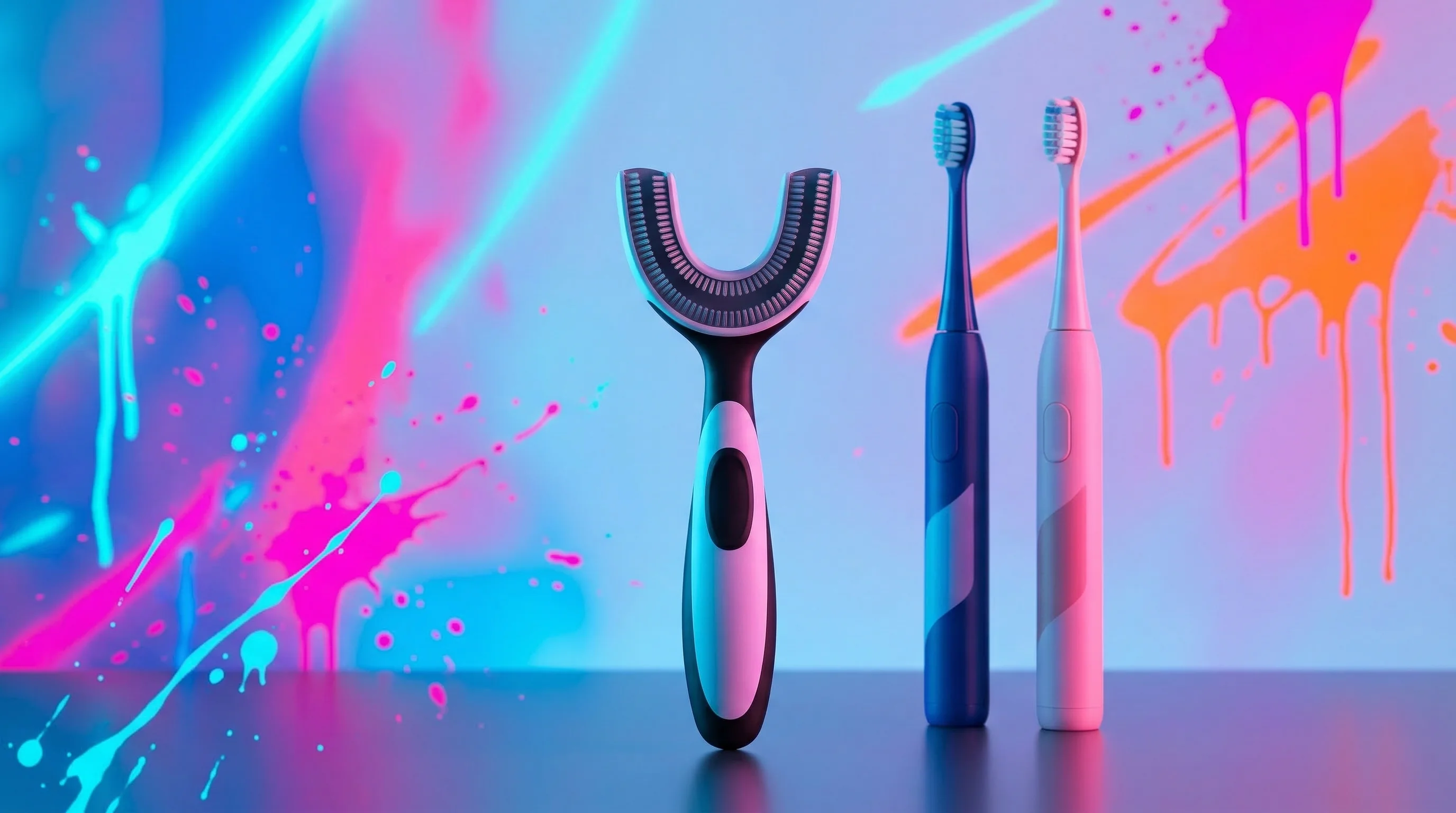
Feno isn't operating in a vacuum. The direct-to-consumer oral care space has seen a flurry of activity in recent years, with brands like quip and BURST building loyal followings around sleek design and subscription refills. Y-Brush, another autobrush contender, offers a similar U-shaped form factor, though without the AI analytics layer.
Then there's Lura Health, which is pursuing intraoral biosensors for saliva-based health monitoring—a different angle on the same premise that the mouth holds diagnostic gold. The interest signals something larger: a growing belief, among investors and entrepreneurs alike, that oral health has been underserved by innovation. Perhaps. Or perhaps it's just the latest frontier for gadgets in search of a problem.
Brown has been vocal about Feno's broader ambitions. The company developed a "Feno for Professionals" program aimed at dental practitioners, though no institutional partnerships or payer agreements have surfaced publicly. That matters, because consumer adoption is one thing; clinical validation and insurance reimbursement are another entirely.
What Comes Next
The seed capital, according to press coverage from September, will fund product development, manufacturing scale-up, and efforts to meet Smartbrush demand—though Feno hasn't disclosed pre-order volumes or shipment timelines. Brown participated in an October 2024 Reddit AMA, fielding questions about the device's design rationale and fundraising journey. CNET reviewed the gadget in late November, offering a characteristically bemused take: "a very strange gadget" that might be worth trying. Feno promptly wove that coverage into its holiday marketing push.
The company continues product iteration and content marketing, though its trajectory remains uncertain. Will the twenty-second clean hold up under scrutiny? Can AI-driven oral insights prove clinically meaningful? And will enough people fork over three hundred dollars for a device that promises to disrupt a ritual most of us have been performing, more or less adequately, for free?
Feno's bet—and Bold Capital's—is that the answer to all three is yes. But in a space where consumer skepticism runs high and regulatory pathways remain murky, the startup has its work cut out for it. Twenty seconds to brush your teeth, maybe. But building a business around it? That's going to take considerably longer.


