

In an era when every fintech startup claims to be "revolutionizing" payments, Sander Janca-Jensen did something almost quaint: he sent people to knock on doors.
It worked. Perhaps better than anyone expected.
Flatpay, the Copenhagen-based payment processor that launched in 2022 with a promise so simple it bordered on radical—one flat rate, no hidden fees—has just closed a €145 million funding round that vaults it into unicorn territory at a €1.5 billion valuation. The milestone makes it Denmark's fastest company to reach that rarefied status, achieving in just over three years what typically takes European startups twice as long.
AVP (the firm formerly known as AXA Venture Partners) led the growth round, with Smash Capital and existing backer Dawn Capital participating. But the real story isn't the capital raised. It's what Flatpay built while everyone else was busy digitizing everything.
The Merchant Problem Nobody Wanted to Solve
Walk into most European cafés, boutiques, or family-run restaurants and ask the owner about their payment processor. You'll get a wince. Legacy providers bury merchants under interchange fees, monthly subscriptions, equipment rentals, and contractual fine print that would make a telecom company blush.
Flatpay looked at that complexity and saw opportunity—specifically, the kind of opportunity that comes from actually visiting these businesses. Not emailing them. Not running Instagram ads. Visiting.
"We target SMBs processing over €100,000 in annual card turnover," the company explains, a threshold that filters for established businesses drowning in fees but overlooked by digital-first competitors chasing e-commerce darlings. Sales teams show up for on-site installations, walk merchants through the terminal, answer questions over coffee.
The pricing pitch takes about 30 seconds: 0.99% for card terminals, 1.49% for full point-of-sale systems. Daily payouts. Support that actually picks up the phone. That's it.
It turns out roughly 60,000 merchants across six European markets wanted exactly that.
Numbers That Don't Usually Happen This Fast
Flatpay crossed €100 million in annual recurring revenue this past October. The company expects to close 2025 somewhere around €125 million in total revenue—more than 400% growth over the prior twelve months. At the time the funding was announced, ARR was reportedly climbing by €1 million daily.
Daily.
The headcount tells a similar story of velocity. Between 1,400 and 1,500 people now work for Flatpay, a jarring expansion from the team in place when Dawn Capital led a €45 million Series B just last April. That round itself came less than a year after a €15 million Series A in June 2023. In startup terms, this is the equivalent of going from walking to sprinting without bothering with jogging in between.
The Contrarian Bet on Physical Commerce
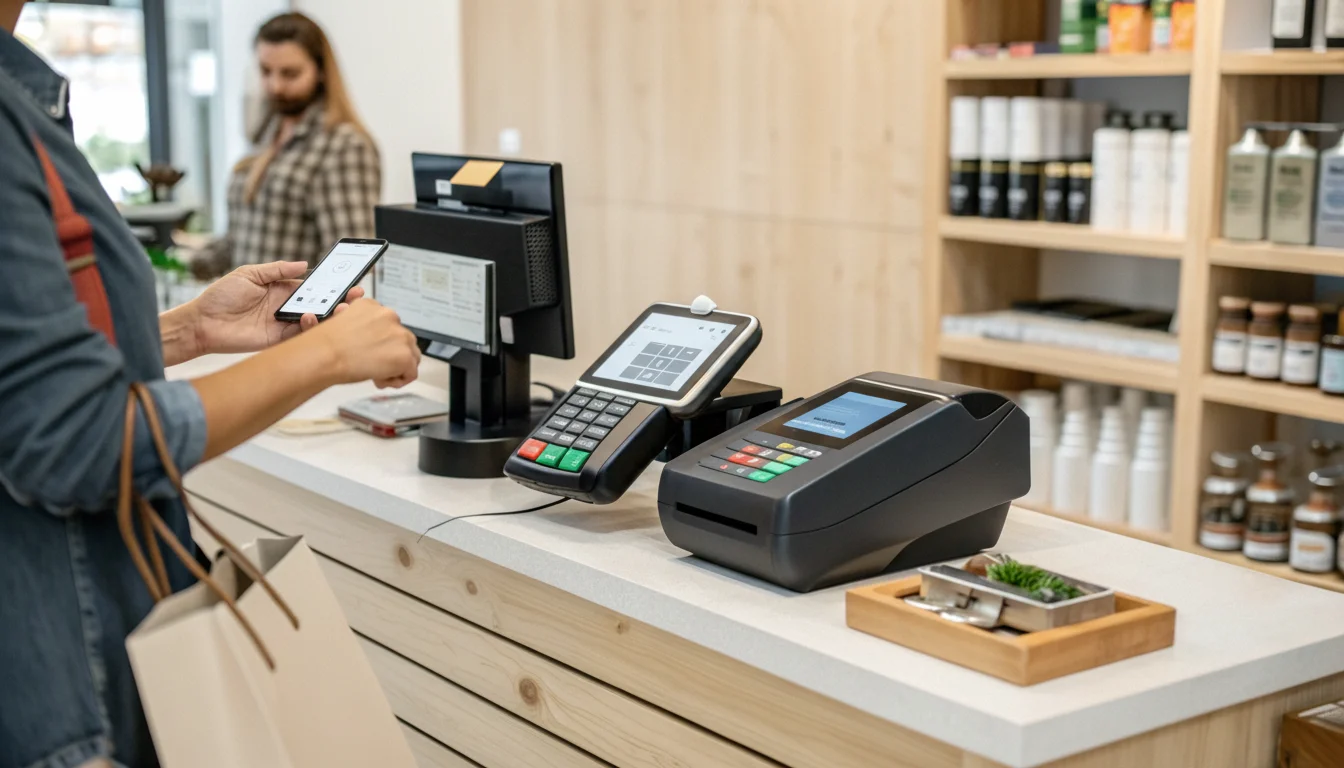
Most fintech investors will tell you the future is online payments, embedded finance, invisible checkout experiences. Flatpay made a different wager: that Europe's millions of brick-and-mortar businesses still matter. A lot.
The company recently launched online payment processing at 0.99% for EU cards, but it remains secondary to the in-person focus. This isn't nostalgia. It's market sizing. Physical retail still accounts for the vast majority of European consumer spending, even after years of e-commerce growth predictions that consistently outpace reality.
Flatpay operates in Denmark, Finland, France, Germany, Italy, and the UK. Job postings hint the Netherlands may be next, with plans to enter one or two additional countries in 2026. The €145 million will fund that expansion while Janca-Jensen chases what might be the boldest target: €400–500 million in ARR by the end of next year.
He's also mentioned a long-term vision of reaching 10,000 employees. Whether that's ambition or hubris depends on how you feel about companies that grow this fast.
What This Means for European Fintech

Flatpay's ascent arrives during a moment of renewed confidence in European tech. For years, the narrative held that only American startups could achieve hypergrowth. Companies like Stripe and Block (formerly Square) set benchmarks that seemed unreachable for European founders navigating fragmented markets and regulatory complexity.
But Denmark's newest unicorn suggests that fragmentation might actually be an advantage if you're willing to do the work. Each market Flatpay enters has different incumbent players, different pain points, different regulatory quirks. The in-person model lets them adapt quickly—something harder to pull off when your entire go-to-market strategy runs through digital channels.
Of course, success invites competition. Adyen and Stripe won't ignore a market this large forever. Traditional acquirers will eventually figure out they need to simplify. And dozens of well-funded payment startups are circling.
The Sustainability Question

Here's what no one quite knows yet: Can Flatpay maintain this pace?
Four-hundred-percent revenue growth is impressive. It's also unsustainable by definition. The company will need to prove it can defend margins while scaling support infrastructure across multiple countries. Regulatory compliance gets messier as you add markets. Talent becomes harder to recruit at scale. Competitors start targeting your best customers with better offers.
Janca-Jensen seems aware of the challenges. In recent interviews, he's struck a tone that balances confidence with pragmatism—talking up expansion plans while acknowledging the operational complexity of managing 1,500 people and counting.
For now, though, Flatpay has proven something important: transparent pricing works. Old-fashioned relationship building works. And maybe, just maybe, the future of fintech doesn't have to be entirely online.
The Danish upstart has three years of unicorn status under its belt. The next three will determine whether it becomes a European payments leader or a cautionary tale about growing too fast.
Given the trajectory so far, smart money seems to think it's the former.


