

Most battery startups sell software. Shatterdome Energy wants to sell risk.
The company emerged from stealth on May 21, 2026, announcing $3.5 million in pre-seed funding and a business model that sounds lifted from a trading floor rather than a renewable energy conference: lease batteries from developers, predict five-minute price spikes in wholesale power markets, then hedge the exposure using financial contracts more commonly found in Wall Street portfolios than solar farms.
It's an unconventional pitch—perhaps even more so coming from founder Amann Shariff, who previously built quantitative trading algorithms for cryptocurrency before selling his system. What pulled him away from crypto wasn't another blockchain play. It was the volatility lurking inside U.S. wholesale electricity markets, where prices reset every five minutes and fortunes can pivot on weather patterns, transmission bottlenecks, or a data center coming online unexpectedly.
"The price swings were mesmerizing," Shariff says, though he's quick to acknowledge the comparison isn't lost on him: applying the same quantitative rigor that powers algorithmic trading desks to batteries and renewable assets. Only this time, the underlying commodity isn't a token—it's electrons.
Crucible Capital led the round, joined by Transpose Platform and Entrepreneurs First. That Crucible's founder Meltem Demirors—better known for crypto bets—is backing an energy trading play suggests a recognition that market volatility, wherever it appears, rewards the same skills.
Taking the Other Side of the Trade
Where Shatterdome diverges from platforms like Stem or Fluence is in who assumes the risk. Those companies sell optimization software to asset owners; Shatterdome leases the batteries outright. The developers get a contract structure with minimum guarantees—effectively rent—plus a share of profits. The terms can stretch seven to eight years, long enough to help projects secure financing. Meanwhile, Shatterdome takes the market exposure.
Under the hood is what the company describes as an "agentic dispatch engine," driven by a proprietary large language model that continuously recalibrates variables: the correlation between natural gas prices and power prices, say, or regional demand surges. The system flags price spikes, decides when to discharge, and layers in financial hedges. One example Shariff offers: holding a physical position in Texas's ERCOT market while placing a virtual hedge in the mid-Atlantic PJM grid.
It's the kind of strategy that makes more sense if you've spent time on a trading desk than if you've installed solar panels. Whether it scales is another question entirely.
Early Traction, Ambitious Pipeline
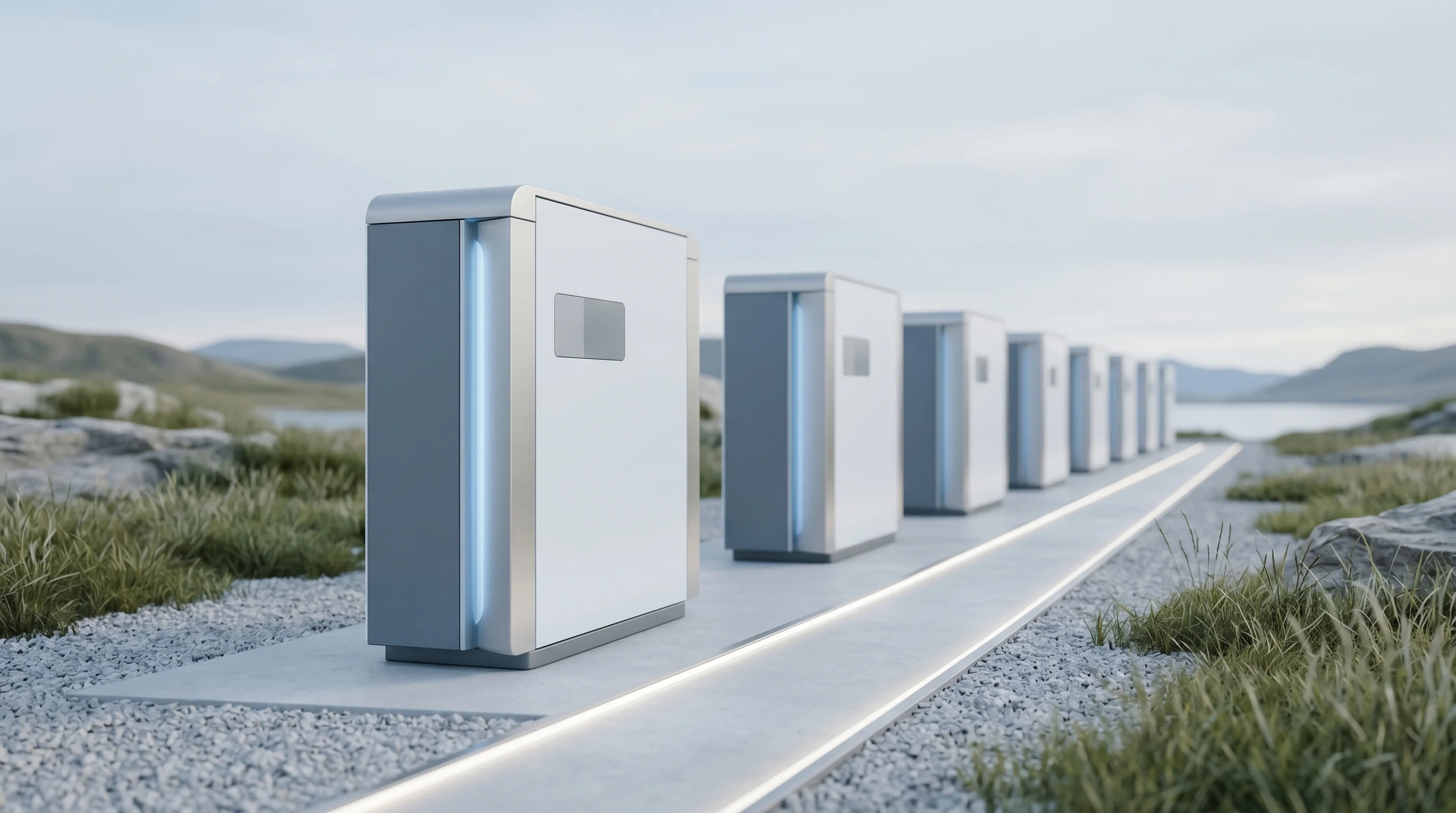
Shatterdrome already operates a 20 MW battery site and claims to have moved roughly 200 MWh of power over three months. The pipeline, according to the company, includes 1.5 GW of assets—a figure that would represent significant expansion from current operations. Among those: a pilot with an unnamed public company involving 1 GW of storage and 500 MW of solar.
The fresh capital will fund deployment of the AI forecasting platform, expand integrations across virtual power plant assets, and push into North American and European markets. Some of the money will also secure letters of credit—insurance-backed—to finance the trading activity and minimum guarantees the company extends to developers.
Shariff's six-person team is targeting front-of-the-meter assets between 9 MW and 2 GW, a scale that reflects wholesale market participation rather than distributed residential systems. It's a deliberate focus: bigger assets, bigger volatility, bigger potential returns.
The Grid Gets Complicated

The timing may be opportune. Grid complexity is surging, driven largely by data center demand. Projections from S&P Global's 451 Research estimate U.S. data center power consumption will reach 75.8 GW in 2026 and 134.4 GW by 2030. The EIA flagged the strongest four-year electricity demand growth since 2000 in a January report, pointing to data centers as a primary catalyst.
That demand is colliding with markets that reprice constantly—every five minutes in most wholesale systems—creating exactly the kind of arbitrage opportunities quantitative traders hunt. When a cloud of AI inference requests hits a server farm in West Texas on a windless afternoon, someone on the other side of that price spike stands to profit. Shatterdome wants to be that someone.
Whether a hedge-fund-meets-battery-operator model can scale beyond a handful of sites remains unproven. The infrastructure is different; the contracts are longer; the counterparties aren't used to dealing with algo traders. But Shariff's wager is straightforward enough: renewable energy trading doesn't need more software optimization. It needs risk capital willing to take the other side when markets get messy.
And if the grid keeps getting more volatile? Well, that's exactly the kind of market a quant knows how to trade.


