

On February 24—Estonia's Independence Day and the third anniversary of Russia's full-scale invasion of Ukraine—Tallinn-based Frankenburg Technologies did something unusual for a defense startup: it announced a major venture capital raise.
The company disclosed a €30 million Series A round on February 24, led by Plural, the European venture firm co-founded by Skype and Wise veteran Taavet Hinrikus. SmartCap, Estonia's state-backed defense fund, also participated, contributing €7 million from its €100 million evergreen pool. The financing brings Frankenburg's total haul to €40 million—money the company says it will use to build not one but two missile production facilities somewhere in the European Union.
The symbolism wasn't subtle. Nor was it accidental.
Europe's defense industrial base has been in a state of frantic reassessment since 2022, and Frankenburg represents a new cohort of venture-backed companies trying to answer a thorny question: How do you mass-produce interceptors cheaply enough to counter an adversary that can churn out disposable drones by the thousands?
Factories First, Then the Missiles
Frankenburg's pitch centers on volume. The company is targeting production capacity exceeding 100 missiles per day at each of its planned factories—facilities that don't yet exist but are slated to come online with the fresh capital. That's roughly 200 interceptors a day, or more than 70,000 annually if the plants run at full tilt. It's an audacious goal for a company that, until recently, was demonstrating prototypes on firing ranges.
Beyond the assembly lines, Frankenburg plans to establish EU-based manufacturing for rocket motors and warheads—components that typically involve long procurement cycles and tightly controlled supply chains. The company is also staffing up across engineering, quality assurance, export compliance, and safety—unglamorous functions that become critical when you're trying to scale military hardware fast.
SmartCap's involvement is particularly telling. The fund, backed by Estonia's government, is explicitly designed to anchor defense manufacturing within the Baltics, a region acutely aware of the threats next door. Committing €7 million to Frankenburg suggests Tallinn sees the company as more than a bet—it's infrastructure.
A Missile Built for Economics, Not Elegance
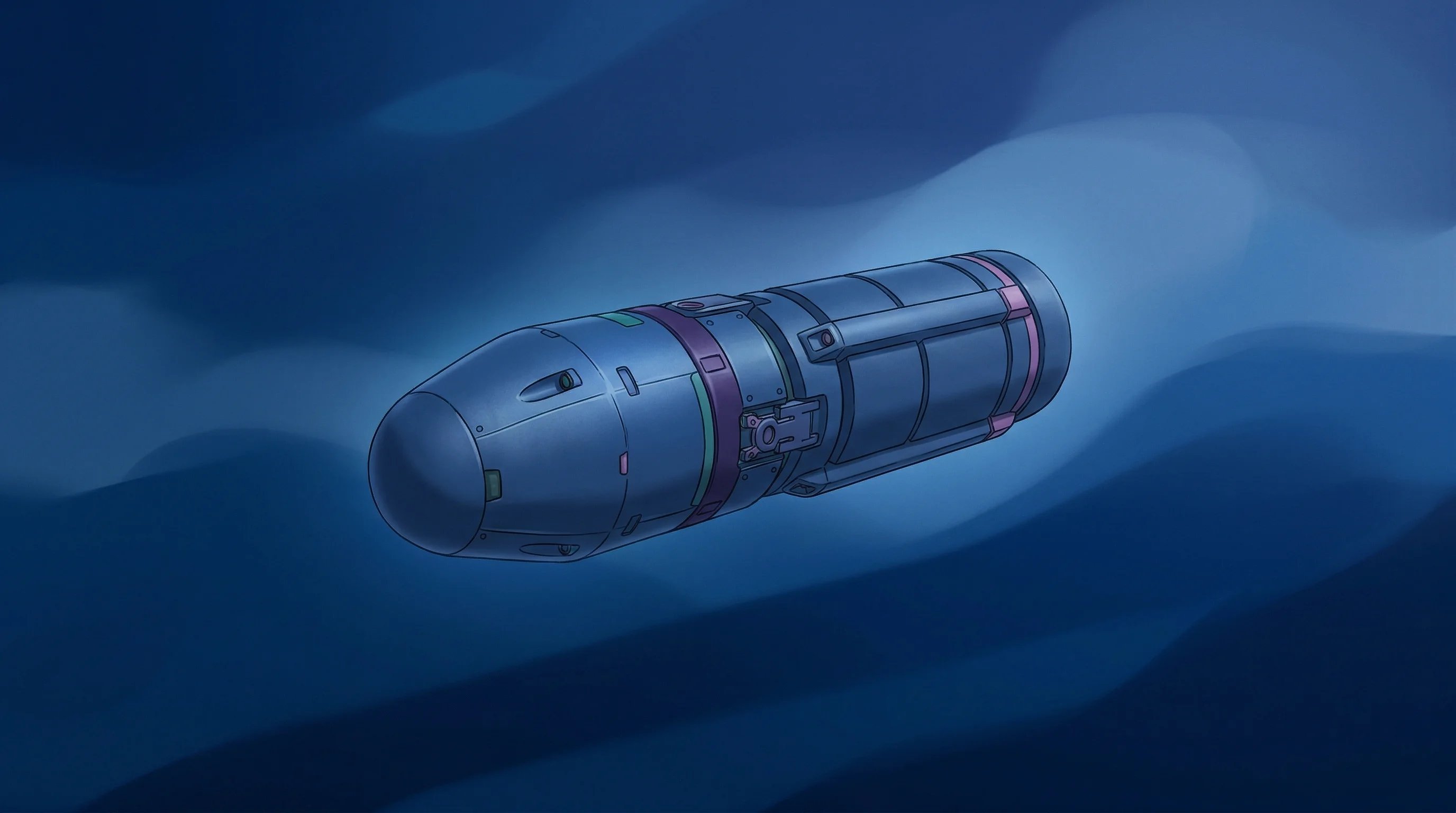
The product itself is straightforward, perhaps deliberately so. Frankenburg's Mark I is a short-range interceptor, roughly 25 inches long, powered by a solid-fuel motor and equipped with autonomous guidance. The company claims a unit cost under $50,000—a figure that, if accurate, would undercut legacy systems by an order of magnitude. (For context, legacy short-range air defense missiles typically cost several hundred thousand dollars per unit.)
Range is modest: about 2 kilometers. Top speed hovers around 750 mph, according to media reports from company demonstrations. The Mark I isn't designed to chase down fighter jets or intercept ballistic missiles. It's built to swat drones—specifically the kind of cheap, swarming threats that have proliferated across Ukraine and, more recently, other conflict zones.
In December, Frankenburg staged a live-fire test at NATO's Ādaži base in Latvia, successfully intercepting a fast-moving aerial target designed to simulate a Shahed-style drone. The test was public, deliberate, and aimed at potential customers skeptical that a startup could deliver battlefield-ready hardware.
Whether that demonstration translates to battlefield reliability at scale remains an open question. But the company is moving quickly to de-risk the path from prototype to production.
The Roster Reads Like a Baltic Defense Rolodex
CEO Kusti Salm isn't your typical founder. Until recently, he served as Permanent Secretary of Estonia's Ministry of Defence, overseeing the country's arms procurement strategy during a period of heightened threat perception. It's the kind of résumé that opens doors in Brussels and Washington—and lends credibility with buyers wary of unproven vendors.
Chairman Taavi Madiberk brings a different pedigree. He founded Skeleton Technologies, a European supercapacitor manufacturer that has raised significant venture funding and built out industrial-scale production. The operational playbook for scaling hardware? Madiberk has run it before.
The COO, Veiko-Vello Palm, is a former NATO Estonian division commander. The CTO, Andreas Bappert, previously led medium- and long-range air defense programs at Diehl Defence, a German contractor with deep roots in missile systems. Put simply, Frankenburg's executive team didn't just study defense—they helped run it.
Plural's decision to lead the round fits the firm's broader strategy. The venture fund also backs Helsing, the Munich-based AI defense startup, and has been vocal about the need for European technological sovereignty. Hinrikus, in previous interviews, has framed defense investment as both a strategic imperative and a market opportunity—a rare convergence in venture capital.
"For the first time in 70 years, there is private money available for developing defense technologies and weapons," Salm remarked at a defense conference late last year. He wasn't exaggerating. The venture dollars flowing into European defense represent a sharp break from decades of state-dominated procurement.
Partnerships as a Scaling Strategy

Frankenburg isn't going it alone. In January, the company signed a memorandum of understanding with Babcock International, a UK defense contractor, to develop a containerized maritime launch system. Engineering work will be led from the UK, a signal that Frankenburg is willing to distribute production and R&D across allied nations to accelerate deployment.
A month earlier, in November, the company struck a collaboration agreement with PGZ, Poland's state-owned defense conglomerate. The partnership targets annual production capacity of up to 10,000 units—though timelines and specifics remain vague. Still, the involvement of a Polish state entity suggests Warsaw sees Frankenburg's technology as aligned with its own rearmament priorities.
The company also holds a research and development contract with Latvia's Ministry of Defence and is reportedly eyeing a production site there. The Baltics, it seems, are becoming a testing ground for distributed, venture-backed defense manufacturing.
A Crowded Field, Suddenly
Frankenburg's announcement landed on the same day that Tytan Technologies, another European counter-drone startup, disclosed its own €30 million round, co-led by the NATO Innovation Fund and German venture firm Armira. The timing wasn't coordinated, but the parallel raises underscore just how much capital is suddenly chasing anti-drone solutions.
The market logic is straightforward: cheap drones have changed the calculus of modern warfare, and legacy defense systems are too expensive to deploy at scale against them. If you can build an interceptor that costs $50,000 instead of $500,000, you fundamentally alter the economics of air defense.
Whether Frankenburg can deliver on that promise is another matter. Manufacturing missiles at high volume involves navigating export controls, securing stable supply chains for specialized components, and meeting stringent quality and safety standards—all while racing to meet demand from customers who need solutions now, not in three years.
Execution risk is high. But so is the urgency. And for a company that announced its biggest fundraise on the anniversary of a war that redefined European security, the stakes couldn't be clearer.


