

A Northbrook, Illinois manufacturer that claims to produce carbon fiber parts faster than anyone else in additive manufacturing has raised $40 million in venture capital. Impossible Objects announced September 11 that Inflection Equity led the Series B round, joined by Aaron Wealth Management, OCA Ventures, Impact Capital and Excell Partners.
The startup did not disclose its valuation. It told Axios Pro that another $30 million to $50 million round is planned within the next 12 to 18 months, though the company provided no further details on timing or potential investors.
Impossible Objects builds industrial 3D printers designed for carbon fiber composite parts, using a process that stacks and fuses material at up to 25 layers per minute. The company markets its CBAM 25 system as fifteen times faster than competing technologies, a claim that appeared in TCT Magazine coverage of the product launch in April 2023. Whether that speed differential holds under real production conditions remains to be seen.
Defense Contracts Anchor the Business
Much of Impossible Objects' traction has come from government work. The company has secured roughly $20 million in U.S. military contracts and awards, including Small Business Innovation Research programs with the Air Force and Army. The Pentagon has funded projects on drone manufacturing, high-strength composites, embedded wiring and lightweight aircraft structures.
One deployment stands out. The U.S. Army's Rock Island Arsenal in Illinois is slated to install an Impossible Objects system for manufacturing composite drone bodies. The stretch goal, according to October defense trade publications: 10,000 drone bodies per month, or 120,000 annually. Those are ambitious numbers for a technology still working its way out of the lab and into volume production.
"The defense industrial base needs new advanced manufacturing technologies that can deliver robust and flexible distributed production," said Maj. Gen. (Ret.) Stephen Farmen in the company's announcement.
The Air Force awarded Impossible Objects a $1.8 million SBIR Phase II contract in 2023 to scale throughput and speed. That work was scheduled to run through February of this year, though the company has not disclosed results. A separate 2024 Navy SBIR award funded development of wire harness embedding into structural UAV parts.
The Technical Approach
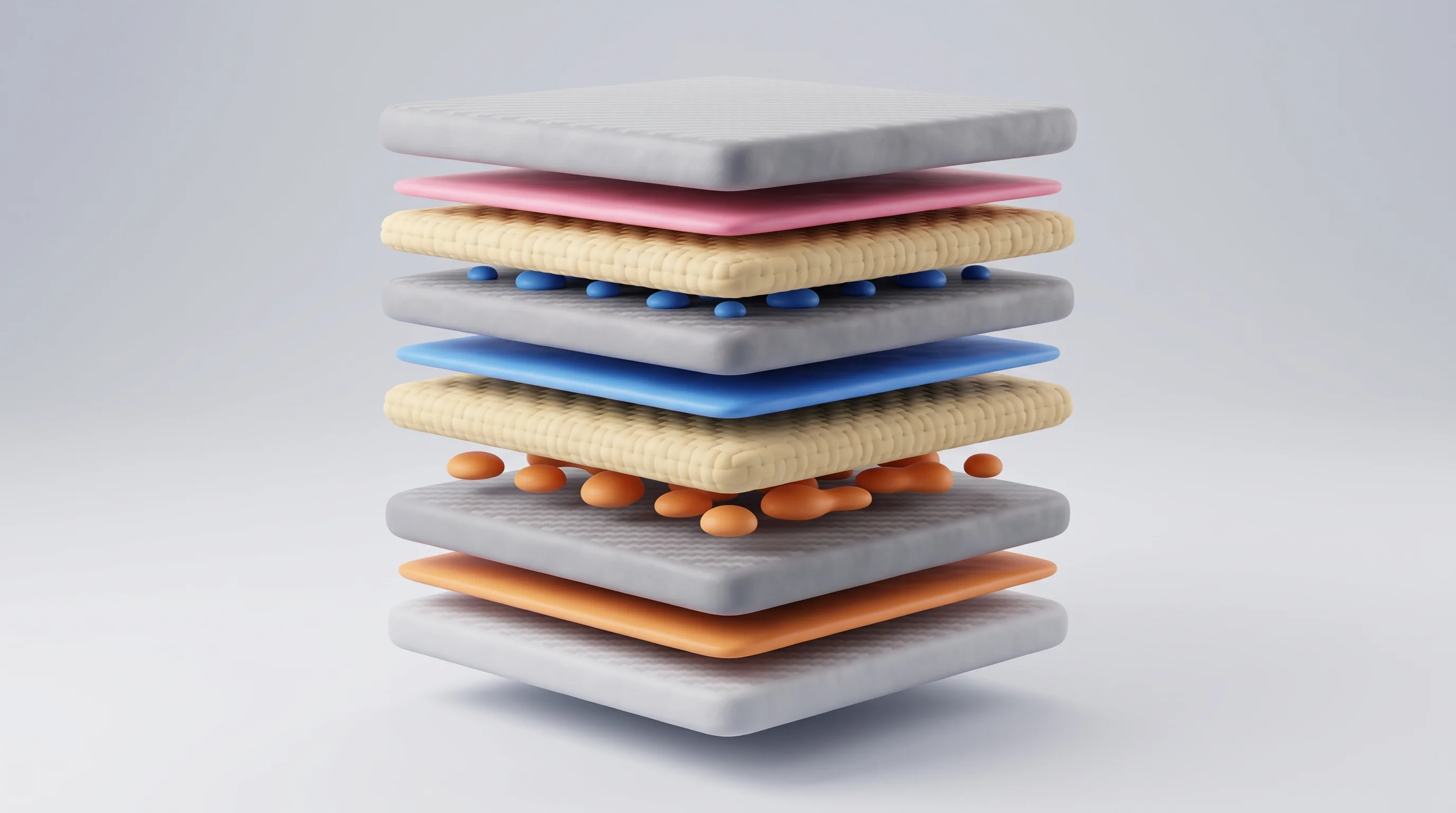
Impossible Objects uses what it calls Composite-Based Additive Manufacturing, or CBAM. The process takes sheets of carbon fiber, fiberglass or Kevlar fabrics, selectively "inks" them, and coats them with high-performance polymers such as PEEK and various polyamides. Those sheets get stacked, heat-pressed and de-fibered to create laminated composite parts.
The company says its materials achieve strength up to 200 megapascals with minimal shrinkage. The CBAM 25 printer can lay down a 60-micron-thick layer every four seconds, according to specifications the company published in November.
Whether those lab specs translate into reliable production at scale is the question facing any additive manufacturing company trying to move beyond prototyping. Impossible Objects has begun answering that with early deployments.
Customer Deployments and Partnerships
Since early this year, the startup has booked five orders for CBAM 25 systems. Buyers include the National Institute for Aviation Research at Wichita State University, the Rochester Institute of Technology's AMPrint Center, Oregon Manufacturing Innovation Center and Weber State University's MARS Center. These are research and training facilities, not yet the high-volume industrial customers that would validate the technology for mass production.
One commercial user has emerged. Absolute Electronics, an electronics manufacturing services provider, uses CBAM wave solder pallets and fixtures in production, according to a June case study on the company's website. European partner Ricoh 3D has distributed CBAM parts and materials since 2021, including for drone applications, though volumes were not disclosed.
Impossible Objects has also formed partnerships with materials suppliers. It worked with BASF Forward AM on PA6 materials support starting in 2019 and partnered with TIGER Coatings in February 2020 for thermoset materials. The company uses Dyndrite's software stack for the CBAM 25 user interface.
Funding History and What Comes Next
Impossible Objects raised a $6.4 million Series A in October 2017, led by OCA Ventures with participation from IDEA Fund Partners, Mason Avenue Investments, Huizenga Capital Management and Inflection Equity Partners. That Inflection returned to lead the Series B suggests continuity, though it also means the startup has taken seven years to progress from Series A to Series B.
"We're excited to double down on our investment in Impossible Objects and lead this Series B," said Gintaras Vaisnys, managing partner at Inflection Equity.
The new capital will fund increased production of industrial systems, expand customer deployments and build out service and commercial operations. "This funding gives us the resources to make it real at scale," said Robert Swartz, founder and chairman.
CEO Steve Hoover joined in early 2023 from Xerox PARC, where he held leadership roles. The company employs approximately 30 people, according to LinkedIn, though employee counts vary across public data sources and the figure may no longer be current.
A Crowded Field
Impossible Objects operates in a competitive market for carbon fiber and continuous fiber 3D printing. Rivals include Markforged, Anisoprint, 9T Labs, CEAD, Continuous Composites and Arevo. Caracol raised a $40 million Series B in November for robotic large-format composites. Carbon secured $60 million that same month for polymer digital light synthesis.
The race is on to prove which approach can deliver industrial-scale production economics alongside the material properties that composite manufacturers need. Impossible Objects is betting that speed makes the difference.
"Our CBAM 25 system is designed to meet the high productivity and high reliability needs of advanced manufacturing," said Hoover. The next 12 to 18 months will show whether customers agree.


