

Michael Cassau has always liked the businesses other founders run from. While Silicon Valley chases software margins, he gravitates toward the capital-heavy, operationally complex ventures that require buying actual things—warehouses full of them. At Grover, his consumer electronics rental startup, he persuaded investors to commit over $1 billion to a platform built on the residual value of smartphones and laptops, devices most people would rather own outright than lease by the month.
Now he's attempting something messier: acquiring family-run trucking companies across Europe, ripping out their diesel fleets, and replacing them with battery-electric vehicles. The whole operation hinges on structured debt that treats trucks like tradable securities—asset-backed financing applied to 40-ton rigs hauling freight across the continent.
It's an audacious premise. One that perhaps only someone with Cassau's track record could convince investors to back with €5 million just three months after incorporating NexDash Autonomy GmbH in Berlin this past July.
When 'Neo-Carrier' Isn't Just Marketing Speak
NexDash bills itself as a "Neo-Carrier," the sort of coinage that usually signals venture-backed vaporware. Except in this case, the label maps to something tangible—if not yet proven. The strategy: target fragmented, multi-generational trucking operators scattered across Germany and beyond, buy them, yank the diesel engines, and install electric trucks coordinated through NexOS, an AI platform designed to orchestrate charging, routing, and the embedded financing that theoretically makes electrification economically viable.
The seed round, closed November 21, came from Extantia Capital and Clean Energy Ventures. That €5 million is earmarked for initial acquisitions, electric vehicle deployments, charging infrastructure buildouts, and further development of the software that's supposed to hold it all together. So far, the company hasn't named customers or disclosed specific acquisition targets. It operates from serviced offices on Kurfürstendamm in Berlin's Charlottenburg district—not exactly the sprawling logistics nerve center you'd imagine, but fitting for a venture barely past its first hundred days.
Cassau brought in Karsten Sachsenröder early, a transport veteran who spent years on the supervisory board of DB Schenker Rail and later ran AAE, a European rail wagon leasing outfit. The hire signals intent: NexDash wants to play in the deep end of infrastructure, not simply write code and outsource the hard parts.
Riding the Regulatory Wave (Before It Crashes)

Heavy-duty trucks generate roughly 35% of road transport CO₂ emissions across Europe. More than 90% of operators still run diesel fleets, and the European Union isn't asking politely anymore. In 2024, Brussels revised its CO₂ standards for heavy-duty vehicles, mandating fleet-wide emissions cuts of 45% by 2030, 65% by 2035, and 90% by 2040. That's not gentle prodding. It's regulatory force majeure.
Simultaneously, the EU's Alternative Fuels Infrastructure Regulation now requires heavy-duty charging pools every 60 kilometers along core TEN-T network routes, with minimum 350 kW capacity per site starting this year. Germany launched a national tender in July 2024 to build 350 fast-charge hubs for electric trucks. Milence—a joint venture between Daimler, Traton, and Volvo—secured over €111 million in EU funding to deploy megawatt charging points at 71 locations across the continent.
The infrastructure is materializing. Slowly, unevenly, but directionally. The question isn't whether it's coming; it's whether small and mid-sized operators can afford to adapt before regulators force the issue. Electric trucks carry upfront costs two to three times higher than diesel equivalents. Charging infrastructure remains patchy outside major corridors. And the operational complexity of managing battery range, charging schedules, and route optimization isn't trivial—it's a wholesale reimagining of how trucking companies function.
That gap, between regulatory pressure and operational capacity, is where NexDash sees its opening.
The Grover Playbook, Now With 18 Wheels
Cassau's history matters here, more than it might seem. At Grover, he built a rental business that required enormous upfront capital to stock inventory—phones, laptops, drones—that customers would pay for monthly. Traditional venture funding wasn't sufficient. In 2021, Grover closed a financing round exceeding $1 billion, blending equity with asset-backed debt facilities that securitized rental contracts and the residual value of the devices themselves. It was venture capital meets structured finance.
NexDash is applying that same framework to freight. According to Extantia Capital's investment memo, the company plans to use asset-backed securities (ABS) to finance fleet acquisitions and conversions, treating electric trucks and their revenue streams as collateral. In theory, it's a model that could scale faster than pure equity funding—though it also demands demonstrating predictable cash flows and residual values in a market where electric trucks remain unproven assets.
The NexOS platform is supposed to be the connective tissue: optimizing routes to minimize charging downtime, predicting battery degradation, coordinating depot and en-route charging, and—eventually—layering in autonomous driving capabilities as the technology matures. Investors describe the software as a "digital backbone" for a future where freight is both electrified and automated. The autonomy piece, though, remains decidedly aspirational.
NexDash's pitch differentiates itself from companies like Einride, which manufactures purpose-built autonomous electric trucks and operates them as a service, or Volta Trucks, which focused on vehicle development before imploding in 2023. NexDash isn't building trucks. It's buying operators, converting their assets, and providing the capital and software to make electrification viable for companies that couldn't manage it alone.
Whether that distinction matters depends entirely on execution.
The Risks (And They're Considerable)
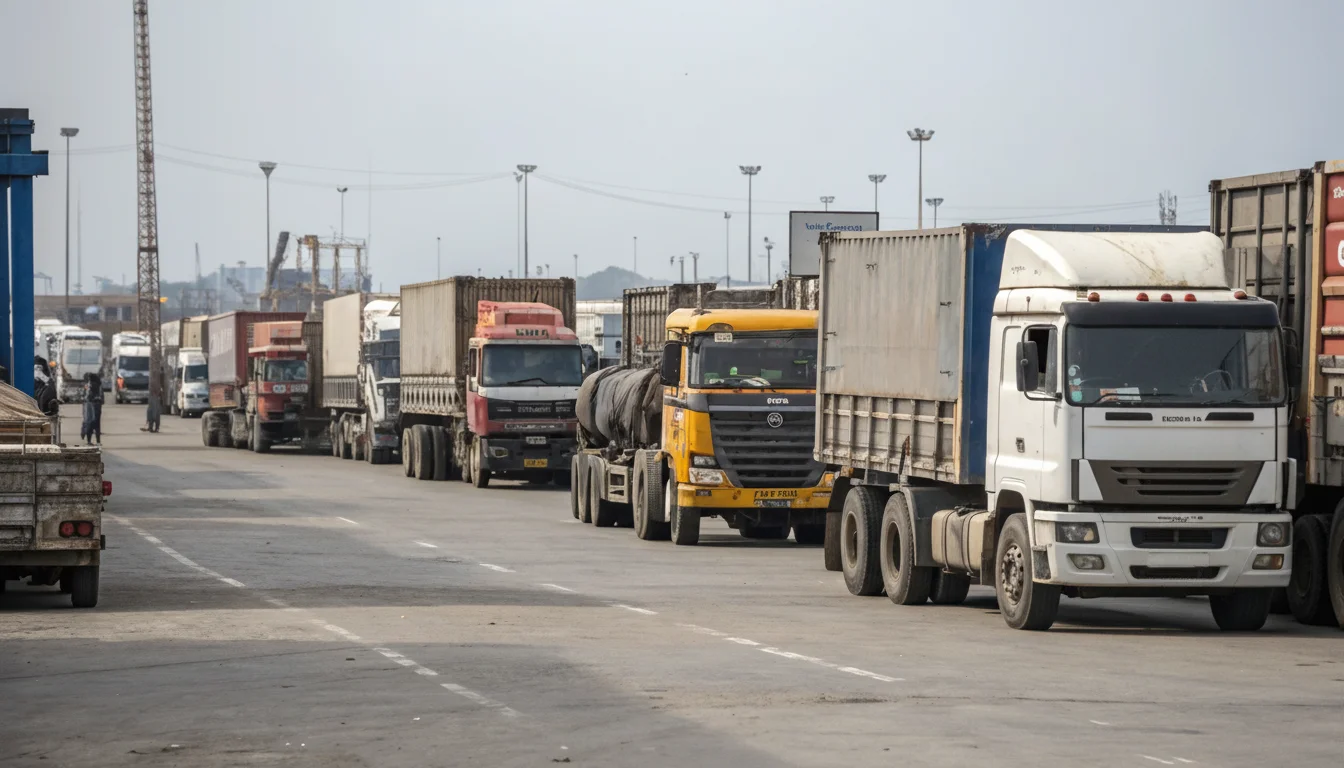
Acquiring trucking operators is capital-intensive and operationally brutal. Family businesses don't always want to sell, and those that do frequently arrive with baggage: aging maintenance contracts, entrenched labor agreements, customer relationships tied to specific drivers who've been running the same routes for 20 years. Integrating multiple acquisitions while simultaneously converting fleets and deploying untested software is the kind of challenge that breaks well-funded companies.
The economics of electric trucking are improving, yes, but remain unproven at scale. Battery costs are dropping. Vehicles like Daimler's eActros 600—in series production since November 2024—are extending range and reducing charging times. Scania and MAN plan to support Megawatt Charging System (MCS) standards by 2026, enabling 20-80% charges in under 30 minutes. But total cost of ownership parity with diesel is still contingent on high utilization rates, stable energy prices, and infrastructure that doesn't yet fully exist.
McKinsey estimates Europe will need roughly €40 billion in truck charging capital expenditure by 2040 and around 300,000 public and private charge points by 2030—up from approximately 10,000 today. Industry analysis suggests the EU's AFIR mandates may only cover 50-70% of projected demand, leaving gaps that companies like NexDash will need to either fill themselves or navigate around.
Then there's the structured finance piece, which introduces its own complications. Asset-backed lending depends on predictable asset values and cash flows. Electric trucks don't have decades of resale data to support underwriting models. The market for used battery-electric commercial vehicles is nascent, to put it generously. If residual values decline faster than expected—and they very well might—the ABS structure could unravel.
Betting on the Inevitable
What Cassau appears to be wagering on is inevitability. The EU has committed to decarbonizing road freight. Manufacturers are ramping production. Infrastructure is scaling—slowly, unevenly, but scaling nonetheless. Small operators will face a binary choice: electrify or exit. NexDash positions itself as the path of least resistance, offering capital, operations, and software in a single package.
Whether that thesis holds depends on execution the company has barely begun. The €5 million seed is a starting point, not proof of concept. No trucks are on the road yet. No operators have been acquired. The NexOS platform exists in some form, but its effectiveness in real-world conditions remains unproven.
Still. Cassau has a track record of building capital-intensive businesses that skeptics initially dismissed. Grover survived and scaled, defying the conventional wisdom that asset-heavy models don't belong in venture portfolios. SKROL, his venture studio, harbors ambitions to acquire 5,000 companies over time—an absurd-sounding claim that's at least internally consistent with someone who views fragmented industries as consolidation opportunities waiting to happen.
NexDash is the latest test of that worldview, applied to one of Europe's least glamorous, most essential sectors. If it works, it won't be simply because electric trucks are inevitable. It will be because someone figured out how to finance, operate, and integrate the messy reality of decarbonizing freight before the regulations make standing still impossible.
And if it doesn't? Well, there are worse bets to make with other people's money. Though perhaps not many that involve quite this many trucks.


