

iPronics, a Spanish silicon photonics company betting that light-based switching can solve a growing power crisis inside AI data centers, announced September 2, 2026 it has secured $125 million in Series B funding co-led by Maverick Silicon and Light Street Capital. The round drew participation from an expansive investor roster that includes NVIDIA, Triatomic Capital, Bosch Ventures, and the European Innovation Council Fund, among others.
The Valencia-based startup has now raised $177 million in total funding—including both equity rounds and grants—since spinning out of Universitat Politècnica de València's research labs in 2019. It declined to disclose its valuation, a common move for European hardware companies navigating an uncertain fundraising climate.
At stake is a technical challenge that keeps hyperscale infrastructure architects awake at night. AI training clusters are bumping up against the power and bandwidth limits of traditional electrical packet switches, the workhorses that have defined data center networking for decades. iPronics builds programmable optical circuit switches that route light signals directly to reconfigure network topologies without the conversion step to electrical signals. In July, Google confirmed in a blog post from principal engineer Ryohei Urata that it "extensively uses Optical Circuit Switching technology in our data centers as part of our Jupiter/AI network architectures," a validation that lends credibility to what remains a nascent product category.
A Crowded Field and a Silicon Bet
The technology sits alongside linear-drive pluggable optics and co-packaged optics as one pillar of next-generation AI infrastructure, according to analysts at TrendForce and Cignal AI. But iPronics faces established competition. Lumentum ships MEMS-based optical switches through its Polatis division, representing the incumbent mechanical approach that has dominated the category for years.
iPronics is wagering that silicon photonics will deliver better scalability, lower power consumption, and improved cost economics at higher port counts. Whether that bet pays off commercially hinges on execution in manufacturing and sales, areas where the startup is now moving aggressively with its fresh capital.
The company plans to scale operations, accelerate deployment of its iPronics ONE programmable optical switch, and deepen its U.S. presence. It recently opened an office in Santa Clara at 5201 Great America Parkway, Suite 519, and is hiring across engineering, sales, and operations in the U.S., Spain, and Taiwan. LinkedIn data suggests the company employs between 51 and 200 people, though iPronics did not provide a precise headcount.
Christian Dupont, who joined as CEO on September 11, 2024 after holding roles at semiconductor and optical networking firms, leads the commercial push. Founder and CTO Dr. Daniel Pérez-López continues to oversee the technical side, a structure typical of hardware startups navigating the transition from research lab to production floor.
Technical Claims and Manufacturing Realities
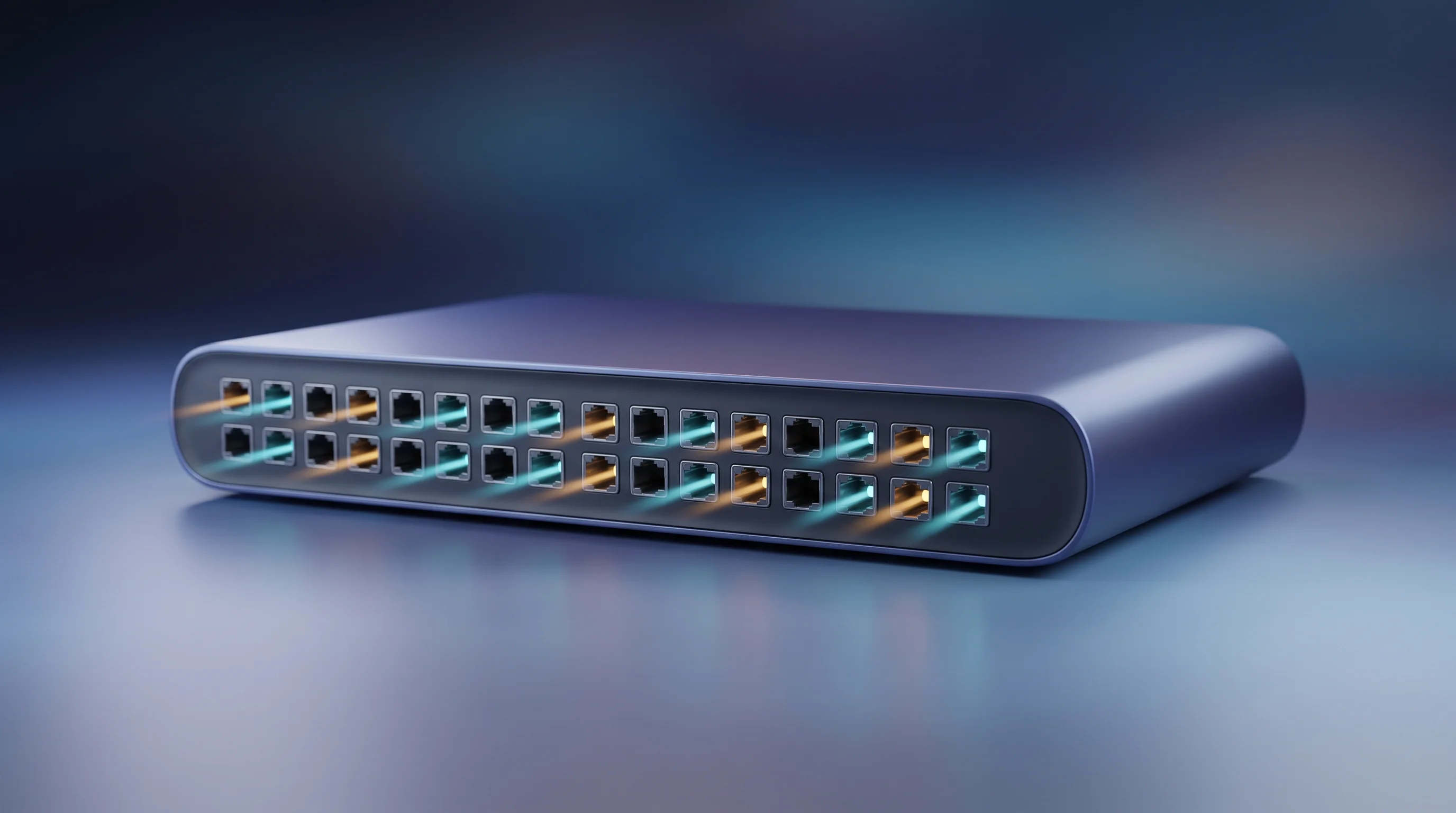
The iPronics ONE targets AI scale-up and scale-out network topologies with a silicon-photonics-based switch that the company says can reconfigure connectivity in under 300 microseconds with sub-30-nanosecond latency. In March, the startup launched its 32-port ONE-32 model, positioning it as the first commercial optical circuit switch built on silicon photonics rather than legacy MEMS technology.
Around the same time, iPronics announced a dedicated silicon photonics packaging, assembly, and test line at Fabrinet to meet production demand. The startup has signed its first ten hyperscaler and AI-cluster OEM customers, according to the company, though it declined to name them. That reticence is standard practice in an industry where customer relationships are closely guarded and NDAs are ubiquitous.
Still, some public validation exists. In July, Google confirmed in a blog post from principal engineer Ryohei Urata that it "extensively uses Optical Circuit Switching technology in our data centers as part of our Jupiter/AI network architectures." Urata announced a new Open Compute Project sub-project on optical circuit switching that includes iPronics alongside Lumentum, Coherent, Microsoft, NVIDIA, and several other players.
Silicon Valley Pedigree Joins the Board
Manish Muthal, senior managing director at Maverick Silicon, joined iPronics' board as part of the round. Geoffrey Tate also took a board seat. Tate advises Light Street Capital and brings a resume that spans senior roles at AMD, Rambus (where he served as founding CEO), and Ayar Labs, where he currently sits on the board. Young Sohn, managing partner at Catalight Capital and former Samsung president and chief strategy officer, joined as an advisor. Sohn also served as CEO of Inphi before its acquisition.
"The explosive growth of AI workloads has pushed traditional network infrastructure to its power and bandwidth limits, making optical circuit switching more critical than ever," Muthal said in the company's announcement, echoing a pitch that has become familiar across the optical networking sector.
Shef Osborn, partner at Light Street Capital, offered a bolder assessment. The firm believes "iPronics offers the most scalable and cost-effective approach to solid-state optical switching at the interconnect layer," he said, a claim that will be tested as the technology moves from pilot deployments to production volumes.
European Roots, Global Ambitions

iPronics raised a €20 million Series A in January led by Triatomic Capital, with Fine Structure Ventures, Bosch Ventures, Amadeus Capital Partners, and Criteria Venture Tech participating. It secured a €3.7 million seed round in July 2022 led by Amadeus. The company has also received grant funding from the European Innovation Council, though it did not break out the grant total within its cumulative $177 million funding figure.
"Securing this support from Maverick Silicon, Light Street Capital and NVIDIA strengthens our vision as we build iPronics," CEO Dupont said. The startup's immediate focus is commercial deployment and hiring to meet demand for its ONE platform. How quickly that demand materializes will determine whether iPronics can convert technical promise into market share in a category that remains, for now, more potential than proven at scale.


