

David Bennett is not exactly building a startup from a garage. The former Tenstorrent executive announced in late March that his new venture, ai&, had secured $50 million in seed funding—substantial by any measure. But that figure pales beside the real headline: more than $2 billion in committed capital earmarked for data center construction.
It's an audacious play in a market that, according to IDC projections, is expected to swell past $5.5 billion in 2026—a seven-fold jump from just four years earlier. And it raises an immediate question: Can a seed-stage company, even one with experienced founders and two data centers already humming, execute infrastructure buildouts at that scale?
Bennett and his co-founder Shimpei Hara, both alumni of the semiconductor startup Tenstorrent, are betting the answer is yes. Operating out of Yokohama's Minatomirai district, ai& is pitching something increasingly valuable to Japanese enterprises: a full-stack AI platform with compute, models, and crucially, data residency inside Japan's borders. Sovereignty, in other words, at a moment when regulatory and security concerns are reshaping where companies run their workloads.
A Running Start, Not a Typical Launch
Unlike most seed-stage ventures sketching roadmaps on whiteboards, ai& inherited operational infrastructure from day one. The company absorbed Unsung Fields, a Japanese AI cloud provider that had partnered with Tenstorrent the prior year. That acquisition handed ai& two functioning data centers, more than 1,000 GPUs already deployed, and a client roster the company claims exceeds 80 enterprises—numbers disclosed in company statements and March coverage by EE Times.
Bennett, who previously ran NEC Personal Computers and led Lenovo Japan as CEO, served as Chief Customer Officer at Tenstorrent before launching ai&. Hara held a technology leadership role there. The team, currently between 11 and 50 employees according to LinkedIn, appears to be moving quickly. Bennett told EE Times the next data center should be operational within a month of the March announcement.
Perhaps more revealing: ai& posted openings for over 14 roles in early April, spanning Japan, the United States, Canada, Singapore, and remote positions. Aggressive hiring, aggressive expansion—standard startup velocity, though the capital commitments here are anything but standard.
Mixing Hardware, Chasing Throughput
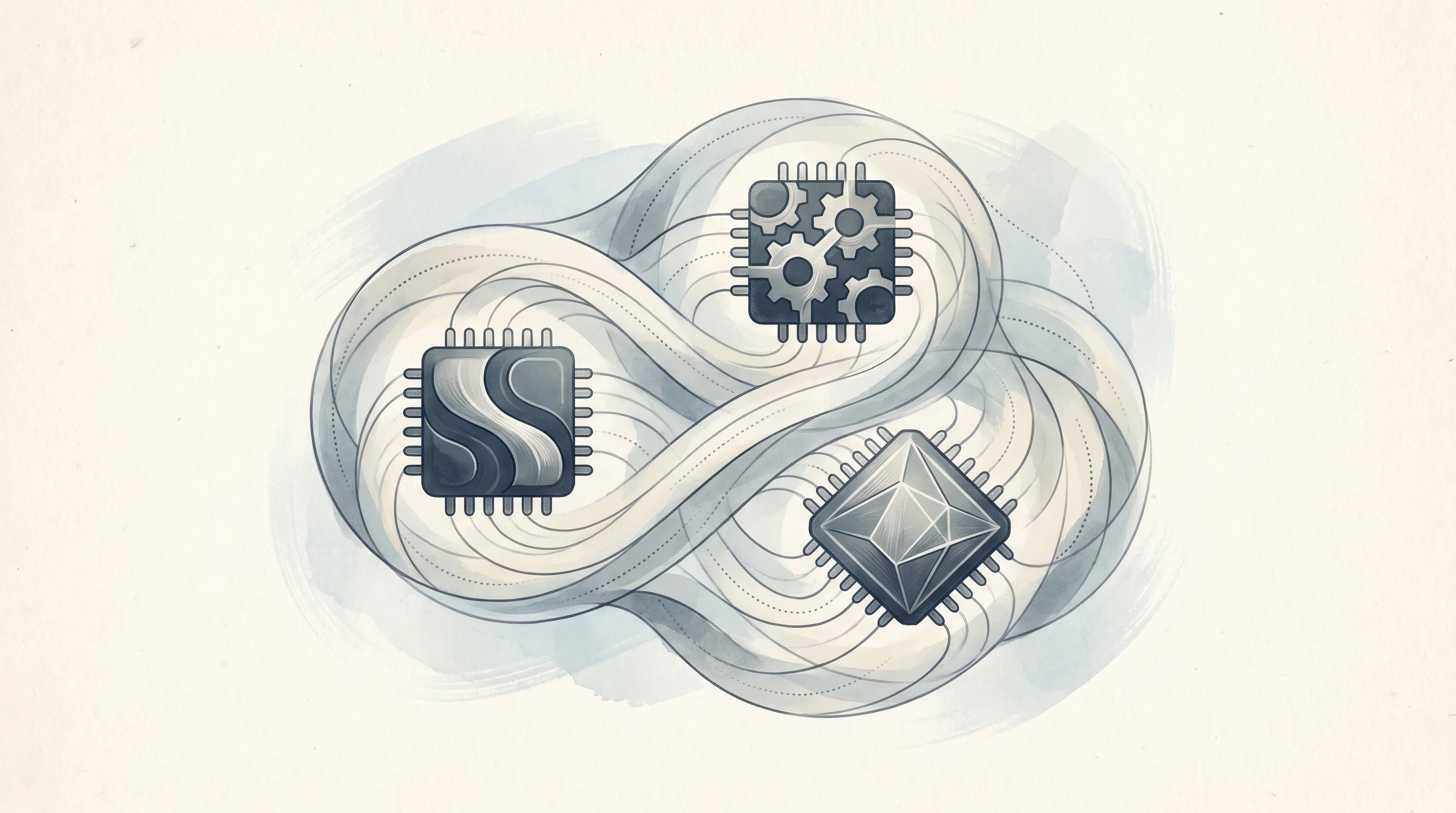
What sets ai& apart technically—at least in its telling—is a deliberate heterogeneity. The company is mixing chips from NVIDIA, AMD, and Tenstorrent in what it calls a disaggregated compute architecture. Bennett claimed to EE Times that this multi-vendor approach can deliver 1.5 to 2 times the token throughput of single-vendor configurations.
That's a bold performance claim, one that will need validation in production environments. Still, the logic is straightforward: avoid vendor lock-in, optimize workloads across different silicon, and potentially gain cost or efficiency advantages. ai& also offers an OpenAI-compatible inference API, lowering the friction for enterprises already using those endpoints.
The company runs an AI research lab in Japan, focused on localized models, continual learning, and multimodal systems tailored to Japanese language nuances and enterprise applications. It's a recognition that language models trained primarily on English-language datasets often stumble in Japanese contexts—corporate or otherwise.
The Infrastructure Buildout

Four data center sites are currently established—two operational in Japan—with 10 more in development across Japan, the United States, and Asia, according to ai&. The company has committed to constructing a 100-megawatt-plus campus within three years—a scale that places it, at least on paper, in conversation with recent Japanese infrastructure moves from incumbents like KDDI, which opened an Osaka data center in January, and EdgeConneX, which broke ground on a 200-megawatt Osaka campus in March.
The $2 billion figure is eye-catching, but structure matters. The company has not disclosed whether that capital represents equity, debt, infrastructure financing, or some combination. Nor has it named a lead investor or revealed valuation metrics for the $50 million seed round. Those omissions are notable—especially for a deal of this size.
What seems clear is that ai& is wagering on full-stack control and hardware flexibility as differentiators in a market where telecom giants, cloud hyperscalers, and private equity-backed infrastructure players are all scrambling for AI workload share. Japan's push for domestic AI capabilities, driven partly by geopolitical anxieties and partly by genuine enterprise demand, has created an opening.
Sovereignty as a Sales Pitch

Data sovereignty is the central argument. Japanese companies navigating compliance frameworks, intellectual property concerns, and latency requirements increasingly want assurance that their data won't leave the country. ai& is positioning itself as the answer—a Japan-based, full-stack platform that keeps everything in-country.
It's a compelling pitch, assuming execution follows ambition. The company's current customer base of 80-plus enterprises, if accurate, suggests early traction. But scaling from there to a sustainable, multi-hundred-megawatt operation is a different challenge entirely. The AI infrastructure market in Japan is heating up fast, and ai& will be competing not just on technology but on capital efficiency, reliability, and the ability to deliver on capacity commitments when customers need them.
Whether Bennett and Hara can translate their semiconductor expertise and substantial capital into a durable market position remains an open question. The 100-megawatt campus timeline—three years—is aggressive. The hiring ramp suggests urgency. And the mix of established infrastructure and ambitious roadmap points to a company trying to move at startup speed with enterprise-scale commitments.
In a market projected to expand sevenfold in four years, there's room for new entrants. Whether there's room for this particular entrant, with this particular capital structure and strategy, is what the next few years will decide.


