

HORNBERG, Germany — The kilns are supposed to roar. For more than a century, producing quicklime has meant firing limestone at temperatures around 900°C or higher—well below the 1,370°C needed to melt steel, but still requiring natural gas or coal to do the heavy lifting. The result: a crucial industrial material and an enormous carbon bill.
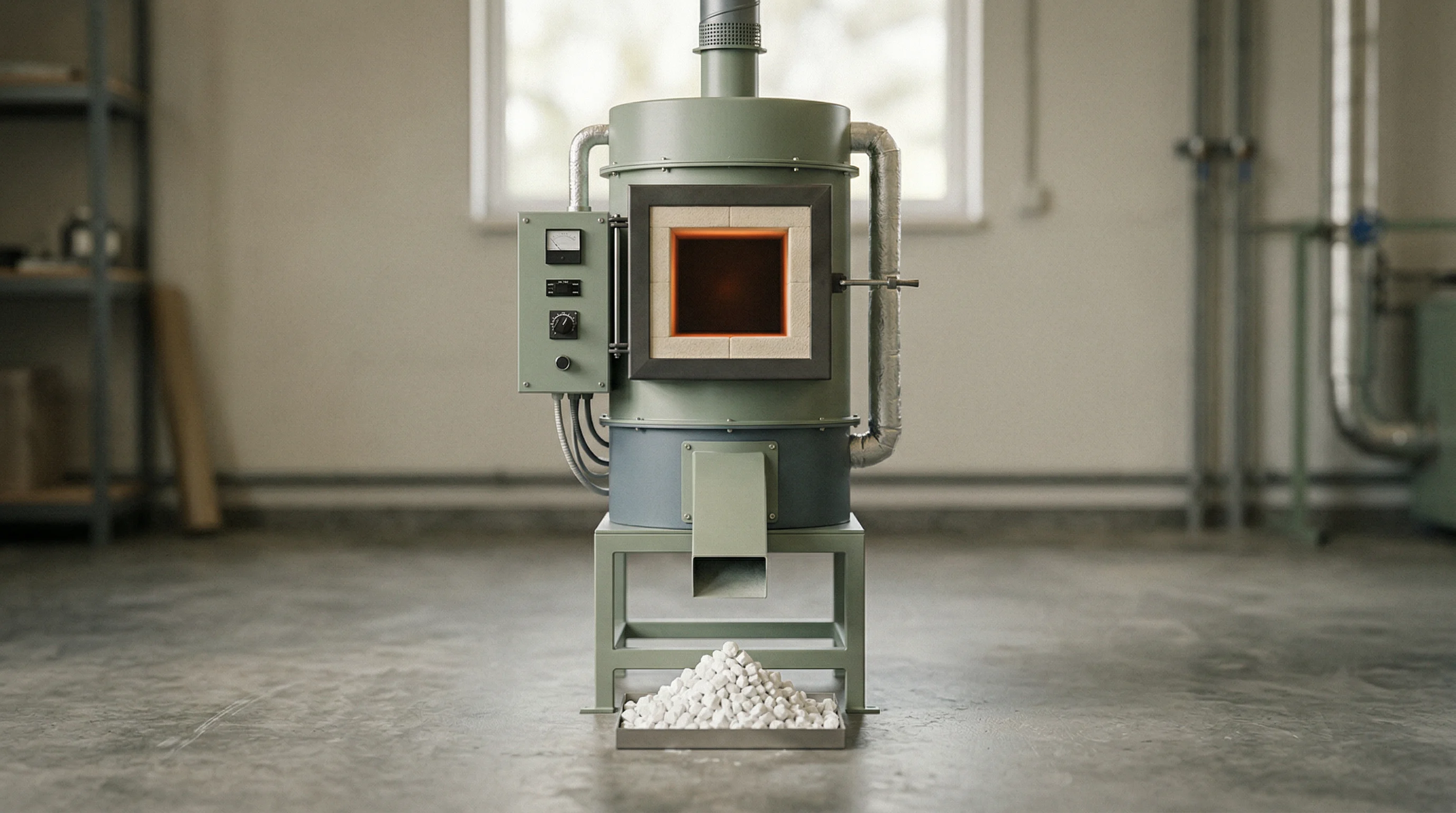
At a pilot site tucked into this town in Baden-Württemberg, Litherm Technologies is trying something different. The startup's calcination reactor hums along at 900°C without combustion, using superheated steam and electric heat to crack apart calcium carbonate. No flame. No mixed exhaust stream. Just limestone going in, quicklime coming out, and—crucially—a stream of CO₂ clean enough to capture without the expensive separation step that has bedeviled conventional carbon-capture projects.
Whether this translates from a 10-ton-per-day pilot to industrial scale is the open question. But the company, founded in Krefeld in 2019 and backed by Breakthrough Energy Fellows, believes it has cracked a stubborn problem: how to decarbonize two of the world's most emissions-intensive industries without rebuilding every plant from scratch.
The Chemistry Problem No One Talks About
Cement and lime together account for roughly 8% and 1% of global CO₂ emissions, respectively. Everyone knows the energy part of that story—kilns burn fuel, fuel emits carbon. What's less appreciated: most of the emissions come from the chemistry itself. Heat limestone past 900°C and calcium carbonate decomposes into quicklime, releasing CO₂ as an unavoidable byproduct of the reaction. That's 60 to 70% of the total carbon footprint, depending on the process.
Traditional carbon-capture systems face a fundamental headache here. When you burn fossil fuels to generate heat, you mix process CO₂ with combustion gases—nitrogen, water vapor, unburned hydrocarbons. Separating the carbon you want to capture from the rest is technically possible but expensive and energy-intensive. It's one reason carbon capture remains more pilot project than production reality in heavy industry.
Litherm's pitch is straightforward, if audacious: eliminate the combustion entirely. The company's electrically heated fluidized-bed reactor uses steam as a heat-transfer medium, delivering what it calls high-purity CO₂ that can be piped directly to capture or utilization systems. According to an UnternehmerTUM portfolio entry dated August 2025, the system is ten times smaller than conventional kilns and uses 40% less energy than traditional carbon-capture setups. Those figures haven't been independently verified, and the company—listed at seed stage—hasn't disclosed detailed operational data.
But the European Patent Office granted Litherm patent EP3799592 for the technology, and in late 2025, the startup announced its Hornberg pilot was running continuously, producing quicklime without fossil fuels. For the cement and lime sectors, that's less a solution than a provocation: if a startup can do this at pilot scale, what's stopping the incumbents?
The Founders and the Fellows
Felix Nelles, a process engineer who studied at TU Berlin, leads Litherm alongside Dr. Thomas Stumpf and Prof. Dr.-Ing. Markus Goldbrunner. The trio incorporated in 2019 with a focus on "thermal treatment of bulk solids"—academic-sounding language for what amounts to reinventing industrial heating. Nelles landed a Breakthrough Energy Innovator Fellowship, connecting Litherm to the Bill Gates-backed network focused on hard-to-abate emissions.
The company now operates out of Wernigerode in Saxony-Anhalt. LinkedIn lists the headcount at somewhere between two and ten employees, which tracks with its seed-stage status. In September 2025, Litherm announced a partnership with Fels-Werke, a German lime producer that's providing the Hornberg site, raw limestone feedstock, and agreeing to test the burned output in real-world applications.
By early 2026, Litherm's public roadmap positioned "trial operation" for this year, with an industrial-scale demonstration plant to follow—though specifics on funding, investor names, or round size remain undisclosed. Recent job postings for an electrical and automation engineer and a founders' associate suggest the company is gearing up for that next phase. Or trying to, anyway.
A Crowded Race With Different Horses
Litherm isn't alone in chasing electrified pathways for cement and lime, though the approaches vary wildly.
Brimstone, a U.S. startup, is building what it calls a first-of-a-kind commercial plant that uses calcium silicate rock instead of limestone—eliminating process emissions altogether by changing the feedstock. The Department of Energy announced up to $189 million in support in March 2024. Queens Carbon, which raised a $10 million seed led by Clean Energy Ventures in April 2025, is betting on hydrothermal cement chemistry. Furno closed a $6.5 million seed in March 2024 for micro-kilns, later adding a $20 million DOE grant for a Chicago demonstration.
In Europe, the picture is similarly fragmented. Origen, a UK startup, is developing a zero-emission lime kiln designed to capture both process and energy emissions. FLSmidth in Denmark is researching electric calcination under its ECem project. Finland's VTT operates an electric rotary kiln testbed. Holcim—the Swiss giant that's the world's largest cement producer—is collaborating with Sweden's SaltX on plasma-based clinker production, part of a broader corporate decarbonization strategy that mixes electrification with carbon capture.
The diversity of bets reflects an uncomfortable truth: no one knows which pathway will win. Electrification works in theory, but industrial kilns operate 24/7, and grid reliability varies. Carbon capture might pencil out economically in regions with CO₂ pipelines and storage infrastructure, but remains expensive elsewhere. Changing feedstocks sounds elegant until you consider the scale of global limestone supply chains.
Proof Points and Question Marks
What Litherm has demonstrated so far is real but limited. A 10-ton-per-day pilot running continuously at 900°C is not nothing—plenty of startups never get that far. Producing high-purity quicklime in a fully electric system, if the quality holds up in Fels-Werke's applications, would validate the core chemistry.
The harder questions come next. Can the technology scale to the hundreds or thousands of tons per day that industrial plants demand? What does the capital cost look like compared to retrofitting an existing kiln with carbon capture? How does the system perform when powered by intermittent renewables rather than steady grid electricity? And perhaps most urgently: will the economics work in a sector notorious for thin margins and long asset lifetimes?
Litherm's efficiency claims—40% less energy than conventional carbon capture—would be compelling if they hold at scale. But "if" is doing a lot of work in that sentence. Industrial pilots have a long history of proving technically feasible and economically unworkable.
For now, the company has something tangible. A reactor in Hornberg that heats limestone without burning anything, producing CO₂ clean enough to use or sequester. Whether that becomes a footnote in the history of climate tech or a fixture in how heavy industry decarbonizes will depend on the next phase: proving it works not just in a pilot plant, but in the brutal economics of real-world production.
The kilns don't need to roar anymore. But they do need to run—and run profitably.


