

The pitch sounds almost too neat: the same artificial intelligence that monitors power lines for fallen branches in Bavaria could, with a few adjustments, track troop movements or infrastructure damage in a conflict zone. But LiveEO, a Berlin-based startup that has spent the better part of a decade perfecting satellite-based monitoring for utilities, is betting that Europe's sudden appetite for defense technology will make that leap less far-fetched than it sounds.
The company announced on May 6 it had closed more than €28 million in new funding, the first tranche of what could become a larger round. Three new investors joined the table: Helantic, a European venture firm focused squarely on defense; b2venture; and the EIC Fund. A clutch of existing backers—NordicNinja, DeepTech & Climate Fonds, Matterwave Ventures, MMC Ventures, Segenia Capital, and Greencode Ventures—stayed in.
LiveEO says it will use the capital to do three things: expand its existing civil infrastructure business, push harder into defense and security markets, and build out something called Twinspector, its first proprietary satellite constellation. That last piece is the most ambitious, and perhaps the most telling about where the company thinks the market is headed.
Watching the Rails, Then the Border
For years, LiveEO's business has been straightforward, if technically complex. The company sells AI-driven monitoring services to utilities and rail operators across Europe. Its Treeline product scans for vegetation encroachment and wildfire risk along power lines and railway corridors. SurfaceScout watches pipelines for ground shifts or third-party interference—think construction crews digging where they shouldn't. TradeAware helps companies navigate the thicket of the EU's deforestation regulation.
The customer list reads like a who's who of European infrastructure: Deutsche Bahn, E.ON, Iberdrola, Network Rail. Solid, unsexy work. The kind of thing that keeps trains running and lights on.
But somewhere along the way, co-founder and co-CEO Daniel Seidel started thinking bigger, or at least differently. If you can spot a fallen tree threatening a power line from orbit, why couldn't you identify infrastructure vulnerabilities in contested regions? Or monitor border zones? The underlying tech stack—satellites, machine learning models trained on terabytes of imagery, automated alert systems—translates. Or so the thinking goes.
The addition of Helantic to the cap table suggests LiveEO is serious about the pivot. Defense VCs don't typically wander into utility monitoring deals unless there's a credible path to military or security applications. And Seidel has been increasingly vocal about the opportunity. Whether the market will materialize at the scale LiveEO hopes is another question entirely.
Building European Eyes in the Sky
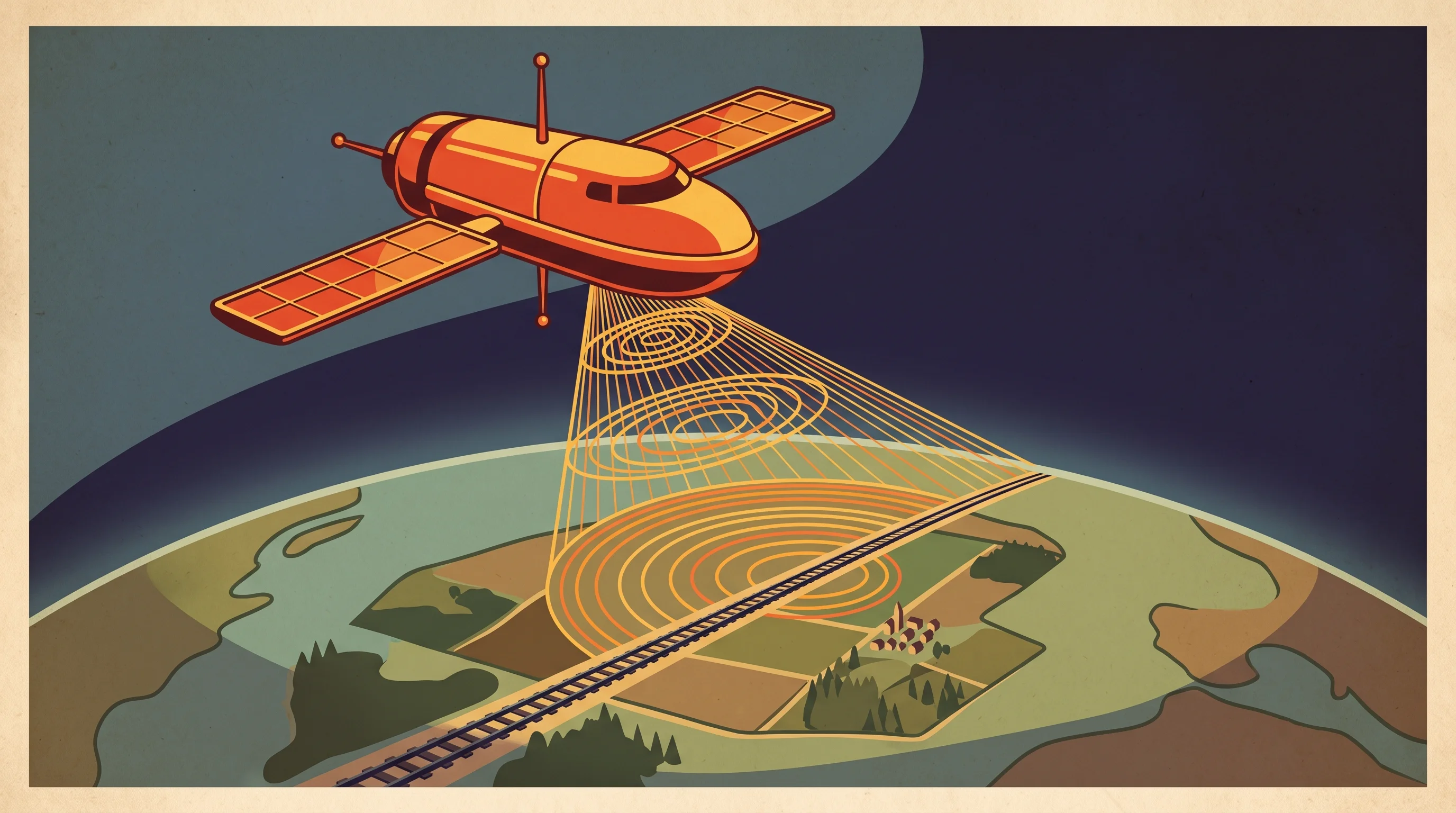
On January 28, 2026, LiveEO unveiled Twinspector. The name is a bit on the nose, but the concept is more interesting: a purpose-built satellite constellation designed specifically for linear infrastructure monitoring. The system promises up to 35-centimeter 3D-stereo resolution, achieved through a formation-flying setup involving two satellites working in tandem.
What stands out, perhaps more than the technical specs, is the supply chain. LiveEO has gone all-in on European and German partners: Reflex Aerospace, Kampf Telescope Optics, Engineering Minds Munich. In an industry that has long relied on a patchwork of international suppliers, that kind of regionalization is both a political statement and a practical hedge. European governments are increasingly wary of depending on foreign satellite operators or cloud infrastructure for sensitive monitoring tasks.
The European Space Agency took notice. On April 14, the agency awarded LiveEO a seven-figure contract through its InCubed program, which backs commercial space ventures that align with ESA's strategic priorities. Two weeks after the funding announcement, on May 20, LiveEO locked in an additional €6.6 million in public funding from Germany's GRW program, administered by Investitionsbank Berlin.
Public money, in other words, is flowing. Germany committed €5.4 billion to ESA for the 2026-2028 period, according to the country's Annual Economic Report. LiveEO is positioning itself to capture a slice of that pie—and to sell the broader narrative that Europe needs homegrown geospatial intelligence capabilities.
The Dual-Use Gamble

LiveEO has raised roughly €77 million to date across five rounds, according to Tech.eu's Funding Explorer. The May raise is described as a first closing, which means more capital could follow if the company hits certain milestones or finds additional investors willing to join.
The dual-use strategy—selling to both civil infrastructure operators and defense customers—is deliberate. It's also risky. Defense procurement cycles are notoriously slow, and breaking into that market often requires navigating bureaucratic labyrinths that make utility sales look breezy by comparison. Civil infrastructure customers, meanwhile, may start asking uncomfortable questions if a vendor becomes too closely associated with military or surveillance applications.
Still, the timing might never be better. Europe is in the throes of a defense spending surge, driven by geopolitical anxiety and a belated recognition that the continent's security architecture has gaps. Space and satellite technology sit at the intersection of multiple national priorities: infrastructure resilience, climate adaptation, border security, and strategic autonomy. LiveEO is betting it can thread that needle.
Whether Twinspector becomes the backbone of European infrastructure monitoring—or remains a niche tool in a market already crowded with established satellite operators—depends on execution. Can the company actually launch and operate its constellation on schedule? Will defense customers bite, or will they stick with incumbent providers? And can LiveEO scale its AI models to handle the vastly different use cases of, say, monitoring a power grid versus tracking activity in a border region?
For now, the company has the capital, the customers (at least on the civil side), and the political tailwinds. What it doesn't have yet is proof that the same technology that keeps European trains running can also become a cornerstone of European security. That's the bet investors just wrote a check to find out.


