

On a humid Wednesday in late June, a small German startup announced what might sound like science fiction to anyone who's ever waited for critical lab results: drones that fly directly to hospital windows, bypassing traffic, elevators, and the labyrinthine corridors of modern medical campuses.
Maple Aviation disclosed a €4 million pre-seed round on June 25, money the Ottobrunn-based company says will help it reach its first paying customer before 2026 ends. Bayern Kapital and ES Kapital led the financing, with angel investors including Rüdiger Schmidt, Stefan Eishold, Martin Giese of Cambridge Ventures, and Bernd Baezner joining alongside institutional backing from Bavaria's regional government through the Bayerisches Luftfahrtforschungsprogramm and the European Space Agency.
The pitch is deceptively straightforward: a medical staff member taps an order into the Maple app—medication, lab samples, whatever fits within ten kilograms and needs to move fast—and an autonomous drone handles the rest. No riders threading rush-hour traffic. The aircraft docks at a window adapter, delivers its cargo, and departs.
More than ten hospitals and laboratories across Bavaria have already committed to the platform, Maple says, including heavyweight institutions like LMU Kliniken, Klinikum Rechts der Isar, and Klinikum Ingolstadt. Whether that enthusiasm survives contact with real-world operations remains the operational question hanging over every drone delivery venture.
Where the Money Goes
The funding will finance what startups in this space always need more of: final engineering tweaks, charging infrastructure buildout, and headcount. Maple is recruiting for a Senior Flight Control System Engineer and Senior Account Executive as it pushes toward commercial service—roles that suggest the company is balancing technical refinement with customer acquisition in roughly equal measure.
Active pilot programs in Munich and Ingolstadt are testing drones capable of hitting 90 kilometers per hour while hauling payloads across densely populated areas. That last detail matters more than it might seem. European drone regulations aren't designed for speed or convenience; they're written with worst-case scenarios in mind, which means flying autonomously over apartment buildings and business districts requires navigating a thicket of certifications that have stalled more than a few ambitious aviation startups.
Maple has already cleared one significant hurdle: a technical audit by Germany's Luftfahrtbundesamt for beyond-visual-line-of-sight corridor operations under EASA's SORA framework. That's bureaucratic language for "we can fly where we can't see the drone," which is essential if the business model involves anything beyond hobbyist range.
The Technology Beneath the Pitch
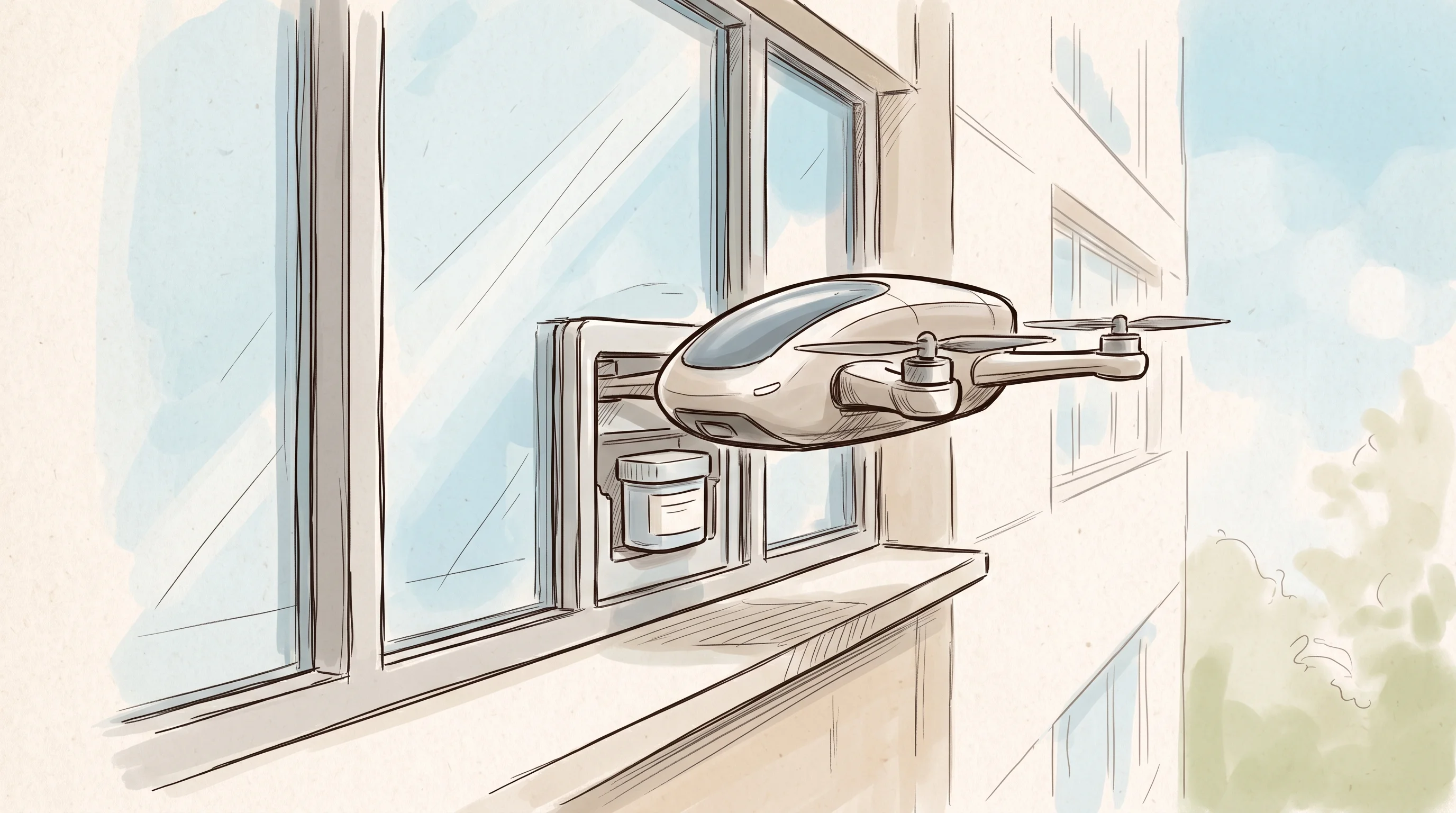
The window-docking approach sets Maple apart from competitors who've opted for rooftop landing pads or ground-based delivery points. It's a clever solution to a problem that plagues hospital logistics: how do you get time-sensitive materials to the right floor, the right wing, the right room without someone physically walking them through a building that might span several city blocks?
The drone relies on what Maple describes as GNSS-independent navigation—a combination of semantic Earth observation and visual-inertial odometry. Translation: the system doesn't need constant GPS signals to know where it is, a nontrivial capability in urban canyons where satellite reception gets spotty and precise positioning becomes genuinely difficult.
Christoph Busch, Maple's CEO and a former executive at Lilium (another German aviation startup with grand ambitions), founded the company in 2022. Maple went through ESA's BIC Bavaria incubation program between 2023 and 2025 and is now embedded in the ESA SURGEON project, which targets commercial operations in the fourth quarter of 2027 pending pilot outcomes—a timeline that gives the company some breathing room but also reveals how far even well-funded startups remain from routine service.
A Crowded Sky
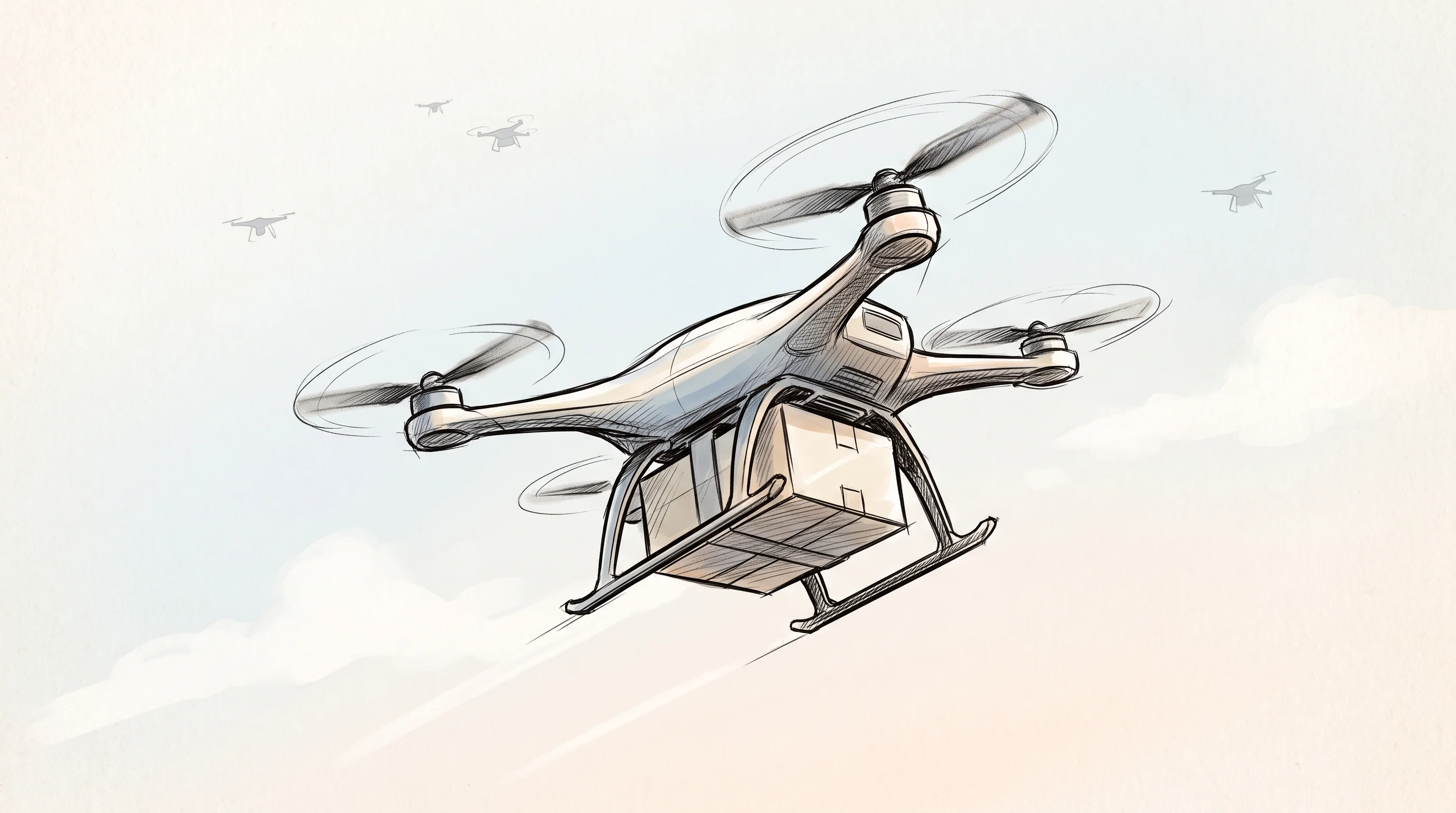
Maple enters a market where the winners haven't been determined yet, but the capital requirements have grown unmistakably steep. Zipline, the California-based drone delivery company, pulled in more than $600 million this past January to expand operations across American cities. Germany's Wingcopter secured €40 million from the European Investment Bank back in 2023. And in the U.S., UPS Flight Forward and Matternet established what they called the first FAA-certified drone airline for medical campus deliveries in 2019—though "airline" might be generous for routes measured in hundreds of meters rather than miles.
Each company is testing a slightly different hypothesis about what works: centralized hubs versus distributed networks, vertical takeoff versus fixed-wing efficiency, full autonomy versus remote oversight. Maple's window-docking concept is distinctive, certainly. Whether it's commercially superior depends on variables the company won't control—regulatory approval timelines, hospital procurement cycles, public acceptance of drones zipping past residential windows.
The startup also received a separate €2.2 million grant from Bavaria's Ministry of Economic Affairs, funding that extends through 2027 and supports a consortium project with Fraunhofer IVI, Technische Hochschule Ingolstadt, and Klinikum Ingolstadt. That effort focuses on single-rotor drone medical transport, a parallel research track that suggests Maple is hedging its bets on multiple aircraft configurations.
Full commercial rollout isn't expected until late 2027, with additional customers slated to come online throughout that year as the company expands beyond its initial Bavarian network. For now, the focus is narrower: proving the system works reliably enough that a hospital will pay for it. Everything else—the grand vision of urban logistics transformed, the promise of saving lives through faster delivery—depends on clearing that first, unglamorous milestone.
Whether Maple's drones become a routine sight outside Munich hospital windows or join the long list of promising aviation concepts that never quite scaled remains an open question. But the company has capital, regulatory clearance, and a problem worth solving. In the startup world, perhaps especially in aviation, that combination doesn't guarantee success. It just buys you the chance to try.


