

An open-source language model that learns continuously from scratch on a single consumer GPU with just 8GB of video memory has emerged from developer Alexey Borsky, whose GitHub repository contradicts the prevailing assumption that meaningful AI training requires high-end hardware. The project, dubbed Mini-AGI, arrives barely a week after Perplexity's new local agent reinforced that very assumption by demanding at least 24GB VRAM on Windows systems, according to Tom's Hardware reporting from September 15.
The timing highlights a widening rift in the on-device AI market. Consumer hardware has struggled to keep pace with research ambitions, creating what amounts to a class system in machine learning development. Those with enterprise budgets train on clusters; hobbyists and independent researchers make do with whatever graphics cards came with their laptops.
Hardware as Gatekeeping
Training AI models on consumer-grade equipment has become something of a litmus test. Microsoft's Copilot+ PCs demand NPUs delivering over 40 trillion operations per second and ship with Phi Silica, a compact language model built for inference rather than training, according to company documentation current through 2026. Apple Intelligence leans heavily on on-device processing with Private Cloud Compute as backup, what SVP Craig Federighi in June 2024 materials called "a new standard for privacy in AI." That framing remains Apple's official position.
Market projections suggest substantial growth ahead. The on-device AI sector stood at $10.7 billion in 2025 and could reach $75.5 billion by 2033, a compound annual rate of 27.8%, Grand View Research reported last June. A September 2026 estimate from 360iResearch pegged the 2024 market at $13.17 billion, forecasting 21.66% annual growth to $43.02 billion by 2030.
Yet consumer GPU capabilities have lagged. The r/LocalLLaMA community on Reddit routinely characterizes 8GB VRAM as "borderline" for larger dense models, a consensus visible in threads from August and September. Developers there typically recommend smaller architectures or quantized configurations instead. Meanwhile, adoption signals remain strong within those constraints: Ollama package downloads averaged 457,000 daily in August 2026, PyPIStats data indicates, while llama.cpp has accumulated 128,800 GitHub stars as of September, according to ecosyste.ms. Interest is healthy; hardware is the bottleneck.
Dissatisfaction as Motivation
Borsky launched Mini-AGI, he wrote in his Hacker News Show post, out of "deep dissatisfaction" that "we cannot really train even moderately big models (1B+ scale) on the consumer's hardware." His solution pairs a byte-level tokenizer-free architecture with dynamic mixture-of-experts growth and disk-based weight paging. Only 32 experts occupy VRAM at any given moment, roughly 109 million of the model's current 540 million parameters, the GitHub README explains.
"The model is genuinely yours: trained on your hardware, on your data, that keeps learning from every conversation you have with it," Borsky wrote. There is no separate fine-tuning phase. "Reading and being trained are the same event," according to the README retrieved September 22, 2026.
The approach represents a philosophical stance as much as a technical one. Borsky spent "a few weeks" brainstorming with Claude to develop batch-1 stream training with differentiated learning rates between trunk and experts, aiming to prevent catastrophic forgetting. Whether that mitigation works as claimed remains an open question without independent replication.
Academic work has accelerated around memory-constrained training. ACM Computing Surveys published a comprehensive review of continual learning for large language models in November 2025, covering regularization, rehearsal, and architecture expansion under tight memory budgets. A second arXiv survey from March 2026 examined continual learning methods spanning pretraining, fine-tuning, and alignment. K-Merge, presented at ACL 2026 in July, demonstrated online continual merging of LoRA adapters for on-device models under storage constraints.
Qualcomm CEO Cristiano Amon told TIME in January 2026 that "for inference, [the NPU] is the most efficient compute platform focused on density and power consumption." A June 2026 Qualcomm blog post labeled the year ahead the "year of agents," positioning agent-first computing across devices with efficient NPUs for local models.
What Works at 8GB
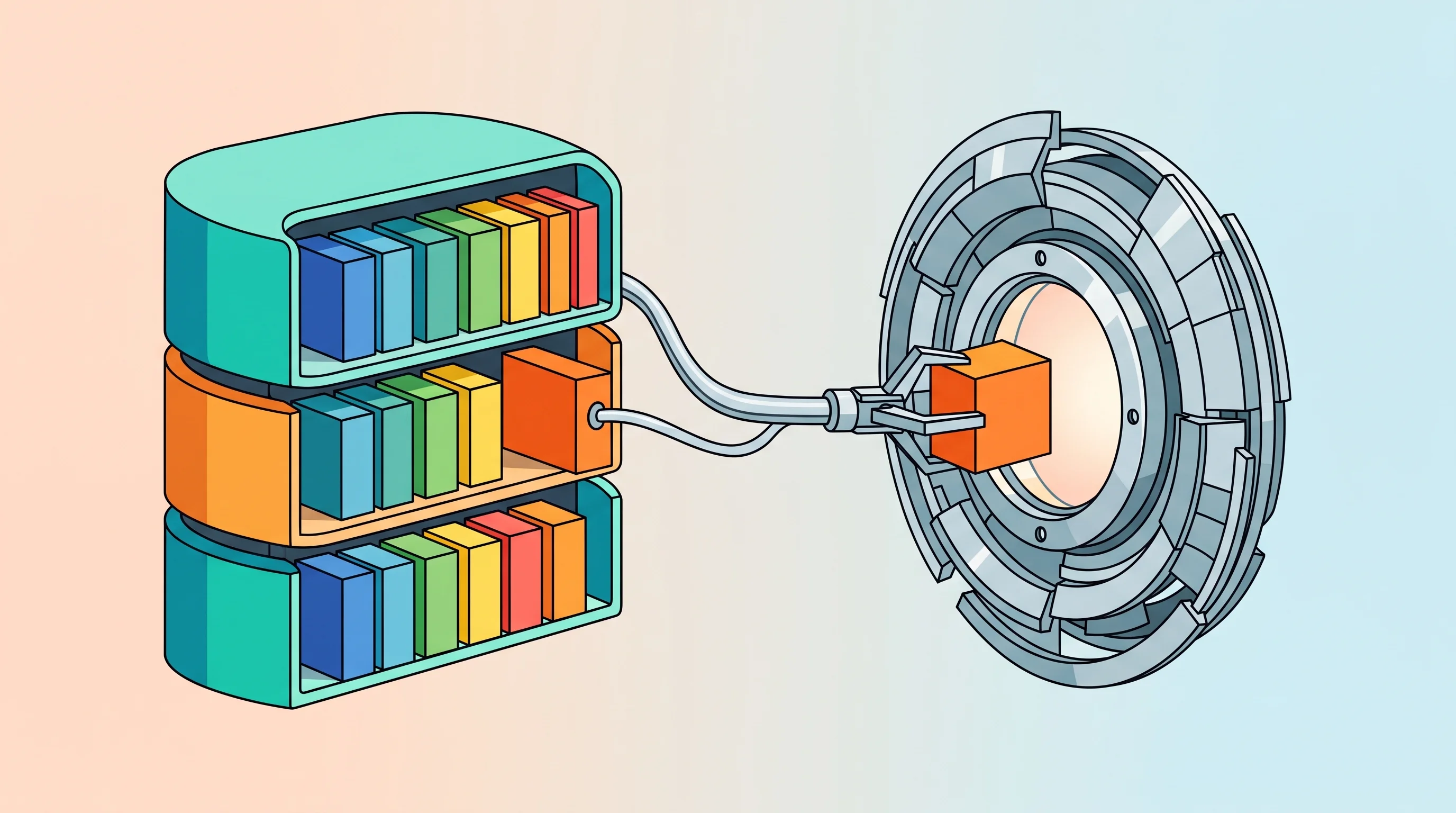
Mini-AGI demonstrates that training at this tier is feasible through architectural compromises. Weights live as ordinary files on disk. The system pages only the working set into VRAM. A growth controller expands the context window and expert pool on demand, reverting when divergence appears.
As of September 22, the model had processed 318.1 million characters across 169 experts with held-out loss of 0.8336±0.0331 nats per character (1.2026 bits per byte), according to repository tables. Compute cost runs about 2.4 gigaflops per byte. A scaling-law fit suggests loss scales as L∝D^-0.239 over post-warmup data. The project earned 263 points and 60 comments on Hacker News, with LocalModelWatch covering it September 21.
Liquid AI has shipped multiple on-device models throughout 2026. The LFM2.5 family spans 230M to 24B parameters, including a 1.2B "Thinking" variant that operates under 1GB, according to company blog posts from January through August. Qualcomm VP quotes in a May update highlighted demonstrations on low-end devices. An AMD collaboration in January showcased private on-device meeting summarization on Ryzen AI processors.
Several smaller projects illustrate where the 8GB boundary sits. An June 2026 Allsikt blog post detailed training a 25-million-parameter TinyStories model on 8GB VRAM. GitHub repositories from developers like varad-more and chrishayuk document nanoGPT training from scratch in 2026, typically in the 10M to 150M parameter range. Mamba3-SSM's PyPI page from August includes training estimates for an RTX 4060 8GB laptop, showing that state-space models can also target constrained configurations.
Memory Offloading Matures
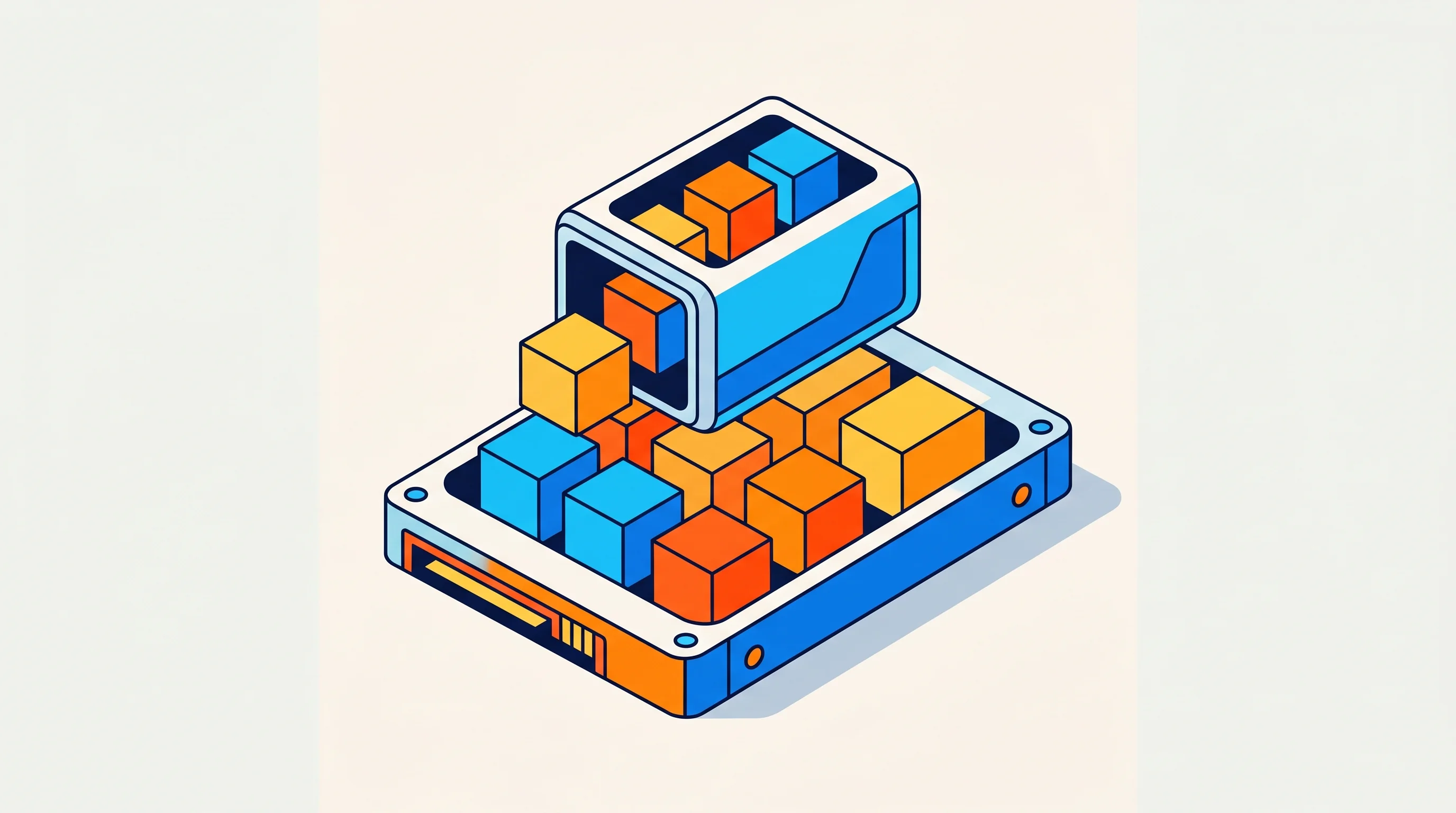
Techniques for working around VRAM limits continue evolving. DeepSpeed ZeRO-Offload and ZeRO-Infinity shift optimizer states and parameters to CPU or NVMe storage, with documentation current through 2026. SSDTrain, published in August 2024, demonstrated activation offloading to SSDs for limited-VRAM training scenarios. QLoRA with paged optimizers has become standard practice for 4-bit adapter training, according to MLflow tutorials crawled in September, though 7B adapter runs typically still need 24GB. Smaller 1B to 3B models or aggressive downscaling can target 8GB to 12GB.
Microsoft's 1-bit training research from 2024 and 2025 explores ternary weights that dramatically cut memory and energy requirements. The company reported training and inference speed gains with BitNet b1.58, though specialized kernels and hardware implications remain active research areas. FlashAttention-3, published in July 2024, continues delivering attention speed and memory improvements through low-precision kernels.
Regulatory pressures will shape how continual learning deploys in practice. The EU AI Act's transparency obligations entered application August 2, 2026, with transition periods extending until December 2 for systems placed on market earlier, according to AI Act Service Desk FAQs. GDPR's right to erasure demands machine unlearning protocols, an evolving research domain with efficiency-versus-guarantees trade-offs, as a 2023 Computer Law & Security Review paper and 2025 EDPS guidance note. NIST AI Risk Management Framework updates through 2026 emphasize post-deployment monitoring and change management for systems that learn continuously.
What Comes Next
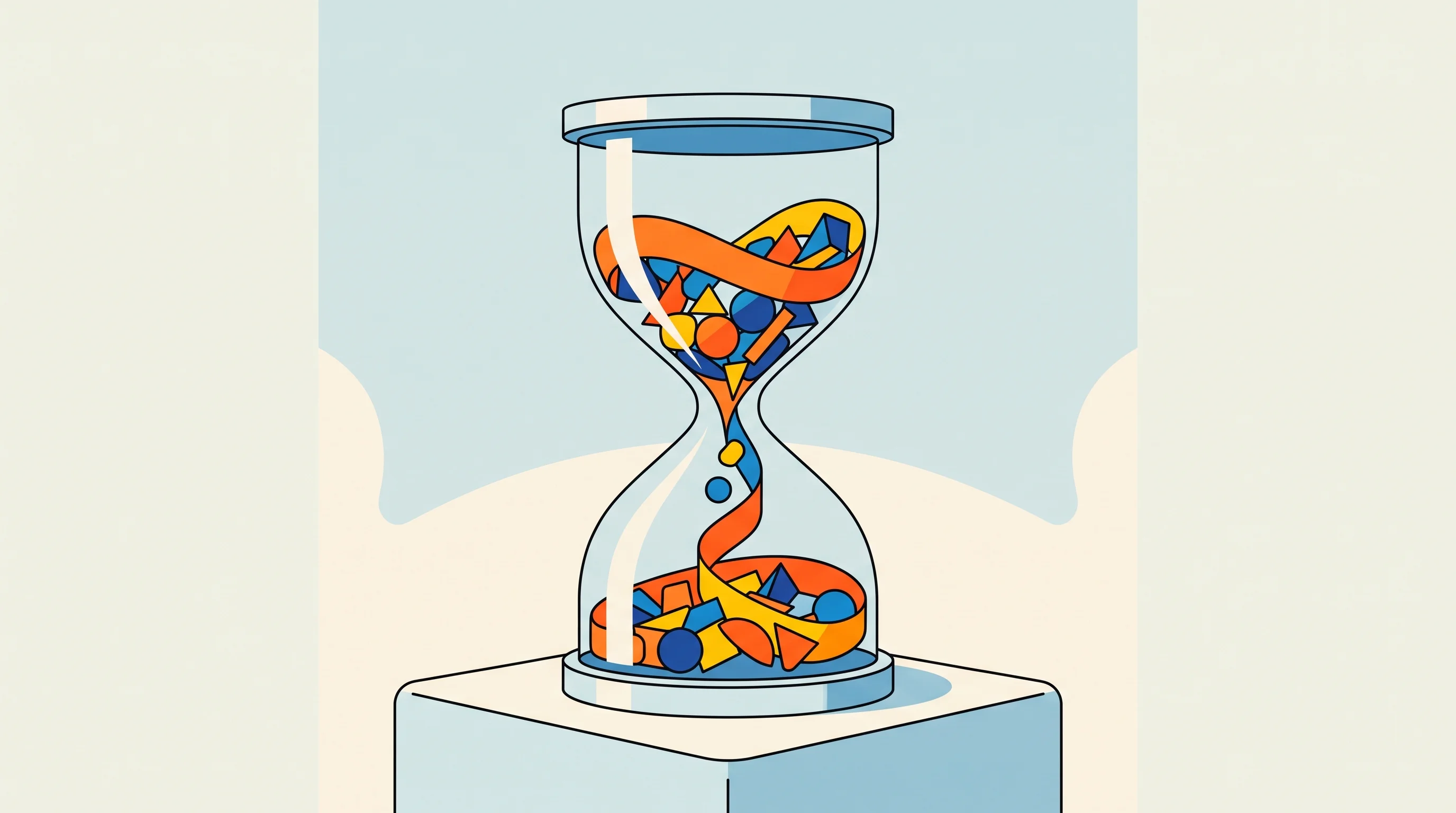
Borsky has not yet released Mini-AGI's weights. The README indicates they will be posted after a complete first pass over approximately 7.87 billion characters, with an estimated "couple of weeks" at current training speed. Hacker News commenters flagged the absence of formal continual-learning benchmarks and ablation studies. The claimed mitigation of catastrophic forgetting relies on internal held-out losses, with independent replication still pending.
The divide between 8GB possibilities and 24GB commercial requirements will narrow unevenly. Indie developers and researchers can now prototype continual learning systems on laptop GPUs through disk paging, dynamic architecture growth, and careful optimizer choices. Production deployments at scale still favor higher-memory configurations, though the engineering path has clarified considerably over the past six months.
Whether Mini-AGI's approach scales beyond proof-of-concept remains uncertain. Borsky's work offers a template, not a finished product. But perhaps that's the point: demonstrating that the barrier to entry is lower than conventional wisdom suggests, even if the road ahead requires patience and architectural creativity.


