

A Santa Monica startup wants to sell you a smartphone designed to make scrolling less appealing. The Minimal Company said Tuesday it raised $2,298,355 on Kickstarter for the Minimal Phone 2, an Android device with a physical QWERTY keyboard that ships in December for $599.
The company is betting that hardware, not just software tricks or personal resolve, can break smartphone addiction. Whether a physical keyboard and stripped-down interface actually change behavior remains an open question, but the campaign struck a nerve. According to co-founder Andre Youkhna, the project hit its funding goal within four minutes of launch.
Nearly half of U.S. adults report spending too much time staring at their phones, according to Pew Research Center data from a survey conducted between May and June and published in September. Federal health officials issued warnings this summer about excessive screen use among young people. The Minimal Phone 2 positions itself as a middle path for people who want to reduce screen time without surrendering modern connectivity entirely.
The device runs full Android with Google Mobile Services certification, which means users can install any app they want. That's a departure from more austere alternatives like the Light Phone, which deliberately omits an app store. But The Minimal Company ships its device with proprietary software called Minimal OS that consolidates email, text messages, calls, and calendar events into a single interface.
Built-in attention controls let users impose grayscale mode, set wait timers before apps open, cap daily limits on individual apps, and establish quiet hours. The strictest settings require a factory reset to disable, according to the company. "Minimalism is a dial, not a switch," co-founder Andre Youkhna wrote in the company's journal on September 7.
The hardware specs suggest a device built for endurance rather than flashiness. The phone features a 3.92-inch OLED display running at 90Hz, MediaTek's Dimensity 8300 processor, and 12GB of RAM. The backlit QWERTY keyboard comes in five physical layouts at launch: English QWERTY, French AZERTY, German QWERTZ, Korean Dubeolsik, and Arabic.
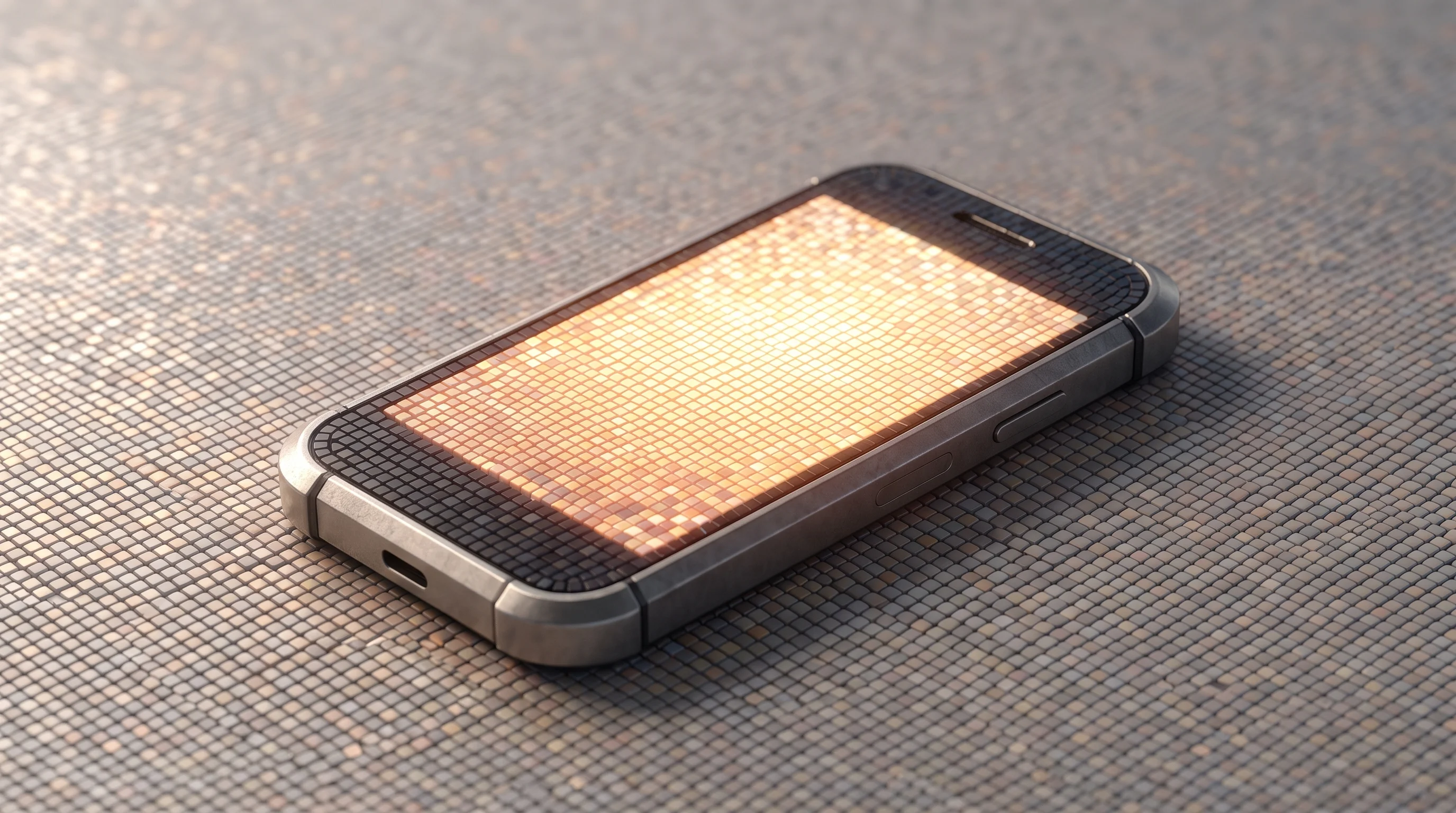
The company upgraded the keys to touch-capacitive switches in September and increased battery capacity from an initially planned 3,000 mAh to 3,600 mAh, according to a company journal entry. The aluminum unibody measures 122.6 by 72 by 9.48 millimeters and includes a 3.5mm headphone jack, a rarity in modern smartphones. Other features include dual speakers, a side-mounted fingerprint sensor, and a programmable physical switch.
Camera specifications hit 50 megapixels on the rear and 20 megapixels on the front. The phone supports 5G sub-6, Wi-Fi 6E, Bluetooth 5.4, NFC, and dual SIM capability through one physical slot plus eSIM.
The Kickstarter campaign ran from August 10 through September 9 and closed with $2,298,355 from 3,416 backers. "We launched Minimal Phone 2 with no VC backing, no massive company behind us, completely bootstrapped," Youkhna wrote on LinkedIn. The company was founded in 2023 and lists between two and 10 employees on LinkedIn. Youkhna and co-founder Armen Youssefian lead the operation.
Preorders on the company website cost $599 for 256GB of storage with 12GB of RAM and $699 for 512GB with 12GB of RAM, representing a $100 discount from the planned retail price. After the preorder window closes, the 256GB model will drop to 8GB of RAM while the 512GB version retains 12GB. The team plans to travel to China on September 21 to finalize production details with manufacturing partners, according to a company journal post.
The Minimal Phone 2 enters a niche but expanding market of devices designed to resist addictive app patterns. Light launched the Light Phone III in March with a camera but maintained its no-app-store philosophy. Punkt's MP02, a 4G basic phone from 2018, remains available for purchase. Unihertz shipped the Titan 2, a 5G QWERTY Android phone aimed at keyboard enthusiasts, earlier this year. Clicks is developing the Communicator, another compact QWERTY device that surfaced in tech coverage alongside the Minimal Phone 2 in August.
The company previously shipped a first-generation phone that used E Ink instead of OLED, though Reddit posts from earlier this year documented delivery delays on that device. December shipping remains the current estimate for the new model, though backers of crowdfunded hardware projects may recall that timelines tend to slip.
For privacy-focused buyers, the company said it will release an official Google-free ROM that users can flash onto the device later. The bootloader unlocks, giving technically inclined customers full control over the software.
Whether a physical keyboard proves sufficient to change deeply ingrained scrolling habits is perhaps the larger experiment here. The Minimal Company is wagering that making interactions slightly more deliberate will prompt users to reconsider reflexive phone checking. The crowdfunding numbers suggest at least a few thousand people are willing to test that hypothesis.


