

The pitch, at first blush, borders on the absurd. Harvest proteins from ticks, worms, viruses—organisms that most of us spend our lives trying to avoid—and deploy them as therapies for autoimmune disease. Yet Ditto Biosciences, a three-person outfit fresh from Y Combinator's recent batch, insists that parasites have already done the heavy lifting. Over millions of years, these creatures evolved exquisite molecular countermeasures to suppress host immune systems without getting evicted. Why not, Ditto's founders ask, borrow those tools?
Seven months after incorporation in May 2025, the company says it has analyzed over a million parasite and viral proteins. That's the claim, anyway. Co-founder Adair Borges—a UCSF-trained parasitologist and virologist who helped pioneer anti-CRISPR technologies—describes the strategy as starting with "molecules that already work in humans." The platform combines AI-driven screening with immunogenicity assays and a tissue biobank designed to map how real human immune systems respond to these foreign proteins.
It's a wager that evolution did the R&D, and Silicon Valley can monetize it.
Whether that bet pays off is another matter entirely.
A Market Ripe for Disruption (Or Just Crowded)
Autoimmune diseases represent both crushing medical burden and serious money. Roughly 4.6% of the U.S. population—about 15 million Americans—has been diagnosed with at least one autoimmune condition, per a Mayo Clinic analysis of electronic medical records covering January 2011 through January 2022, published in December 2024. The NIH, using broader criteria, pegs the figure closer to 8% when you factor in undiagnosed cases, according to a NIAID page updated in May 2024.
Globally, spending on autoimmune therapies is projected to approach $178 billion by 2026, according to IQVIA's outlook. AbbVie's immunology portfolio alone pulled in $30.406 billion in 2025, the company reported in February. Skyrizi, an IL-23 inhibitor, led the pack at $17.562 billion. Rinvoq, a JAK inhibitor, contributed $8.304 billion. And Humira—the aging TNF blocker now battered by biosimilar competition—still managed $4.540 billion.
That revenue mix tells a story. The market is migrating away from first-generation TNF inhibitors toward mechanisms that promise sharper targeting: IL-23 inhibitors, JAK inhibitors, and increasingly exotic modalities. Meanwhile, payers are forcing substitution toward cheaper biosimilars, squeezing margins on older drugs and lighting a fire under pharma to find differentiated approaches. In recent years, autoimmune indications have accounted for over 90% of all immunology sales worldwide.
The commercial opportunity is obvious. But so is the medical need. Many patients cycle through multiple biologics, encountering side effects, waning efficacy, or outright treatment failure. That's created space—perhaps more than the industry expected—for companies exploring something fundamentally different: not just blocking immune pathways, but reprogramming tolerance itself.
Nature's Immune Hackers
Parasites don't survive inside hosts by accident. To persist for months or years without getting annihilated by the immune system, organisms like ticks, worms, and certain viruses have evolved molecular arsenals—proteins that dampen inflammation, divert immune surveillance, hijack regulatory circuits. These molecules, refined across evolutionary timescales, often mimic or modulate host cytokines and immune receptors with a specificity that's hard to replicate in a lab.
Take OmCI, a protein from the soft tick Ornithodoros moubata. It inhibits both the complement component C5 and leukotriene B4, an inflammatory mediator—dual activity that's attracted interest in complement-driven diseases. Akari Therapeutics developed a recombinant version called nomacopan and received encouraging pre-IND feedback from the FDA for a long-acting formulation targeting geographic atrophy, an eye disease. Earlier clinical work explored ocular allergies and dermatology applications.
Or consider ES-62, derived from the filarial worm Acanthocheilonema viteae. Preclinical data published in Frontiers in Tropical Diseases showed efficacy in arthritis models, building on studies dating back to 2014 that demonstrated protective effects in allergy and autoimmune conditions. Researchers have even synthesized small-molecule analogs that retain activity, though those programs remain in early stages.
Then there are hookworm-derived proteins—AIP-1 and AIP-2—which have shown promise in mouse models of colitis, asthma, and cardiac inflammation. These molecules appear to promote regulatory T-cell responses, potentially restoring immune balance without broad suppression. Paragen Bio, an Australian biotech, secured funding in 2018 to develop AIP-2, though public updates have been sparse.
A review published in the Biochemical Journal cataloged an even broader landscape: TGF-β mimics from helminths, viral TNF decoys from poxviruses, chemokine-binding proteins evolved to evade host defenses. The structural diversity is staggering. The functional specificity often exceeds that of molecules designed from scratch.
But history offers a cautionary tale.
Early attempts to harness the so-called "hygiene hypothesis" through live helminth therapy stumbled badly. Trichuris suis ova—pig whipworm eggs—showed a tantalizing signal in a small 2005 ulcerative colitis trial. But when Coronado Biosciences ran a 250-patient Phase 2 trial in Crohn's disease, the study failed its primary endpoint in October 2013. The broader field learned a hard lesson: whole organisms introduce too many variables—dosing consistency, patient compliance, unpredictable immunogenicity.
The pitch now, from Ditto and others, is that you can extract and engineer specific proteins, sidestepping the organism itself. Whether that solves the problem or just introduces new ones remains an open question.
From Evolutionary Biology to Clinical Validation

If Ditto represents the discovery frontier, a handful of other companies are further along—testing whether parasite-inspired biology actually works in humans. The progress is uneven. The capital keeps flowing anyway.
Akari's nomacopan remains the furthest-advanced tick-derived candidate. The company has run early-stage clinical work in atopic keratoconjunctivitis and other inflammatory conditions. Recent filings suggest it's preparing to file an IND for a long-acting formulation in geographic atrophy. If the timeline holds, human data for the next-generation molecule could emerge this year.
Meanwhile, the broader autoimmune space is seeing an influx of novel modalities that share conceptual DNA with the parasite-mining approach—if not the actual source material. COUR Pharmaceuticals uses antigen-containing nanoparticles to induce tolerance, publishing mechanistic data in Science Advances and closing a $105 million Series A. The company has struck collaborations with Genentech and Takeda. Its liver-targeted particles aim to "teach" the immune system to ignore specific antigens—a different mechanism, but the same endgame.
Anokion reported positive symptom data from a Phase 2 trial of KAN-101 in celiac disease early last year. MRM Health, developing a live microbial consortium for ulcerative colitis, presented encouraging data at Digestive Disease Week and raised a €55 million Series B.
And then there's CAR-T, the cancer therapy now pivoting hard into autoimmune disease. Multiple publications documented deep remissions in lupus, systemic sclerosis, and other B-cell-mediated conditions. Kyverna Therapeutics is targeting a biologics license application submission for KYV-101 in stiff-person syndrome, which could mark the first FDA approval of a CAR-T for a non-oncology indication. The FDA's decision to eliminate REMS requirements for autologous CAR-T products may ease logistics, though a boxed warning for T-cell malignancies remains on all CAR-T labels.
The landscape, in other words, is getting crowded. Fast.
The AI Wild Card
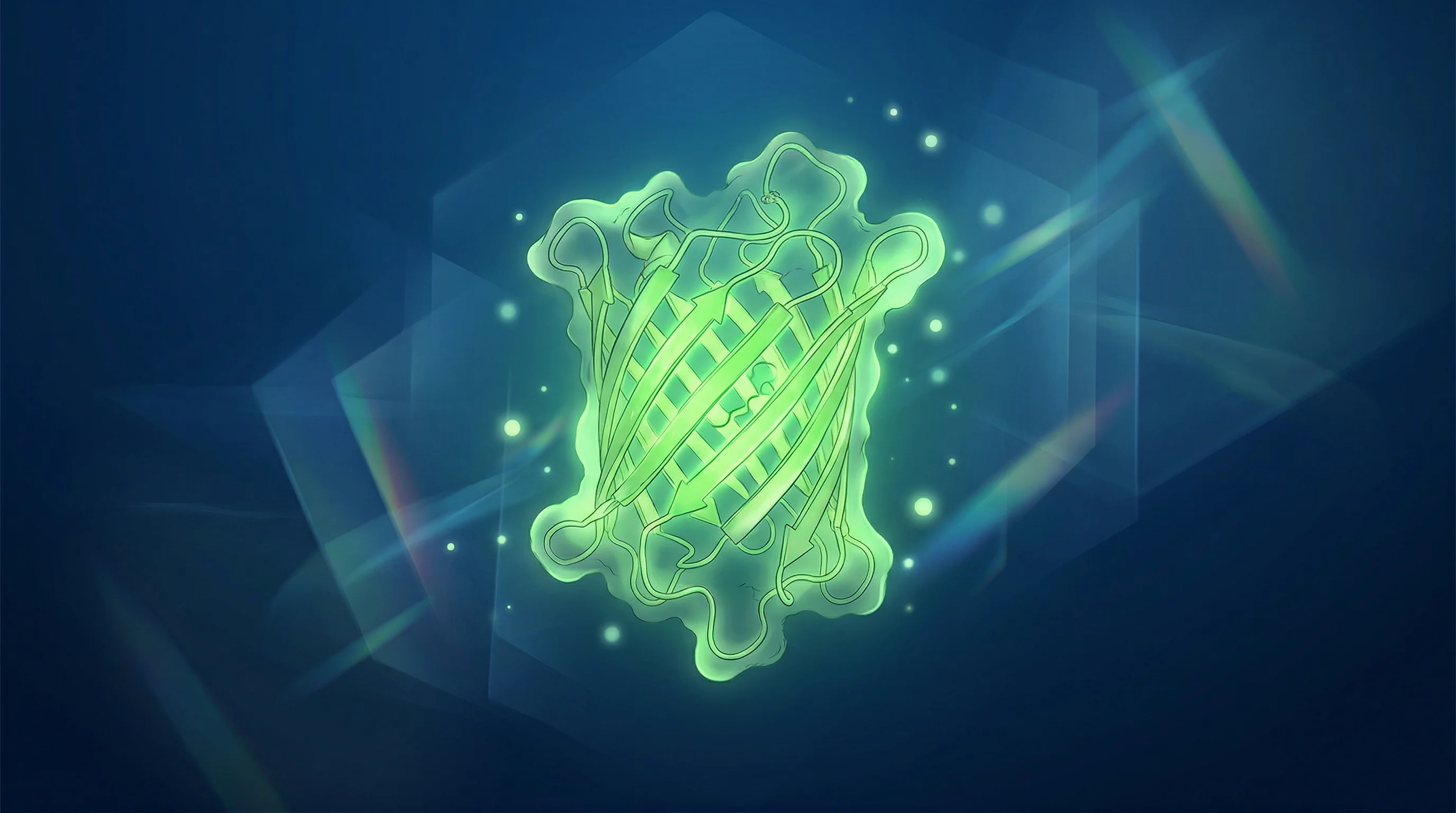
Ditto's pitch hinges not just on nature's library, but on AI's ability to rapidly sift it. In early 2025, EvolutionaryScale published ESM3, a multimodal protein language model, in Science. The system generated a novel fluorescent protein—esmGFP—that the authors claimed represented 500 million years' worth of evolutionary divergence from known GFPs. Code, model weights, and API access were released, accelerating adoption across biotech.
For a startup like Ditto, such tools can compress timelines. Instead of laboriously screening parasite proteins one by one, AI can predict which scaffolds possess drug-like properties—solubility, stability, low immunogenicity risk—before anyone synthesizes a molecule. The company's tissue biobank and immunogenicity assays suggest it's also building proprietary datasets to train models on human immune responses to foreign proteins. That's a critical step in derisking clinical development.
This convergence of computational biology and evolutionary medicine is relatively new. A decade ago, mining parasite genomes for therapeutics would have required years of painstaking structural biology. Today, a three-person team can analyze over a million sequences in months. At least in silico.
Whether that speed translates to validated leads is another question.
Immunogenicity—the tendency of engineered proteins to provoke anti-drug antibodies—remains the persistent thorn. FDA guidance dating back to 2014 outlines frameworks for assessing ADA risk, and workshop proceedings from earlier this year highlighted ongoing concerns for complex peptides and oligonucleotides. Even molecules refined by evolution inside human hosts can trigger immune responses when administered at therapeutic doses in engineered form. Ditto's emphasis on mapping "real-world immune memory" to parasite proteins hints at awareness of this hurdle. But no preclinical data has been disclosed yet.
What Comes Next

Ditto Biosciences has not announced a lead program, external funding beyond Y Combinator, or preclinical validation. The team of three—Borges, Dennis Sun (Harvard and Berkeley-trained, previously chief of staff at an early-stage biotech), and Emily Weiss (a molecular and computational biologist with stints at Illumina and DuPont)—is still in the discovery phase.
For now, the company exists as a hypothesis: that the fastest route to breakthrough autoimmune therapies may start with organisms that have already solved the immune-evasion puzzle.
Several forces could shape this trajectory. The NIH launched its first NIH-wide Strategic Plan for Autoimmune Disease Research in July 2025, potentially steering grant funding toward precision immunology and mechanistic research. That could benefit academic collaborators feeding the discovery pipeline. On the regulatory side, the FDA's evolving guidance on immunogenicity and willingness to accommodate novel modalities—CAR-T for autoimmune diseases being the most striking example—signals an agency open to new approaches. If the data supports them.
Market dynamics matter too. As AbbVie's recent earnings illustrate, the autoimmune drug landscape is bifurcating. Legacy TNF inhibitors are eroding under biosimilar pressure, while newer mechanisms and emerging modalities compete for differentiation. Payers are increasingly sophisticated, demanding real-world evidence and cost-effectiveness. A parasite-derived biologic would enter a crowded, high-stakes arena.
The most immediate test case may not come from Ditto, but from Akari's nomacopan. If the tick-derived molecule advances into Phase 1 trials this year and demonstrates tolerability and target engagement, it could validate the broader thesis. Conversely, if immunogenicity or off-target effects derail development, it would underscore the gap between evolutionary precedent and pharmaceutical success.
For Ditto, the path forward likely involves publishing preclinical proof-of-concept data, securing seed or Series A financing, and selecting a lead indication where parasite-derived immunomodulation offers a clear mechanistic advantage. Inflammatory bowel disease, lupus, rheumatoid arthritis—all plausible targets, given the academic precedent. But the company will also need to answer harder questions.
Does engineering a tick protein into a drug strip away the evolutionary elegance that made it work in the first place? Can a molecule optimized for immune evasion in a parasitic context be safely dosed in chronic human disease? And perhaps most pressingly: Can three people with laptops and a bold idea compete with pharma giants spending billions on the same problems?
The answers will determine whether mining parasites for cures is a clever pivot in drug discovery—or just another evolutionary dead end.


