

Mosaic Intelligence Labs, a surgical robotics startup, came out of stealth on Nov. 10 with $47 million in seed funding, which The Next Web reported was raised across two seed rounds. The company is building AI-guided catheters for blood-vessel procedures.
Who backed it
The Next Web, citing reporting by The Information, identified 8VC and Fundomo as the lead investors. Mosaic's Business Wire release is less specific. It assigns no lead roles and does not say which firm led which round, though it names Lingotto Innovation and Obvious Ventures among its backers and describes that list as non-exhaustive.
CEO Ileana Pirozzi also named A in her launch post, and A lists Mosaic Intelligence in its portfolio.
Much else about the financing remains opaque. Either the company declined to disclose them or the materials reviewed did not provide them: a valuation, round-by-round amounts, closing dates, ownership stakes and board appointments. Nor is there any breakdown of how the money will be divided among staffing, hardware development, clinical work and manufacturing.
What Mosaic is building
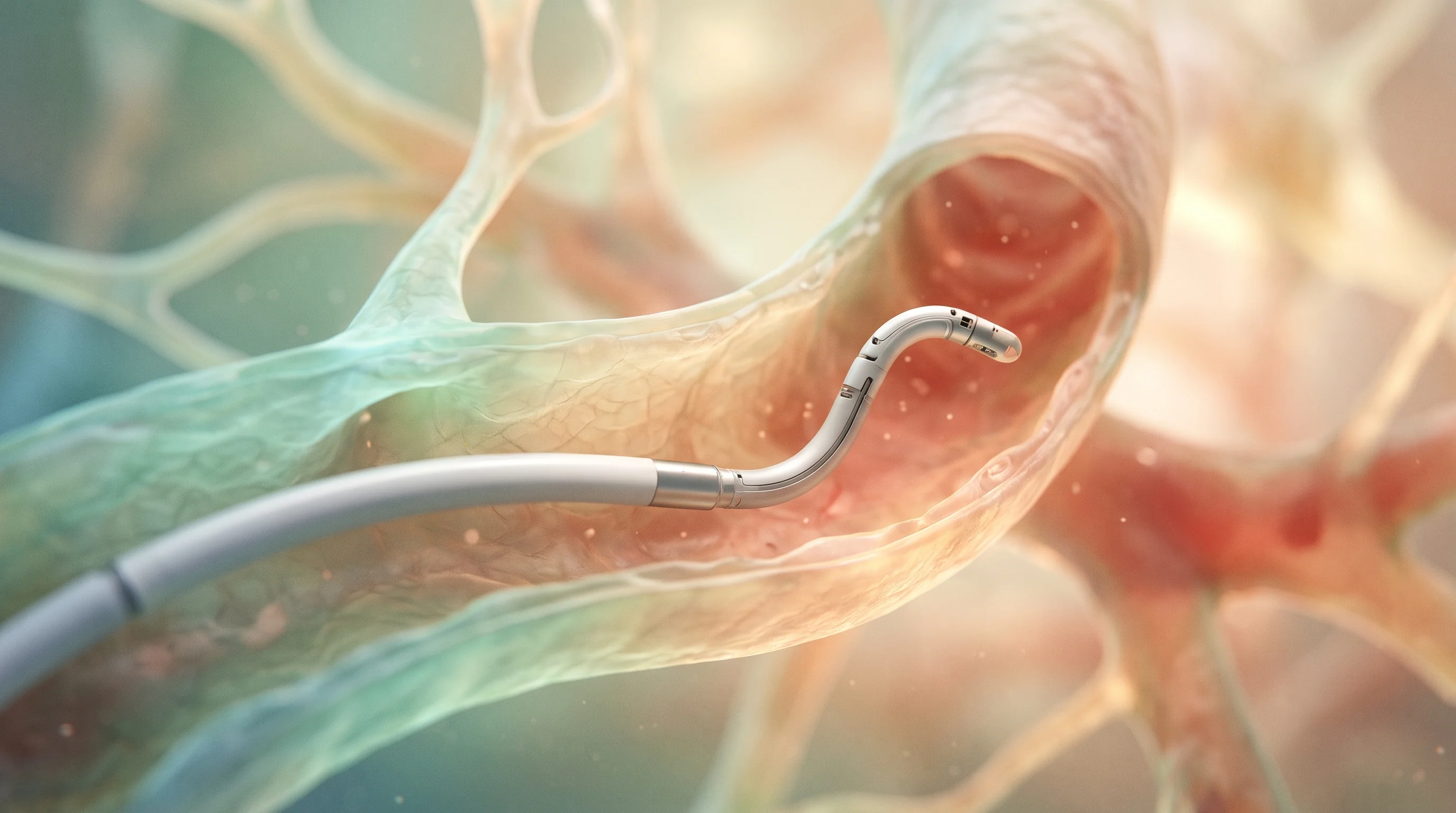
According to The Next Web, Mosaic is developing a semi-autonomous catheter whose tip bends to follow the intended vascular route while the surgeon advances it. That is a narrower proposition than fully autonomous surgery, and the distinction matters: the surgeon stays in the loop.
The company release describes a continuously updated three-dimensional view of anatomy and instrument location as the intended display. Longer-term, it mentions treatment categories such as targeted delivery of drugs, energy, biologics and other therapies.
Mosaic says it hopes to reduce, and eventually replace, reliance on ionizing X-ray guidance. That is a goal, not a documented present capability. The funding announcement likewise frames safer navigation and lower radiation exposure as development objectives rather than demonstrated patient-outcome findings.
The team
Pirozzi is CEO and co-founder. Dr. Alison "Ali" Kight Mackanic is co-founder and CTO, according to the release; earlier academic and entrepreneurial sources refer to her as Ali Kight.
The company said team members previously built surgical systems used to treat more than 20 million patients, and its release also cites experience building rockets, cars, artificial hearts and drugs. That wording applies to the broader team's prior work, not only the founders'. All of it amounts to company claims, not clinical validation.
Pirozzi told The Information, in an interview reported by Rocket Drew, that Mosaic is collaborating with NVIDIA on simulation. No separate NVIDIA announcement turned up, and the contract value and scope are unknown.
Competitors
Several companies are pursuing robotic navigation for vascular procedures, and their recent financings are smaller than Mosaic's disclosed total.
- Magnendo, an MIT spinout developing magnetic robotic navigation for neuro-endovascular intervention, announced an $18 million Series A on July 24, 2026, led by Penumbra.
- Nanoflex Robotics, an ETH Zurich spinout, announced €12.5 million in EIC Accelerator financing on June 24, 2026, consisting of a €2.5 million grant and €10 million in equity.
- XCath, which works on neuro-endovascular robotics and remote intervention, announced a $30 million Series C on March 12, 2026, co-led by Crescent Enterprises and Dr. Fred Moll. The company reported $92 million in cumulative funding at that time.
In a Nov. 11 article, Tech Funding News also named Medical Decision Alliance, Uncovr, Caresyntax and ForSight Robotics as adjacent companies, working respectively in surgical guidance, video reporting, operating-room data and ophthalmic robotics.
What's next

Mosaic has yet to disclose pricing, a reimbursement strategy, revenue, a commercial launch date or a regulatory clearance timeline. Its release also mentions hiring, though the materials reviewed give no targets. For now, the company's claims rest on its backers' confidence and its team's résumés, with clinical evidence still to come.


