

Daniel Ek spent years convincing the world to stream music instead of buying albums. Now he's trying something considerably harder: persuading healthy people to pay for annual body scans they may not think they need.
Neko Health, the preventative care startup Ek co-founded with CEO Hjalmar Nilsonne back in 2018, announced a $700 million Series C round on July 15, 2026, led by Lightspeed Venture Partners with O.G. Venture Partners co-leading. The investor roster reads like a dinner party you'd never get invited to: Mark Zuckerberg and Priscilla Chan, Tim Ferriss, Maria Sharapova, will.i.am. Atomico, General Catalyst, Lakestar, and several others also piled in.
The timing of the raise wasn't random. Two months earlier, on May 20, the FDA granted 510(k) clearance for Neko's Derma-2 telethermographic system—a critical regulatory checkpoint for the company's planned entry into New York City. That clinic, announced with some fanfare in January, was still in "coming soon" limbo as of early August, though the company insisted it would open before year-end.
For Ek, this represents a very different kind of disruption. Spotify upended an industry by making content cheaper and more accessible. Neko is asking people to pay out-of-pocket—prices haven't been disclosed for the U.S. market, though Nilsonne told Bloomberg in March that U.S. pricing would "likely be higher" than the £299 charged in London—for preventative scans that might reveal nothing at all.
Or, occasionally, something life-threatening.
The Experience: More Apple Store Than Hospital
Walk into a Neko clinic and the vibe is deliberate: minimalist Scandinavian design, no waiting rooms that smell like anxiety. The whole thing takes about an hour.
You spend roughly 15 minutes moving through different scanning stations. The technology is proprietary, radiation-free, and decidedly not an MRI, though the company operates in overlapping territory. Sensors capture data on skin, cardiovascular function, blood markers, body composition. Then you sit down with a clinician who walks through what they found, on the spot. You leave with a digital report and, if necessary, referrals for follow-up.
According to Neko's U.S. product documentation, the platform incorporates an almost dizzying array of measurements: blood pressure (both brachial and ankle), ankle-brachial index, SpO2, ECG, respiratory rate via photoplethysmography, estimated aortic pulse wave velocity using laser-radar systems. There's dermatoscopy and thermography. Point-of-care labs test HbA1c, lipids, C-reactive protein, albumin-to-creatinine ratio, glucose, hemoglobin. Some cardiovascular imaging relies on third-party ultrasound devices. Two in-house systems, cleared under EU MDR Class I regulations, handle full-body skin imaging—both color and thermographic—plus tissue hemoglobin and oxygen saturation inspection.
A June 2026 product update added body composition metrics (visceral fat, body fat percentage) derived from proprietary imaging, along with Apple Health integration for pulling in wearables data: steps, sleep patterns, heart rate variability. Next-generation devices—Derma-2, Echo-2, Spectrum-2—began rolling out first in Stockholm.
It's a lot of tech for a company that doesn't do traditional imaging.
The Numbers: Early Traction, But Questions Remain
By mid-2026, Neko had scanned more than 100,000 people across the UK and Sweden. Another 350,000 were on waitlists or had registered interest—though how many of those would convert to paying customers remained unclear.
Here's the number that matters, though: 75% of patients who complete a scan rebook and prepay for next year's appointment before they leave the clinic. That's not just satisfaction. That's behavioral buy-in.
The company operates multiple London locations (Marylebone, Spitalfields, Covent Garden, Victoria), plus clinics in Manchester (opened September 2025, capacity for 20,000 annual scans) and Birmingham (opened January 2026, up to 25,000 scans annually). Stockholm remains headquarters, with clinics at Östermalmstorg and at least one more in development.
Pricing in the UK sits at £299. In Sweden, 2,750 SEK. Nilsonne told Bloomberg in March that U.S. pricing would "likely be higher," citing labor and real estate costs, but declined to be more specific. Industry observers have speculated anywhere from $500 to $1,000, though nothing official has been confirmed.
Data published by Neko Health in June 2025 from Stockholm's 2024 cohort offers a glimpse at what Neko actually finds. Among 4,362 members scanned that year, 81.3% had no issues requiring follow-up. The remaining 18.7% were flagged for further evaluation. Of those, 1.2%—54 people—had life-threatening conditions detected: 25 cases of melanoma, 19 severe cardiovascular issues, 8 severe metabolic conditions.
Among 1,477 returning members in 2024, 77% of those previously diagnosed with serious or life-threatening conditions were either in good health or had their conditions under control at their second scan.
Whether these detection rates justify annual screening for asymptomatic populations is, to put it mildly, an open question among researchers and healthcare observers. Neko's not making that clinical claim outright, but the data suggests some version of it.
The FDA and the U.S. Gambit
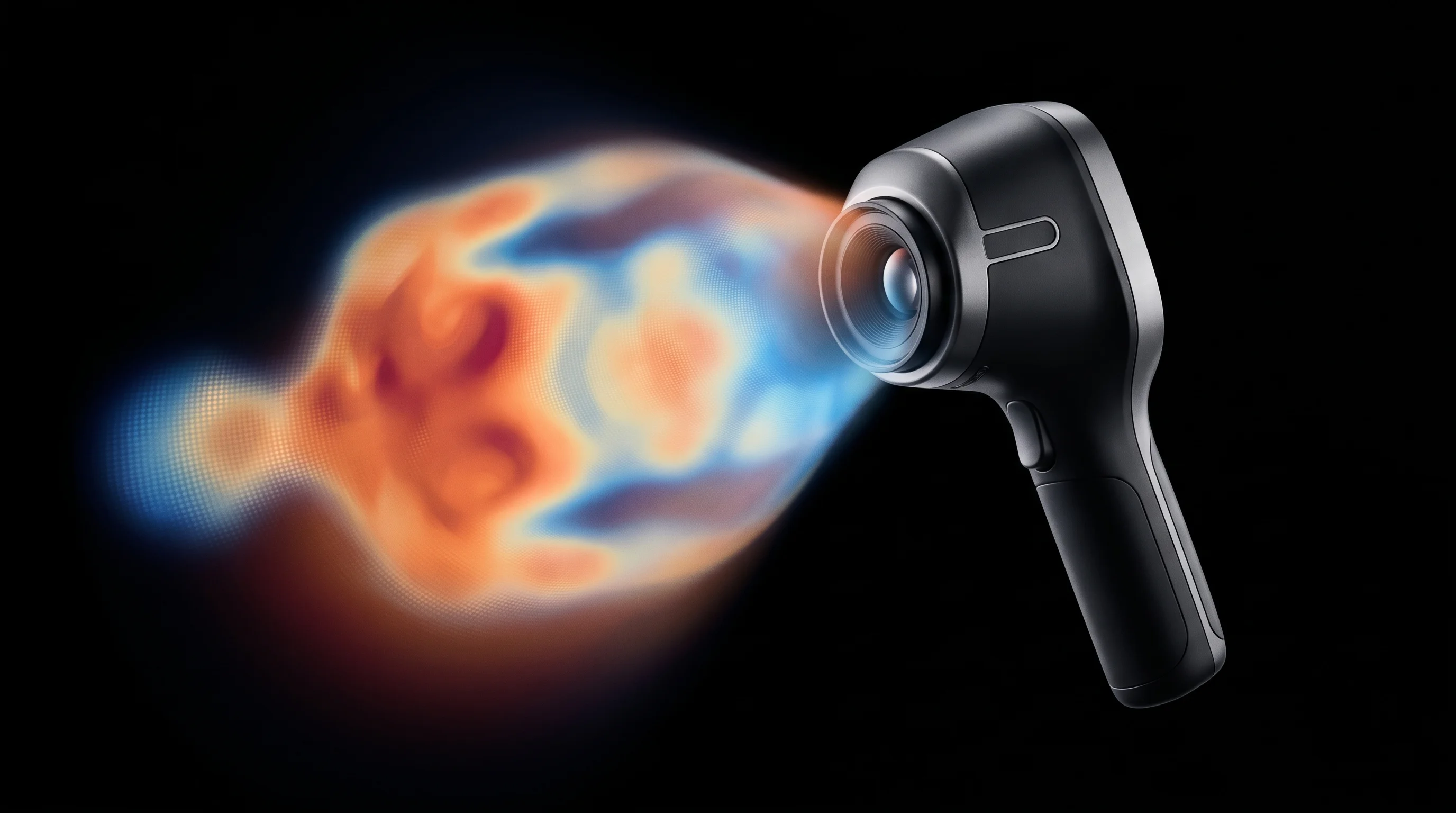
The May 2026 FDA clearance for the Derma-2 system (K253911) represents Neko's first U.S. regulatory win. The device is classified as a Class I telethermographic system—adjunctive imaging for relative temperature patterns, not diagnostic thermometry.
That's one device. Neko's platform relies on several proprietary systems (Spectrum-2, Echo-2, Neko Lens), and it's unclear whether additional FDA submissions are pending or approved. Many of the third-party devices Neko uses already carry EU MDR Class IIa designations, but those don't automatically translate to U.S. market access. There's a gap, potentially a wide one, between what Neko offers in Europe and what it can legally deliver in America.
Dr. Sunita Mishra, formerly with Amazon Health, joined as Chief Medical Officer in March 2026—a hire clearly designed to build clinical credibility stateside. The New York Times reported in January that some Americans had flown to London for scans rather than wait for the NYC clinic to open. Whether that's desperation or just disposable income is hard to say.
The Competitive Landscape: MRIs, Skepticism, and Market Positioning
Neko's entering a U.S. market that's already seen full-body MRI screening attract both fervent believers and sharp criticism.
Prenuvo, probably the most visible player, charges $3,999 for its Executive Membership scan ($4,499 in New York), with a $2,499 Comprehensive option, according to the company's FAQ. Ezra offers tiered membership packages; SimonMed has launched longevity-focused MRI bundles through its simonONE program. The market exists, in other words, even if it's still a niche one.
The American College of Radiology, however, maintains there's "insufficient evidence" to recommend total-body MRI for asymptomatic patients—a position it's held since 2023 and hasn't budged from. That hasn't killed the direct-to-consumer imaging market, but it casts a long shadow over anyone trying to scale preventative screening.
Neko's non-MRI approach sidesteps some of those concerns while introducing others. The company isn't doing deep imaging of organs; it's doing broad-spectrum surface and functional measurements. It's a fundamentally different value proposition: early detection across multiple systems rather than detailed anatomical imaging. Whether that proves more or less clinically useful than MRI remains to be seen, though the 75% rebook rate suggests customers aren't waiting for peer-reviewed validation.
The Money Trail

The $700 million Series C follows a $260 million Series B in January 2025—Axios pegged that round at a $1.8 billion valuation, though the company didn't confirm—and a $65 million Series A in July 2023. Lightspeed led the B and C rounds; General Catalyst and Lakestar have participated across all three.
David Ofer from O.G. Venture Partners is expected to join the board, pending regulatory approval. Bejul Somaia of Lightspeed joined after the Series B.
The capital is earmarked for U.S. expansion and "global scale-up," though specifics remain vague. More U.S. cities beyond New York? Deeper European penetration? The company's press materials offered little clarity, which is either strategic or indecisive.
The Harder Question: Does Prevention Actually Scale?
Preventative care sounds like common sense until you try to build a business around it. Most healthcare systems—certainly the American one—reward intervention, not prevention. Neko's model requires people to pay out-of-pocket, annually, for scans that may find nothing actionable. That's a tough sell in most markets.
The 75% rebook rate suggests Neko has solved some version of the value equation, at least in markets where £299 or 2,750 SEK feels reasonable. The U.S. price point will be make-or-break. Too high, and Neko becomes a luxury product for the worried wealthy—biohackers and longevity enthusiasts with disposable income. Too low, and the unit economics might not support the capital-intensive clinic buildout the company clearly has in mind.
The wearables integration and body composition features hint at something broader: Neko as a longitudinal health platform, not just an annual checkup. If the company can demonstrate that year-over-year tracking catches deterioration early enough to meaningfully alter outcomes—and ideally, reduce downstream healthcare costs—that's a very different business from episodic screening. More defensible, more scalable, potentially transformative.
The FDA clearance opens the door, but only partway. How quickly Neko navigates U.S. regulatory pathways for its other proprietary systems will determine whether the American product mirrors what's available in Europe or becomes a watered-down version. And whether Americans embrace a non-MRI preventative scan at scale, regardless of how much capital is backing it, remains genuinely uncertain.
Ek bet that people would pay for streaming instead of ownership. He was right, though it took years to prove. Now he's betting they'll pay for information about their bodies they didn't know they needed. The early data is encouraging. But convincing Americans to make preventative health an annual ritual, especially one they fund themselves? That's a harder song to sell.


