

The funding whispers started circulating in late 2024. A Munich-based startup called Noxon GmbH—barely two years old, led by a female founder, working on something involving fabric and muscle sensors—was supposedly closing a seed round. Investors mentioned it in passing. A database entry appeared listing the Karlsruhe Institute of Technology as a backer. But then… silence.
No press release. No LinkedIn celebration. No amount disclosed.
It's the sort of quiet that, in startup circles, can mean one of two things: a round fell apart, or a company simply isn't interested in the noise. In Noxon's case, the evidence leans toward the latter. While the exact contours of any equity financing remain opaque, the startup has been racking up a different kind of capital entirely—the non-dilutive kind that European deep tech founders increasingly prize.
Grants First, Glory Later
Last June, Noxon secured a €75,000 Women TechEU award from the European Commission, a program aimed squarely at female-led ventures navigating the long, expensive road of hardware development. It's not transformative money—barely enough to fund a small team for a few months—but it signals institutional validation. And it came on the heels of something bigger: €1.3 million in project grants awarded two years earlier through Friedrich-Alexander-Universität Erlangen-Nürnberg's N-squared Lab. Those funds supported initiatives with names like "GraspAgain" and "NeurOne," the kind of research-heavy projects that take time but can anchor a company's IP foundation.
Then there was the trophy moment. In May 2025, at VivaTech in Paris—the glitzy annual tech carnival where startups pitch between panels on AI ethics and the future of mobility—Noxon reportedly walked away with a jury prize for "most promising startup in healthcare." Judges from B. Braun, Dräger, Bosch, and Air Liquide were involved, though the company hasn't said much about what, if anything, came after the handshakes.
Put together, it's a picture of steady traction. The kind that doesn't necessarily require shouting.
The Pitch: Clothes That Listen to Your Muscles
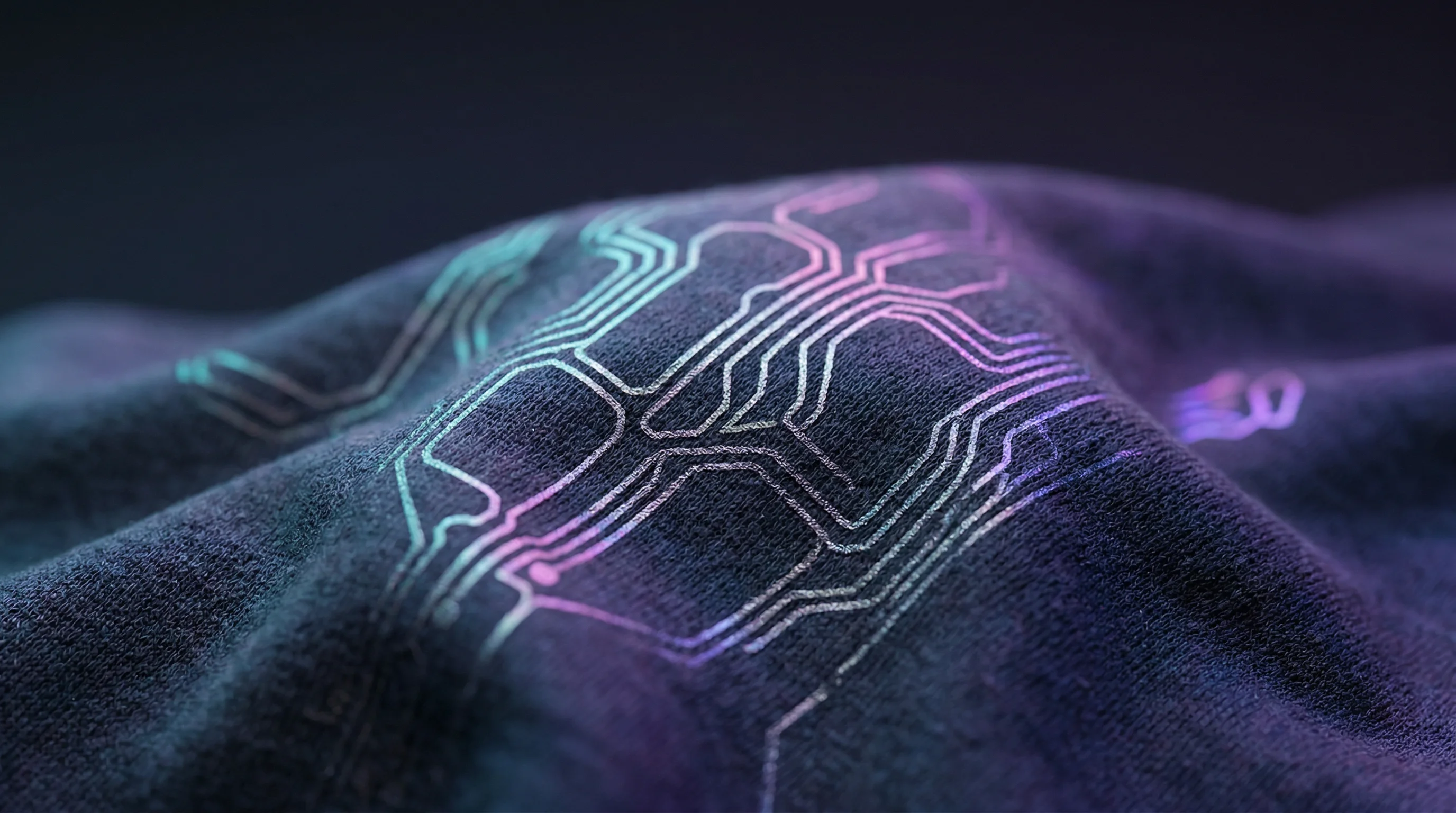
What Noxon actually does sits at the intersection of materials science, neuroscience, and wearable computing—a crowded intersection these days, but one where precision matters.
The company embeds printed biosensors directly into textiles. Using conductive inks and screen-printing methods (think less "lab coat," more "industrial fabric printer"), Noxon's system measures surface electromyography—sEMG, in the jargon—while simultaneously delivering targeted electrical muscle stimulation. Hardware, software, IoT connectivity: all integrated into fabric you could, in theory, wash and wear. The company has taken to calling it a "muscle-computer interface," a deliberate echo of the better-known brain-computer interfaces (BCIs) that have captured Silicon Valley's imagination.
But unlike Neuralink's surgical implants or the high-risk, high-reward world of invasive neurotech, Noxon's approach is resolutely external. No incisions. No electrodes threaded through blood vessels. Just cloth against skin, reading electrical signals from muscles and responding in real time.
The applications, at least in theory, span rehabilitation (helping stroke patients regain motor function), mobility assistance (supporting people with muscular dystrophy or similar conditions), and chronic muscle health management. Clinical collaborators listed on the company's site include Klinikum rechts der Isar—linked to the Technical University of Munich—and Universitätsklinikum Ulm. Whether these are pilot studies, research partnerships, or something closer to commercial deployment remains, like much else about Noxon, a bit vague.
Regulatory Clues and Market Comparisons
A job posting updated as recently as March of this year offers a glimpse of where the company might be heading next. Noxon is hunting for a Regulatory Affairs Manager, the kind of hire that typically precedes a serious push toward European medical device certification. Under the EU's Medical Device Regulation framework—a notoriously rigorous standard—any product making health claims needs to clear a gauntlet of clinical evidence, risk assessments, and technical documentation. Hiring someone to navigate that maze suggests Noxon believes it's close enough to a certifiable product to justify the expense.
The broader muscle-interface and peripheral neurotech sector, meanwhile, has been quietly pulling in capital. Scotland's Neuranics raised $8 million last spring for touchless magnetic muscle sensing. California's NeuroBionics secured $5 million in early 2025 for endovascular neuromodulation—a more invasive technique, but still focused on peripheral nerves rather than the brain. These aren't Neuralink-sized rounds (the brain-computer interface darling has raised hundreds of millions), but they're substantial for early-stage hardware companies operating in a space where timelines are long and regulatory burdens are heavy.
Noxon's rumored seed round—if it materialized at all—remains unconfirmed in terms of size or scope. Not unusual for a company that seems to prefer operating below the radar, but it makes comparisons difficult. What's clear is that the company has been methodical about securing non-dilutive funding—potentially enough to push through clinical trials, finalize regulatory submissions, and begin conversations with strategic partners in the medical device world.
The Silence Strategy
So why the radio silence on funding?
One theory: European founders, particularly in medtech, often move more cautiously than their Silicon Valley counterparts. The pressure to perform, to hit growth metrics that justify ever-larger rounds, can warp priorities. A company building medical-grade hardware—something that must work not just well but flawlessly, under regulatory scrutiny—might reasonably decide that a quieter, steadier path serves it better. Grants and early institutional money can fund progress without the expectations that come with venture capital's more aggressive timelines.
Another possibility, less charitable: perhaps the rumored round simply didn't close, or closed at terms the company doesn't want to publicize. The October 2024 database entry listing KIT as an investor exists, but without disclosed amounts or co-investors, it's hard to draw conclusions. And in a funding environment where even established startups are facing tighter purse strings, a smaller-than-hoped raise wouldn't be unusual.
Either way, investors tracking European medtech will be watching for two things. First, official confirmation—or pointed denial—of the seed speculation. Second, regulatory milestones: CE marking under MDR, clinical trial results, partnerships with hospital systems or rehab centers. Those are the signals that separate promising research from actual commercial traction.
For now, Noxon remains something of an enigma. Well-credentialed, quietly progressing, and apparently uninterested in the usual startup theater. Whether that strategy ultimately proves wise depends on what happens when the company finally does need to make some noise—and whether the technology, when scrutinized beyond the pitch deck, delivers on the promise of muscles that talk back through fabric.


