

Andy Lonsberry has a problem most CEOs would envy: his robots work too well in the controlled confines of a factory. Now he wants to see if they can handle the chaos of a shipyard.
Path Robotics, the Columbus company Lonsberry leads, spent years perfecting AI-guided welding systems for manufacturing plants—environments where parts arrive on schedule, workpieces fit into cells, and the floor stays level. Shipyards offer none of those luxuries. Hulls stretch hundreds of feet. Surfaces tilt. Seams hide in hard-to-reach corners. And the welds, if they fail, do so in open water.
That hasn't stopped Path from chasing the maritime market. The company recently announced partnerships with Huntington Ingalls Industries and autonomous vessel developer Saronic, both aimed at bringing its Obsidian AI welding platform into shipbuilding. Then, on April 16, 2026, came Rove, a mobile system that mounts the same welding intelligence onto a quadruped robot—essentially teaching the technology to walk to its work rather than waiting for the work to come to it.
Whether any of this actually works at scale remains an open question. But the moves signal something larger: a conviction that AI trained on enough real-world data can jump between radically different physical forms and still perform. It's an industrial echo of the foundation model thesis that reshaped software—and it's about to get tested on some of the most unforgiving manufacturing environments around.
Teaching Machines What Welders Already Know
Traditional robotic welding operates like a careful choreography. Engineers program exact paths, positions, and parameters. The robot follows instructions. When parts don't arrive precisely as modeled—and in real manufacturing, they rarely do—the whole dance falls apart.
Obsidian takes a different approach, one rooted in what Path claims is a massive dataset: tens of millions of welded inches, over 200,000 hours of sensor readings, thermal patterns, and joint geometries collected from Path deployments. The model, unveiled on September 8, 2025, uses real-time vision to locate seams, compensate for gaps and misalignment, and adjust welding parameters on the fly.
Lonsberry talks about "imperfect fit-up" the way a veteran welder might—as an inevitability rather than a failure. Stamped steel doesn't align perfectly. Castings have variations. Obsidian, he argues, learned to handle those imperfections by seeing thousands of examples across actual production runs, not simulations—though this characterization of the training data comes from Path itself and lacks independent verification.
Path claims the system delivers up to 17 times the speed of manual welding while cutting costs by more than 30% and achieving a 97% first-pass yield. Those numbers, it's worth noting, come from the company itself and lack third-party validation. Independent verification is hard to come by, and Path's customers—bound by the usual confidentiality provisions—aren't publishing detailed performance data.
The business model sidesteps the traditional capital expenditure hurdle. Path offers robots as a service, bundling hardware, software, and round-the-clock support into a subscription. It's a structure borrowed from enterprise software, transplanted to the world of industrial equipment. The company says it crossed $100 million in bookings during 2025, a milestone announced at the beginning of 2026 as Obsidian completed its first year in production. For a startup founded in 2018, that's notable growth, though the privately held company hasn't disclosed profitability or cash burn.
When the Customer Builds Warships
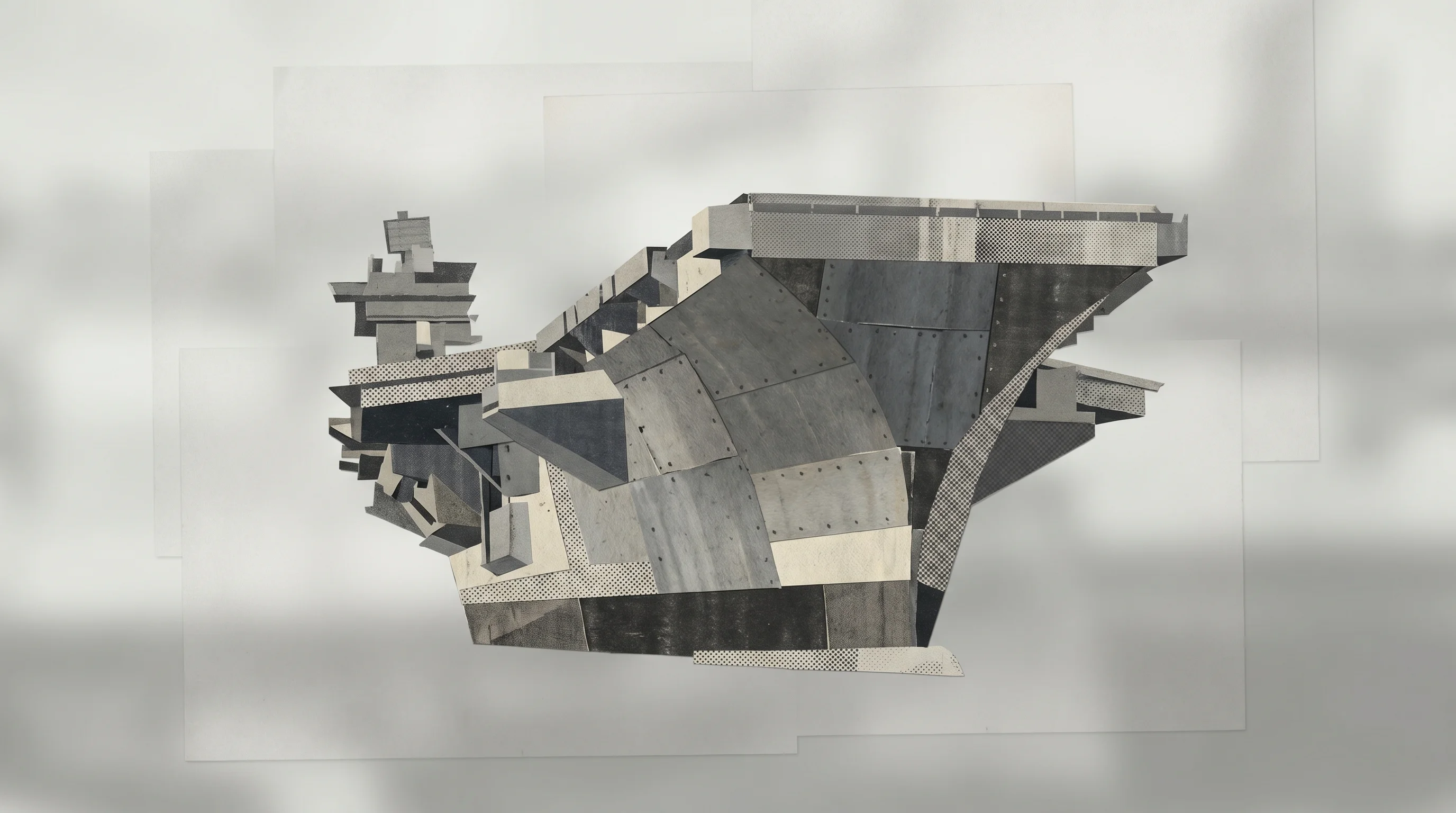
Huntington Ingalls Industries doesn't mess around. The Newport News, Virginia-based contractor builds nuclear aircraft carriers and destroyers for the U.S. Navy—vessels that cost billions, take years to complete, and carry strategic importance that extends well beyond their hull plates.
HII signed a memorandum of understanding with Path in mid-February, outlining plans to explore integrating physical-AI welding into both crewed and uncrewed ship production. The partnership aims to develop autonomous welding capabilities, train HII's workforce on the technology, and establish intellectual property frameworks—the kind of legal scaffolding that matters when defense contractors and startups collaborate.
The timing makes sense, perhaps more than the founders expected. HII had already notched a 14% throughput increase in its shipbuilding operations during 2025 and set a target for a 15% gain in 2026. But efficiency improvements only go so far when you're facing a structural shortage of skilled welders and a backlog measured in years, not months.
Three days before the HII announcement, Saronic—a venture-backed developer of autonomous surface vessels—said it would work with Path to integrate AI welding at its Franklin, Louisiana shipyard. Saronic occupies a different corner of the maritime world than HII, building smaller uncrewed platforms designed for patrol, surveillance, and potentially offensive operations. But the welding challenge is similar: complex geometries, demanding specifications, and labor constraints.
There have been no public reports of deployed systems from these partnerships. These are memorandums of understanding and exploratory agreements—the kind of corporate courtship that precedes actual contracts. Still, they represent something shipyards have struggled to achieve for decades: functional robotic welding outside the controlled environment of a drydock jig.
Ships, it turns out, don't fit neatly into robotic cells. You can't rotate a destroyer hull the way you'd spin an automotive subframe. Welders climb scaffolding, work overhead, navigate tight compartments. Bringing automation to that environment has defeated previous attempts, largely because traditional robots need the world arranged just so. Path is betting Obsidian can adapt to the world as it is.
The Robot That Walks
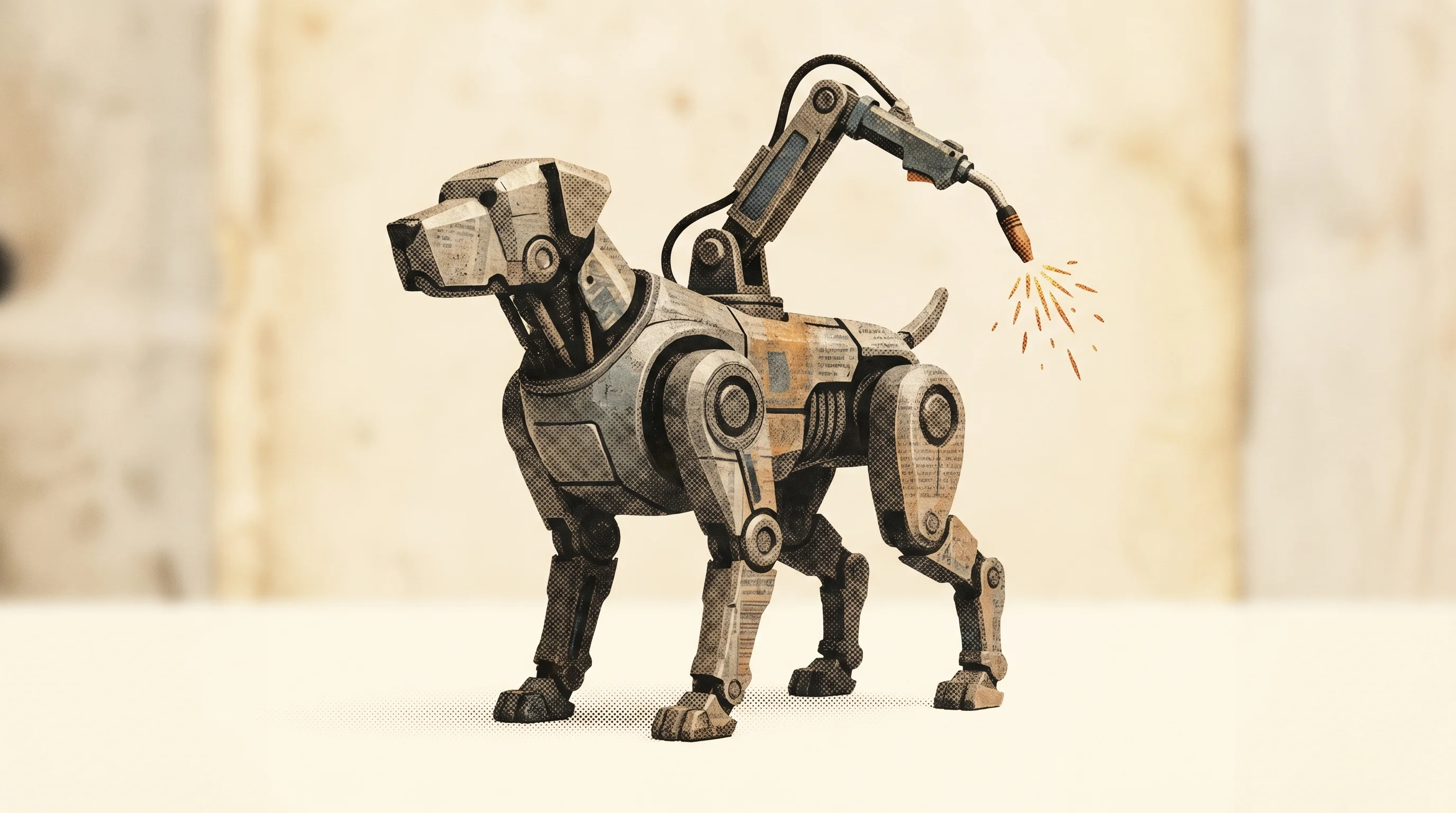
Rove, unveiled on April 16, 2026, takes Obsidian's AI and gives it legs. Literally.
The system pairs Path's welding model with a quadruped robot platform, the kind of legged machine that's become familiar from Boston Dynamics demonstrations and increasingly common in industrial inspections. But instead of carrying sensors or cameras, this one hauls welding equipment.
The concept is straightforward: rather than building a stationary cell and bringing parts to it—an impossibility with ship sections or large structural assemblies—send the robot to the workpiece. Rove navigates uneven surfaces, steps over obstacles, positions itself for overhead or vertical welds, then lets Obsidian handle the actual welding.
Path describes Obsidian as "embodiment-agnostic," suggesting the AI model can guide different physical platforms without fundamental retraining. The company's public materials showcase Obsidian directing six-axis robotic arms in manufacturing cells and now the mobile Rove platform. What's less clear is whether the technology integrates with third-party hardware from established robotics manufacturers like ABB, FANUC, or KUKA, or if it remains proprietary to Path's own systems.
That distinction matters. If Obsidian only works with Path-designed robots, it's a powerful but closed ecosystem. If it can drop into existing industrial robots—or onto platforms from other manufacturers—the potential market expands dramatically. Path hasn't publicly clarified that boundary.
Questions the Industry Keeps Asking
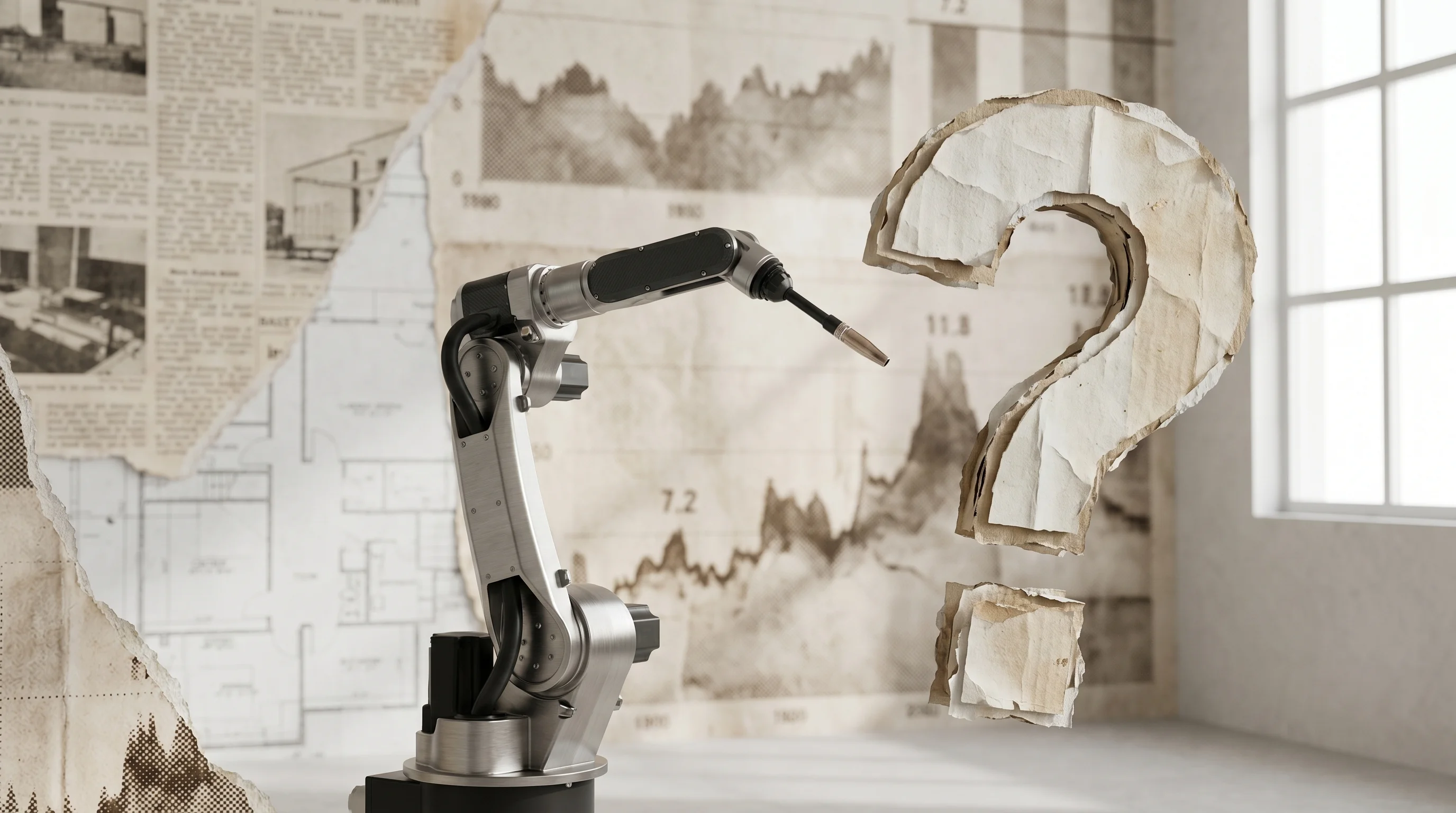
The robotic welding market is growing, from roughly $7.2 billion in 2025 toward projections of $11.8 billion by 2030, according to industry analysts. But growth doesn't equal maturity, and AI doesn't equal reliability.
A March 2026 academic survey of robotic foundation models delivered a sobering assessment: "industrial maturity is limited and uneven." The researchers flagged gaps in safety validation, real-time performance guarantees, and auditable deployment—precisely the concerns that arise when you're proposing to let algorithms weld structures that will face saltwater corrosion and storm-force seas.
Path's communications suggest that domain-specific training data and controlled deployment through service contracts are intended to address those risks. The company has raised more than $300 million since its founding, according to HII's announcement, though Path hasn't disclosed detailed financials or identified all its investors. That's substantial capital for an industrial robotics startup, suggesting confidence from investors who've seen the technology in operation.
But money doesn't guarantee the technology translates from automotive parts to naval architecture. Welding a ship isn't just harder welding—it's a different category of challenge. Thicker materials. Harsher inspection standards. Welds that might hold watertight integrity or structural strength under conditions that would demolish a car frame.
The shipyard partnerships are, in that sense, Path's credibility test. If Obsidian can handle the complexity, variability, and stakes of maritime welding, the factory applications start to look almost easy by comparison. If it can't—if the AI struggles with the unpredictability or the mobile systems prove too finicky for shipyard conditions—then the foundation model thesis faces some hard questions.
For now, executives at HII and Saronic are willing to explore the possibility. Whether they're ready to let algorithms loose on vessels destined for open water is a question that won't be answered in a press release. It'll be answered in a shipyard, with a walking robot and a weld seam that either holds or doesn't.


