

Every engineering leader has that morning seared into memory. A routine configuration change. Production goes dark. The post-mortem, inevitable and frustrating in equal measure, reveals what you already suspected: your monitoring caught everything—after the damage was done. You watched, in high-fidelity real-time, as the building burned.
A small startup operating out of a Parisian office on Rue Réaumur thinks it's time the industry stopped replaying that scenario. PRESAGE—recently rebranded from CloudyFit and fresh off a €1.2 million seed round (roughly $1.4 million)—is taking a bet that sounds almost too sensible to be revolutionary: What if you could see the fire before striking the match?
The funding, announced in early February 2026 and led by Kima Ventures and WeLoveFounders with strategic backing from Boost10x, arrives at a moment when cloud infrastructure is becoming, in the words of the company itself, "ungovernable." Not unmanageable, mind you. Ungovernable—a distinction the team's 2-to-10-person operation takes seriously.
Their answer involves something called world-model AI, a term borrowed from reinforcement learning research. Think of it as teaching software to dream about your infrastructure, simulating what happens when you change a setting or migrate a database before you actually do it. Operations, in this vision, shift from reactive firefighting to something closer to anticipatory engineering.
Whether the market is ready for that shift is another question entirely.
When Watching Isn't Enough
The observability market is, by any measure, thriving. Gartner forecasts it'll hit $14.2 billion by 2028. In the past year alone, nearly every major vendor added AI-powered features—some more useful than others. Datadog unveiled Bits AI agents at DASH 2025 that can triage incidents and open pull requests autonomously. Dynatrace launched enhancements focused on generative AI workloads. New Relic made its AI monitoring generally available last March, promising full-stack visibility into model performance, token costs, latency. Elastic integrated observability for AWS Bedrock and Azure AI Foundry.
These are sophisticated tools, built by talented teams. They correlate signals across sprawling environments, tamp down alert fatigue, increasingly offer causal graphing of service dependencies.
But here's what they all have in common: they watch what's happening and react to it. Diagnostic, not predictive. They'll tell you the patient is sick. They won't tell you whether the treatment you're about to prescribe will make things better or catastrophically worse.
That distinction matters more now because infrastructure keeps getting stranger. Kubernetes has become the de facto operating system for AI, according to a January 2026 survey from the Cloud Native Computing Foundation. Eighty-two percent of container users are running it in production—up from 66 percent in 2023. Two-thirds of organizations hosting generative AI models run inference on Kubernetes. The infrastructure substrate underneath modern applications is increasingly dynamic, multi-tenant, and only partially visible. Workloads appear and vanish. AI agents create and modify resources on their own.
AWS does offer predictive scaling for EC2 Auto Scaling, using machine learning to forecast load up to 48 hours out. But it's metric-specific, scoped to a single service. It doesn't model cross-service dynamics, cost-performance tradeoffs, cascading reliability effects. It's a weather forecast, not a climate simulation.
Dreaming in Code
PRESAGE's core bet is that infrastructure operations is fundamentally a world-modeling problem—not just a monitoring problem.
The term "world models" comes from reinforcement learning research, notably a 2018 paper by Ha and Schmidhuber, where an AI agent learns an internal representation of how its environment works. Once it has that model, it can plan and experiment "in its own dream" before taking action in reality. More recent work like DreamerV3 demonstrated this approach across 150-plus tasks, showing that learned dynamics models can plan effectively across vastly different domains.
PRESAGE describes itself as building "world models for real-world problems." The pitch moves beyond dashboards and alerts to what they call causal and dynamics modeling—learning not just what's happening, but why, and what will happen next under different scenarios. You're planning to scale a service? Migrate a database? Change a traffic routing policy? Simulate it first. The model predicts cost, latency, failure modes, resource contention under your proposed change. A forecast of consequences rather than a post-mortem autopsy.
The company says its technology has been shaped by feedback from over 100 engineering leaders—a number that sounds suspiciously round but suggests, at minimum, they've been talking to potential customers. Investors saw enough promise to back the seed round. Whether that promise translates to working software that actual DevOps teams will trust? That's the €1.2 million question.
The Collision Course
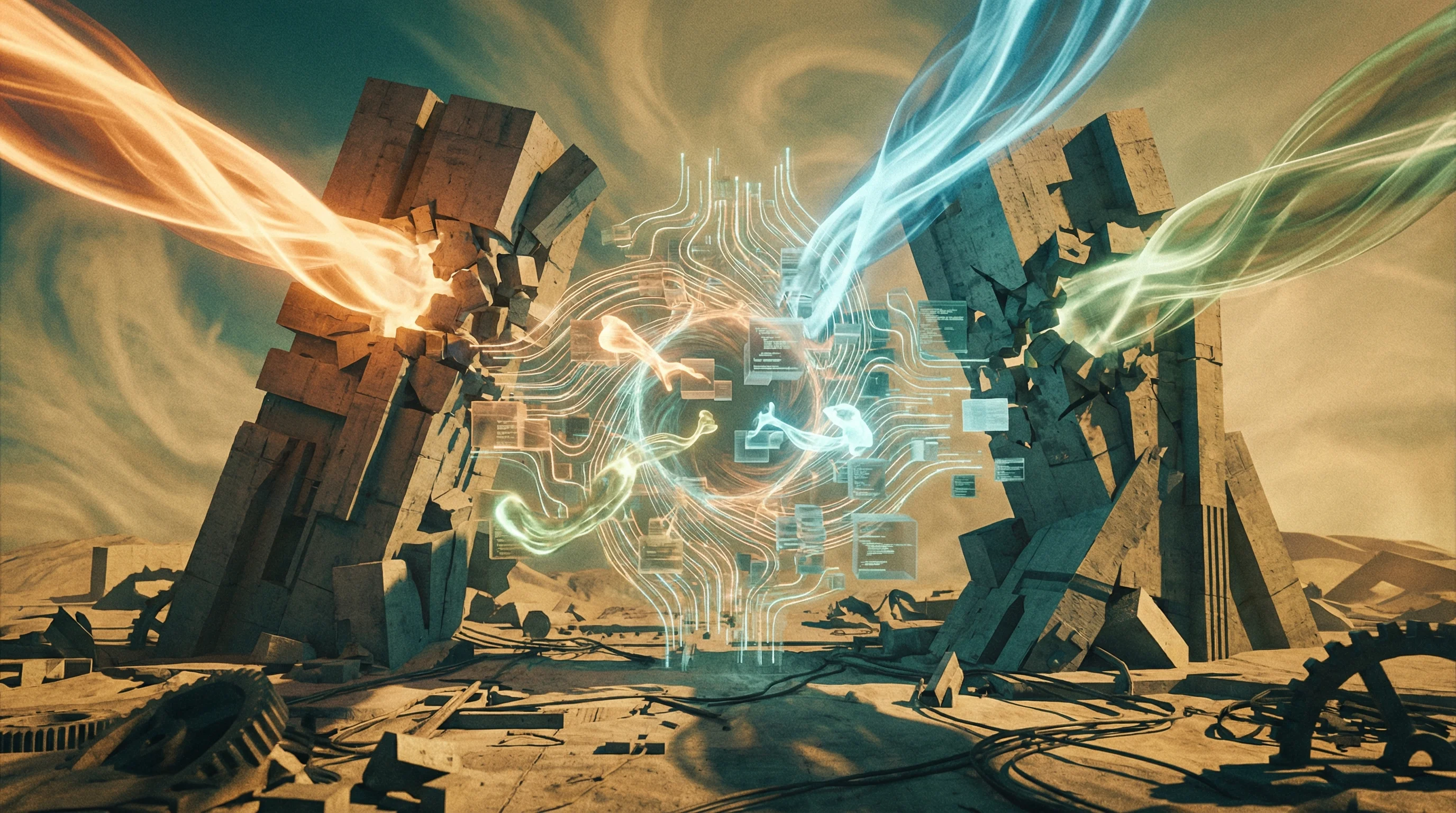
Three forces are converging to make predictive infrastructure operations feel less like science fiction and more like necessity.
First: AI agents are dismantling the old rules. Large language models now autonomously create and modify workloads. The CNCF positioned Kubernetes as "the OS for AI," and OpenTelemetry is emerging as the default telemetry standard. But the mental model of relatively static infrastructure managed by human operators? That's dead, or dying quickly. Agents act faster, at higher cardinality, with less predictability than human teams ever could. You can't manually reason about every change when changes happen continuously, autonomously, at machine speed.
Second: regulatory pressure is mounting in ways that make "we'll fix it after it breaks" a legally perilous strategy. The SEC's cybersecurity incident disclosure rules—effective since December 2023—require public companies to disclose material cyber incidents on Form 8-K within four business days of determining materiality. The EU's Digital Operational Resilience Act, or DORA, became applicable in January 2025 for financial entities, mandating ICT risk management and incident reporting. The EU AI Act's first measures took effect last month, with staged obligations for transparency and risk management in critical infrastructure contexts.
These aren't guidelines. They're binding rules that demand measurable resilience and auditability. Reactive monitoring catches incidents, sure. But it doesn't answer the question regulators are starting to ask: Did you proactively manage the risk?
Third: the technology stack is converging in ways that make world modeling feasible, maybe even practical. OpenTelemetry standardization means multi-signal data streams are more accessible and consistent than they've ever been. Kubernetes as a common substrate provides a relatively structured state space to model. Cloud APIs expose enough control plane information to infer causal relationships. The raw materials for training dynamics models exist now in ways they simply didn't five years ago.
Cisco's $28 billion acquisition of Splunk—completed in March 2024—underscored the industry's belief that observability, security, and data platforms must unify to "power and protect AI," in the company's phrasing. Vendor consolidation creates both opportunity and urgency for startups that can add differentiated predictive layers. The window might not stay open forever.
What's Already Out There
No major observability vendor currently markets explicit "world-model" simulation of future infrastructure state under hypothetical actions. The focus remains squarely on correlation, causal topology, alert automation.
Dynatrace's Davis AI offers root-cause analysis and causal topology mapping. PagerDuty's AIOps orchestrates events and automates triage. Dell acquired Moogsoft in 2023 to bolster its AIOps portfolio. Cast AI automates Kubernetes optimization through rightsizing and bin-packing. Gremlin—with roots in Netflix's legendary Simian Army chaos engineering tools—offers enterprise reliability testing to validate disaster recovery and migration readiness.
Valuable capabilities, all of them. But they either optimize within the current state or validate resilience through controlled destruction. They don't simulate the future state space under a proposed change across multiple objectives—cost, performance, reliability, compliance—simultaneously.
PRESAGE's positioning is that world models provide the missing layer: a learned, causal dynamics model that rolls forward in time and predicts system behavior under counterfactual actions. The difference between "this configuration failed in the past" and "this configuration will fail if you deploy it tomorrow, and here's specifically why."
The risk, obviously, is that building accurate world models of complex distributed systems is extraordinarily hard. Infrastructure is partially observable, non-stationary, subject to external shocks no model could anticipate. A model trained on last quarter's traffic patterns may fail spectacularly when faced with next quarter's workload. Recent research highlights persistent tradeoffs between efficiency and interpretability in world-model-based testing. Open questions remain about integrating symbolic reasoning and spatial representation into pure learned dynamics models.
Still. The gap between what's theoretically possible and what's actually deployed is real and widening. AWS predictive scaling works but remains narrowly scoped. Chaos engineering validates robustness but doesn't prescribe optimal changes. Observability platforms see the present in high fidelity but project the future only through rudimentary forecasting.
There's room for something in between, assuming someone can build it.
If This Works

If PRESAGE succeeds—a meaningful if—the operational playbook changes fundamentally. Engineers don't just monitor and react. They simulate, compare, choose. A proposed Kubernetes node upgrade gets tested in a learned model of the production cluster before rollout. A database migration runs through a simulation predicting query latency under the new schema. Cost optimization recommendations come bundled with predicted reliability impacts, not just savings estimates printed in green.
The near-term question is adoption. World models are well understood in robotics and game-playing reinforcement learning, but cloud infrastructure presents different challenges: higher dimensionality, less stationary dynamics, much lower tolerance for model error. A robot can fail in a lab. A production database migration doesn't get that luxury.
Early customers will likely be teams already sophisticated in observability and chaos engineering—teams looking for the next frontier because they've hit the ceiling of current tools. Financial services firms under DORA compliance pressure make sense as a beachhead. So do AI-first companies running dynamic, agent-driven workloads on Kubernetes, where the old playbooks have already stopped working.
The longer-term question is whether world-model-based operations becomes its own category or gets absorbed by the incumbent observability platforms. Datadog, Dynatrace, Elastic—they have deep pockets and enormous customer bases. If predictive simulation proves valuable, they could build or buy their way into the space faster than a Paris startup with a seed round can establish defensibility.
The $1.4 million gives PRESAGE runway to prove the concept. Whether they can build compounding data or model advantages that are genuinely hard to replicate? That determines whether they become a category leader or an acqui-hire.
What Comes After Watching

One thing does seem increasingly clear: the era of reactive-only operations is closing, perhaps faster than the incumbents realize.
Autonomous agents making changes at machine speed. Regulators demanding proactive risk management with legal teeth behind the demand. The sheer complexity of AI workloads running on Kubernetes, where the old mental models break down entirely. The industry is being pushed—maybe dragged—toward prediction.
Whether PRESAGE becomes the name associated with that shift or just an early mover that got the timing slightly wrong, the shift itself is already underway. The question is no longer "what just happened?"
It's "what happens if?"
And for the first time, there might be tools sophisticated enough to answer before you find out the hard way.


