

The robot arm sitting in a San Francisco office responds instantly to commands from somewhere else entirely. A stranger on the internet—approved, vetted, but still essentially unknown—is guiding its movements through a browser window, stacking blocks or sorting objects while a camera streams back grainy proof of work.
This is PrismaX's bet: that the robotics industry's most pressing problem isn't algorithmic brilliance or cheaper actuators, but rather a shortage of plain old human demonstration. Thousands upon thousands of hours of it.
The three-month-old startup emerged from Andreessen Horowitz's crypto-focused accelerator in June with $11 million and an unusual thesis straddling two disparate worlds. On one side, robotics infrastructure that captures human operators telecontrolling machines. On the other, Web3 incentive structures—points, potential token airdrops, the gamified economy of contribution—designed to convince those operators to keep showing up.
Now the company has opened its teleoperation platform to early users. For the moment, that means a single tabletop robotic arm and tasks that sound decidedly unglamorous: pick and place, object manipulation. The kind of repetitive demonstrations that robotics foundation models supposedly need by the terabyte to learn anything useful.
Teleoperation as Infrastructure
PrismaX calls it "standardized teleoperation," which in practice means a technical layer between humans and hardware. Approved members—the company uses the slightly cultish term "Amplifiers"—log into a gated portal at gateway.prismax.ai and remotely operate the arm. Every motion, every adjustment gets recorded for downstream training purposes.
The stack underneath relies on industry standards: ROS and its successor ROS2, plus gRPC for messaging and WebRTC to stream low-latency video and commands. Specific performance numbers haven't surfaced publicly, though CEO Bayley Wang insists the technical bottleneck isn't really technical at all.
"Scalability of visual datasets is hindering breakthrough advancements in robotics," Wang told Robotics and Automation News back in June. He's arguing, essentially, that robots need what large language models already got: massive, carefully labeled datasets drawn from real-world interaction.
Wang isn't exactly a newcomer. He previously co-founded oneTesla, the kit car company for tinkerers, and held leadership positions at Kura Technologies, which makes AR headsets. His co-founder Chyna Qu brings supply-chain experience from a stint at Cummins and time as COO at DeFiner, a crypto lending protocol. It's a pairing that reflects PrismaX's hybrid nature—part logistics problem, part blockchain experiment.
The company's stated theory of change hinges on what it calls a "data-model-tele-op flywheel." Humans control robots, generating training data. That data trains better models. Better models attract more users who want access to increasingly sophisticated robots. Repeat indefinitely, or until the models don't need human help anymore.
Whether that flywheel actually spins remains an open question.
Crypto Money, Crypto Incentives
The $11 million seed round announced in mid-June was led by a16z CSX, the firm's crypto accelerator that typically invests $500,000 per company and culminates in a flashy Demo Day. PrismaX launched publicly at the June 3rd event, pitching to a room full of blockchain believers.
Other backers included Volt Capital, Symbolic Capital, Stanford Blockchain Builder Fund, and Virtuals Protocol, alongside angels who prefer to remain unnamed. The investor roster skews heavily crypto-native, which makes sense given PrismaX's approach.
The platform has already integrated Solana wallet connections. There's a points system—"Prisma Points"—visible on third-party airdrop tracking sites, the kind of speculative infrastructure that hints at a future token without saying so explicitly. The company has teased something called "Proof-of-View," apparently a scoring mechanism for operator sessions, though details remain murky. Most of this comes from community chatter rather than official documentation.
PrismaX hosted what it called "RoboCon" in San Francisco over the summer, drawing more than 500 people. It held a side event at Chainlink's SmartCon conference in New York last month. The marketing playbook looks familiar to anyone who's watched crypto projects try to bootstrap networks.
The Web3 elements seem designed to solve a distinctly non-crypto problem: how do you pay people to generate massive training datasets without building an internal army of minimum-wage data labelers? Make it a game. Add points. Dangle the possibility of future rewards.
It's unclear whether robotics researchers or enterprise buyers will find this appealing. But Wang clearly believes the alternative—relying on academic labs or in-house teams to painstakingly collect demonstration data—doesn't scale.
From Arms to Humanoids
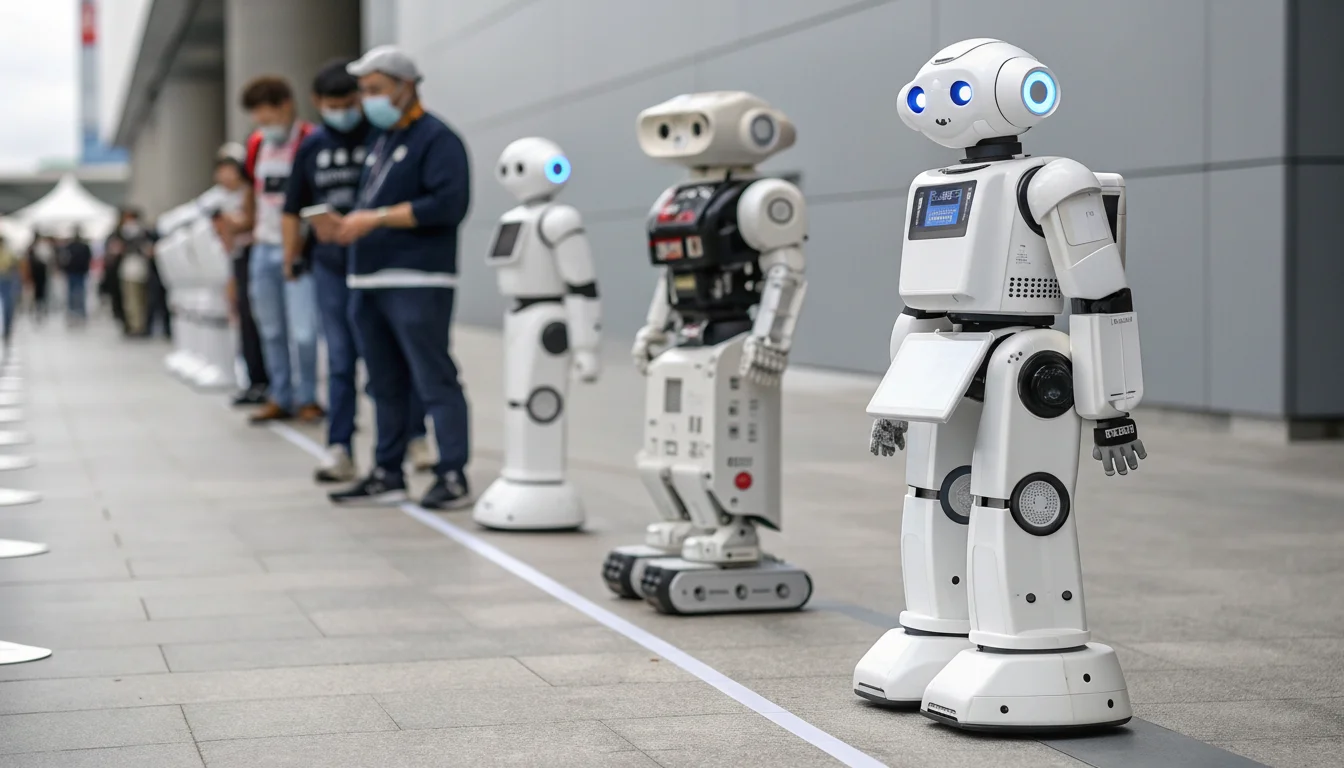
Right now, the product is deliberately modest. One arm. Simple tasks. But PrismaX's roadmap gets ambitious quickly.
An August blog post lists plans to integrate with a parade of humanoid robots: Unitree's G1, Ubtech's Walker, Reachy 2, K-Scale's K-Bot, Boardwalk Robotics' Alex, Enchanted Tools' Mirokai. The company talks about "fleet operations," suggesting a future where dozens or hundreds of operators coordinate across a distributed network of machines simultaneously.
Users will eventually access what PrismaX calls a "Tele-op Arcade"—a gamified task library. There's mention of tournament formats that turn data collection into competition. Whether people will actually spend hours doing this, even with crypto incentives, remains very much unproven.
The humanoid focus makes strategic sense, if you squint. Companies like Figure AI have described their own data challenges—Figure's "Helix" system reportedly required extensive human demonstration to train. Tesla's Optimus team has hinted at similar bottlenecks. The industry consensus seems to be shifting: maybe you can't just throw simulators at the problem.
Not Exactly Alone
PrismaX didn't invent teleoperation, obviously. It's trying to standardize it, scale it, and wrap it in an economic model that might actually work.
Formant already offers web-based fleet management with built-in teleop via WebRTC, plus deep ROS integration. DriveU.auto provides connectivity platforms for autonomous vehicles and delivery bots, using cellular bonding for low-latency video streams. Ottopia raised a $14.5 million Series A last year—backers included Hyundai—for what it calls a "universal teleoperation platform." Olis Robotics sells remote monitoring and control systems for industrial arms like those from Universal Robots.
What's different about PrismaX, at least in theory, is the data collection thesis paired with crypto incentives. Existing players emphasize reliability and safety—teleoperation as a fallback when autonomy fails. Remote assistance for edge cases.
PrismaX positions teleoperation as the primary input for training, not just a backup. It's a subtle but meaningful distinction. The robotics industry has spent years trying to reduce human intervention, to make the machines smarter so operators become unnecessary. PrismaX is proposing the opposite, at least temporarily: systematize human control to bootstrap the next generation of autonomy.
That framing might resonate, or it might not. Enterprise buyers tend to be skeptical of anything that sounds like infrastructure for infrastructure's sake. Research teams have access to their own robots and grad students willing to run experiments.
But perhaps—and this is Wang's gamble—neither of those groups can generate data at the scale foundation models actually require. Maybe you need a crowd, and crowds need incentives beyond altruism or academic credit.
Early Days, Big Questions
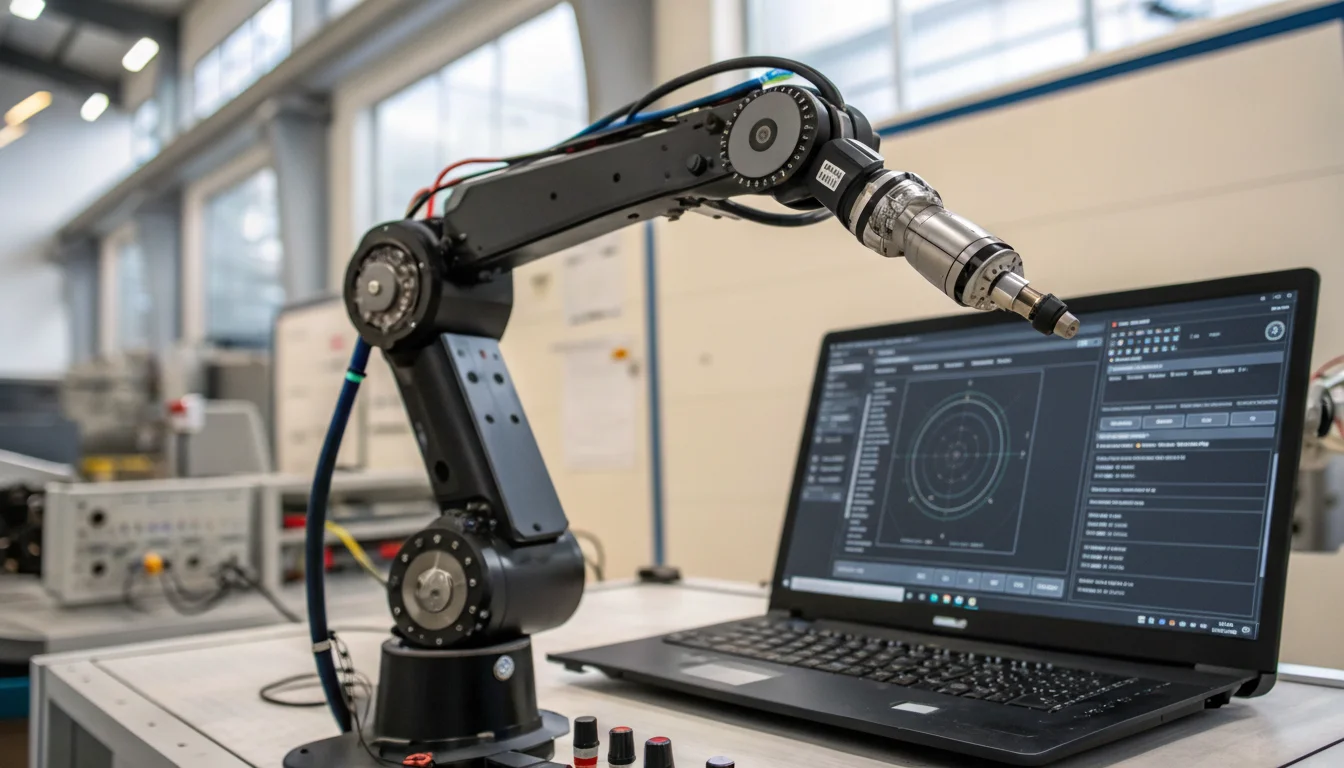
For now, PrismaX is running small by necessity. One robot. Early access gates. A roadmap that reads ambitiously on paper but starts with the absolute basics: can you get strangers on the internet to reliably control a robot arm?
The $11 million buys runway to answer that question, and several others. Do the flywheels actually spin? Will people spend meaningful time teleoperating robots for points and speculative future rewards? Can you collect training data this way that's actually useful, not just voluminous?
In robotics, as in crypto, community is supposedly everything. Or at least that's what the pitch deck says. Whether PrismaX can build one—and whether that community can generate the datasets Wang believes will unlock the next wave of robotic intelligence—remains very much an open question.
The robot arm in San Francisco keeps moving, block by block, guided by invisible hands. Somewhere, a database grows larger. Whether it grows useful is another matter entirely.


