

Most factory floors hide a paradox in plain sight. Gleaming automated workcells hum along with robotic precision, churning out everything from pharmaceutical compounds to automotive components. But between those islands of automation? Humans still shuffle parts from station to station, sometimes in hazmat suits, often at considerable risk when the materials involved are biologics or toxic chemicals.
Sancho Robotics thinks it has found a wedge into that gap—and just raised $7 million to prove it.
The Palo Alto startup announced the seed round on July 15, 2026, with Fusion Fund and Catapult Ventures sharing lead investor duties. What Sancho is building, in the company's own framing, is a "physical API" for manufacturing: an orchestration layer using mobile robots to handle the handoffs that current factory automation simply leaves to people.
It's an unsexy problem with high-stakes implications, particularly in regulated industries where contamination risks or data-residency rules make conventional approaches unworkable.
From NVIDIA's Stage to Seed Capital
Sancho surfaced publicly earlier this year. The company's technology got a showcase slot during NVIDIA's GTC 2026 keynote in March, where CEO Chao Cao demonstrated integration work with Multiply Labs, a robotic biomanufacturing outfit. By late June, job postings referencing the $7 million raise had already appeared—suggesting the round closed weeks before the formal announcement, not unusual in venture timing.
Cao brings a pedigree steeped in autonomy research. He spent time as a research scientist at the Boston Dynamics AI Institute beginning in early 2024, after completing a robotics PhD at Carnegie Mellon. There, he led the autonomy stack for CMU's DARPA Subterranean Challenge team and racked up a string of best-paper awards—RSS 2021's top honors, IROS 2022's best student paper, and a 2023 publication in Science Robotics. Co-founder Jack Yang came from Nuro, where he led mapping, and before that was a founding engineer at Phiar, the augmented reality startup Google acquired in late 2022.
It's the kind of résumé stack that opens investor calls. But Catapult Ventures, in its investment thesis published July 16, pointed to something else: Sancho had already bootstrapped to revenue and landed a contract in cell therapy automation before raising a dollar.
The Technical Bet: Geometry Over Pixels

Here's where Sancho diverges from much of the current robotics pack. The company's system relies on what it calls a "geometry-first world model"—reasoning at test time rather than depending on massive pixel-based training datasets or human demonstrations. The compute runs entirely on embedded hardware, on-premises, with no cloud dependency.
That's a deliberate architecture choice. In biopharma and cell therapy manufacturing, data-residency requirements are strict, often legally mandated. Sending sensor data to the cloud for inference introduces latency, compliance headaches, and in some cases violates regulatory frameworks entirely. An on-device system sidesteps all of that, though it places a steeper technical burden on the algorithms themselves.
Rouz Jazayeri, managing partner at Catapult Ventures, flagged the "geometry-first" approach in the firm's announcement as a way to avoid the data overhead and cloud bottlenecks common in vision-heavy robotic deployments. Charlotte Xia from Fusion Fund's investment team had surfaced Sancho's launch in posts dating to May and June, a couple months before the formal funding disclosure.
The company positions its orchestration layer as hardware-agnostic—meaning it plans to work across different robot platforms rather than building proprietary machines. That's a software-led play, though one that requires intimate knowledge of how different manipulators and mobile bases behave in practice.
Why This, Why Now
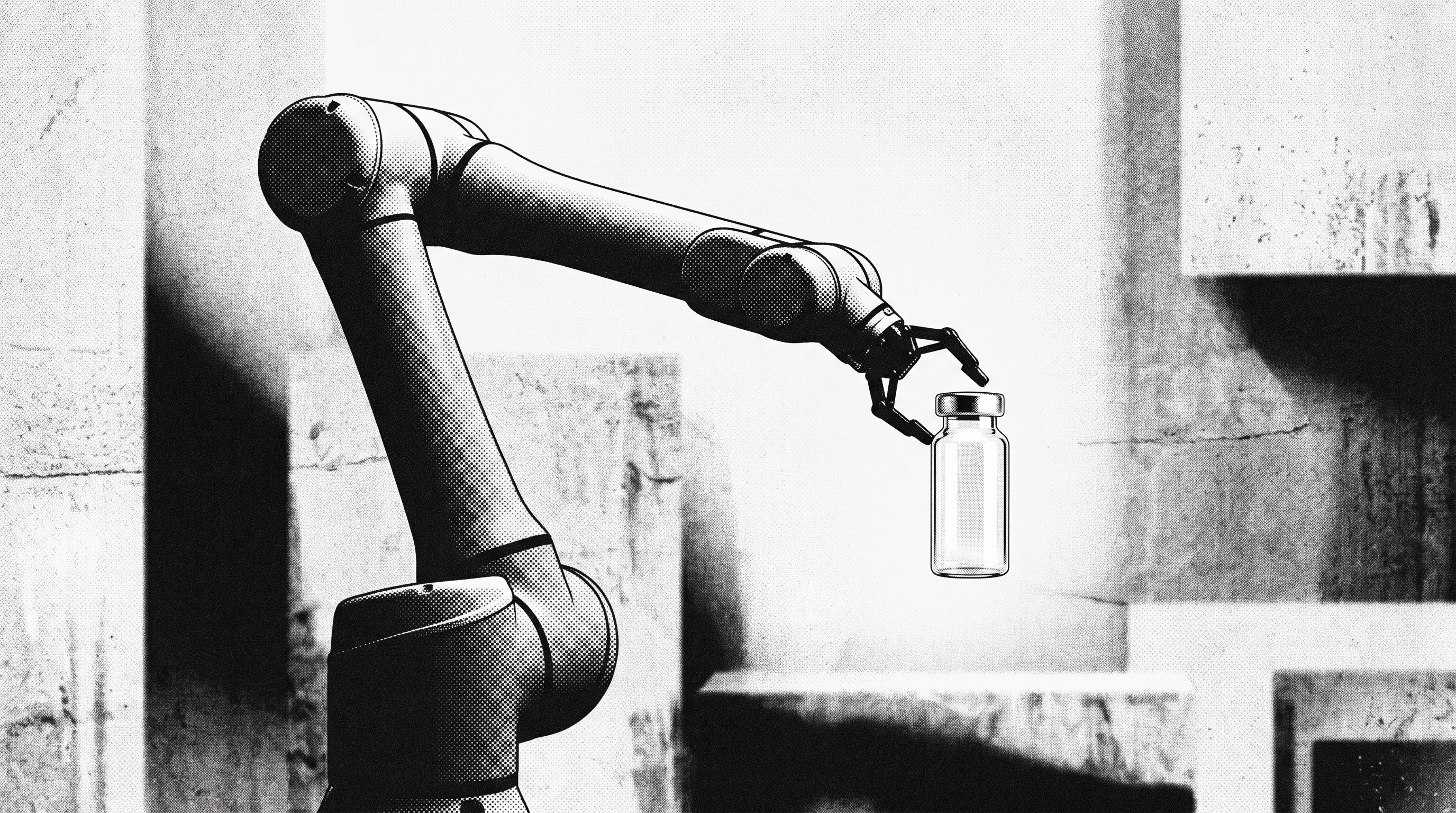
Factory automation has long promised to eliminate manual labor from production lines, but the reality has been patchier. Workcells excel at repetitive tasks in controlled environments; the spaces between those cells remain stubbornly analog. In high-stakes domains like cell therapy—where contamination can destroy an entire batch and each batch might be a personalized treatment for a single patient—those manual handoffs represent both a quality-control liability and a production bottleneck.
Sancho's work with Multiply Labs offers a case study. Cell therapy manufacturing involves cleanroom environments, stringent contamination protocols, and high unit economics that can justify automation investments. If the orchestration layer works there, the logic goes, it should translate to other advanced manufacturing contexts with similar constraints.
LinkedIn lists Sancho at two to ten employees as of mid-July, though such platform estimates are indicative at best. The company is actively hiring for founding-level roles in autonomy systems and mobile manipulation, all on-site in Palo Alto as of mid-July. Cao's LinkedIn post announcing the round on July 16 mentioned participation from "an incredible group of investors, founders, and operators" beyond the two lead firms, though no other names were disclosed.
The Road Ahead
Seed capital in robotics often funds a familiar playbook: expand the engineering team, refine the core technology, chase a handful of early deployments that can serve as reference customers. Sancho appears to be following that script, with the cell therapy contract providing an anchor.
The question, as always, is whether the technical approach scales beyond initial use cases. Geometry-first reasoning and on-device compute address specific pain points in regulated manufacturing, but factories are messy, unpredictable environments. What works in a cleanroom with structured materials may struggle in less controlled settings.
Still, the funding signals investor confidence that the "brittle middle layer" of factory automation represents a genuine opening—and that perhaps the robotics industry has spent too long chasing grand visions of fully autonomous factories when the more lucrative opportunity sits in the mundane space between machines.
The orchestration problem isn't glamorous. It just might be solvable.


