

The steel skid weighed more than three mid-size sedans. Forty feet of welded framework, built to structural code, engineered to sit beneath a data center chiller or brace a substation transformer—the kind of unglamorous hardware that keeps the lights on and the servers humming. When it rolled off the line at a factory in Cincinnati's Camp Washington neighborhood recently, it represented something larger than its dimensions suggested: a wager that artificial intelligence can remake an industry that's been welding metal for over a century.
1872, the startup behind that skid, announced a $15 million seed round in mid-2026, led by The O.H.I.O. Fund. The company's pitch centers on what CEO Dan Summers calls "the first advanced, autonomous steel fabrication factory in the United States." It's an audacious claim. Plenty of American fabricators already run highly automated operations—beamlines that cut, drill, and cope structural steel with minimal human touch. Walk through facilities in Houston or Pennsylvania and you'll see robotic plasma cutters and automated processors that have been humming for years.
What 1872 is attempting is both narrower and potentially more disruptive: an AI-orchestrated pipeline that takes CAD files and turns them into finished welded assemblies, the complex, high-mix work that's historically resisted automation. Whether they've solved it is another question entirely.
When Demand Outstrips Supply
The timing, at least, makes sense. Data centers consumed record power across North America last year, with vacancy rates in Northern Virginia—the world's largest concentration of data center capacity—reportedly hovering near zero point three percent by mid-2026, according to CBRE's tracking. Meanwhile, large power transformers now carry procurement lead times that can stretch past two years, sometimes reaching five, per assessments from the Department of Energy. The Tennessee Valley Authority has projected that data center demand could reach 18 percent of its industrial load within a few years, roughly double recent figures.
Somewhere in that collision between surging demand and glacial supply chains, 1872 and its backers see an opening. Maybe they're right.
The U.S. fabricated metal products sector represents a market north of $400 billion, based on recent Bureau of Economic Analysis data. Steel shipments have climbed, driven by nonresidential construction spending that hit elevated levels through 2026. But raw volume tells only part of the story. The real constraint isn't tonnage—it's capacity. Specifically, the ability to execute complex, code-compliant assemblies at the pace that infrastructure buildout now demands.
Traditional steel fabricators have spent decades perfecting certain kinds of automation. Lincoln Electric's plasma cutting systems, Voortman's all-in-one processors, Peddinghaus's robotic thermal lines—these have become the backbone of structural shops from coast to coast. Recent installations at facilities in Texas and elsewhere demonstrate that established players continue investing heavily. These systems excel at high-volume, low-mix work: cutting, drilling, coping standardized beams with precision and speed.
Where the model breaks down is in welded assemblies.
A data center skid or substation frame involves dozens of welds, tight tolerances, and AWS D1.1 certification requirements that have historically demanded skilled human welders and manual setup. The American Welding Society has projected the U.S. will face a shortage of hundreds of thousands of welding professionals by decade's end, a gap that median wages around $51,000 haven't closed. Automation has been the obvious answer for years. Execution has been considerably harder.
Three Converging Forces
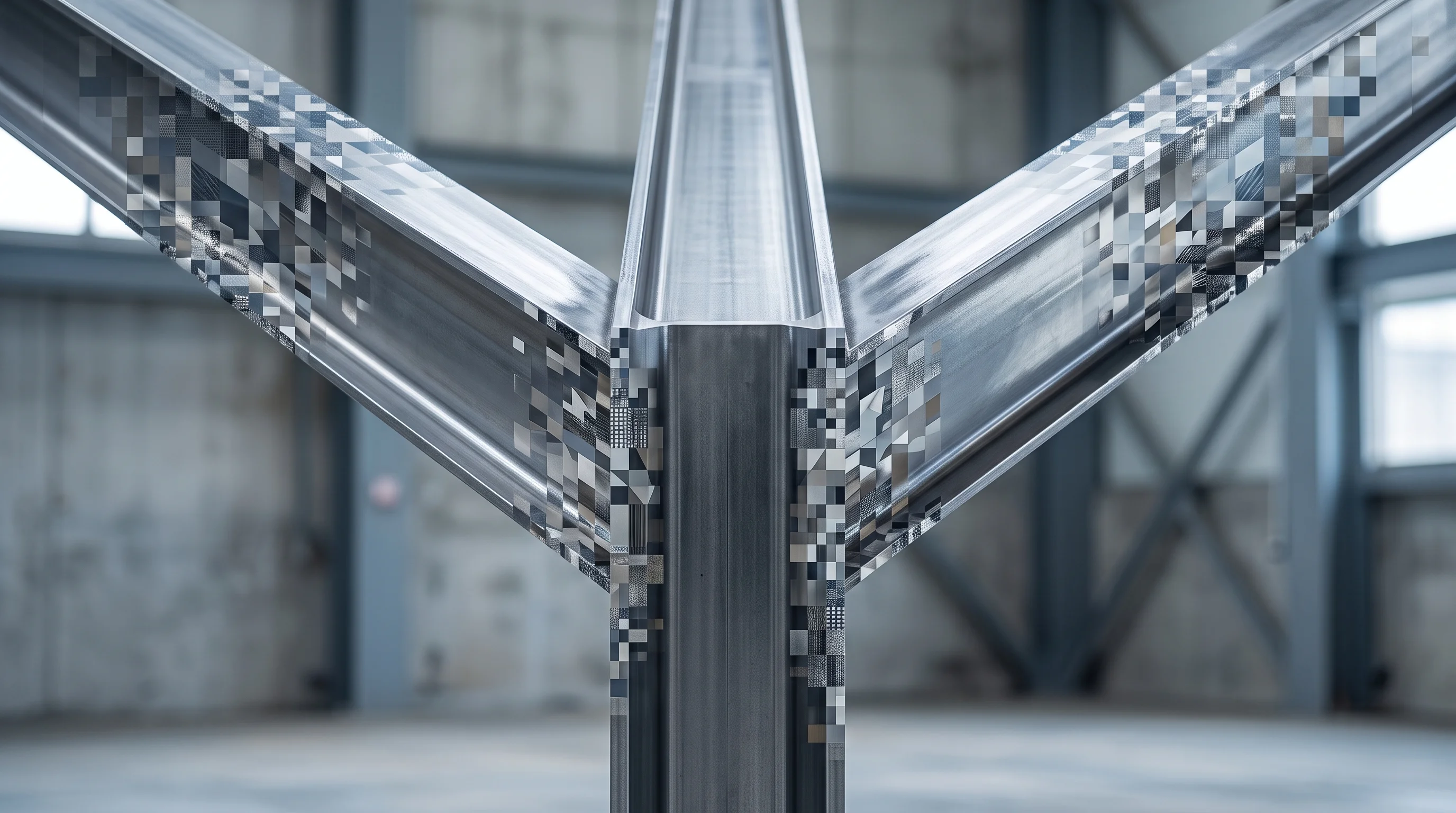
Regulatory pressure is one driver. Build America, Buy America requirements, tightened domestic content thresholds under federal acquisition rules, and IRS domestic content credits under the Inflation Reduction Act all tilt toward U.S.-made steel and manufactured products. Section 232 tariffs, adjusted periodically, reinforce the advantage. For infrastructure projects drawing federal dollars, offshore fabrication is increasingly difficult to justify economically, even when technically permitted.
Technology is the second force. Path Robotics announced its Obsidian foundational model for welding in late 2025—a system that uses AI to adapt to variations in joint geometry, fit-up, and material properties in real time. By early 2026, Huntington Ingalls Industries had signed an agreement to explore Path's welding AI for U.S. shipbuilding, reportedly sending thousands of pounds of steel to Ohio for trials. Meanwhile, companies like OTC DAIHEN, ABB, and KUKA have rolled out arc-welding robots with adaptive control. Detailing platforms like Tekla Structures and SDS2 now output machine-ready files directly from CAD models, theoretically closing the loop from design to production.
The third force is straightforward demand. CBRE's data center tracking showed 716.7 megawatts of capacity under construction in mid-2026, with 88 percent already preleased. Power constraints are pushing large campuses into regions with actual grid capacity—think Ohio River Valley, not the saturated Northern Virginia market—which means modular, prefabricated infrastructure that can be shipped and assembled on-site. Transmission projects, meanwhile, can average seven to eight years from planning to energization, according to utility commission analyses. Prefabricated steel structures—substation skids, switchgear frames—can compress on-site schedules significantly, a lever utilities are starting to pull harder.
Software as Factory
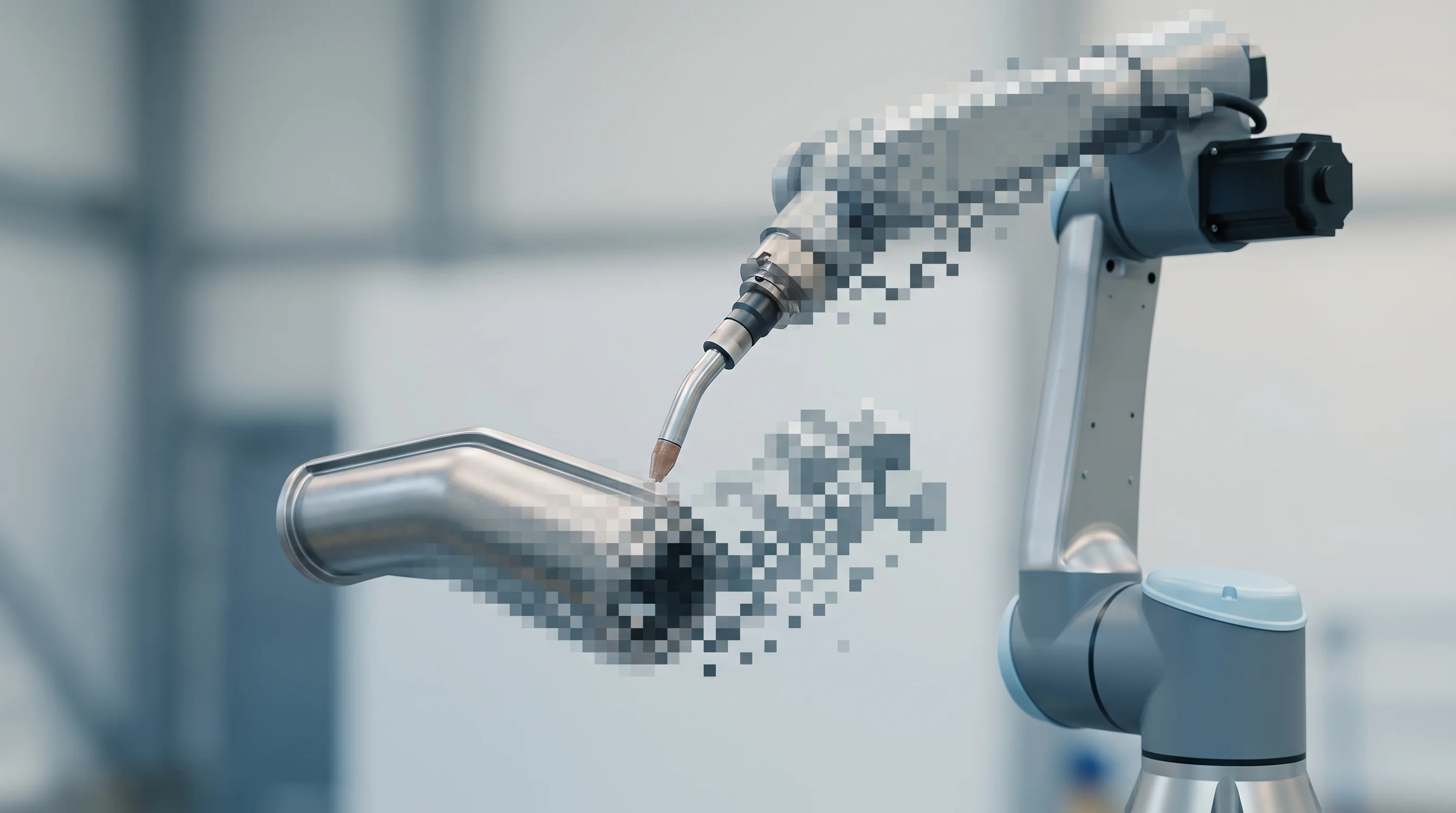
1872's approach treats the factory itself as software, or so the pitch goes. The company's "CAD-to-part" pipeline ingests design files, uses AI to plan production schedules and routing, and executes with robotic welding cells supplied by Path Robotics. The Camp Washington facility can reportedly handle envelopes up to 20 tons and dimensions stretching 63 feet by 15 feet, targeting skids, frames, and enclosures for energy and compute infrastructure. The company has claimed first-pass yield rates of 99 percent, arc-on time of 70 percent, and an 85 percent reduction in weld cost—metrics that, as of this writing, remain unverified by independent third parties but would represent a genuine step-change if sustained in production.
Summers, who previously worked on software and Starship programs at SpaceX, frames it as a systems engineering problem. "Software orchestrates robotics and production," he said in announcing the funding. The company has suggested targeting "full autonomous vision" by 2027, a timeline that implies current operations involve considerably more human oversight than the marketing might suggest. That's not particularly unusual—even FANUC's highly automated European factories rely on human supervision for changeovers and quality checks—but it's worth noting. What distinguishes the effort is the focus on welded assemblies, a harder problem than the cutting and drilling that incumbent beamline automation has largely conquered.
The autonomous manufacturing landscape has other players making similar bets. Hadrian raised $260 million in mid-2025 to build what it calls "Factories as a Service" for aerospace and defense CNC parts. Machina Labs closed a substantial Series C in early 2026 for robotic sheet metal forming focused on missiles and airframes. GrayMatter Robotics, which applies AI to surface finishing, had processed millions of square feet across multiple industries by mid-2026. The pattern across these companies: vertical integration of software and hardware, targeting high-value, low-volume parts, and using AI to handle the variability that defeats traditional automation.
Traditional fabricators aren't exactly standing still, though. Infra Metals has deployed advanced processing systems across multiple sites. Advanced Construction Robotics partnered with Nucor Rebar Fabrication in early 2026 to deploy rebar-tying robots capable of over a thousand ties per hour. The question isn't whether automation is accelerating—it clearly is. The question is whether AI-native startups can move faster than well-capitalized incumbents retrofitting existing operations.
The Hard Part
The $15 million 1872 raised—described as among Ohio's largest seed rounds—buys time to prove the model works at scale. The O.H.I.O. Fund's backing signals regional ambition to capture advanced manufacturing reshoring, particularly as Rust Belt states compete for battery, semiconductor, and infrastructure supply chain investment. But capital alone doesn't solve the genuinely hard problems: achieving AWS D1.1 certification at scale, building a customer pipeline in a notoriously relationship-driven industry, and hitting cost and quality targets that make lights-out fabrication viable for high-mix work.
Demand tailwinds are real enough. A BCG survey of manufacturers in mid-2026 found AI-powered factories showing promise, with early adopters reporting material gains in productivity and throughput. NIST's Smart Manufacturing AI Roadmap has prioritized autonomous systems and robotics. The International Federation of Robotics reported nearly 400,000 industrial robots operating in the U.S. as of 2024, with metal and machinery representing a major application vertical. Adoption appears to be accelerating, though from what baseline and toward what ceiling remains unclear.
The workforce question lingers. AWS projects a welder shortfall through the end of the decade, but automation advocates argue that robots complement rather than replace skilled workers, shifting tasks toward setup, quality assurance, and supervision—roles that theoretically command higher pay. Whether that transition happens smoothly depends on training pipelines and whether companies like 1872 can demonstrate that human welders thrive alongside the robots, not get displaced by them. The evidence on that front is still emerging.
For infrastructure investors and construction technology leaders, the calculus is relatively straightforward. Long lead times on transformers and grid equipment create bottlenecks that prefabrication can ease—but only if fabrication capacity itself doesn't become the new constraint. Autonomous factories promise to decouple throughput from labor availability. The technology, however, remains unproven at the scale 1872 is targeting. The company's first skid is encouraging. The next hundred will tell the real story.
What's undeniable is that the infrastructure boom isn't waiting for anyone. Data center pipelines, transmission upgrades, industrial reshoring—all of it is creating demand for welded steel that appears to outpace existing capacity. Whether a group of SpaceX alumni in Cincinnati have cracked the code on autonomous fabrication, or whether they're simply the latest in a line of well-funded attempts, won't be clear for some time.
But in an industry where lead times stretch across months and margins compress by the quarter-point, even incremental improvements in speed and consistency carry real weight. The steel that builds the AI era's infrastructure may yet be fabricated by AI itself. Or it may not. Either way, someone's going to weld a lot of skids.


