

The founders of Sunday Robotics made a curious pitch to investors late last year. Instead of showing off a gleaming humanoid robot performing choreographed tasks in a pristine laboratory, they handed out gloves.
Not just any gloves. These were Skill Capture Gloves—sensor-laden mitts that track every movement of the human hand as it, say, loads a dishwasher or folds a shirt. More than 2,000 of them are now circulating among what Sunday calls "Memory Developers," essentially regular people doing household chores while feeding data into a robot foundation model that has, according to the startup, been trained on "zero robot data."
On March 12, that unorthodox strategy helped Sunday close a $165 million Series B round at a $1.15 billion valuation. Coatue led the investment, with Bain Capital Ventures, Fidelity, Tiger Global, Benchmark, Conviction, and Xtal Ventures all piling in. The milestone puts Sunday squarely in the unicorn club—and on the hook to deliver its Memo home robot to beta testers by Thanksgiving.
Eight months. That's the runway Sunday has given itself to go from funded startup to shipping hardware into American living rooms, a timeline that's either admirably bold or faintly reckless depending on how much faith you place in the company's technical pedigree.
Academic Lineage Meets Kitchen Sink Reality
CEO Tony Zhao emerged from Chelsea Finn's influential lab at Stanford, where he spearheaded the ALOHA and Mobile ALOHA projects. Those systems showcased bimanual manipulation through imitation learning—robots learning contact-rich tasks by watching and mimicking. His co-founder, CTO Cheng Chi, co-authored the Universal Manipulation Interface (UMI) paper in February 2024, describing an open-source handheld gripper designed precisely for real-world data collection. Both founders logged time in the trenches: Zhao interned at Tesla Autopilot and Google DeepMind; Chi did stints at Toyota Research Institute.
The academic credentials are sterling. Whether they translate to a robot that won't knock over your grandmother's china is another matter entirely.
Memo itself defies some expectations. It's not a walking biped—Sunday opted for wheels and a telescoping spine instead. The machine operates at about four feet in working height but can stretch to seven feet when fully extended, arms overhead. It moves, Sunday says, at roughly half the speed of a human tackling the same task, a software-imposed governor rather than a hardware limitation. And it boasts what the company calls "passive stability," meaning it won't topple over if the power cuts out mid-task. In a home environment—pets underfoot, toddlers running past—that's not a minor consideration.
The tasks demonstrated publicly so far feel almost quaint in their domesticity: pulling espresso shots (grinding beans, tamping grounds, locking the portafilter into place), clearing dinner tables while gripping two glasses in one hand, loading dishwashers, folding socks. All performed, Sunday insists, in homes the robot had never encountered before.
Building one Memo today costs around $20,000. That's the manufacturing expense, not the sticker price consumers will eventually see. Sunday projects it can slash costs by at least half at scale, though the company has been notably quiet about what it plans to charge. For context, 1X's Neo humanoid opened for preorders in October 2025 at $20,000 outright or $499 monthly on subscription, with deliveries also promised for 2026.
The Glove Gambit
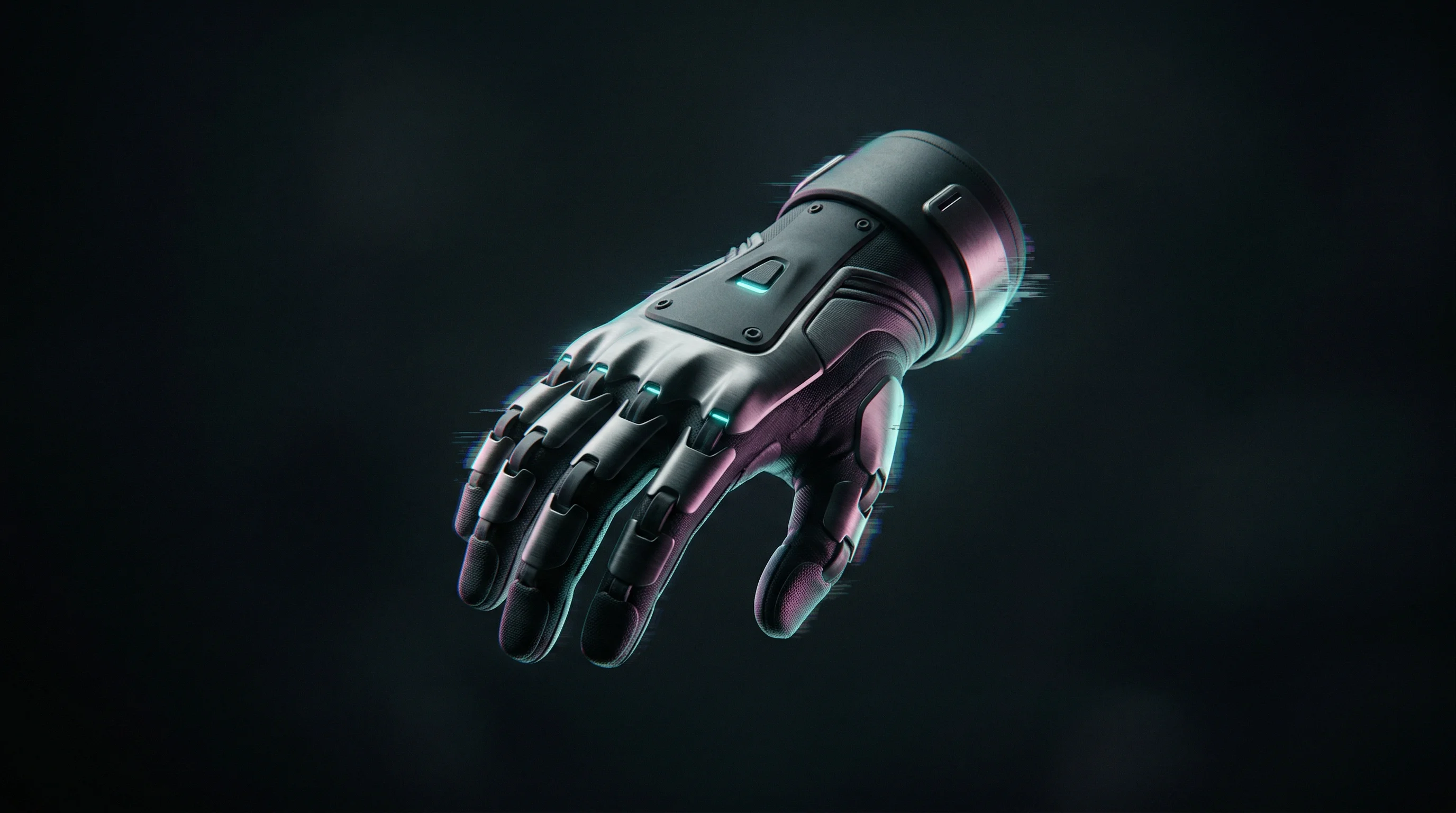
The glove strategy is where Sunday diverges most sharply from competitors.
Rivals like 1X and Sanctuary AI rely heavily on teleoperation—remote human pilots guiding robots through tasks in real time. It's effective for demonstrations, less so for scaling a product into thousands of homes. Sunday's approach sidesteps that bottleneck entirely by collecting human demonstration data in situ: real kitchens, real clutter, real unpredictability. Those hand movements get piped into ACT-1, Sunday's robot foundation model, which then translates them into robot-executable commands through what the company calls "Skill Transform." Sunday claims a 90% success rate on that translation, according to a technical blog post from November 2025.
It's clever. Perhaps too clever, in the way that elegant solutions sometimes are. The bet assumes that enough diverse, messy, real-world manipulation data—paired with a sufficiently robust model—will generalize across the chaotic spectrum of household tasks. Sunday has demonstrated narrow competency under controlled conditions. Generalizing to the full disorder of daily life—the spilled juice, the cat on the counter, the lighting that shifts throughout the day—is exponentially harder.
Whether Memo can handle that by late November is very much an open question. The company will deploy beta units backed by "more than 70 engineers and researchers," per its press release. TechCrunch reported a waitlist surpassing 1,000 names, though waitlists in consumer tech are notoriously unreliable indicators of actual demand.
Thomas Laffont of Coatue, joining Sunday's board as part of the deal, praised Zhao's "research-to-product velocity." Aaref Hilaly of Bain Capital Ventures emphasized the "full-stack" thinking required to move beyond teleoperated stunts into reliable daily service. Translation: investors believe in the technical chops and systems-level design, but they're also keenly aware the hardest stretch lies ahead.
Crowded Field, High Stakes
Sunday is hardly alone chasing the home robot prize, and the competitive landscape has sharpened considerably in recent months.
Figure AI raised $675 million at a $2.6 billion valuation back in February 2024, attracting capital from Microsoft, OpenAI's Startup Fund, Nvidia, and Jeff Bezos personally. Figure has concentrated mostly on manufacturing pilots—BMW's Spartanburg plant serves as a high-profile testbed—but the company has hinted at home applications down the road. Tesla's Optimus folded laundry in a January 2024 video, though skeptics widely dismissed the demo as pre-scripted theater. Agility Robotics' Digit is running warehouse trials with Amazon, with broader commercial rollout expected sometime this year.
Less than two weeks after Sunday's funding announcement, Amazon acquired Fauna Robotics, maker of the Sprout home and school humanoid. The timing sent a clear signal: large tech platforms view the home robotics space as strategically vital, and they're willing to buy rather than build if the right targets emerge. Samsung's Ballie, a rolling home companion, has stumbled through repeated delays—originally slated for the first half of 2025, it was pushed again in December.
The global dimension adds another layer of complexity. China's government-backed humanoid push, complete with standardization committees and industrial action plans, is driving hardware costs downward at a pace that unsettles Western competitors. Reports from late 2025 cited Chinese humanoid pricing falling toward $16,000, with some models advertised below $6,000—though specifications and real-world capabilities vary wildly, and independent verification is scarce.
The Thanksgiving Sprint

Sunday's timeline is aggressive to the point of audacity. Beta units by Thanksgiving 2026 leaves roughly eight months from funding announcement to first deliveries. That's a sprint in hardware, even for a team with deep technical roots and academic credibility.
Consider the broader context. The International Federation of Robotics reported 102,900 professional service robot units sold in 2024, a 14% year-over-year uptick. But those are overwhelmingly logistics bots operating in structured warehouses and factories, not machines navigating the anarchic sprawl of a lived-in home. Home manipulation at the level Sunday is promising has no proven playbook at scale. None.
Goldman Sachs Research projects the humanoid market reaching $38 billion by 2035, with roughly 250,000 units shipped by 2030—mostly for industrial applications. Morgan Stanley's April 2025 outlook swings far more optimistic, modeling a $5 trillion market by 2050 and envisioning one humanoid per household. Both forecasts rest on assumptions about reliability, safety, and regulatory frameworks that remain largely theoretical.
The safety certification hurdle is perhaps the most underappreciated obstacle in Sunday's path. UL 3300, the ANSI/CAN standard for service, communication, information, education, and entertainment robots, was published in April 2025. Simbe's Tally inventory robot became the first to secure UL 3300 certification on March 4—proof the pathway exists, but also proof the bar is real. Sunday has disclosed no certification progress, and consumer robots wandering homes with children and pets will face scrutiny that retail floor bots never encounter.
The EU's AI Act, which took effect in August 2024, imposes staggered compliance deadlines running through 2027 for high-risk embedded AI systems. Depending on use case and risk classification, household robots could easily fall into that category. Startups eyeing European markets will need compliance documentation ready well before any product launch.
Free from Chores?
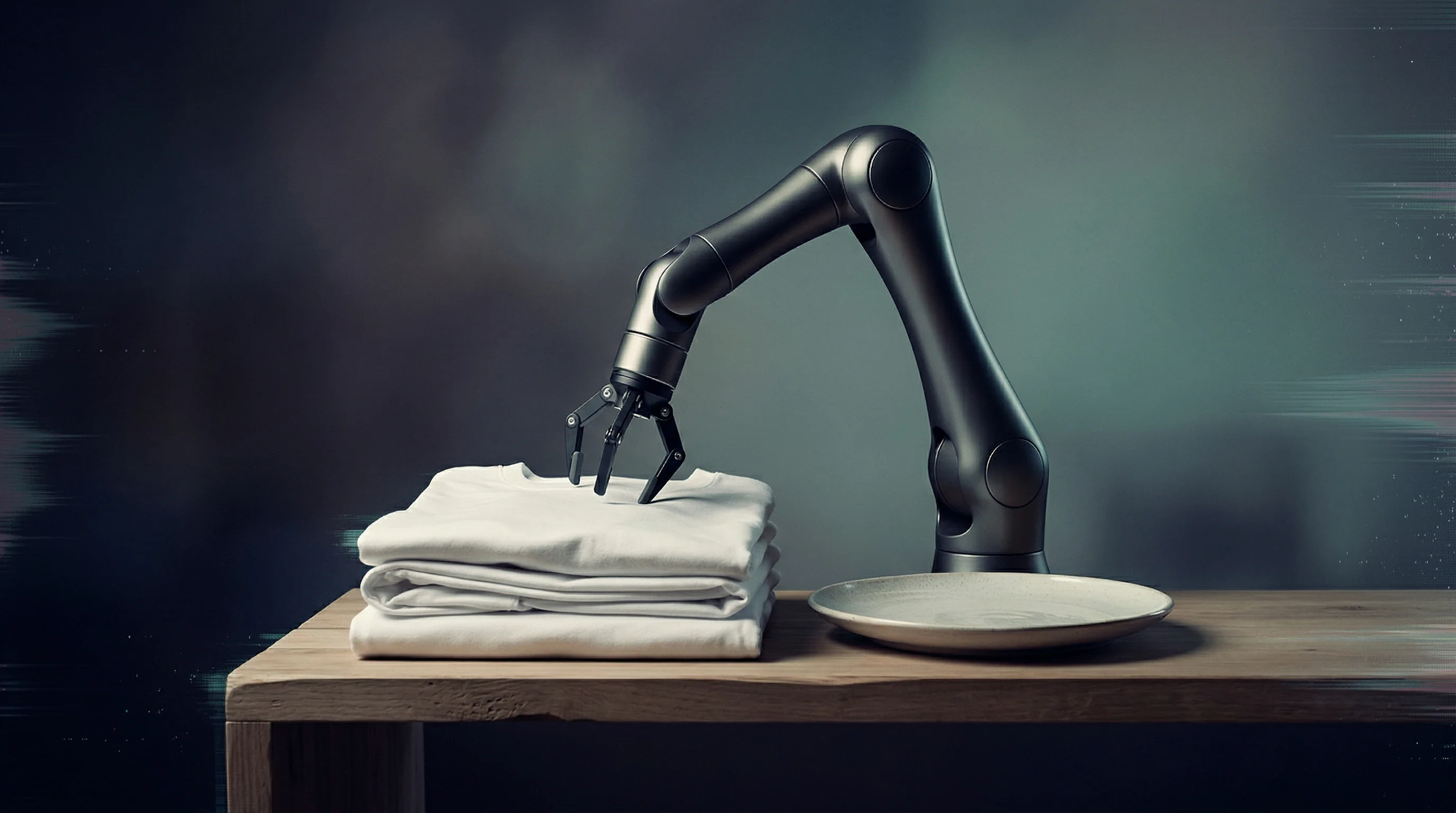
Sunday's $1.15 billion valuation reflects both the grandeur of the vision and the difficulty of the execution. Zhao told WIRED in November 2025, "We want to build robots that free people from laundry, from the dishes, from all chores."
It's a seductive promise. Americans spend an average of two hours daily on household tasks, according to Bureau of Labor Statistics time-use surveys. Outsourcing even half of that to a machine would fundamentally reshape how people structure their days, their weeks, their lives.
Whether Memo can deliver on that by Thanksgiving—or at all—will test not just Sunday's technology, but the entire thesis that home humanoids are ready for prime time. The company has the funding, the talent, and the technical approach. What it doesn't have is time, or margin for error.
Thanksgiving is eight months away. The turkey will be carved, the dishes will pile up, and we'll find out if a robot can handle them.


