

November 2023. Most people missed it. The FDA published guidance on computational modeling and simulation—dry stuff, technical—but buried in the document was something rare in regulatory circles: a green light.
For the first time, the agency laid out exactly how virtual human models could replace physical testing in device submissions. Not as supplementary evidence. Not as "nice-to-have" data. As the real thing. The ASME V&V40 framework they cited wasn't aspirational theory. It was a roadmap, and suddenly navigable.
Beneath the policy announcements and the predictable academic symposia, something else started happening. A new category of infrastructure company began taking shape.
The pitch sounds almost too good: simulate human biology in software, run thousands of virtual trials, iterate on medical devices without cadavers or animal testing, shrink clinical studies by a third or more. Silicon Valley loves this story. Investors love this story.
But between the vision of "digital twins" and the reality of regulatory submission sits an unglamorous truth. The data layer is a disaster.
When Regulators Open Doors
The FDA's guidance—officially titled "Assessing the Credibility of Computational Modeling and Simulation in Medical Device Submissions"—represents more than bureaucratic process improvement. It aligned with ASME V&V40-2018, the engineering standard that spells out how to validate physics-based models for regulatory purposes. The message was clear: prove your simulation is credible for a defined context, and we'll accept it as evidence.
Not theoretical anymore.
On the pharmaceutical side, ICH M15 has been grinding through Step 2b consultation (comments closed February 2025), working to harmonize model-informed drug development across U.S., European, and Japanese regulators. The EMA is drafting its own guideline for mechanistic models—PBPK, PBBM, quantitative systems pharmacology—likely landing sometime between now and 2026. Meanwhile, the FDA's MIDD Paired Meeting Program, institutionalized under PDUFA VII, gives drug sponsors a structured pathway to discuss computational approaches early in development.
The regulatory doors are open, in other words. Walking through them, though? That requires something most organizations simply don't possess: unified, validated, traceable datasets that span clinical operations, imaging, labs, omics, and real-world outcomes.
Good luck with that.
The Tax You Pay for Fragmentation
Healthcare data doesn't just live in silos—it speaks different languages within those silos. Electronic data capture systems use one syntax, clinical trial management software another. Imaging arrives in DICOM format. Lab results come wrapped in proprietary schemas. Real-world data shows up in OMOP if you're fortunate.
Try integrating motion capture from an elite athlete, biometric streams from wearables, imaging studies, and training logs into a coherent "digital twin" sometime. It's not a data science problem. It's a data engineering nightmare that eats months.
Standards exist, technically. HL7 FHIR handles clinical data exchange. DICOM governs imaging. OMOP harmonizes observational datasets. But stitching them together while encoding biological meaning and maintaining lineage back to source? That's where most projects stall. Companies building digital twin applications tend to spend more time wrangling data than running simulations—a ratio that makes CFOs wince.
Enter a new class of platform.
Mantis Biotechnology, a Y Combinator Winter 2026 graduate, positions itself as the "world's first domain-aware data platform" for biomedical and clinical datasets. Founder Georgia Witchel, who previously built physics-driven AI engines for multi-organ digital twins at Louiza Labs, frames the value proposition simply: "Databricks for biomedical and clinical data."
The platform ingests fragmented inputs—EDC systems, CTMS software, labs, omics files—and transforms them into canonical datasets with biological context baked in. The output: validated digital twins ready for production applications, including auto-generated FDA Q-Submission packages.
Mantis isn't the only player recognizing this gap. But the explicit focus on regulatory-ready infrastructure tells you something about where the market is heading. As Witchel's earlier work in professional sports and medical device development demonstrated, the value isn't just building a twin. It's making that twin defensible under scrutiny.
Which matters enormously when the FDA comes calling.
Evidence That Holds Up
This market isn't speculative anymore—hasn't been for a while, actually.
In 2018, the FDA ran VICTRE, an in-silico trial simulating 2,986 virtual patients to compare digital breast tomosynthesis against full-field digital mammography. Results aligned with human clinical trials. Precedent established.
September 2022: Unlearn.ai secured EMA qualification for its PROCOVA method, using machine learning to generate digital control patients and shrink sample sizes in clinical trials. The company's TwinRCT™ approach cut control arms by up to 33 percent in retrospective Alzheimer's disease analyses presented at AAIC 2024. AbbVie and Johnson & Johnson are live partners—not pilot programs, actual partnerships. The FDA noted in 2024 that PROCOVA aligns with existing guidance, which in regulatory speak means "we're comfortable with this."
HeartFlow went public in 2025. The company uses CT scans and computational fluid dynamics to create patient-specific cardiac digital twins (FFRCT, in the jargon). Revenue hit $125.8 million in 2024, up 39 percent year-over-year in Q1 2025. Payers cover it. Cardiologists order it routinely. The business model works.
Dassault Systèmes announced a beta of its next-generation Living Heart platform this past February—AI-powered parametric heart models designed to scale virtual testing and reduce animal studies. The project, a decade-long collaboration with the FDA, is positioning virtual hearts as production assets for device R&D and regulatory submissions.
These aren't research curiosities. They're commercial deployments generating revenue, regulatory acceptance, and clinical outcomes that show up in peer-reviewed literature.
Europe Builds Its Own Stack
Europe, characteristically, is building parallel infrastructure with more coordination than you'd expect.
The European Commission's Virtual Human Twins initiative launched platform procurement in June 2025, backed by more than €100 million in funding. The goal: a continent-wide framework for digital twin development, validation, and regulatory use. The European Health Data Space, which entered into force this past March with phased implementation running through 2031, is designed to enable secondary use of health data for research and innovation—precisely the fuel digital twin platforms need for validation at scale.
The Avicenna Alliance published "Toward Good Simulation Practice" in 2024, an open-access consensus document on best practices for in-silico trials. The Virtual Human Global Summit has been convening stakeholders to align on infrastructure, regulation, and ethical frameworks.
The momentum is global, coordinated, and accelerating faster than most U.S. observers realize.
What the Market Is Telling You
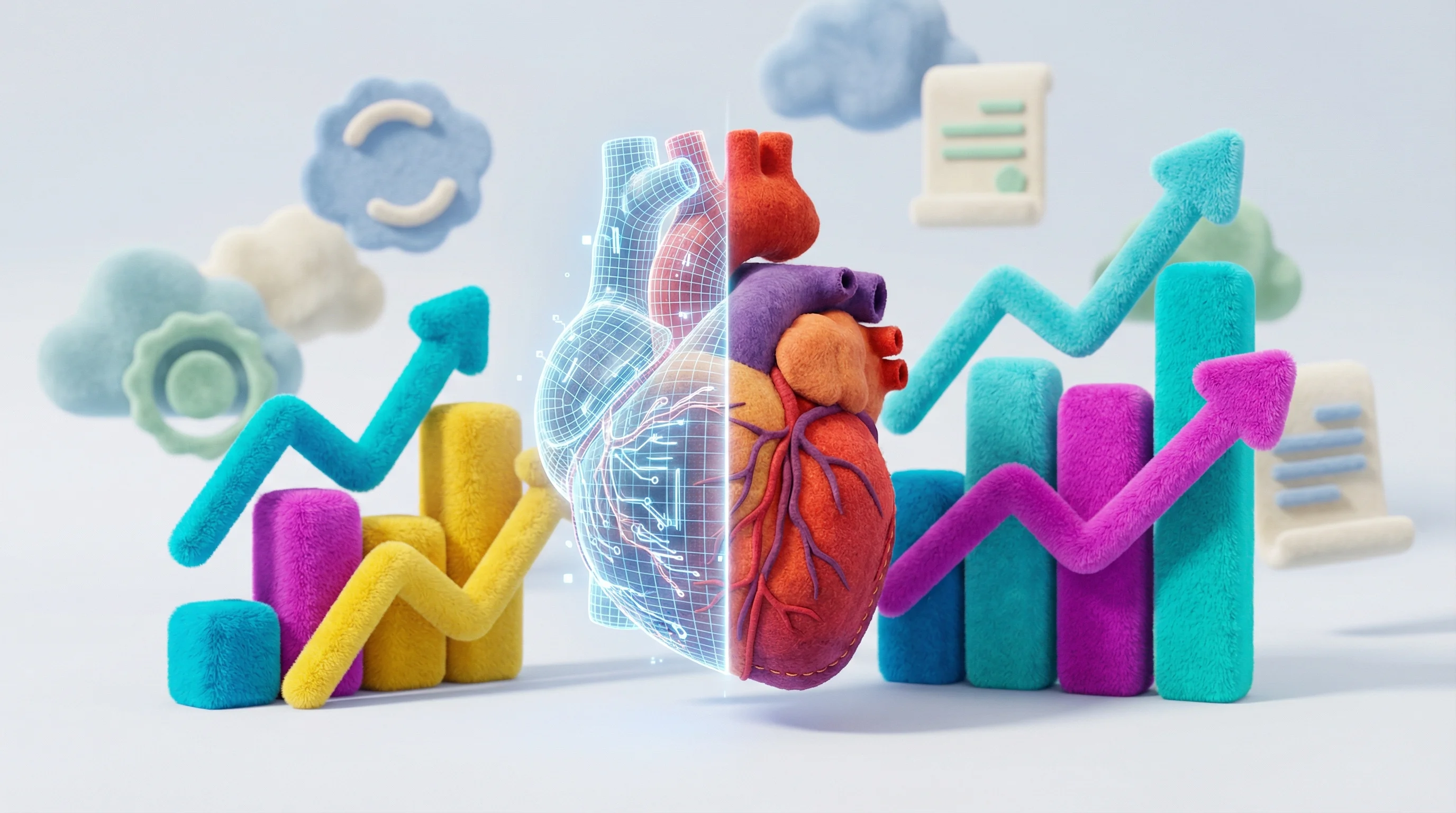
Grand View Research pegs healthcare digital twins at $902.6 million in 2024, growing to $3.55 billion by 2030—a 25.9 percent CAGR. In-silico clinical trials are projected to reach $5.59 billion by 2030.
But market size isn't the story here. Regulatory acceptance is.
For device companies, the FDA's credibility guidance and ASME V&V40 are now table stakes. Submissions that include computational evidence require documentation: verification, validation, uncertainty quantification, context of use. Q-Submissions—the FDA's pre-submission feedback mechanism—are moving to electronic templates in 2025, streamlining what was already becoming standard practice.
For pharma, ICH M15 finalization will harmonize MIDD expectations across major markets. The FDA's MIDD Paired Meeting Program is already operational. The EMA is drafting mechanistic modeling guidelines that should land within the year.
The question isn't whether computational models will be accepted. It's how quickly sponsors can operationalize them—and whether they have the data infrastructure to do so credibly.
Here's the thing: the constraint isn't simulation technology. Physics engines, finite element analysis, computational fluid dynamics—all mature fields. The constraint is data infrastructure. Platforms that can unify messy inputs, maintain lineage, encode biological meaning, and generate regulatory artifacts will capture disproportionate value.
Mantis's pitch—infrastructure that turns fragmented data into validated digital twins with auto-generated Q-Sub packages—suggests where this is heading. Not toward better simulations, necessarily. Toward better data foundations that make simulations defensible.
Twin Health's whole-body digital twin for metabolic disease, with real-world results showing 2.9 percent HbA1c reductions, operates at the patient level. Virtonomy's v-Patients for device testing operate at the cohort level. Unlearn's trial twins operate at the protocol level. Each solves a different problem. All depend on the same thing: trustworthy data pipelines that can withstand regulatory scrutiny.
The Unglamorous Winner
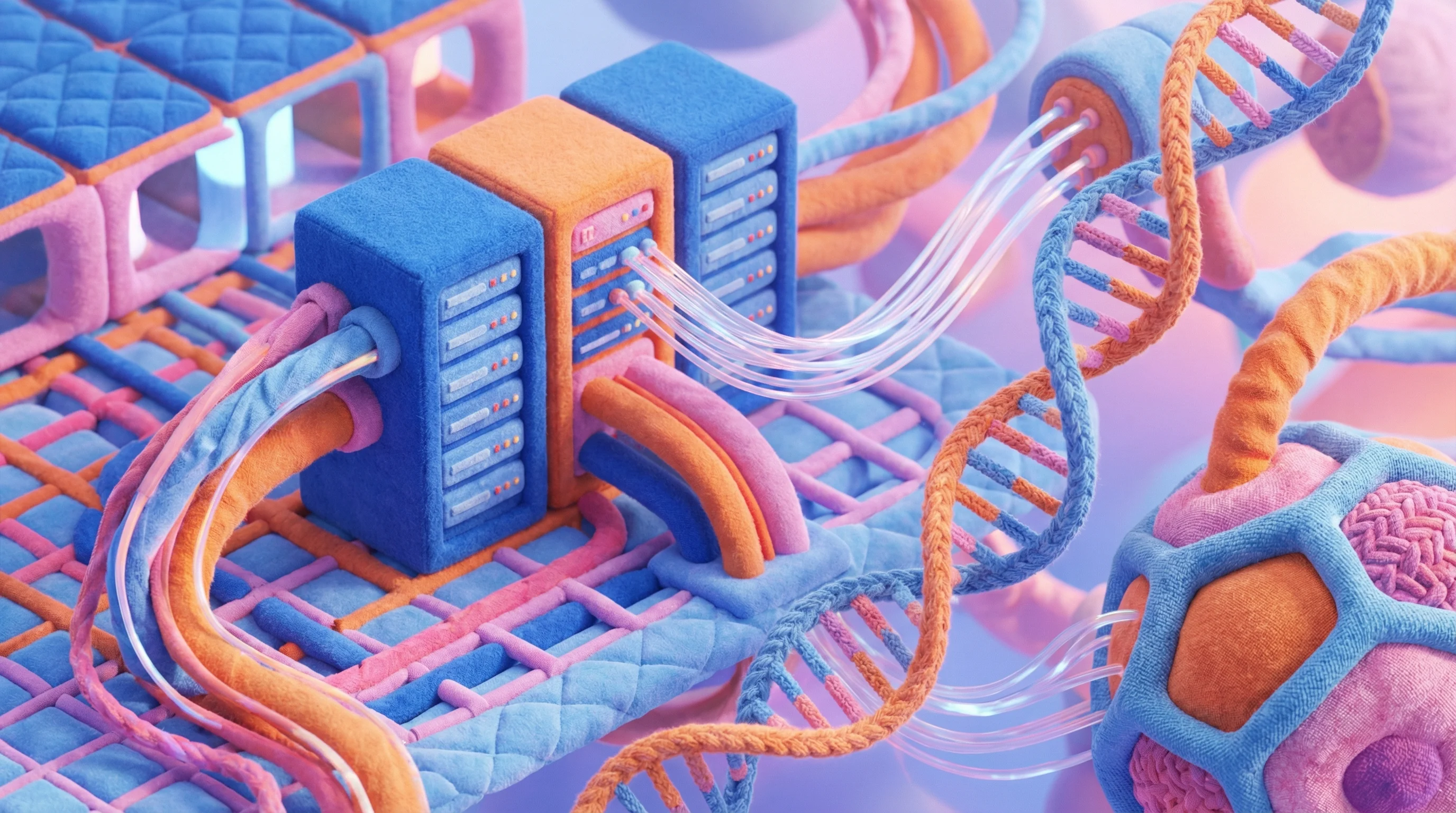
The next wave of digital twin companies won't win on modeling sophistication alone. They'll win on data infrastructure—the unglamorous, deeply technical work of making biology computable, traceable, and regulatory-ready.
That's where the race is happening. Just not where most people are looking.


