

When BMW's press release landed roughly three weeks ago, announcing a pilot program for humanoid robots at its Leipzig plant, one phrase stood out. The German automaker wasn't creating a "robotics center" or even an "automation lab." It was building a "Center of Competence for Physical AI in Production."
The language wasn't accidental. It signals where the real bottleneck lives in the effort to put humanoid robots on factory floors. These machines aren't held back by actuators anymore, or even power systems. They're held back by data—specifically, data about how humans actually move, manipulate objects, and solve physical problems in real time.
Now a clutch of startups is racing to build that data infrastructure, deploying custom sensor rigs across continents to capture what you might call skill itself. It's messy work, capital-intensive, and increasingly tangled in cross-border regulatory complexity. But the companies assembling these archives believe they're sitting on the raw material for the next generation of industrial automation.
Whether that belief translates into defensible businesses remains to be seen.
Wearables, Warehouses, and the Pursuit of Dexterity
Human Archive emerged from Y Combinator's Winter 2026 batch with a straightforward pitch: strap sensors onto people doing manual labor, capture everything, and sell the resulting datasets to companies training robots. The San Francisco startup—still just four people, according to its public filings—has spent recent months in India and China, outfitting workers with what it calls "custom rigs."
The hardware isn't subtle. Each rig combines egocentric RGB cameras, stereo depth sensors using infrared dot projection, tactile gloves embedded with force sensors, body-mounted inertial measurement units, and wrist-mounted cameras. The setup captures aligned multimodal streams: what the worker sees, how their hands move, what forces they're applying, how their body shifts through space.
In March 2026, the company's LinkedIn account described pilots with a 30-person operations team in Indian cities, collecting data from blue-collar workers performing repetitive tasks. The company's website claims a "50,000+ contributor network" and "1,000+ custom rigs," though those figures lack independent verification and carry no date stamps. Reached for comment, a spokesperson declined to provide updated numbers or specify which customers have licensed the data.
What Human Archive has disclosed is its technical roadmap. The company describes its "HA-Multi" dataset as synchronized streams of egocentric video, depth maps, tactile sensing, and IMU data, all time-aligned. In a post from roughly two weeks ago, the startup promised to open-source sample data "next week." As of late March 2026, no public dataset artifacts have appeared.
The company isn't operating in a vacuum. Embodi, founded by alumni from the robotics firm Sanctuary AI, is building what it calls a "Global Archive of Human Skill," using proprietary wearables to capture motion, dexterity, force, and point-of-view data. Embodi Labs, the company's data arm, says it operates across more than 50 countries and emphasizes privacy-preserving pipelines with "at source" PII redaction—a nod to the regulatory scrutiny these operations increasingly face.
Meanwhile, established players are muscling in. Scale AI, already dominant in large language model training data, has pivoted toward what it brands "Physical AI," publishing blog posts through February 2026 positioning itself for the embodied intelligence wave. Toloka and micro1 both offer "data engines" tailored for robotics. The field is getting crowded fast.
The hardware choices matter because the modalities matter. Research published throughout 2025 and early 2026 demonstrates that synchronized multimodal streams—vision plus depth plus tactile plus IMU—unlock performance gains that single-sensor setups simply can't match. Papers like RoboPaint (February 2026) and HuMI (February 2026) showcase tactile-aware retargeting and robot-free human demonstrations, reporting data collection efficiencies three times higher than traditional teleoperation methods.
In other words, strapping a GoPro to someone's head isn't enough. You need the full sensorimotor picture.
What Makes a Dataset Worth Millions?
The academic precedent helps explain why investors are suddenly interested in what amounts to filming people at work.
The Open X-Embodiment collaboration, which aggregated over 1 million robot trajectories across 22 different robot platforms, won Best Paper at the 2024 International Conference on Robotics and Automation. DROID, released at Robotics: Science and Systems in 2024, contains roughly 76,000 demonstrations spanning 350 hours, collected over 12 months across 564 scenes and 86 distinct tasks. Its GitHub repository saw calibration updates as recently as April 2025, suggesting ongoing use by researchers.
Ego-Exo4D, a Meta-led effort, captured 1,286 hours from 740 participants across 13 cities worldwide, released in December 2023. It includes audio, IMU data, eye gaze tracking, and point clouds with language annotations—useful building blocks for human-to-robot learning pipelines. Newer datasets like HD-EPIC (41 hours with 3D-lifted annotations; accepted to CVPR 2025) and OpenEgo (1,107 hours unified from six existing datasets, with hand pose and intention primitives) continue pushing the frontier on egocentric skill capture.
NVIDIA's GR00T foundation model, detailed in a March 2025 research paper, was trained on a mix of egocentric human videos, real and simulated robot trajectories, and synthetic data. The company's Cosmos world models and GR00T-Dreams synthetic motion system—announced through 2025 and into January 2026—represent a bet that combining real-world human data with high-fidelity simulation can scale pretraining without proportional increases in collection cost.
That combination is emerging as the recipe. Pure simulation doesn't capture contact dynamics or material variation well enough—not yet, anyway. Pure human teleoperation is prohibitively expensive and slow, requiring expert operators and custom hardware for every task. The middle path—capturing how humans actually perform tasks in real environments, then using that data to bootstrap robot policies—is what's drawing capital.
FieldAI raised $405 million at a $2 billion valuation in August 2025, according to Axios. Genesis AI emerged with $105 million in July 2025, promising to open-source parts of its data engine. Physical Intelligence reportedly raised $600 million in November 2025 at roughly a $5.6 billion valuation, though that figure relies on secondary sources and hasn't been confirmed by the company. Skild AI's funding history includes what Wikipedia lists as a $1.4 billion Series C in January 2026, though primary verification remains elusive.
The dollar figures are staggering for what is, at bottom, an infrastructure play in an industry that doesn't quite exist yet. Perhaps that's precisely the point.
Regulation Arrives, Ready or Not
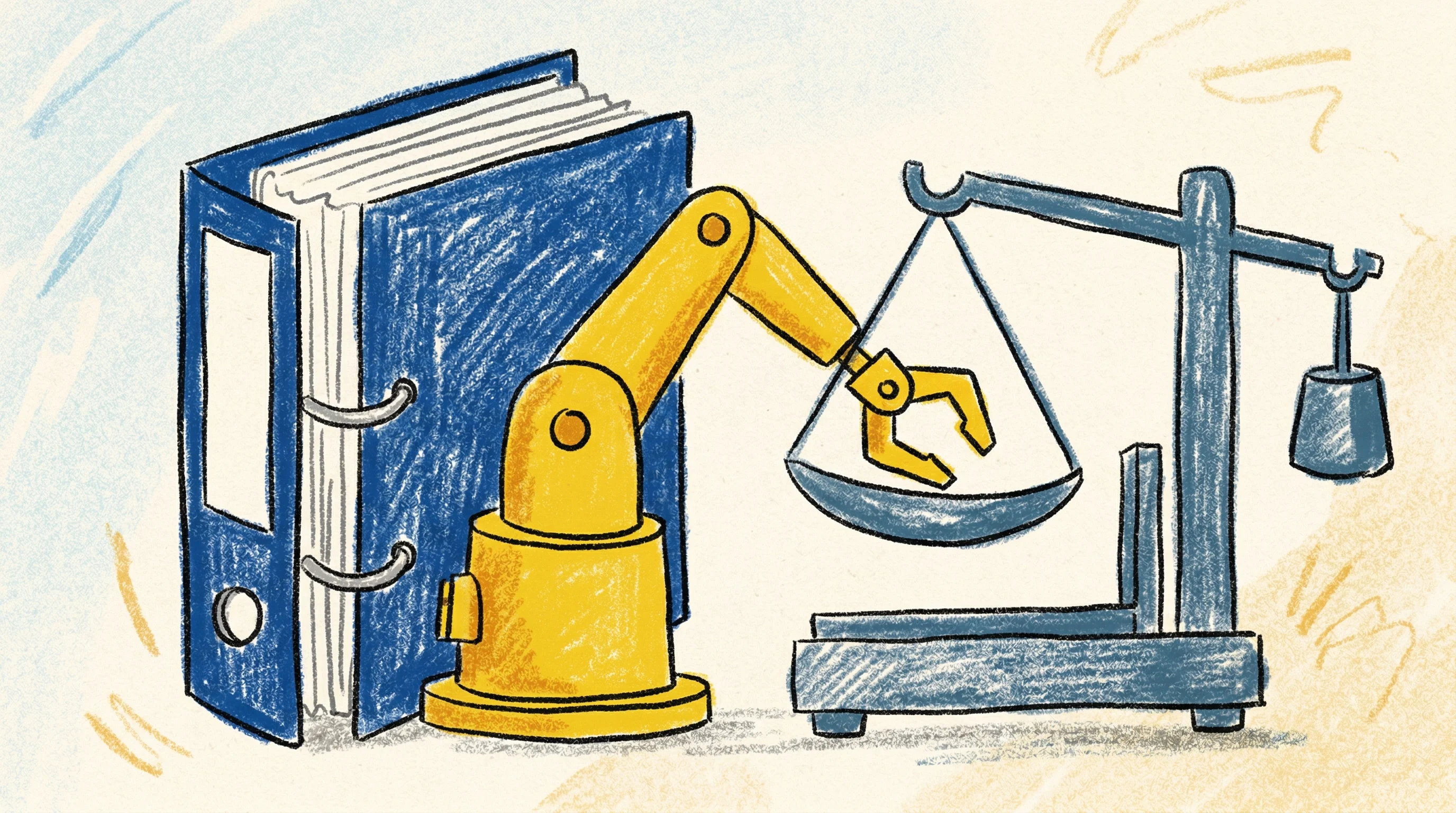
The timing of this buildout is not coincidental. Regulatory obligations that seemed distant in 2024 are now arriving with uncomfortable precision.
The European Union's AI Act entered force in August 2024, but its high-risk AI system requirements—potentially applicable to industrial robotics integrations—take effect August 2, 2026, with some categories extending to August 2027. Companies capturing egocentric video, biometric data, and workplace surveillance feeds will need auditable data governance: dataset lineage, bias management, post-market monitoring. The compliance burden is real, and it's landing now.
India's Digital Personal Data Protection Act, with rules notified in November 2025, phases in obligations through May 2027. Consent frameworks become mandatory by November 2026; broader notice requirements, breach reporting, and cross-border transfer safeguards follow in May 2027. The law doesn't separately define "sensitive personal data" the way GDPR does, but biometric and facial data captured in egocentric video still requires a lawful basis and adherence to retention limits.
In the United States, Illinois amended its Biometric Information Privacy Act in August 2024 to shift damages from "per scan" to "per person," reducing theoretical exposure for companies. But legal commentary from 2025 notes that retroactivity remains unsettled, and litigation risk persists—particularly for companies deploying facial recognition or biometric tracking without explicit consent.
For companies deploying wearable sensors in workplaces, especially across borders, the compliance runway is shrinking fast. Human Archive's India operations, Embodi's claimed 50-country footprint, and any data-collection-as-a-service provider working at scale will face operational complexity by late 2026. Privacy-preserving pipelines aren't optional anymore. They're table stakes.
The Synthetic Wildcard
One question hangs over the entire sector, unspoken but unavoidable: does expensive real-world multimodal capture remain defensible if synthetic data gets good enough?
NVIDIA's trajectory suggests the answer is "both, for now." The company's Cosmos world models, announced through 2025 and updated in January 2026, generate synthetic motion and environment data. GR00T-Dreams aims to scale pretraining without corresponding increases in real-world collection—essentially, teaching robots in simulation before they touch physical objects. Intrinsic, the Alphabet robotics subsidiary, has integrated NVIDIA's Isaac Manipulator and demonstrated universal grasping trained largely on synthetic data via Isaac Sim. At Automatica 2025, Intrinsic showcased vision models pretrained on 130,000 synthetic objects, developed in collaboration with Google DeepMind.
The pattern emerging is a hybrid recipe. Real human data provides ground truth for contact-rich, dexterous manipulation—the kind of tasks where physics matters and mistakes are costly. Synthetic data covers long-tail scenarios and scales cheaply, filling in gaps without deploying armies of sensor-wearing workers.
Research papers from 2025—EgoVLA, EgoBridge, tactile-vision fusion work presented at ICRA and IROS—show that models trained on human egocentric video can generalize to robot control. But retargeting and domain adaptation remain active research problems, not solved engineering challenges.
If synthetic continues improving at its current pace, the marginal value of costly real-world capture for certain tasks may compress. You can already see the pressure. But manipulation in unstructured environments, with variable materials and human-in-the-loop feedback, still demands high-quality real sensorimotor data. That's the wedge Human Archive and its competitors are betting on—that some skills are simply too complex, too contact-dependent, to simulate convincingly.
At least for now.
The Narrow Window

Market forecasts vary wildly, as they tend to when the technology in question hasn't shipped at scale. Goldman Sachs projected a $38 billion global humanoid market by 2035 in a February 2024 report. Morgan Stanley sees $5 trillion by 2050, according to an April 2025 analysis. More modest estimates from Fortune Business Insights peg the broader service robotics market at $131.9 billion by 2034. The spread reflects uncertainty more than conviction, but the direction is consistent: upward revisions throughout 2024 and 2025 as foundation models demonstrate faster-than-expected progress.
Industrial adoption will likely follow a familiar cadence—pilot, cell, line. According to BMW's press release, the Leipzig timeline exemplifies the cautious scaling: further test deployment in April 2026, pilot phase starting summer 2026, with broader rollout contingent on results. Boston Dynamics announced at CES 2026 that its Atlas humanoid is now a product, targeting factory deployments around 2028. Agility Robotics' Digit has been trialing at GXO and Amazon facilities, though neither company has disclosed performance metrics publicly. 1X Technologies opened consumer preorders for its NEO humanoid at roughly $20,000, with deliveries expected sometime in 2026.
For data providers, the window is narrow but real. Companies need aligned, high-quality multimodal datasets now to train the next generation of manipulation policies. Academic datasets like Open X-Embodiment and DROID provide baselines, but they lack the task diversity, scale, and modality synchronization that commercial deployments demand.
Human Archive's promise to open-source samples may be a hedge—establishing credibility while commercializing the premium, task-specific datasets that actually pay the bills. Embodi's emphasis on expert-operator guilds and PII-redacted pipelines speaks to the same dual mandate: research-grade rigor with enterprise compliance baked in.
Whether any of these companies build durable moats remains an open question. The robotics data stack is still being defined in real time. Platform players like NVIDIA and Intrinsic have the scale to vertically integrate. Established data labeling companies like Scale have distribution and trust. Startups have speed and focus, but they're also navigating regulatory complexity, cross-border operations, and the perpetual risk that synthetic data eats their margins before they've recouped collection costs.
What's certain is that the race is happening now—not in some hypothetical future. The robots heading to factory floors in 2026 and 2027 need training data that doesn't exist in any comprehensive form yet.
Someone has to build the archive. The only question is who gets there first, and whether arriving first actually matters.


