

The numbers tell one story. The International Federation of Robotics reported in 2025 that 2024 saw the second-highest number of industrial robot installations on record—proof that factory automation continues its relentless advance. But spend time with the researchers and founders reshaping this industry, and you hear something else entirely: that the whole premise might be backwards.
They're not trying to build better robots. They're trying to build one brain that works on any robot.
It's a subtle distinction, perhaps, but one with seismic implications. For decades, robotics companies built vertically integrated systems—custom hardware married to bespoke software, meticulously tuned for specific tasks. A robot arm for welding car frames couldn't pack boxes. A warehouse bot couldn't navigate a hospital corridor. Each machine required its own engineering effort, its own training regimen, its own support infrastructure.
Now, from Google DeepMind's sprawling labs to scrappy Y Combinator–backed startups, a new thesis is taking hold. The industry is converging on what researchers call "embodiment-agnostic" AI—software that doesn't care whether it's running on a humanoid, a quadruped, a robotic arm, or a wheeled platform. Train the model once, the thinking goes, then deploy it everywhere.
Whether this gambit works may well determine which companies capture the next wave of automation spending. And that wave is building fast.
A Market in Flux
The robotics industry is experiencing a curious bifurcation. Traditional industrial automation marches on—factory robot demand has doubled over the past decade, according to the IFR's 2025 report—while a new cohort of companies races toward something more ambitious: general-purpose embodied intelligence.
The United States ended 2024 with an operational stock of 393,700 robots according to the IFR's 2025 report, though installations dipped 9% year-over-year to 34,200 units. China's installed base sits roughly five times larger, a gap that underscores the geopolitical stakes. Collaborative robots, or cobots, are gaining traction but face pricing pressure; in recent quarters, they've accounted for a higher share of unit volume than revenue, signaling compression in the segment.
Yet the long-term forecasts sketch a radically different future. Goldman Sachs estimated in 2024 that the humanoid robot market could reach at least $6 billion within 10 to 15 years, climbing to $38 billion by 2035. Morgan Stanley goes further, with 2024-2025 projections of a $357 billion wage impact by 2040 and eight million humanoids operating in the U.S. alone. By 2050, the firm envisions a potential $5 trillion global market.
These are directional numbers, and perhaps optimistic ones. But they underscore the gravity of the bet now being placed on general-purpose machines. Gartner, in its typically measured way, predicts fewer than 20 companies will scale humanoid robots to production in manufacturing and supply chain by 2028. Fewer than 100 proof-of-concept projects, the firm believes, will progress beyond experimentation.
In other words: lots of hype, but a narrow path to commercial reality.
Three Converging Forces
What's enabling this shift toward universal robot brains? Three forces, primarily.
First, datasets have exploded in both scale and diversity. Google DeepMind's Open X-Embodiment dataset, released in 2023, aggregated robot demonstrations from more than 30 research labs. The RT-X model trained on this data showed early—if tentative—signs of cross-embodiment transfer: skills learned on one robot platform applied, with varying success, to another. By early 2026, DeepMind's AutoRT pipeline had orchestrated tens of thousands of trials across dozens of robots, feeding what the company now calls its Gemini Robotics-ER model, which emphasizes "embodied reasoning."
NVIDIA has matched this ambition with infrastructure. The company's Isaac GR00T platform provides open foundation models for humanoid robots alongside synthetic data generation tools. Early adopters include Agility Robotics, Boston Dynamics, and Skild AI. NVIDIA's approach pairs cloud-based training with edge inference modules, letting developers simulate millions of scenarios before touching actual hardware—a critical advantage when robot time is expensive and scarce.
Second, academic research is maturing, fast. A string of recent papers has tackled cross-embodiment generalization head-on. At a computer vision conference workshop in 2026, researchers demonstrated CrossZero, a zero-shot approach to manipulating objects with robot configurations the system had never seen before. Another paper showed that augmenting training data with synthetic robot configurations improved transfer performance. In August 2026, XEWorld launched as a controlled testbed for generalization benchmarks, giving researchers a common yardstick.
Not all the news is rosy. A preprint circulated last summer warned of pitfalls in measuring cross-embodiment transfer, emphasizing the need for rigorous confound checks. The message, in essence: it's easy to claim generalization when what you've actually built is a fragile, overfitted hack.
Third, commercial pressure is mounting. Agility Robotics announced plans to go public via a $2.5 billion SPAC merger in mid-2026, disclosing that its Digit humanoid had logged over 65,000 hours of real-world operation across nine customer sites. The company cited more than $300 million in multi-year orders in its pipeline. That's not vaporware. That's revenue visibility, of the sort that makes investors sit up and pay attention.
The Contenders
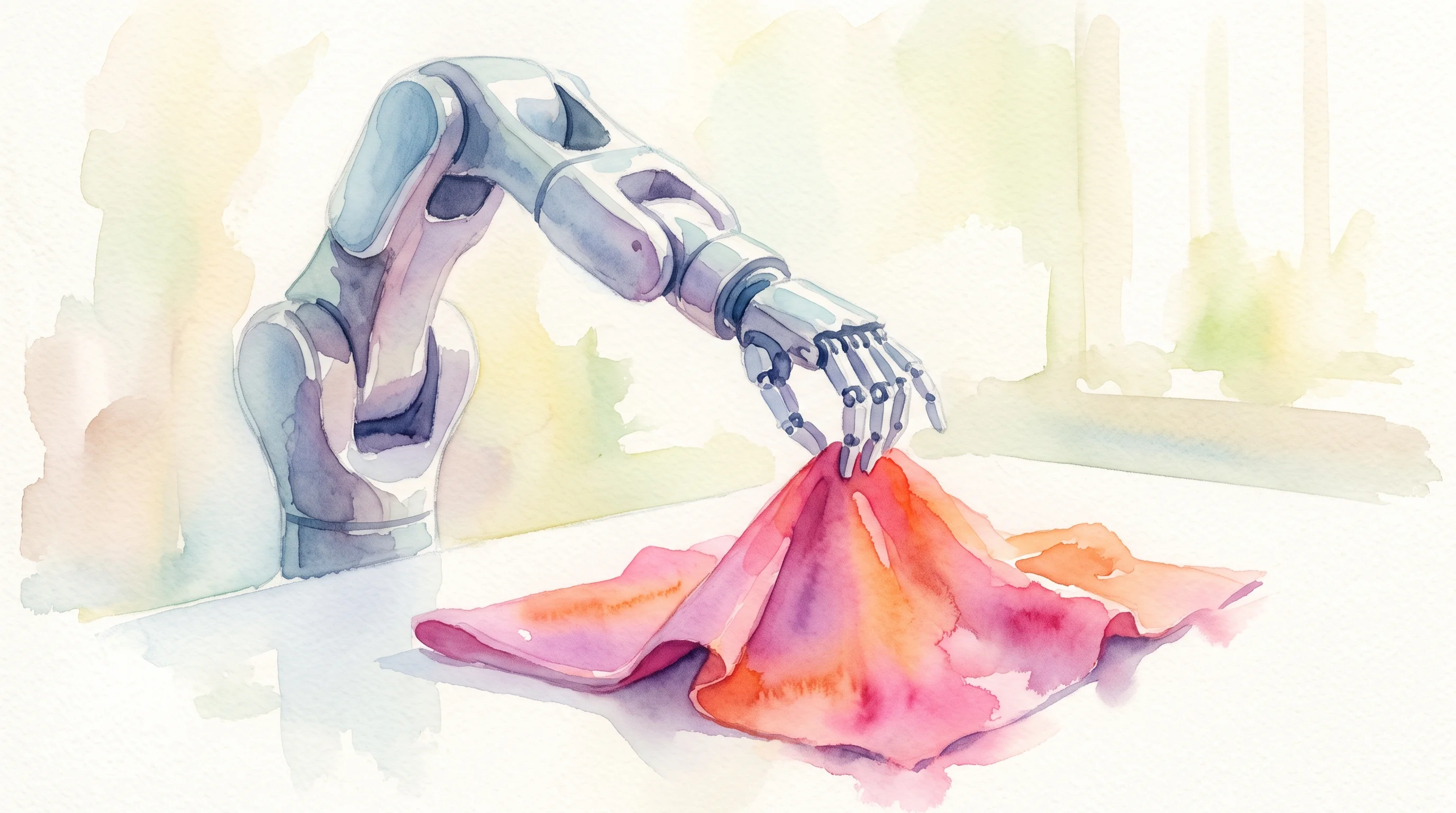
The race is crowded, and the approaches vary wildly.
Physical Intelligence positions itself as a pure-play "robot brain" builder. In April 2026, the startup published research showing its model controlling robots to perform tasks it had never been explicitly trained on—folding laundry, assembling objects, retrieving items from cluttered shelves. Co-founder Sergey Levine, speaking on a podcast shortly after, suggested that "fully autonomous robots are much closer than you think," leaning on foundation model initialization to achieve generalization. Whether that optimism holds up in the field remains to be seen.
Skild AI calls its offering an "omni-bodied brain." The company, which reportedly raised a $1.4 billion Series C at a valuation around $14 billion in early 2026, announced partnerships with ABB Robotics, Universal Robots, and NVIDIA in March. The thesis: one intelligence stack, many hardware partners. It's the Android strategy for robotics, essentially.
Agility Robotics, by contrast, is betting on vertical integration. Its Digit humanoid targets logistics and light manufacturing—environments where, the company argues, tight hardware-software coupling matters more than flexibility. Agility opened a factory in Oregon and is now navigating the SPAC process, which will subject its claims to the scrutiny of public markets. That scrutiny is coming soon.
Overseas, the landscape looks different. UBTECH began mass production of its Walker S2 humanoid in late 2025, targeting 5,000 units in 2026 and 10,000 in 2027. By mid-2026, the company announced that Walker S2 had entered Hitachi manufacturing environments for on-site validation. Unitree, also based in China, lists its G1 humanoid at $13,500—a price point that has opened the platform to researchers and smaller enterprises, though some configurations restrict secondary development.
A newer entrant, Neuromorphic—part of Y Combinator's Summer 2026 batch—claims to onboard robots in "minutes, not weeks." The startup describes its system as a "universal robot brain" that translates plain-language requests into executable skills: navigation, manipulation, inspection, tool use. It has gone live with its first customer in biotech, the company says, moving from onboarding to daily operations in one week. Neuromorphic offers a Robots-as-a-Service model priced at $5,000 to $10,000 per robot per month, bundling hardware, software, monitoring, and support. The company advertises support for quadrupeds, wheeled robots, and humanoids, with a dual-arm embodiment teased as "coming soon."
Other players are carving out niches. FieldAI announced a collaboration with Ouster in June 2026, pairing its "universal robot brain" with digital lidar for unstructured environments—farms, construction sites, disaster zones. Galaxy General, a Chinese firm, released what it calls a "cerebellum GPT" for humanoid motion control; the company claims over 5.5 billion yuan in cumulative funding. Heshi Think, also in China, revealed a dual-brain architecture in late May.
And then there's OpenAI, which launched a robotics hiring push on May 31, 2026. CEO Sam Altman framed the near-term focus as building robots to assist skilled workers, with a longer-term vision of personal robots. Whether OpenAI can translate its language model dominance into embodied intelligence remains an open question.
The Infrastructure Layer

The infrastructure layer is consolidating faster than hardware. NVIDIA's GR00T stack has emerged as something close to a de facto standard for humanoid development, while Qualcomm announced a physical AI robotics suite in March 2026, collaborating with NEURA Robotics.
Tooling is maturing, too. The Robomyne orchestration protocol, which launched in May 2026, bills itself as enabling "any brain, any skill, any robot"—a lofty claim, but one that reflects where the industry is heading. Operational interfaces are integrating with enterprise IT. InOrbit's RobOps Copilot offers a Slack interface for robot control; WAKU Robotics pushes notifications to Slack, Teams, and email.
The message: robots are becoming another asset class in the enterprise stack, not a standalone island. They need to talk to ERP systems, warehouse management software, and shop floor schedulers. The companies that solve those integration headaches may capture as much value as the ones building the robots themselves.
Regulatory Headwinds

The regulatory environment is tightening, which may slow deployments even as technology accelerates.
The EU AI Act's transparency rules took effect in August 2026, with high-risk obligations for robotics delayed until late 2027 and requirements for high-risk systems embedded in regulated products pushed into 2028. The EU Machinery Regulation, which explicitly covers autonomous machinery and AI safety functions, applies starting in early 2027.
In the U.S., ANSI/CAN/UL 3300:2024 has become the standard for consumer and public-facing service robots, published in April 2025. UL has begun certifying public-facing robots under this framework—a process that can take months and adds cost.
Internationally, ISO 10218-1:2025, the updated standard for industrial robots, is aligning with collaborative robot guidance from ISO/TS 15066. Vendors are rolling out software compliance updates to meet these requirements.
The upshot: many pilots now underway are running under transitional frameworks, with formal conformity pathways maturing over the next year or two. For startups, this creates a narrow window. Early deployments may proceed faster than later ones, before compliance gates slam shut.
Separating Signal from Noise
The next two years will separate the viable from the vaporware. Gartner's prediction—fewer than 20 production-scale humanoid programs by 2028—suggests the bottleneck isn't technology, exactly. It's operationalization.
Can these systems handle the variability of real environments? Can they integrate with existing enterprise workflows? And can they do it at a price point that beats hiring humans or buying task-specific machines? Those are the questions that matter, and the answers aren't yet clear.
The cross-embodiment models emerging from research labs are promising but narrow. They handle motion primitives, grasp families, constrained tool use. They don't yet handle the full chaos of a factory floor or warehouse—the oil spill, the misplaced pallet, the fire alarm that sends everyone scrambling. A preprint circulated last summer warned that many claims of generalization don't hold up under rigorous testing. The field, as one researcher put it, is littered with models that work beautifully in the lab and fall apart in production.
Still, the convergence is real. Hardware diversity is accelerating, but software is consolidating. NVIDIA's GR00T, Google's Gemini Robotics, and a handful of well-funded startups are all chasing the same prize: a foundation model for embodied intelligence. Someone will get there first.
For founders and investors, the strategic question is whether to bet on the integrators or the platforms. Companies like Agility are building end-to-end systems—hardware, software, services. They're betting that verticalization wins in robotics, just as Tesla showed it could in electric vehicles. The platform players—Skild AI, Physical Intelligence, Neuromorphic—are betting the opposite: that the brain is separable from the body, and that whoever controls the intelligence layer captures the lion's share of value.
It's the old debate: Apple or Android? iOS or Windows? Except this time, the stakes include not just consumer devices but the future of work itself.
Enterprise buyers, meanwhile, face a different calculus. Do you lock in with a single vendor's ecosystem, or do you wait for interoperability standards to mature? The answer may depend on urgency. If you need automation today—labor shortages, rising wages, competitive pressure—you go vertical. If you can afford to wait, the platform bet looks safer. But waiting has costs, too.
What's clear is that the industry is moving beyond proofs of concept. Agility's $300 million pipeline, UBTECH's mass production ramp, and the proliferation of robots-as-a-service models all point to real commercial traction. The question is no longer whether general-purpose robots are coming.
It's how fast they arrive, and who's building the operating system they'll run on.


