

A phantom product launch reveals the chaotic state of ambient intelligence, where every major tech company is chasing the same vision and none have figured out how to deliver it.
Search for "Superpowers AI" and you'll find a coaching app. A training consultancy. An audio SDK. A book about Chinese tech giants. What you won't find—despite whispers that circulated in certain corners of the industry late last week—is any visual assistant for phones or wearables by that name.
Which tells you something.
The phantom search became its own answer. If you're looking for ambient intelligence on wearables right now, you're not shopping for a product. You're watching a land grab play out in real time, one where the gap between the pitch deck and the actual technology remains wide enough to drive a truck through.
Samsung Went First (Sort Of)
April 7, 2025. Samsung flips the switch on Real-Time Visual AI for the Galaxy S25 series through a Gemini Live update. The mechanics are simple: hold the side button, point your camera, and the assistant tries to hold a two-way visual conversation. Should you buy that jacket? What's this thing you're looking at? Can you help me shop from this screenshot?
Free through year-end. After that, Samsung's left the door open to fees and "availability restrictions," which is corporate speak for "we'll figure out the business model later."
The timing wasn't accidental. Google had already laid groundwork with the Pixel 9 family back in August 2024, positioning Gemini Live as an always-on conversational layer across phones, watches, earbuds. Samsung's move was less invention than acceleration—getting Google's visual AI fully integrated on a flagship Android device before anyone else could.
Meta's Betting on Your Face, Apple's Working in Secret
Meta went all-in on glasses. The Ray-Ban Gen 2 models shipped. Then in September 2025, the company pulled back the curtain on the Ray-Ban Display variant—monocular micro-display, Neural Band wristband for silent gesture input, the whole augmented reality package.
Reviews have been... let's call them cautious. Forbes flagged utility and privacy concerns. AI features work in some regions, not others. But Meta's committed to the ecosystem play, reportedly dusting off its smartwatch project (code-named Malibu 2, because of course it is) for a 2026 release to tie everything together.
Apple? Working in private, as always. February 18, 2026: reports surface that the company's accelerated development on AI glasses without a display, a pendant device, AirPods with cameras and AI baked in. Production timelines are anyone's guess. Glasses might hit manufacturing in December 2026 for a 2027 launch. Maybe. Apple's betting on Siri with visual context, leveraging a decade of hardware design and an install base that runs deeper than anyone else's.
The company doesn't need to be first. It just needs to be right.
CES 2026: The Concept Parade
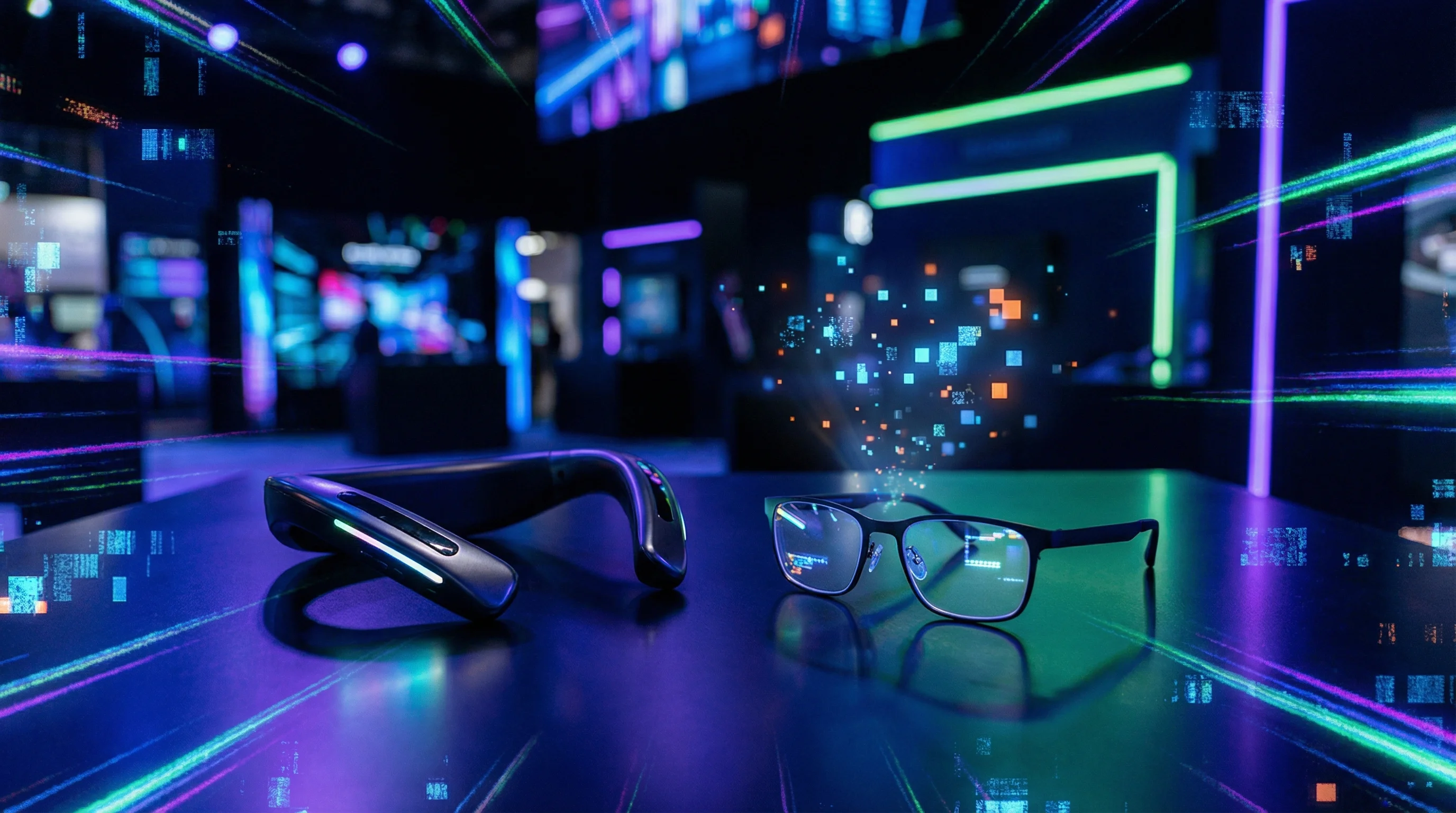
Motorola and Lenovo showed up at CES with Qira, an ambient AI assistant, plus Project Maxwell—a neck-worn multimodal wearable that exists mostly as a concept. Lenovo also wheeled out Visual AI Glasses V1: lightweight AR frames, micro-LED displays, a Tianxi assistant, translation and teleprompter features, navigation overlay.
Snap's planning next-gen Specs with an integrated AI assistant for sometime in 2026.
Common thread: these are concepts. Prototypes. Products with launch dates that live somewhere between "soon" and "eventually."
Brilliant Labs shipped Frame glasses in January 2024, promising AI "visual superpowers" tied to Perplexity search. Amazon acquired Bee—a wrist-worn device for continuous audio capture and transcription—mid-2025. Neither has set the world on fire, and both underscore just how hard it is to get ambient wearables right when people actually have to use them every day.
The Cautionary Tale Nobody Mentions in Press Releases
Humane AI Pin.
That's what happens when the pitch sprints ahead of the product. The device launched to reviews that were less "mixed" and more "uniformly scathing." Poor performance, severe thermal issues, UI that felt like it shipped six months too early. The company slashed prices, then shut the service down entirely on February 28, 2025, effectively bricking devices with limited refunds available.
The Pin's failure wasn't just a product stumble. It was a $230 million market education—funded largely by OpenAI CEO Sam Altman and other high-profile backers—in what ambient AI cannot yet do reliably at the edge, on battery power, in real time, when it counts.
What the Tech Can Actually Do (Versus What's Promised)
The academic research offers a more sobering view than any product launch video. WearVQA, a benchmark designed for visual question answering on wearable egocentric images, shows current vision-language models dropping to 24–52% accuracy when confronted with low-quality, real-world imagery captured from smart glasses.
That's a problem when you're promising seamless understanding.
Progress is happening, though mostly around the edges. MagicVL-2B, a lightweight vision-language model targeting smartphone deployment, achieved a 41% power reduction versus state-of-the-art models. Helios 2.0 demonstrated ultra-low-power gesture recognition for smart glasses operating below 10 milliwatts. Vinci, an egocentric vision-language model assistant, is designed for real-time, always-on operation with historical context recall on phones and wearable cameras. Research groups have mapped end-to-end power and compute tradeoffs required for all-day contextual AI on wearables, including full-system architecture work on models like Aria2.
The technical foundation is being laid, in other words.
It's just not there yet. Not really.
The $438 Billion Bet
Coherent Market Insights forecasts the ambient computing market hitting $438 billion by 2033, which assumes a fundamental shift toward context-aware, on-device intelligence running on sensors you don't see, gesture and voice interfaces, edge processing that happens locally instead of bouncing to the cloud.
It assumes the phones and wearables shipping today evolve into system-level assistants that work across devices—glasses, phone, watch, earbuds—without you having to think about which one you're talking to or whether they're listening.
Motorola and Lenovo's Qira is designed exactly for that vision: a single ambient AI layer running everywhere. Apple's rumored pendant and glasses would presumably tie into an iCloud-synced Siri that knows what you're looking at. Samsung and Google are tying everything to Gemini Live, betting conversational AI becomes the connective tissue.
The question isn't whether companies are building toward this. They clearly are, and the investments are substantial. The question is whether the underlying models, battery life, thermal management, UI paradigms—and most critically, the actual user value proposition—can mature fast enough to meet the expectations currently being set in keynotes and press releases.
Privacy Is Still the Third Rail
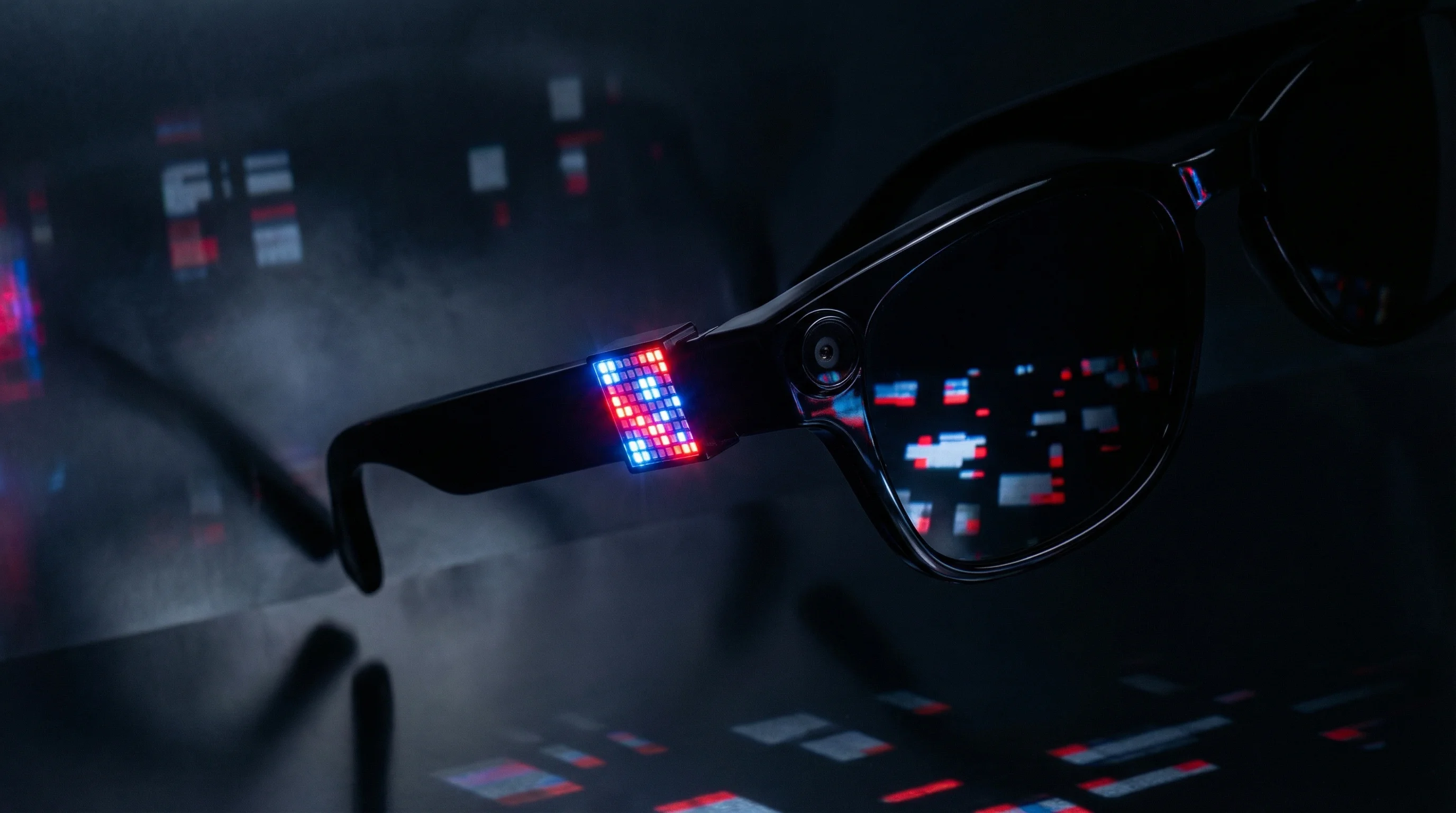
Every product in this category runs into the same wall eventually: people don't love the idea of cameras pointing at them all day.
Meta's Ray-Ban glasses ship with a small LED recording indicator. Privacy backlash in the press has been persistent anyway. Regional feature gating, where AI capabilities get turned off in certain countries due to data protection laws, is now standard practice. Retention policies, consent flows, accessibility considerations for blind and visually impaired users—all add layers of complexity that better models alone can't solve.
The Humane Pin's collapse included a privacy dimension that didn't make most headlines but mattered to early adopters. Bee's continuous audio capture raised immediate concerns, even with Amazon's integration plans. Any company building ambient intelligence is, functionally, building surveillance infrastructure. Whether they frame it that way or not.
So Who's Winning?
Samsung shipped first on phones with real-time visual AI. Google built the platform it runs on and presumably collects the most valuable data. Meta has actual hardware in market with Ray-Ban, even if adoption remains niche and concentrated among early adopters willing to overlook the privacy questions. Apple hasn't shipped anything yet, but the timeline suggests confidence it can leapfrog the current generation when it finally does.
Winning, in this market, might just mean staying in the race long enough for the technology to catch up to the vision. The phantom launch that prompted this inquiry didn't exist because someone decided not to ship. It didn't exist because the market is moving so fast that names, claims, and concepts blur together before most products reach consumers.
The real story?
Everyone's betting on the same future—a world where your devices understand what you see, anticipate what you need, fade into the background until the moment they're useful. And no one, not yet, has proven they can actually deliver it at scale.
Which means the race is still wide open. For now.


