

The pitch, delivered amid the cavernous halls of Atlanta's Georgia World Congress Center, was straightforward enough: what if autonomy didn't have to be bespoke?
Thoro, a robotics outfit spun out of Carnegie Robotics and headquartered in Pittsburgh's Lawrenceville neighborhood, chose the MODEX floor in April 2026 to unveil CoreFlex—a platform the company hopes will convince equipment manufacturers that autonomous systems don't need to be rebuilt from scratch for every forklift, floor scrubber, or pallet jack that rolls off the line.
The promise is modularity at scale. One software stack, many machines, no infrastructure headaches. No beacons dotting warehouse ceilings, no magnetic tape snaking across concrete floors. Just plug, integrate, deploy.
Whether the industrial world will buy that vision—literally—remains an open question. But CoreFlex represents a specific wager in a crowded autonomy landscape: that standardization, not customization, is what equipment makers actually want.
The Infrastructure Problem
Warehouses have been wrestling with autonomy for years, often discovering that the real cost isn't the robot itself but the ecosystem it demands. Fixed infrastructure—those beacons, that tape—requires installation, maintenance, and adaptation every time a facility layout shifts. For manufacturers already managing thin margins and tight timelines, that's friction.
CoreFlex is designed to sidestep it. The platform uses what Thoro calls "infrastructure-free navigation," relying instead on onboard sensors to map and navigate dynamically. Standardized mechanical and electrical interfaces mean an OEM can, in theory, drop the same autonomy kit into a tugger, a scrubber, or an AMR without engineering each integration from the ground up.
"CoreFlex is a modular, safety-certified platform designed to scale across many machine types," CEO Patrick Mondi said at the launch. The phrasing is careful—designed to scale, not proven to scale. That distinction will matter as the platform moves from trade show demos to factory floors.
Sensor Partnerships and Perception Layers
Under the hood, CoreFlex stitches together hardware from established players in the perception space. Thoro is partnering with Orbbec for depth cameras—specifically the Gemini 336 stereo unit, built around the MX6800 depth-sensing chip. The camera is tuned for the kind of visual chaos warehouses generate: glare off shrink-wrapped pallets, shadows from overhead racks, forklifts darting across sight lines.
"CoreFlex demonstrates the tremendous potential of modular autonomous systems," said Brad Suessmith from Orbbec, speaking in terms that suppliers typically reserve for partnerships they hope will scale. "Chip-level depth sensing enables stable and efficient operations even in complex warehouses."
For 360-degree awareness, Thoro is integrating Hesai's JT128 LiDAR sensor. The two companies have announced plans to collaborate on four new autonomous mobile robots earmarked for 2027, though details remain scarce. Product roadmaps in robotics have a habit of shifting, so skepticism seems warranted until those machines actually ship.
Software Stack and Safety Claims
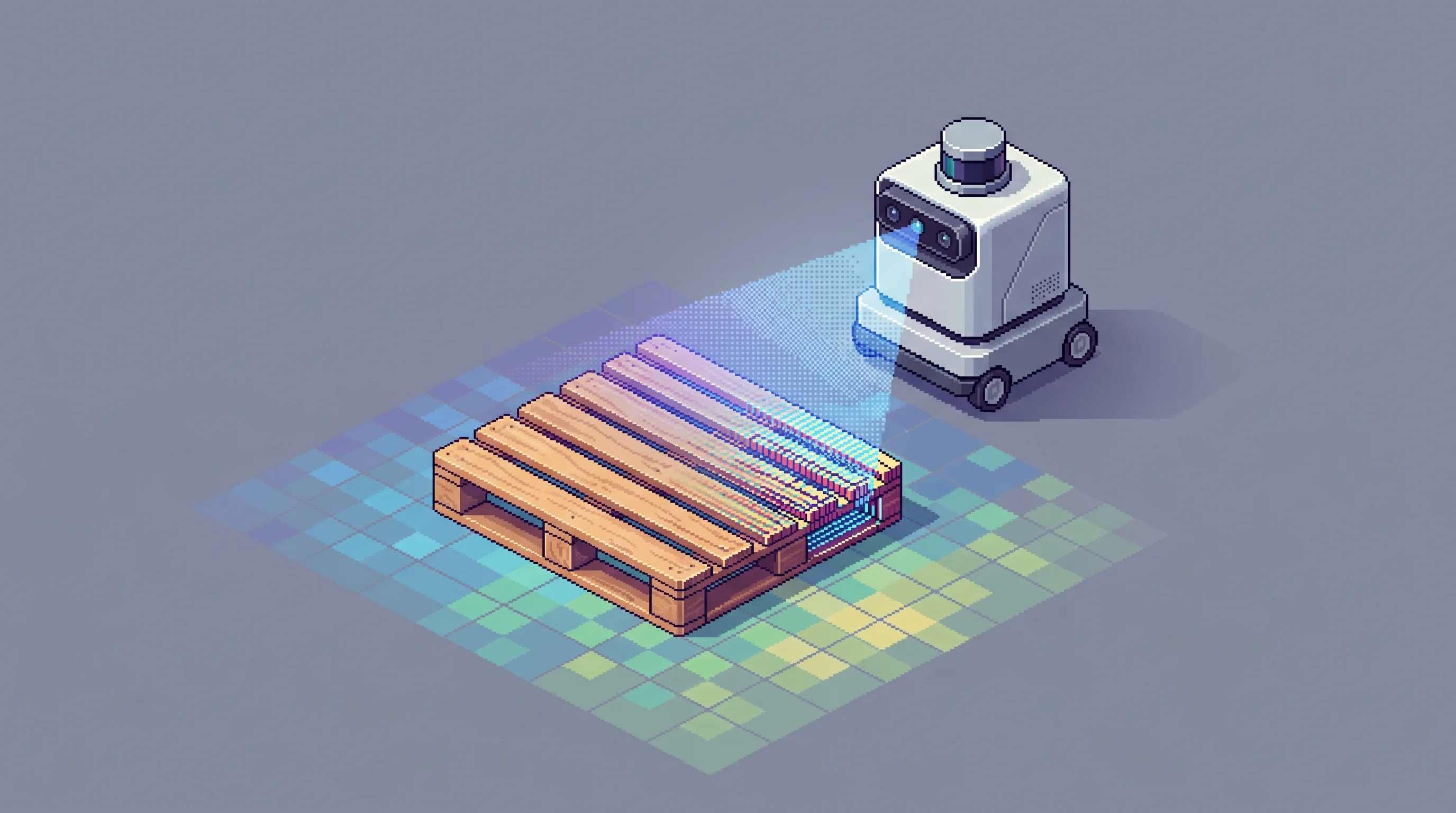
CoreFlex fuses data from 3D LiDAR, depth cameras, and inertial measurement units through Visual-SLAM algorithms—standard fare in mobile robotics, but executed here with domain-specific AI models trained on data from Thoro's existing fleet. Pallet detection, person detection, ground plane analysis: the essential building blocks of warehouse navigation.
Compute runs on NVIDIA Jetson modules, though Thoro hasn't disclosed which specific system-on-module it uses. (In robotics, that level of detail often signals whether a platform is optimized for power efficiency or raw processing throughput—a telling omission.)
The software architecture is what Thoro describes as "progressive cloud": autonomy lives at the edge, operating locally without relying on constant connectivity, but hooks into cloud APIs for warehouse management, ERP integration, and fleet analytics. Over-the-air updates, mission dispatch, and telemetry round out the operator toolset.
Safety, naturally, is front and center. Thoro claims the system includes dynamic safety fields and redundant sensor coverage, with certification aligned to ISO and CSA standards. But the company hasn't published specific certification numbers in its recent announcements, which raises the usual questions about how rigorously those claims have been tested in independent third-party audits.
The OEM Value Proposition—and the Big Joe Partnership
The real audience for CoreFlex isn't warehouse operators. It's equipment manufacturers who want autonomy but lack the in-house software talent—or the appetite for building it. Thoro's pitch: "Deploy in days, develop in months." OEMs get onboard UI, cloud operator tools, map sharing across different machine types, and multi-robot path planning without assembling a robotics engineering team from scratch.
This isn't vaporware. Thoro has been working with Big Joe Forklifts since 2023 on an autonomous pallet mover. Company materials claim 1,300+ deployed systems across its customer base as of April 15, 2026, though that figure hasn't been independently verified. In robotics, "deployed" can mean everything from pilot programs to full production runs, and the difference matters.
Carnegie Robotics Roots and the Pivot to Material Handling
Thoro's origin story runs through Carnegie Robotics, the Pittsburgh-based outfit known for ruggedized sensors and autonomy systems. Thoro spun out in September 2020, initially targeting autonomous cleaning and disinfection—a natural extension of Carnegie's earlier work with Nilfisk on autonomous floor scrubbers dating back to 2016.
The safety certification expertise carried over as Thoro pivoted into material handling, a shift that reflects broader market realities. Cleaning robots proved to be a tougher sell than anticipated; warehouses, meanwhile, have labor shortages and are hungry for automation that can move goods, not just mop floors.
The company raised $6.1 million in February 2025, according to CB Insights—over a year before the CoreFlex launch. Team size hovers between 11 and 50 employees, per LinkedIn data as of March 2026. Last November, Thoro picked up a Pittsburgh Tech50 Startup Award—the kind of regional recognition that signals momentum but doesn't yet guarantee national scale.
A Crowded Field
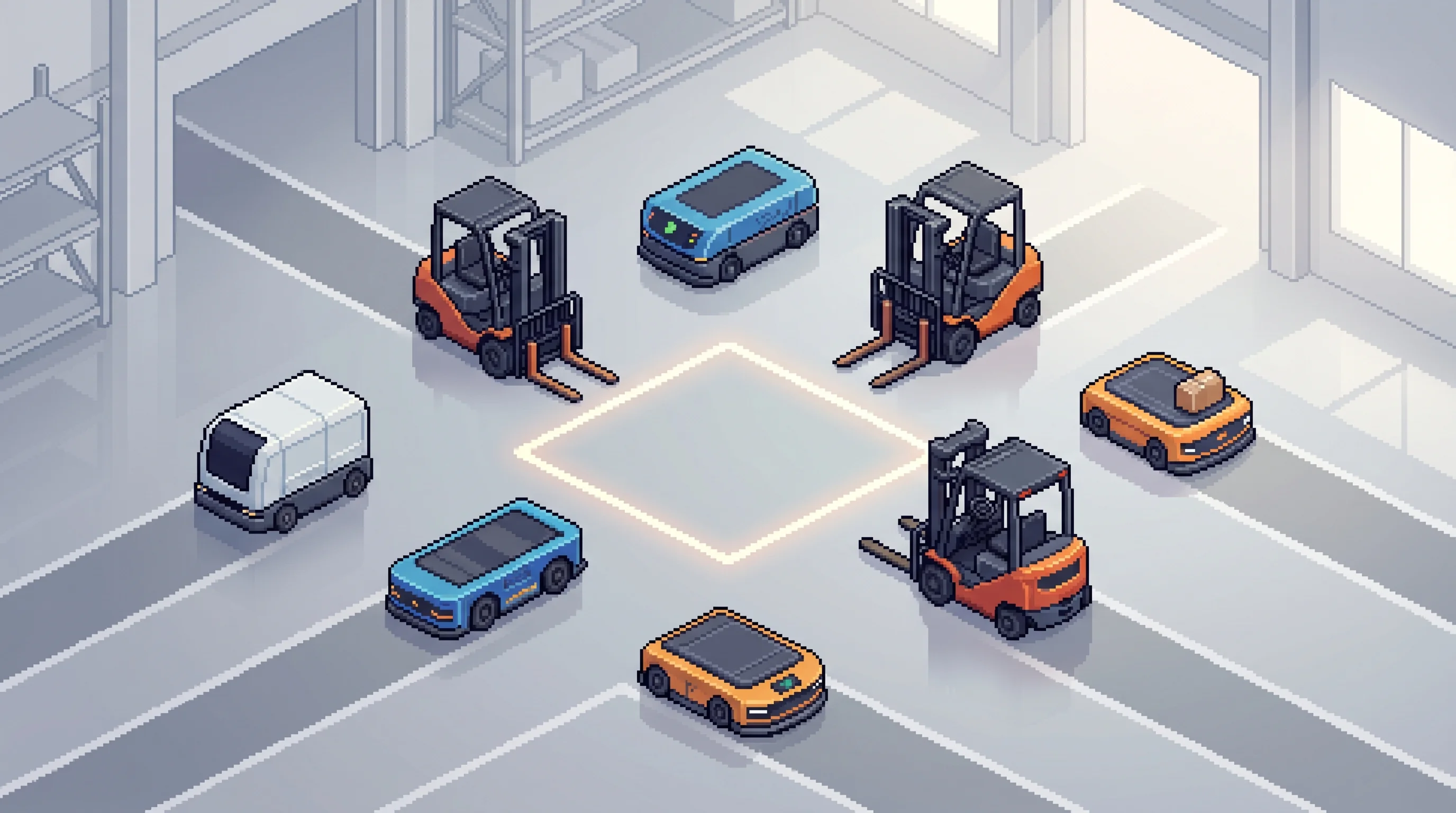
Industrial autonomy is not a sparse market. Cyngn, BlueBotics, Vecna Robotics, Third Wave Automation, Fox Robotics—these are just the names that come up in conversations about warehouse automation, and they're all angling for the same square footage. Some focus on specific vehicle types; others, like Thoro, are betting on platform plays.
What distinguishes CoreFlex, at least on paper, is the modularity thesis: that a single autonomy stack can serve forklifts, scrubbers, and specialty vehicles without costly one-off engineering for each product line. If that thesis holds, Thoro could become the preferred supplier for OEMs who'd rather integrate than innovate.
If it doesn't—if each machine type ends up requiring more customization than advertised—CoreFlex risks becoming another overpromised platform in a sector littered with them.
The 2027 Test

The four AMRs Thoro and Hesai have planned for 2027 will offer a clearer verdict. Can a modular platform actually deliver across such varied use cases? Or will edge cases, safety edge conditions, and OEM-specific requirements force the kind of customization Thoro claims to avoid?
For now, CoreFlex is live on the MODEX floor through April 16, available for demos and technical deep dives. The conversations happening in Atlanta—between Thoro's engineers and prospective OEM partners—will likely shape whether this modular bet pays off or becomes a cautionary tale in robotics overreach.
In an industry where infrastructure-heavy deployments have become the norm, Thoro is wagering that manufacturers are ready for something simpler. Whether they are remains to be seen.


