

There's a particular kind of quiet that settles over a startup when it's been working in stealth mode. But when Traysar, an Austin-based defense technology company, finally surfaced this week, the nature of its work was anything but subtle: autonomous platforms designed to navigate—and fight—beneath the earth's surface.
The company announced a $25 million seed round on June 17, timing the reveal for one day after its public debut at Detroit's Reindustrialize Summit. For those who've been tracking the steady militarization of venture capital, the investor roster reads like a who's who of defense tech's new guard: Silent Ventures led the round, joined by Lux Capital, Ora Global, and a collection of strategic angels that, according to the company, includes entrepreneur Steve Blank and founders from Anduril and Erebor. NeverLift VC, Mana, Impatient Ventures, New Vista, and Entree Capital filled out the syndicate.
What they're betting on is a premise that sounds plucked from speculative fiction—but which military strategists have been quietly obsessing over for years.
The Subterranean Battlefield
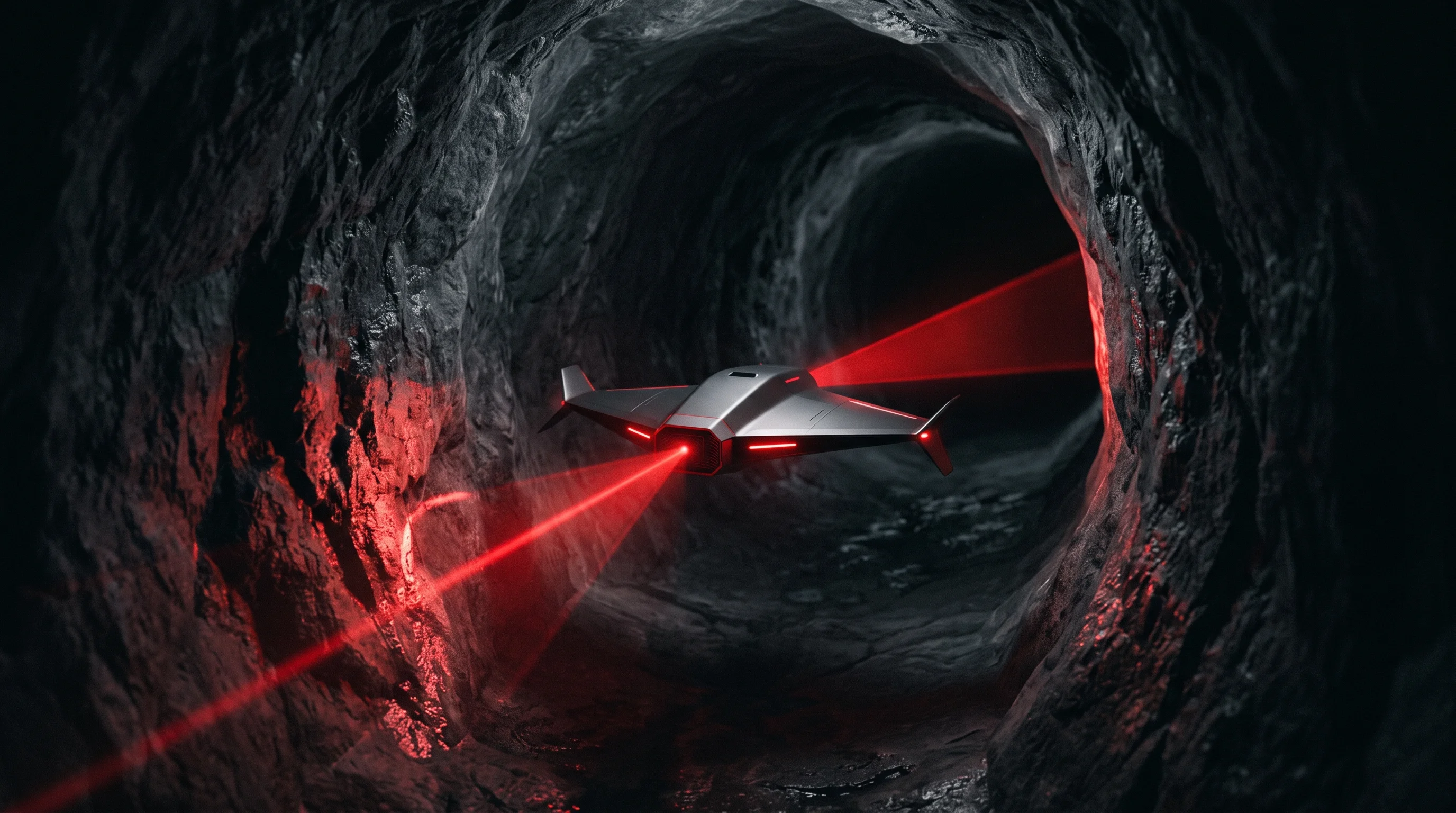
Founded last year by Yadin Soffer, Asher Katz, and Gilad Adin, Traysar describes itself as the first American defense startup focused entirely on underground operations. That's a narrow lane, to be sure. But perhaps a crowded one isn't the point. The company is building what it calls "Subterra" technology: autonomous systems engineered to navigate, map, and operate in places where GPS signals die and human soldiers can't easily follow.
According to the company, its engineering ranks include early-stage talent from SpaceX and The Boring Company—an interesting crossover between Elon Musk's commercial tunneling ambitions and the Pentagon's operational needs. Traysar describes two platform classes in its materials, though the language veers toward the aspirational. One is an "excavator-class autonomous tunnel breaching and tactical exploration platform," meant for navigating hostile underground networks. The other: a "high-speed, rapid-burrowing autonomous platform" designed to create precision entry points and deliver payloads.
The company frames the underground as both sword and shield—a domain for striking hardened targets, yes, but also for protecting critical infrastructure by burying it deeper than adversaries can reach.
There's a doctrinal foundation here, not just engineering bravado. The U.S. Army published ATP 3-21.51 in 2019, a manual on subterranean operations that laid out the tactical challenges of underground warfare. DARPA's Subterranean Challenge, which wrapped in 2021, pushed autonomous robotics through tunnel systems, urban basements, and cave networks—proof-of-concept work that companies like Traysar are now attempting to operationalize.
What Money Buys in Defense Tech
Jackson Moses, a general partner at Silent Ventures, struck a declarative note in the announcement: "Traysar is pioneering the doctrine and developing the technology required for U.S. military supremacy across the subterranean domain."
Lux Capital—which closed a $1.5 billion ninth fund early this year—had already mentioned Traysar in a quarterly report back in May, a subtle breadcrumb trail confirming its involvement ahead of the formal news. Ora Global, a 2024 spinout from Exor Ventures with footholds in New York, London, and Tel Aviv, focuses on resilience and defense applications. It's the sort of investor mix that signals both deep pockets and patient timelines.
CEO Soffer, for his part, didn't shy from hawkish rhetoric. "Our message to adversaries is clear," he said in the release. "There is no place to hide."
The $25 million will go toward the usual startup imperatives: accelerating product development, expanding engineering and manufacturing capacity, advancing system deployment. Traysar is hiring for government affairs roles in Austin—a telling detail, given that defense startups live and die by their ability to navigate procurement bureaucracies as much as by technical prowess. The company's website lists conceptual "system cards" with designations like "2887.2 maneuver-class boring" and "2554.2 precision access drilling," though actual specifications remain under wraps.
The Ground Beneath the Battlefield
Traysar's emergence reflects a broader shift. Underground infrastructure—tunnels, bunkers, subterranean command centers—has become both a security concern and a strategic frontier. Adversaries have long used tunnel networks to evade surveillance and move undetected; Hamas's tunnel systems beneath Gaza are just one recent example. The question for U.S. defense planners has been how to counter that advantage, or better yet, claim it first.
The company remains opaque about timelines and deployment specifics, which is standard practice for early-stage defense tech ventures dealing with sensitive applications. But the funding and the pedigree of its backers suggest Traysar has managed to convince a sophisticated group of investors that subterranean autonomy isn't just feasible—it's necessary.
Whether the technology lives up to the pitch remains to be seen. Defense startups, even well-funded ones, face long validation cycles, shifting Pentagon priorities, and the hard physics of making things work in environments that resist instrumentation. Building robots that can tunnel autonomously through rock and soil while maintaining communications and situational awareness is, to put it mildly, non-trivial.
Still, Traysar has carved out a niche that few others have dared to touch: the literal ground beneath the battlefield. And with $25 million in the bank and a mandate to move quickly, the company has at least bought itself time to find out whether its underground ambitions can surface into something real.


