

Charles Pick's startup in York, England, isn't trying to outmuscle Neo4j. It can't, really—not with 57 GitHub stars to its name and a database still labeled alpha. But the open-source project that Codemix shipped in April 2026 poses an uncomfortable question for an industry charging toward $14 billion in annual revenue: What if everyone's been optimizing for the wrong thing?
While the graph database establishment races to bolt on vector search and machine learning integrations—Neo4j rolled out native vector data types in October 2025, AWS Neptune linked up with GraphStorm for graph ML around the same time—Pick's team took a different turn. They built collaboration directly into the storage layer. Not as a feature you toggle on. Not as an enterprise add-on. As the foundational architecture, using conflict-free replicated data types, or CRDTs.
It's an odd enough idea that you'd be forgiven for missing it entirely. But the timing is worth noting, if only because two trends that rarely intersect are suddenly bumping into each other: industrial-strength graph databases on one side, the local-first software movement on the other.
The Market Everyone's Chasing
Graph databases are having more than one moment right now. Mordor Intelligence pegged the market at roughly $4.21 billion in 2026, projecting it'll hit $14.02 billion by 2031—a compound annual growth rate of 27.19%. Precedence Research is even more bullish, forecasting $25.23 billion by 2035 with a CAGR of 24.27%. The numbers vary, as they always do with analyst projections. The direction doesn't.
Neo4j still owns this space. DB-Engines ranked it first in April 2026 with a score of approximately 46.9, well ahead of anyone else. The company's recent moves telegraph where the industry thinks value creation is headed: Aura Agent hit general availability in February, targeting enterprises that want graph databases to power AI agents. The subtext is impossible to miss. Everyone sees the future in GraphRAG, in knowledge graphs feeding retrieval pipelines, in hybrid vector-graph architectures that make AI applications smarter.
Fair enough. But underneath that, a quieter current has been building. FOSDEM 2026—the massive open-source conference in Brussels—dedicated an entire track to "Local-First, sync engines, CRDTs." JupyterLab has been running real-time collaboration on Yjs since version 3.1. Liveblocks rewrote their entire realtime storage engine around Yjs in February. Loro keeps pushing high-performance CRDT implementations forward.
This isn't academic curiosity anymore.
When Two Hard Problems Collide
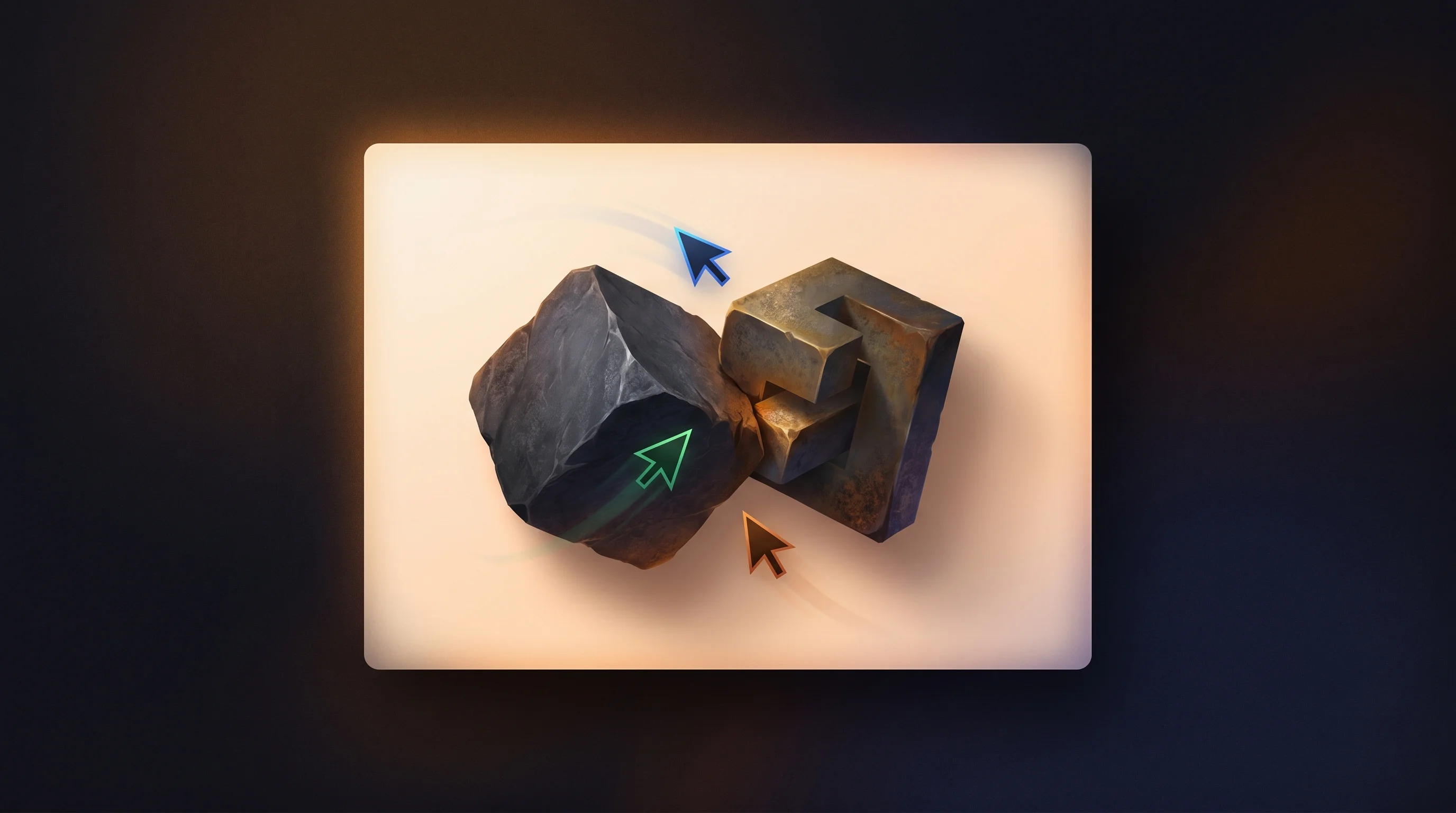
The convergence is interesting because the problems themselves are distinct. Problem one: collaborative software is expected now—multiplayer Google Docs, Figma canvases where five designers work simultaneously, Notion databases that sync instantly. Building this stuff remains genuinely difficult. Problem two: centralized architectures are showing cracks. Whether that's regulatory pressure (the EU Data Act's interoperability requirements started phasing in last September) or just engineering teams tired of debugging synchronization bugs at 3 a.m.
CRDTs solve collaboration through mathematics rather than arbitrary rules. When two users edit the same data at the same moment, CRDTs guarantee eventual consistency without needing some central authority to pick a winner. Elegant in theory; in practice, it's why Figma's multiplayer doesn't fall apart, why JupyterLab can sync notebooks across continents, why Liveblocks can promise real-time updates without the gnarly complexity of operational transforms.
Graph databases solve something else: representing connected data so relationship queries feel natural instead of painful. Traditional relational databases force you to join tables. Graph databases make edges first-class citizens. For knowledge graphs, social networks, recommendation engines—anything where relationships matter as much as entities—the model just fits better.
Merge them? You get a database that's collaborative by default and relationship-aware by design. Codemix's @codemix/graph is one answer to what that looks like.
What a Small Team in York Built
Pick describes the project as beginning with research, then evolving into something more practical. Codemix itself has a curious history. Founded in York in 2011 as an agency, it was "rebuilt in 2026," according to the company's about page. LinkedIn lists incorporation in 2013 with 2-10 employees, which suggests the rebuild represents a strategic pivot rather than a literal restart. The kind of pivot that happens when research starts suggesting product-market fit.
The graph database launched as MIT-licensed open source in April. GitHub shows approximately 57 stars and 4 forks as of late April—not viral, but for a technical tool in alpha, not nothing. A Hacker News post gathered 163 points and 45 comments, the kind of traction that signals the idea resonates with at least some slice of developers. Pick was transparent about constraints in the HN thread: "not designed for large data sets," he noted. The choice of TypeScript was deliberate—it lets the database run in browsers and Cloudflare Workers, edge computing environments where traditional databases can't follow.
The architecture itself is revealing. Dual query interfaces: a type-safe Gremlin-like traversal API and Cypher parsing. The Cypher support exists because "LLMs already know it," Pick explained. Possibly the first database design decision explicitly optimized for AI pair programming. Storage is pluggable, but the headline feature is the Yjs CRDT backend—YGraph—which makes the entire graph persistent in a Yjs CRDT document. Properties can be collaborative types themselves: Y.Text for shared text, Y.Array for lists, Y.Map for key-value structures. All automatically synchronized.
The demos illustrate the vision better than specifications might. Global airline routes rendered in a browser—fine, mildly interesting. More tellingly: an "add your face to the wall" demo where changes in one browser tab instantly appear in others. Collaboration not as an enterprise checkbox feature, but as the foundational architecture.
Other players occupy adjacent territory, though none quite the same niche. GUN offers a JavaScript graph database with CRDT-inspired conflict resolution and peer-to-peer networking. OrbitDB builds CRDT-based databases on IPFS. NextGraph promotes a "Graph CRDT" framework over RDF triples, but these trend experimental or blockchain-adjacent. On the other end, Redis Enterprise Active-Active uses CRDTs for multi-region writes, and AntidoteDB implements CRDTs with highly-available transactions, but neither emphasizes graph semantics the way Codemix does.
Codemix occupies middle ground: production TypeScript, familiar query languages, collaborative sync as a first-order concern. An April 6 blog post positioned Codemix as a "product intelligence" platform with LLM-integrated workflows, suggesting the graph database serves a larger vision. Perhaps as the shared state layer for human-AI collaboration.
The Interesting Part
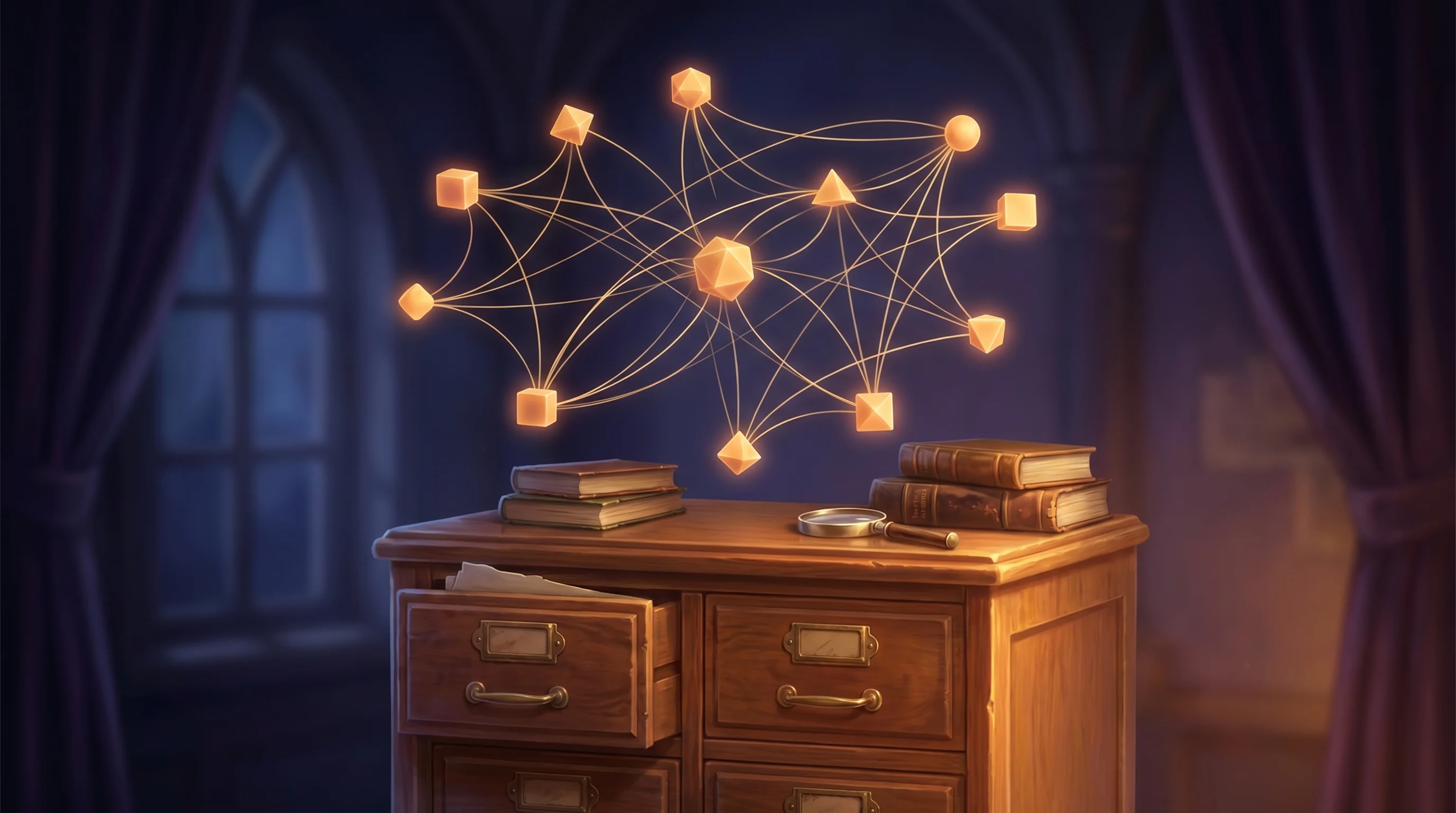
The broader market seems to be converging on similar problems from different angles. Gartner's 2026 strategic technology trends emphasize AI-native development and data provenance. Enterprise Knowledge's March analysis argued that GraphRAG represents a natural evolution for governed knowledge management. Neo4j and its competitors are betting billions that knowledge graphs will power the next generation of AI applications.
But the more interesting question—or at least, the less obvious one—is whether collaborative infrastructure becomes a default expectation rather than a premium feature. If regulation keeps pushing toward data portability and interoperability, if teams increasingly include AI agents alongside humans, if offline-first stops being a nice-to-have, then CRDT-backed data stores might stop being exotic and start being pragmatic.
The graph database market's growth projections assume continued centralization. Cloud-first architectures, enterprise sales cycles, the usual playbook. Local-first software assumes something else: users own their data, applications work offline, synchronization happens peer-to-peer or through minimal coordination servers. Codemix's graph database sits right at that tension point. Centralized query capabilities with decentralized sync.
Whether this particular implementation gains traction matters less than what it signals. With 57 GitHub stars, Codemix isn't threatening Neo4j's dominance—not this quarter, not next. But it demonstrates that merging graph semantics with CRDT consistency is technically feasible in TypeScript, deployable to edge computing environments, compatible with existing AI tooling. If you're building collaborative applications with interconnected data—design tools, knowledge management systems, multi-agent simulations—the architecture suddenly makes quite a bit of sense.
The market will decide whether collaborative graph databases become a category or remain a curiosity. Engineering footnote or inflection point. But the engineering itself is no longer theoretical, and the problems it solves aren't getting any less pressing. That's worth watching, even from York.


