

The pitch sounds almost too simple. Take a multimillion-dollar medical imaging machine, shrink it by redesigning the physics, park it in a truck outside urology clinics that can't afford the real thing, and charge by the scan.
But Adialante—a Redwood City, California-based startup backed by Y Combinator—insists it has done exactly that. The company says it has spent about eight years reworking the guts of magnetic resonance imaging, stripping out the heavyweight gradient coils that make conventional MRI scanners massive, deafening, and expensive. What's left, according to CEO Efraín Torres, is a system 40 percent shorter and 80 percent lighter than the standard hospital equipment, quiet enough to run without soundproofing and compact enough to fit in a mobile trailer.
In May, the startup announced that six urology clinics had signed on. One top-ten practice, the company said, had already put down a $30,000 deposit. Letters of intent totaling $12.75 million were in hand. The first mobile unit, Adialante claimed, would begin scanning patients by June 16—timed, perhaps not coincidentally, to Y Combinator's Demo Day.
Whether that timeline holds—and whether the technology actually works as advertised in a clinical setting—remains an open question. As of early June, no FDA clearance for an Adialante MRI system appeared in public databases. MRI systems are generally Class II devices that typically require FDA 510(k) clearance before they can be marketed commercially in the United States. The company's stated plans to begin scanning by Demo Day suggest progress in regulatory processes, though the specific status has not been publicly detailed.
Still, the core problem Adialante is trying to solve is real enough. Prostate MRI before biopsy can improve cancer detection rates significantly, and clinical guidelines from groups like the American Urological Association increasingly recommend it. But most urology practices don't have the millions of dollars—or the construction timelines—required to install an MRI suite. The result: fragmented care, delayed diagnoses, and a lot of scans that simply don't happen.
A Different Kind of Magnet
Torres, who earned a PhD in biomedical engineering from the University of Minnesota, co-founded Adialante with COO Parker Jenkins. Between 2018 and early 2026, the pair published thirteen peer-reviewed papers on what they call radiofrequency- or B1-encoding—a spatial imaging method that, in theory, sidesteps the need for the bulky gradient coils that give traditional MRI scanners their industrial heft.
Two U.S. patents covering the technology were issued in the past year, both assigned to the University of Minnesota. One arrived in July 2025, the other in May 2026. According to the company's materials, the redesign eliminates roughly half the hardware, cuts power requirements, and allows the scanner to run off a box truck without specialized electrical infrastructure.
The claims are striking, though not yet independently verified in a commercial setting. Traditional mobile MRI trailers typically rent for anywhere from $18,000 to $55,000 per month. Adialante's approach, if it works, would be less a refinement than a reinvention.
Scanning as a Service

Adialante isn't selling scanners. It's selling scans.
The business model is straightforward: the company owns and operates the mobile units, parking them at partner clinics for weeks or months at a time. Clinics pay Adialante a per-scan fee—the exact rate has not been disclosed—and collect insurance reimbursement for the procedure. Prostate MRI is covered under CPT code 72197, and clinics retain the margin after paying Adialante. The company frames this as "hours and hundreds" instead of "months and millions," a deliberate contrast to the traditional capital gauntlet of buying, installing, and maintaining an in-house MRI suite.
It's a wedge strategy aimed at practices that want the imaging but can't stomach the cost or logistical burden. Whether the economics actually pencil out for both sides—Adialante and the clinics—will depend on reimbursement spreads, scan volumes, and how much the company can scale its trailer fleet without running into operational bottlenecks.
For now, the six signed clinics remain unnamed. The $12.75 million in letters of intent are non-binding. But the $30,000 deposit, confirmed in the company's YC launch post, suggests at least one large urology group is willing to take the bet.
Beyond Prostate Cancer
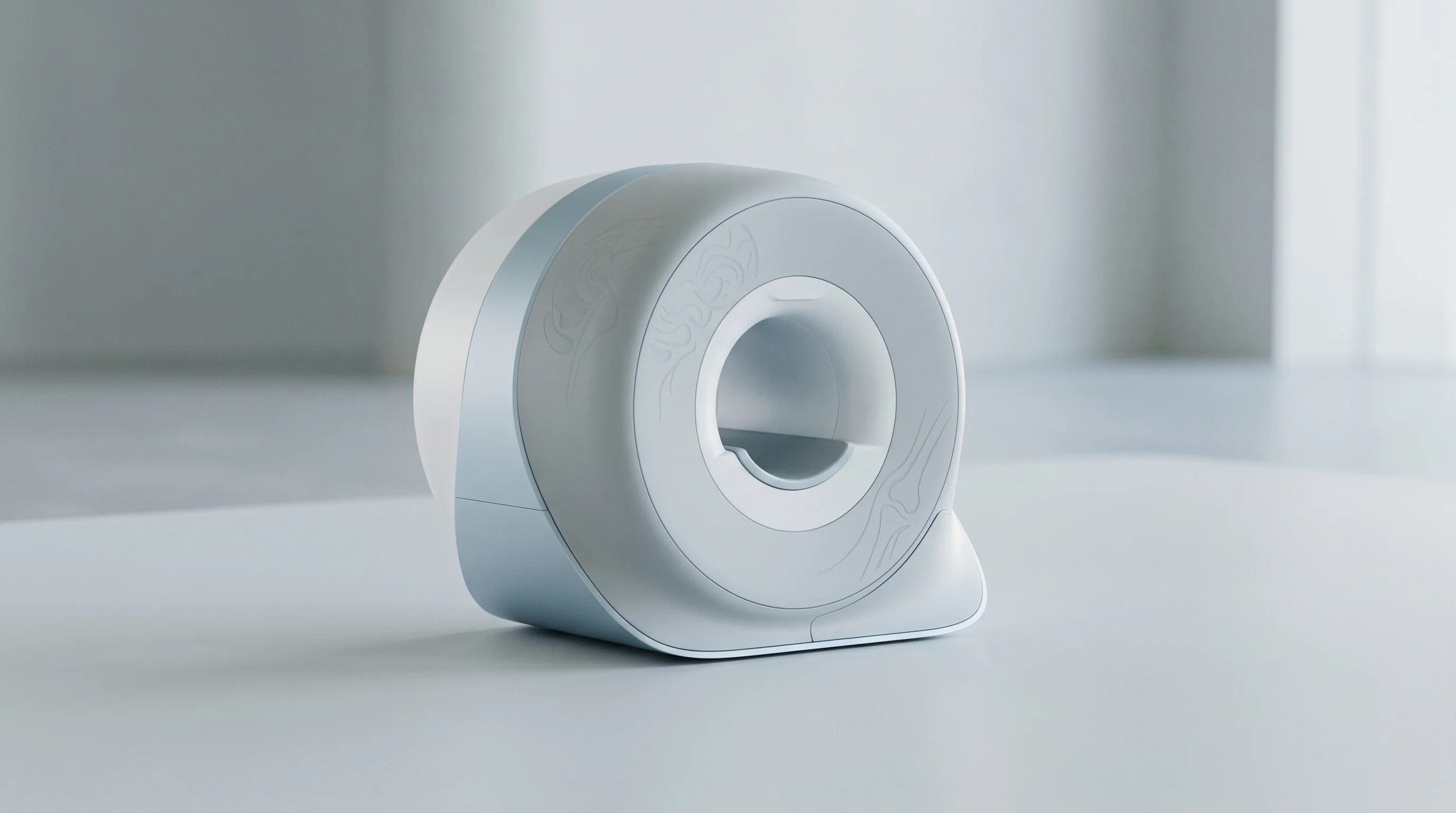
Prostate imaging is the beachhead, not the endgame. Adialante's roadmap extends to orthopedics, breast cancer screening, renal imaging, and neuroimaging. The company has already pulled in $1.18 million in NSF SBIR Phase II funding—announced in June 2025—to develop a compact, silent, head-only MRI system. An earlier Phase I grant in 2023 added $275,000.
The broader funding picture includes a $1.5 million seed round raised in 2024 from the University of Minnesota, the State of Minnesota, NSF, and angel investors, according to a profile published by Fogarty Innovation in August of that year. Adialante's website also lists the Brown Venture Group among its backers, though no public announcement of that investment has surfaced.
The company is entering a crowded, if fragmented, imaging market. On one end, startups like Prenuvo and Ezra are selling $2,499 whole-body MRI scans directly to consumers, positioning the service as preventive wellness rather than diagnostic medicine. On the other, Hyperfine's FDA-cleared Swoop system has brought low-field, portable brain MRI into hospital settings, targeting point-of-care neuroimaging rather than cancer screening.
Adialante's positioning is somewhere in between: diagnostic-grade imaging integrated into specialty clinics, billed through insurance rather than sold as a wellness product. Whether the physics, the business model, and the regulatory path align in practice will become clearer in the coming weeks—assuming the first trailer actually starts scanning on schedule.
For now, the company is betting that urology clinics will pay for convenience, and that early prostate cancer detection—where outcomes can improve eightfold or more with timely intervention—is a large enough market to prove the model before expanding to other cancer types.
That's the pitch, anyway. Whether it scans remains to be seen.


