

The math is brutal, and it's getting worse. Strawberry growers in California spent roughly 70% of their operating costs just getting the fruit out of the ground and into cartons—a labor line item that hit $79,288 per acre in the Central Coast, according to a University of California cost study from 2024. That's up from under 60% in earlier years, a creep that has made the state's $3 billion strawberry sector something of a proving ground for anyone with a robot and a pitch deck.
Enter Synphony, a ten-person outfit that emerged from Y Combinator's Spring 2026 batch with what might be the most common opening line in agricultural robotics: we're building robots that pick strawberries. What sets the startup apart, at least in its telling, is what comes next. The company isn't just selling mechanical pickers; it's offering software to replace the grizzled tools growers have used for four decades. And it claims to have already landed orders from some of California's largest producers, though it hasn't named them.
Founded in 2025 by Sean Wu, a former AI researcher at NVIDIA, and Lucas Amlicke, whose background spans neuromorphic computing and IoT security, Synphony went public in May 2026 with a straightforward value proposition. Robots in the field. Analytics on the backend. A promise to keep fruit from rotting when labor shortages hit. The pitch resonates in an industry where the constraints are as old as the crop itself.
What the Company Is Actually Selling
Synphony's approach pairs hardware with software, though technical specifications remain scarce. The robots operate in California strawberry fields—the company's careers page mentions potential work locations such as Salinas and Watsonville, two epicenters of the state's berry production. But public materials don't detail cycle times, success rates per pick, or damage metrics. Those are the benchmarks that matter in agricultural robotics, the numbers that separate pilot projects from commercial reality.
Where Synphony distinguishes itself, perhaps, is on the software side. The company talks about bed-level analytics and what it calls "agentic solutions" for farm operations—a positioning meant to signal that legacy systems are ripe for replacement. Third-party intelligence platforms reference two products: the Forte Engine, which supposedly generates synthetic training data from limited video footage, and the Crescendo Pipeline, described as a deployment layer for physical AI models. Neither gets much airtime on Synphony's main website as of late June 2026, which is curious given how central they seem to the pitch.
Wu frames the offering more expansively than just strawberry picking. On the company website, Synphony presents itself as a "deployment layer for physical AI," with strawberries serving as an initial use case. The underlying thesis: train, validate, and deploy AI models for real-world tasks while building a data pipeline from actual field operations. It's ambitious. Whether it's realistic is another question.
Why This Matters (and Why It's Hard)
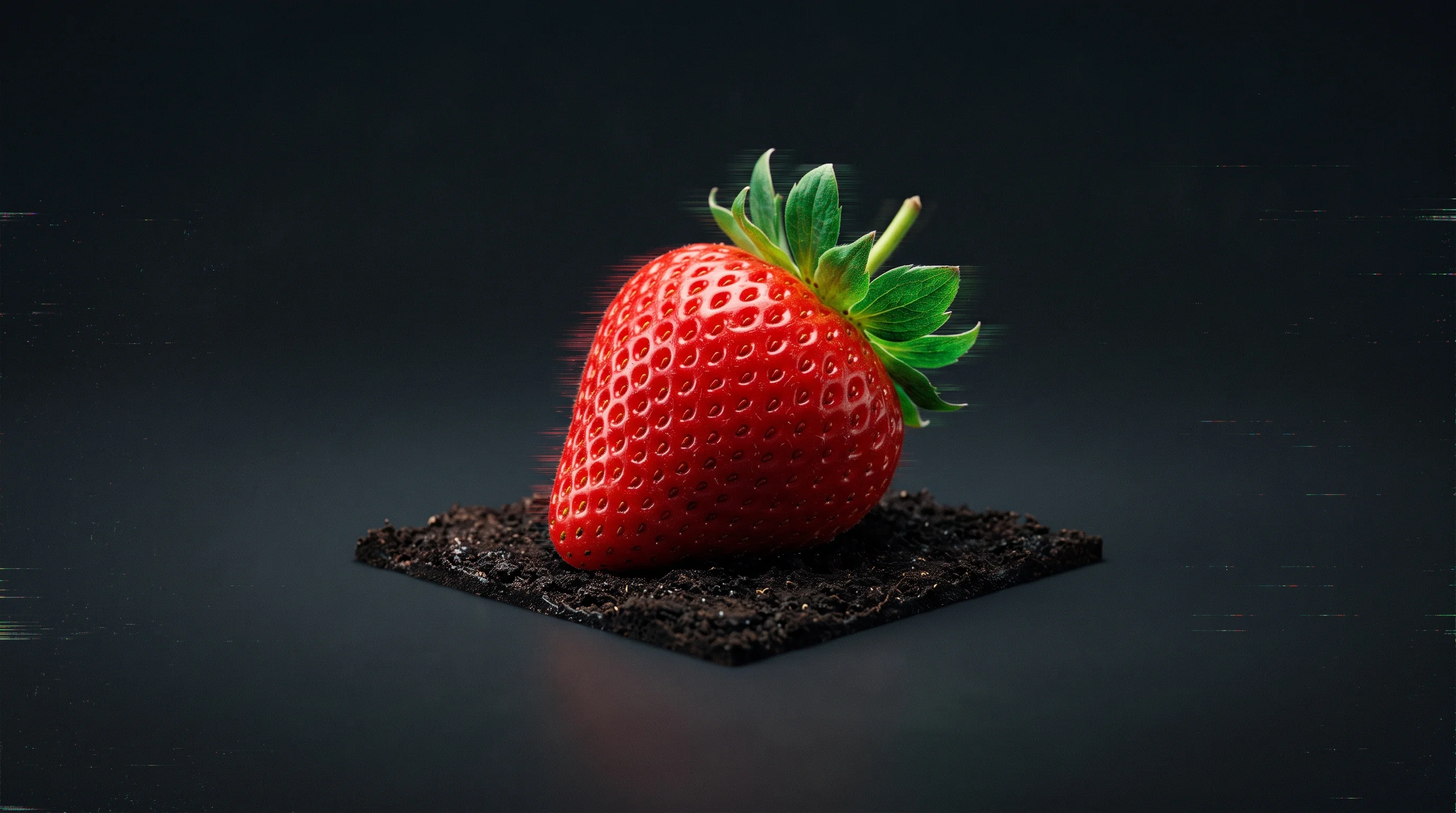
According to the California Department of Food and Agriculture, California grows roughly 90% of the strawberries consumed in the United States, all from about 1% of the state's farmland. The crop was estimated to generate approximately $3 billion in annual sales and ranks among California's top ten agricultural commodities by value, according to a 2024 report from the state's Department of Food and Agriculture.
Labor dominates the economics. The UC Davis cost study published in March 2024 pegged total production costs at $112,694 per acre. Harvest labor alone: $79,288. That's a 70% share, and it's climbing. Historical studies put the figure closer to 60%, a sign that labor availability has tightened and costs have risen in lockstep.
That squeeze explains why strawberry automation has drawn waves of venture capital, even though the technical challenges remain formidable. Strawberries bruise if you look at them wrong. They ripen unevenly, hide under leaves, and present differently depending on variety and field conditions. Previous attempts have foundered on throughput—robots that are too slow to justify their cost—or on unit economics that never quite pencil out.
The Team, the Backing, the Usual YC Signals
Wu and Amlicke founded Synphony in 2025. A third team member, Alex Anokhin, appears on third-party company intelligence pages as chief architect, though the company's own materials don't confirm the title—a small discrepancy that may mean nothing or may reflect early-stage flux in roles. Current headcount sits at ten, according to Y Combinator's directory.
The YC company profile includes a detail that feels very founder-circa-2025: "15+ hackathon wins (4 Jensen-signed GPUs)." It's a credential meant to signal technical chops, and it does, in a way that might make older investors smile or roll their eyes depending on the day.
Beyond Y Combinator's standard check, Synphony lists backing from an a16z scout and a Zoom co-founder, per a job listing on the YC board. Individual investor names, amounts, and terms haven't been disclosed. That's typical for a startup this young, though the absence of a named lead investor or disclosed round size leaves room for interpretation.
Customer Claims Without Customer Names
In a June 2026 LinkedIn post, Wu claimed Synphony's robots have been "purchased by California's largest producers, and they want more." The YC launch page echoes the language, referencing work with "California's largest strawberry producers."
No growers are named. No purchase quantities. No deployment scales. The Salinas-Watsonville region, where the company's careers page suggests potential work locations, is home to major operations—Driscoll's, California Giant, and others. Whether "largest producers" means the top two or three growers, or a broader set of large-scale farms, is impossible to say from public materials. It's a claim that invites skepticism until there's more to show.
A Crowded Field with Mixed Results
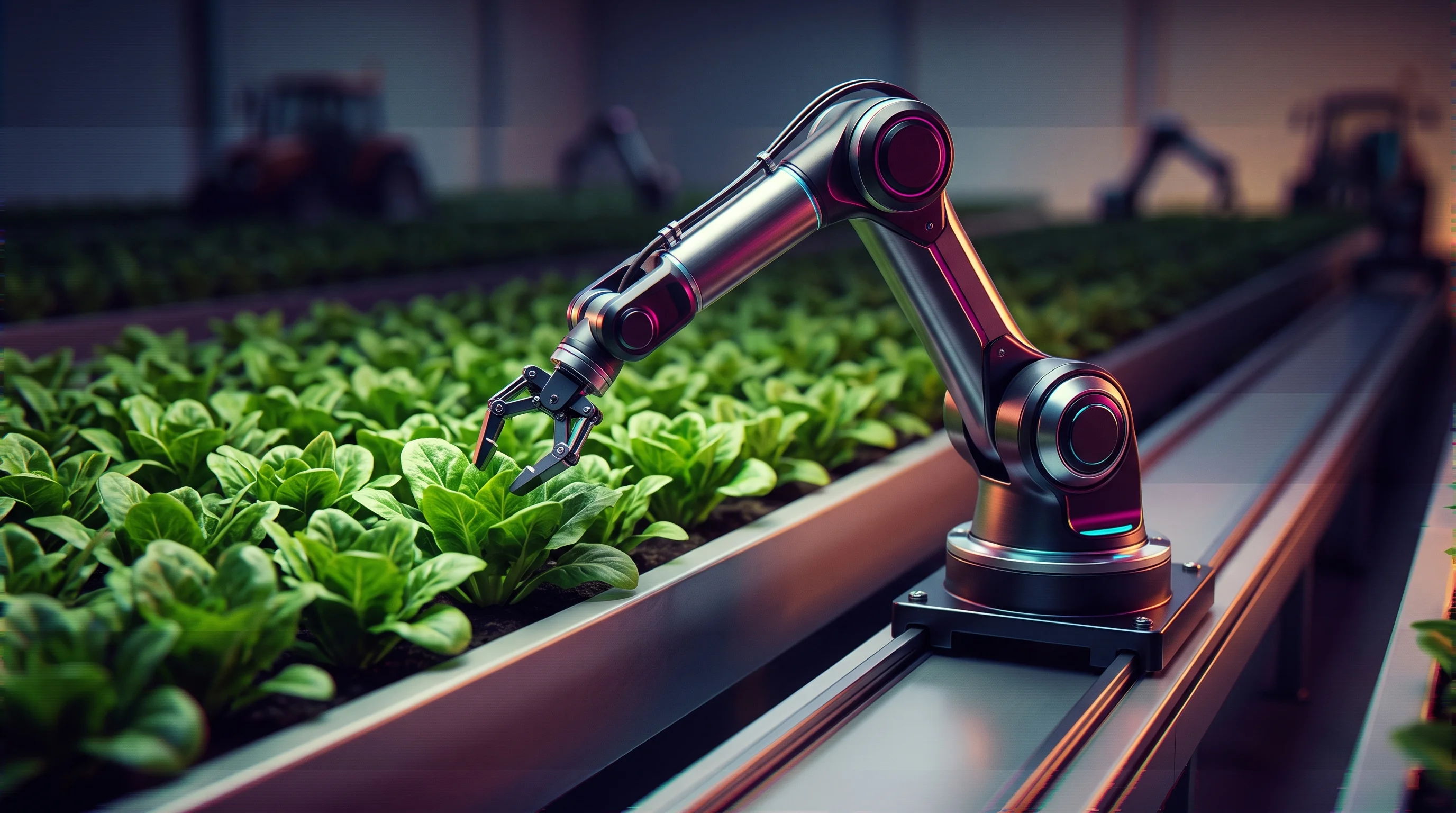
Synphony isn't pioneering virgin territory. Advanced Farm Technologies, based in Texas, raised a $25 million Series B in 2021 and later secured investment from CNH Industrial in 2023. Florida's Harvest CROO Robotics has been demonstrating what it calls commercially viable harvesting, emphasizing plant-level analytics alongside autonomy. Spain's Agrobot offers multi-arm harvesters with as many as 24 picking units, a different approach to throughput.
Some earlier entrants have pivoted or stalled. Traptic, a California strawberry robotics startup, was acquired by Bowery Farming in 2022 and shifted focus to indoor vertical farming—a signal that the outdoor field robotics problem remained too hard, or the economics didn't work. Dogtooth Technologies in the UK and Octinion in Belgium target greenhouse and tabletop berries, which is a fundamentally different production model than California's sprawling field operations.
Recent activity suggests the category is heating up, though. In April and May 2026, UK-based Fieldwork Robotics secured roughly £3 million to scale autonomous berry harvesting trials. Indoor strawberry producer Oishii closed the first $150 million tranche of a Series C in May 2026, having acquired robotics startup Tortuga AgTech the year prior. Later in May, Blue Radix launched autonomous climate control software for strawberry greenhouses—a signal that analytics are becoming baseline expectations rather than differentiators.
Academic progress is accelerating, too. Papers published in recent months propose improved perception models and deep reinforcement learning for strawberry harvesting, along with new field datasets for 6D pose estimation. The research suggests that sim-to-real transfer and computer vision challenges—long obstacles to field robotics—are starting to yield. Slowly.
The Bigger Bet Beyond Berries
Synphony's framing as a "deployment layer for physical AI" suggests the founders see strawberries as a wedge into something much larger. The logic: build a data moat from outdoor operations, feed synthetic data generation through the Forte Engine, and create a general-purpose pipeline—Crescendo—for deploying AI models to real-world tasks. It's a theory that turns strawberry fields into training grounds for broader automation.
Whether that thesis holds depends entirely on execution in the dirt. Robotic strawberry harvesting remains unproven at commercial scale. No startup has yet published sustained throughput numbers or demonstrated positive unit economics across multiple seasons and multiple growers. Synphony's claim to have paying customers from the largest producers, if true, would be notable—worth watching, at minimum. But without named growers, disclosed deal sizes, or published performance metrics, the market will reserve judgment. That's how it should be.
For now, the company is hiring for on-site roles in Salinas and Watsonville, which is at least a practical signal that field deployments are happening in some form. The rest—cycle times, pick rates, damage percentages, return on investment—remains to be demonstrated. Those are the numbers that will matter when the novelty fades and growers decide whether robots can actually replace the 70% line item that keeps getting bigger.


