

The mustering problem is older than barbed wire. For generations, moving cattle across Australia's sprawling stations has meant horses, helicopters, or backbreaking hours on foot. Sam Rogers, who grew up watching those operations unfold on his family's property near Bowen in North Queensland, decided there had to be a better way.
His answer: fully autonomous drones that herd cattle like a digital stockhand.
GrazeMate, the startup Rogers founded while still in his teens, secured A$1.2 million in a seed round led by Y Combinator this past January. Antler and NextGen Ventures—an Australian student-run venture fund—also participated. The company mentioned Meat & Livestock Australia as an investor in a LinkedIn post, though that hasn't been independently verified through mainstream outlets.
At 19, Rogers is now based between San Francisco and Australia, navigating the messy regulatory realities of drone aviation on two continents while trying to prove that machine learning can replicate the intuition of experienced cattlemen.
From Science Fair to Silicon Valley
Rogers didn't stumble into agricultural robotics. He formalized GrazeMate in 2025 after years of tinkering with mechatronics and machine learning—work that earned him recognition at the International Science and Engineering Fair back in 2022. By the time Y Combinator accepted him into its Winter batch earlier this year, he'd already left university to focus on the venture full-time.
The timing mattered. Labor shortages on Australian cattle stations aren't just chronic—they're worsening. And mustering thousands of head across distances that can stretch into the hundreds of thousands of acres isn't something you can solve with a few extra ranch hands.
When the funding announcement hit, GrazeMate was already operating pilot programs on two Queensland and New South Wales properties, with commitments to muster cattle across 1.7 million acres. The system relies on modified DJI drones paired with custom hardware and a base computer. The core technology uses reinforcement learning to mimic stockmanship—those subtle pressure points and movements that experienced hands deploy to guide cattle without stressing them into a stampede.
The Economics of Autonomous Herding
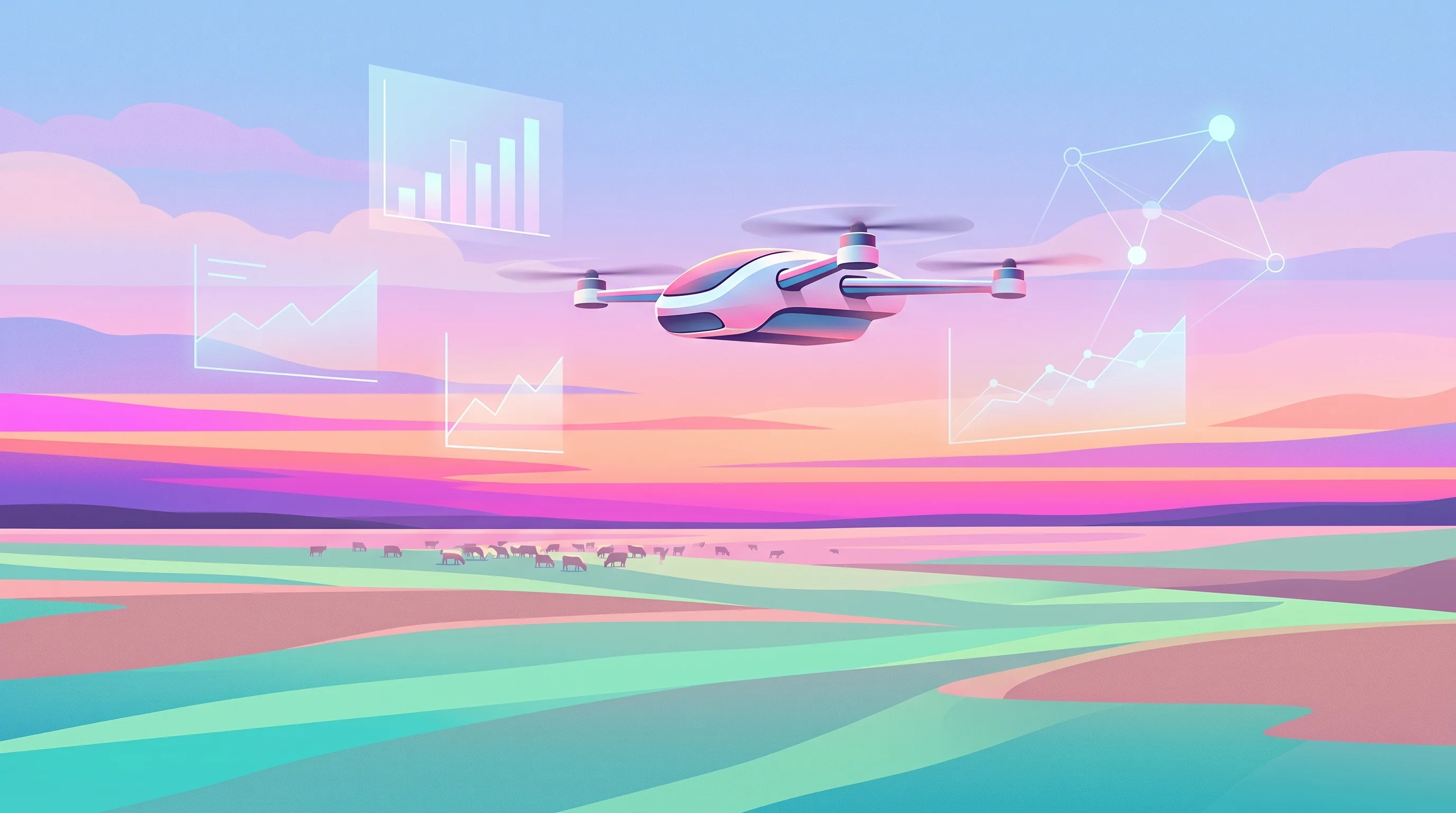
GrazeMate isn't selling hardware outright, which might be the smartest part of the business model. Instead, ranchers lease the drones and pay a monthly software subscription tied to property size and herd numbers. According to AgFunderNews, that pricing is designed to undercut traditional mustering costs, which industry estimates suggest can run around 30 cents per head per kilometer—a figure that adds up fast when you're talking about continent-sized properties.
Since closing the raise, the company has broadened its pitch. In February, it rolled out GroundView, a module that generates 3D maps of ranch infrastructure—fences, water troughs, the works—updated within half an hour of a drone flight. March brought PastureView, which estimates dry matter and weekly pasture growth rates per paddock.
Suddenly, the drones aren't just moving cattle. They're becoming eyes in the sky for data-starved ranchers.
California Dreaming (and Regulatory Headaches)
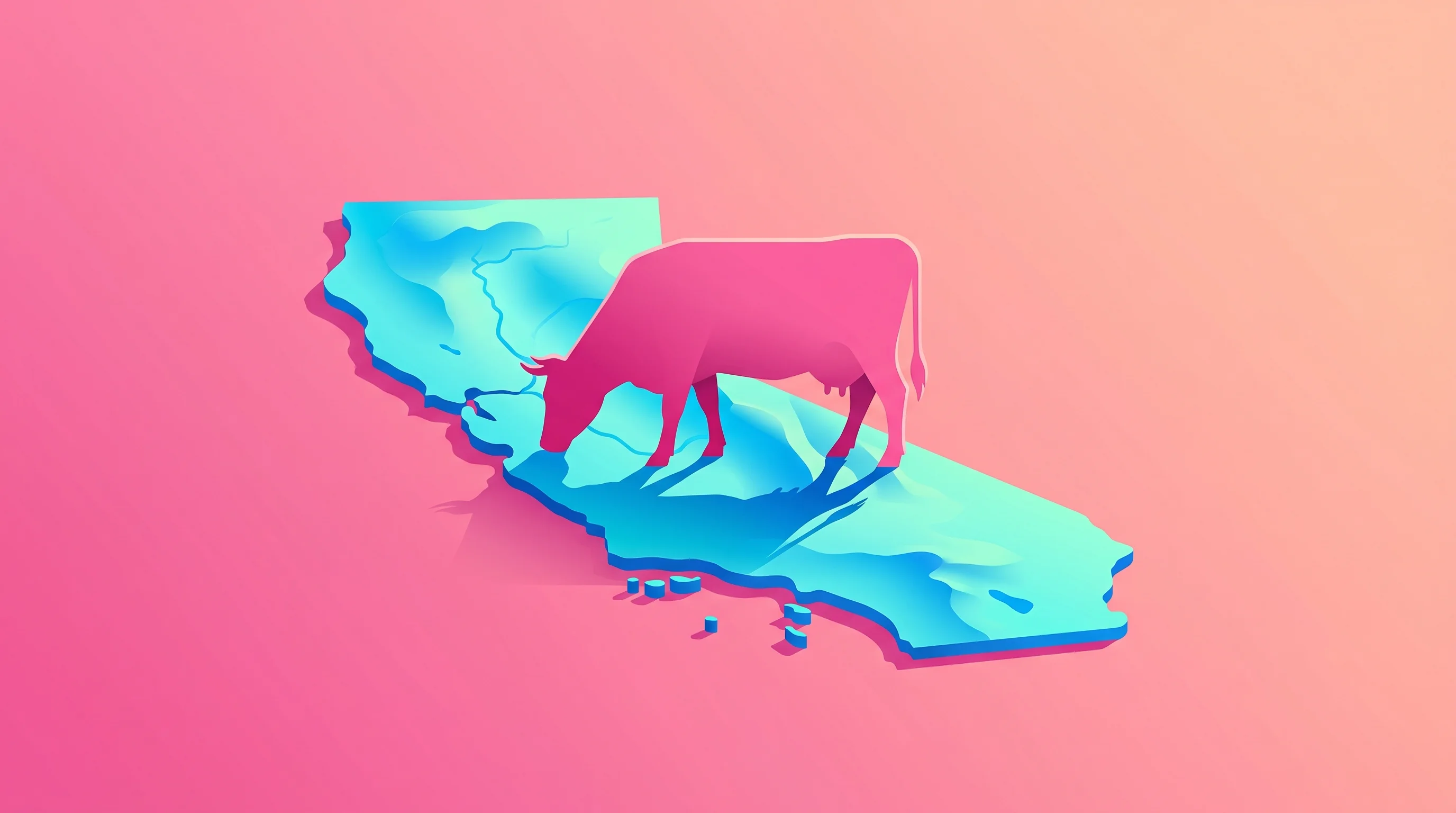
The A$1.2 million is earmarked partly for expansion into California, where GrazeMate has begun piloting operations. Rogers showed up at the National Cattlemen's Beef Association's CattleCon conference earlier this year, a clear signal he's eyeing what Startup Daily described as a $120 billion U.S. livestock market.
But scaling into America comes with complications. In Australia, beyond-visual-line-of-sight drone approvals have long been a friction point for autonomous agricultural systems—getting regulators comfortable with drones flying miles from an operator takes time. In the U.S., potential restrictions on DJI hardware loom as an additional hurdle, though AgFunderNews reported GrazeMate claims its platform can pivot to alternative manufacturers if Washington cracks down.
Perhaps more than Rogers anticipated, the regulatory dance may prove just as complex as the technology itself.
A Crowded Pasture

GrazeMate enters an agricultural robotics landscape that's seen serious capital inflows recently. Virtual fencing startup Halter raised $220 million at a $2 billion valuation in March 2026, while competitor NoFence closed a $35 million Series B in September 2025. Those companies rely on GPS-enabled collars to manage livestock movement—a fundamentally different approach than aerial herding, but one aimed at the same labor crunch.
Rogers is betting that drones offer advantages collars can't match: real-time visual monitoring, infrastructure assessment, and the ability to work across properties too large or rugged for other technologies to cover efficiently.
Whether that bet pays off hinges on proving the technology works reliably at scale, navigating the regulatory maze, and convincing a notoriously risk-averse industry to hand over one of its most critical operations to a machine.
For now, the 19-year-old from North Queensland is doing what startup founders do: iterating fast, pitching hard, and hoping the data backs him up before the capital runs out.


