

For twelve years, Clint Reid ran Zonos on bootstrapped revenue, building APIs that helped online merchants calculate international shipping costs from a basement office in Salt Lake City. Then came $69 million in venture funding in 2021, explosive growth in cross-border e-commerce, and a regulatory shift that turned customs clearance from a back-office headache into a strategic asset.
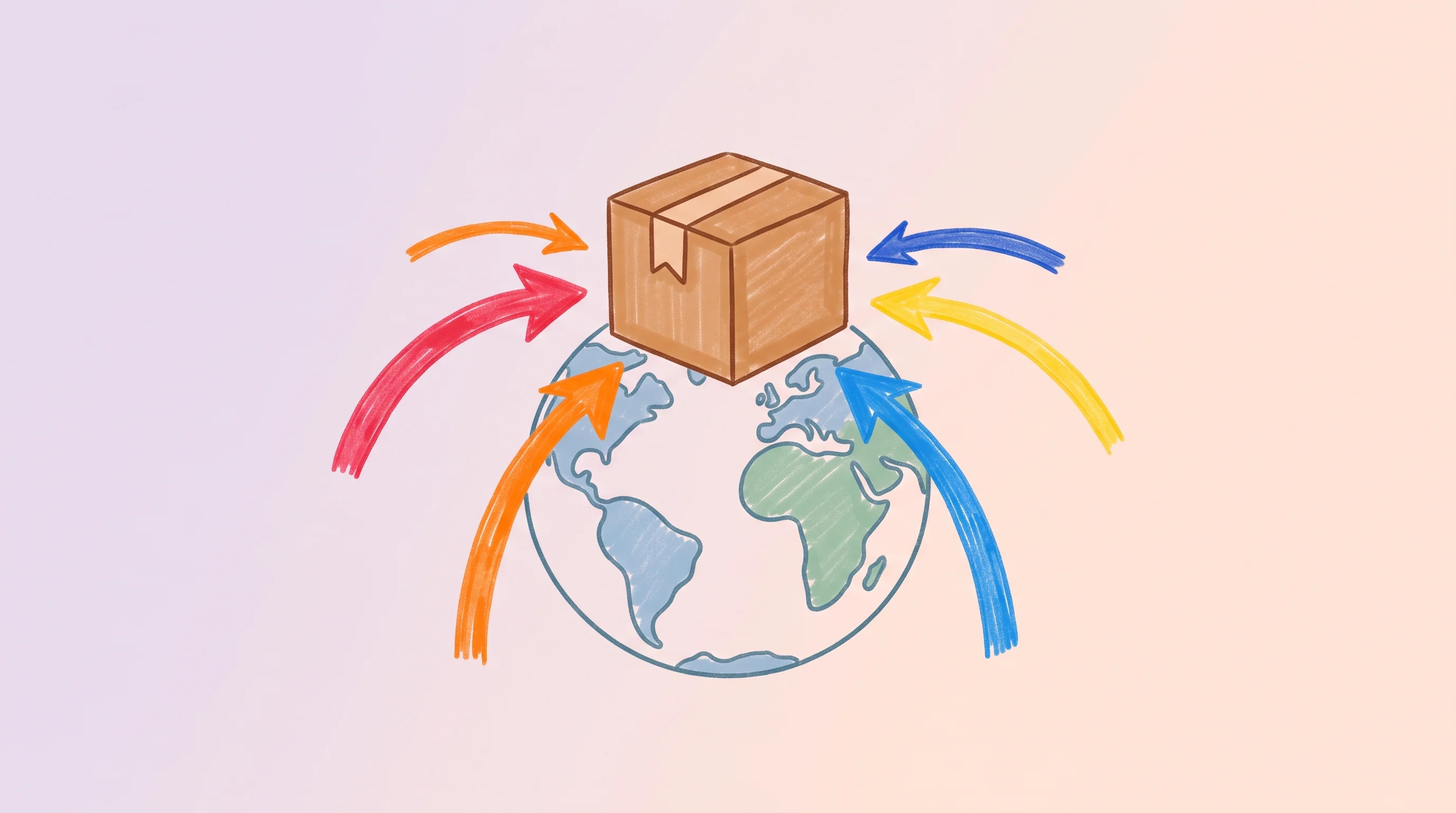
On April 30, 2026, Zonos announced the acquisition of Evolve Trade Services, a licensed U.S. customs brokerage that now operates as a wholly-owned subsidiary. The deal gives the cross-border commerce platform direct control over customs filing just as new U.S. Customs and Border Protection data requirements make that capability more valuable. Zonos declined to disclose financial terms.
The timing reflects a broader transformation in how international parcels move through the postal system. Postal operators worldwide are shifting from a "delivered duty unpaid" model—where recipients pay customs fees upon delivery—to prepaid duty arrangements that collect taxes and tariffs at checkout. Zonos has positioned itself at the center of that transition, working with more than 70 postal operators including USPS and Canada Post, according to the company.
Filing entries, not just calculating costs
What began as a landed-cost calculation tool has evolved into something more embedded in trade infrastructure. Using Evolve's broker license, Zonos now files Entry Type 13 informal postal entries directly with CBP on behalf of merchants, the company said in a September 2026 blog post. That capability matters as regulatory requirements tighten around what data must accompany shipments entering the United States.
USPS lists Zonos as the service provider for its Delivered Duty Paid program. Canada Post went further, launching a mandatory DDP partnership with Zonos on August 29, 2025, that requires a "Declaration ID" from Zonos for shipments bound for the U.S. Japan Post referenced a "Zonos Prepay App" in a July 2026 service notice.
The Universal Postal Union integrated Zonos as the first DDP provider in its Customs Declaration System in 2025, according to UPU news releases. For a platform that started by helping Shopify merchants avoid sticker shock at international checkout, the progression to filing actual customs documents represents a significant operational deepening.

The venture bet
Reid had spent years in international logistics at DHL and UPS before starting what was then called iGlobal Stores in 2009. He relocated the operation to St. George, Utah in 2014 and rebranded to Zonos in 2018, building quietly until Silversmith Capital Partners led a $69 million Series A round on September 15, 2021.
The investor roster included a who's-who of Utah tech founders: Eric Rea of Podium, Aaron Skonnard from Pluralsight, Josh James of Domo, and David Elkington of InsideSales. Austen Allred, who founded Lambda School, also participated. Todd MacLean, managing partner at Silversmith, joined the board.
At the time, Zonos said it had tripled headcount to over 100 employees and was delivering millions of landed-cost quotes daily to thousands of businesses. The company planned to use the proceeds for product development and team expansion. Current headcount is harder to pin down—LinkedIn suggests between 51 and 200 people, while other sources list approximately 113 or 164. The company said in early 2026 it serves more than 50,000 merchants, though that figure is self-reported. TechCrunch reported over 1,500 customers in September 2021.
The API suite
Zonos sells an API-first platform for calculating total landed cost at checkout, independent of which carrier a merchant chooses. Pricing runs $2 plus 10 percent of duties, taxes, and import fees per order for its Landed Cost guarantee, according to company documentation.
The product suite has expanded: Hello handles localization, Checkout manages international transactions, Classify infers HS codes (the tariff classification system), Restrict flags trade restrictions, and Screen checks sanctions lists. On March 18, 2026, the company launched Zonos AI, a suite of six products for automated classification and validation.
Competition comes from multiple directions. Global-e offers a competing cross-border enablement platform, and Shopify's native Markets Pro product targets the same merchant spend on international expansion, according to CB Insights.
What transparency looks like
"We are on a mission to create trust in global trade," Reid said in the 2021 funding announcement. "Trust comes through transparency."
Whether owning a customs brokerage makes commerce more transparent or simply more vertically integrated is perhaps debatable. But for a platform built on demystifying international shipping costs, the Evolve acquisition suggests Zonos sees regulatory compliance as the next layer of opacity to strip away. Filing the paperwork yourself certainly eliminates one intermediary.


