

The bottleneck in modern drug development isn't where you'd think. It's not in the lab, exactly, or even in the clinic. It sits somewhere between the algorithm and the bench.
Consider the peculiar situation facing biopharmaceutical companies in 2026. Artificial intelligence models can now conjure novel proteins from scratch—simulating what evolution might take millennia to produce, in a matter of hours. AlphaFold predicts how they'll fold. ESM3 generates entirely new sequences that never existed in nature. The computational machinery hums along, spitting out candidates that look, on paper at least, like potential blockbusters.
Then those molecules arrive at the lab bench, and everything slows to a crawl.
Understanding what you've actually made—confirming structure, identifying modifications, checking for aggregation—can consume weeks of manual analysis. For companies racing toward clinical trials, each day of delay carries a price tag that industry insiders estimate at upwards of $1 million. It's an expensive gap, and it's exactly where 10x Science, a three-person startup fresh from Y Combinator's Winter 2026 batch, believes it has found an opening.
Their pitch is appealingly straightforward: compress protein analysis time from weeks to minutes using AI-native software, potentially saving development teams north of $150,000 monthly. Founded last year and operating out of San Francisco, the company claims 18 years of combined domain expertise across its founders—credentials that include stints at Stanford's Bertozzi lab (home to a 2022 Chemistry Nobel laureate), the Broad Institute's proteomics platform, and previous YC ventures. They've raised roughly $500,000 via convertible note from Y Combinator, according to CB Insights.
Whether they can deliver remains an open question. But their timing intersects with an industry reality that's become impossible to ignore: the chasm between AI-enabled drug discovery and experimental validation is widening, and it's bleeding money.
A Market Hungry for Solutions
Protein characterization occupies an oddly sprawling position in the life sciences economy. Depending on who's counting and how boundaries get drawn, the market for protein characterization and identification alone ranges somewhere between $2.31 billion and $18.5 billion in current valuations—a spread that says as much about overlapping definitions as it does about actual market size. Cast the net wider to include the full proteomics market, and you're looking at roughly $42 billion to $45 billion this year, projected to swell toward $135 billion to $163 billion by 2035. Growth rates hover between 11.7% and 14.6% annually, depending on which market research firm you trust. North America claims 44% to 47% of that total.
Context helps. Biologics now represent 42% of global pharmaceutical sales by value, in an industry worth approximately $1.41 trillion through the first quarter of 2024. Last year, the FDA's Center for Drug Evaluation and Research approved 46 new molecular entities, with biologics accounting for about 20%—nine antibodies by one count, though that excludes products regulated by CBER. The two years prior saw biologics comprise roughly 31% to 32% of CDER approvals. Meanwhile, CBER—which oversees cell therapies, gene therapies, and vaccines—maintains a separate approval track that further underscores just how varied "characterization" has become.
The technical toolkit reads like an alphabet soup. High-resolution mass spectrometry (Thermo Fisher's Orbitrap Astral Zoom, Bruker's timsOmni). Light scattering methods from Waters and Wyatt. Mass photometry from Refeyn, which hit its 500th instrument installation milestone last May. Emerging single-molecule protein sequencing platforms from Quantum-Si and Encodia. Software vendors like Protein Metrics and Biognosys—the latter now majority-owned by Bruker since 2023—provide data analysis layers, while open-source tools from the AlphaPept ecosystem are increasingly finding their way into biopharma pipelines.
And the landscape keeps consolidating. Thermo Fisher completed a $3.1 billion acquisition of Olink in July 2024. Illumina closed its purchase of SomaLogic's assets from Standard BioTools this past January. Bruker has been on a tear, expanding its proteomics footprint in Massachusetts and snapping up biocrates for metabolomics kits last year. The signal is clear: large life science vendors are assembling integrated, multiomic stacks they're billing as "AI-ready."
What that actually means in practice is another question.
Three Forces Colliding
If protein characterization feels more critical—and more complicated—than ever, there are reasons. Three of them, specifically, converging in ways that are reshaping the field.
First, AI-driven protein design is flooding the pipeline. EvolutionaryScale's ESM3 model, published in Science in 2025 and backed by a $142 million seed round, produced a novel fluorescent protein through simulated evolution. Isomorphic Labs, an AlphaFold offspring, expanded partnerships with Novartis last year and raised around $600 million. Profluent published AI-authored CRISPR editors in Nature. Amgen researchers used in silico viscosity prediction to reduce an antibody's viscosity from 34 to 13 centipoise at 150 mg/mL—impressive on paper, but requiring orthogonal experimental methods to confirm the prediction held up in the real world.
These tools work, mostly. But they generate static predictions. AlphaFold's limitations are well-documented by now—it produces static conformations, struggles with intrinsically disordered regions, doesn't capture ligand-binding states or dynamic complexes. A 2024 review in Nature Chemical Biology spelled it out plainly: cryo-EM, cryo-ET, and proteomics remain essential. You still need to look.
As 10x Science puts it on their Y Combinator profile, "development is the bottleneck, not discovery." Whether their platform can actually clear that bottleneck is another matter, but the diagnosis resonates.
Second, regulatory frameworks are tightening. ICH Q14, which took effect last June, formalizes a science- and risk-based lifecycle approach to analytical procedure development—including multivariate methods and real-time release testing. ICH Q5E places analytical comparability at the center of demonstrating no adverse impact after manufacturing changes, critical for biologics that often undergo multiple process tweaks between Phase I and commercial scale. The FDA's Emerging Technology Program has been actively assessing multi-attribute methods via mass spectrometry for quality control, emphasizing validation, orthogonal comparisons, and the ability to detect new peaks that traditional methods might miss.
USP General Chapter <129> outlines analytical procedures for recombinant therapeutic monoclonal antibodies, covering everything from aggregation and glycan profiling to host cell protein identification. Waters published a 2025 application note demonstrating parts-per-billion detection of host cell proteins using high-resolution Q-TOF LC-MS—an orthogonal approach to traditional ELISA. Discussions around biosimilar approval pathways have even raised the prospect of relying more heavily on analytical similarity rather than full clinical comparative studies, which would further jack up demand for robust characterization methods. (Though recent articles on this come largely from advocacy sources and should be noted as such.)
Third, the biologics themselves are getting harder to characterize. Bispecific antibodies. Antibody-drug conjugates. Engineered proteins. Viral vectors, especially AAV gene therapies. All present heterogeneous populations with complex post-translational modifications that standard peptide mapping struggles to resolve. Refeyn's mass photometry technology has been recognized by USP draft standards for AAV empty/full capsid ratio determination. Bruker's timsOmni mass spectrometer offers multi-stage fragmentation and proteoform-level sequencing to tease out glycosylation and phosphorylation variants. Thermo Fisher's collaboration with GenNext Technologies integrates protein footprinting with Orbitrap MS to validate AI-generated structural models—a direct bridge between computational prediction and experimental reality.
Industry analysts expect the pace to accelerate. McKinsey projects $60 billion to $110 billion in annual value creation from generative AI across life sciences, with the share of organizations spending $5 million or more on AI rising to 32% this year. BCG and Deloitte reports emphasize that scaling AI end-to-end—from discovery through trials and manufacturing—can drive material improvements in yield and speed. But only a minority of biopharma companies have actually captured value at scale.
The gap between aspiration and execution, it seems, remains stubbornly wide.
What 10x Science Is Actually Building
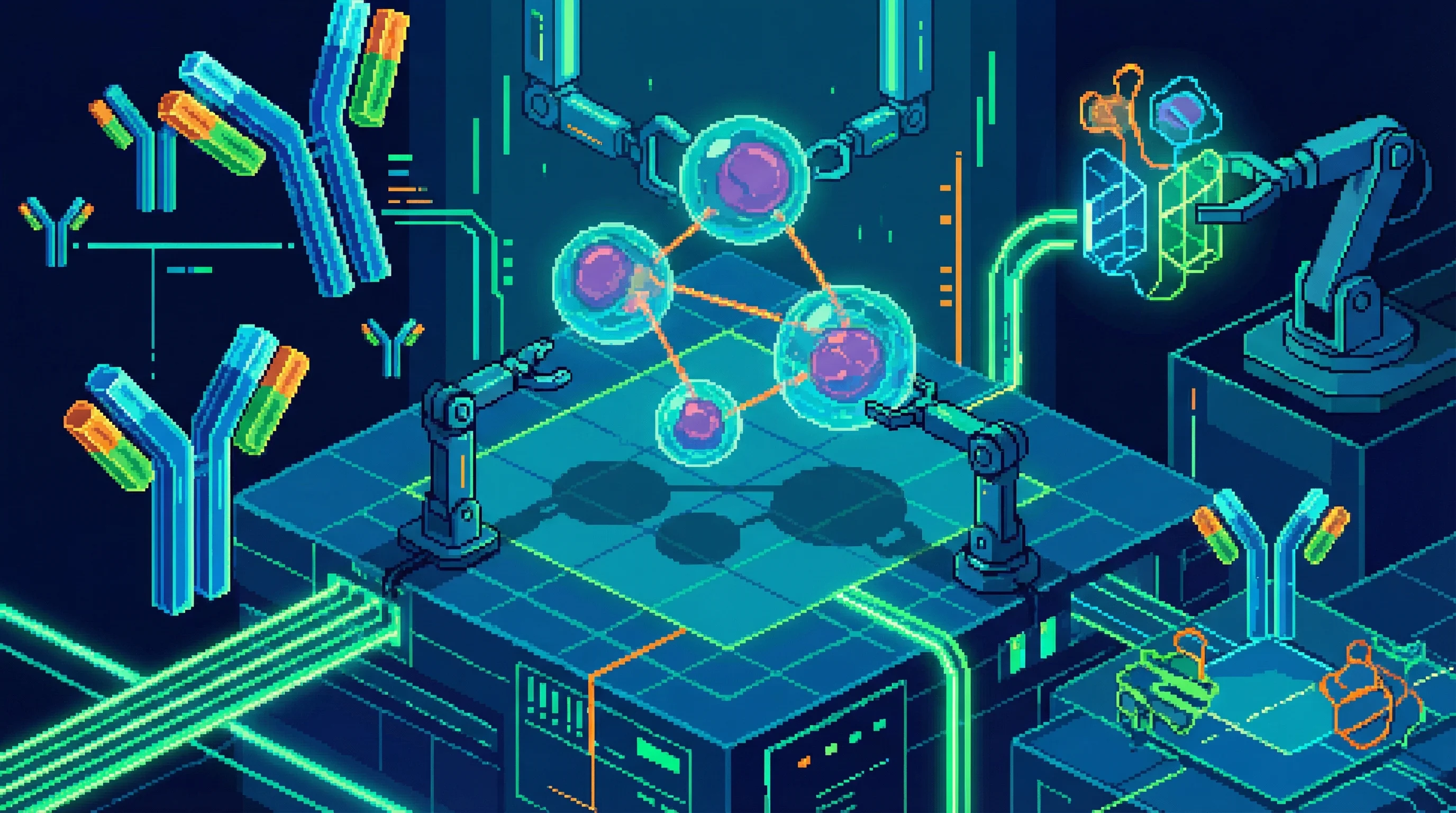
10x Science's approach, at least as articulated on their Y Combinator profile and in founder statements on LinkedIn, centers on automating the analytical workflow itself. The platform is designed for "next-generation protein characterization," targeting antibodies, cell therapies, and engineered proteins. The claim of reducing analysis from weeks to minutes hinges on automating data crunching and report generation—tasks that currently involve manually integrating mass spec outputs, chromatography traces, light scattering data, and functional assays.
The team's scientific credentials lend weight. CEO David Roberts completed a postdoctoral fellowship in Carolyn Bertozzi's lab at Stanford (Bertozzi won the 2022 Nobel Prize in Chemistry) and is a Damon Runyon Fellow with an h-index around 21. His specialization in chemical biology and glycobiology includes publications on native mass spectrometry and proteoforms—exactly the kind of deep technical knowledge this problem demands. COO Andrew Reiter comes from the Broad Institute's proteomics platform under Steven Carr and holds a Stanford Biology PhD co-advised by Bertozzi and Or Gozani. CTO Vishnu R. Tejus is a two-time YC founder and former founding engineer at Nooks, bringing experience building ultrafast AI models.
It's the kind of hybrid team—deep domain science paired with engineering velocity—that can accelerate translation from research insight to product. In theory.
What's less clear is how much of the workflow they've actually automated, and for which use cases. Their website (10xscience.com) offers minimal detail beyond the tagline "AI-native software for scientists." The company hasn't published case studies or validation data publicly. With a reported team size of three and roughly $500,000 in funding, they're early stage even by Y Combinator standards. That $150,000+ monthly savings figure? It's a founder-provided estimate, not independently verified. The "$1 million per day" cost of clinical trial delays cited in LinkedIn posts reflects industry rule-of-thumb calculations rather than specific attributed research.
Still, the competitive landscape illuminates the opportunity—and the challenge.
Protein Metrics, operating under the Insightful Science family, has been steadily releasing updates through this past January. New features include DIA (data-independent acquisition) workflows enhanced by deep learning, nodes for Thermo's Proteome Discoverer software, and ISO 27001 security certifications. The company positions itself as vendor-neutral, supporting multiple mass spec platforms—a stance that suggests customers want flexibility rather than lock-in to a single instrument ecosystem.
Biognosys, now majority-owned by Bruker, offers TrueDiscovery, TrueTarget, and TrueSignature CRO services alongside its Spectronaut software for unbiased DIA proteomics. The firm expanded its U.S. footprint with a new Massachusetts facility in 2024 to support pharmacoproteomics on Bruker's timsTOF instruments. The bundling of software, services, and hardware reflects a trend: end-to-end solutions that reduce integration friction for biopharma R&D teams.
Thermo Fisher's $3.1 billion acquisition of Olink signals confidence in high-plex affinity proteomics as a translational medicine tool. Bristol Myers Squibb signed a multi-year strategic engagement for SomaScan platform access—SomaLogic's aptamer-based proteomics—that ran through 2026, before Illumina acquired SomaLogic's assets in early January. These partnerships underscore pharma's willingness to invest in proteomics for target validation, mechanism-of-action studies, and biomarker discovery—upstream applications that feed into characterization workflows later in development.
On the instrumentation side, advances are coming fast. Bruker's timsOmni, announced last May, combines trapped ion mobility spectrometry with multi-stage fragmentation and electron/collision-based dissociation modes for deep PTM localization and top-down proteoform sequencing. Thermo Fisher's Orbitrap Astral Zoom and Excedion Pro push speed and throughput for biopharma applications. Waters integrated Wyatt's multi-angle light scattering detectors directly into its Empower chromatography data system in 2025, streamlining regulatory compliance for biologics QC.
Meanwhile, Quantum-Si—a publicly traded company developing single-molecule protein sequencing—delivered its Platinum Pro instrument last year and reported progress on its next-generation Proteus prototype. Revenue remains modest but growing, and the company emphasizes a long cash runway for commercialization. Encodia's ProteoCode represents a parallel bet on NGS-based sequencing as an orthogonal technology. Both are attempting to bypass mass spectrometry's sample preparation bottlenecks and enable direct sequence readout—potentially transformative for de novo antibody discovery or proteoform identification, but still nascent in biopharma quality control contexts.
It's a crowded field. And the question for 10x Science becomes: what can a three-person team with $500,000 accomplish that these well-funded, established players haven't?
The Next Phase
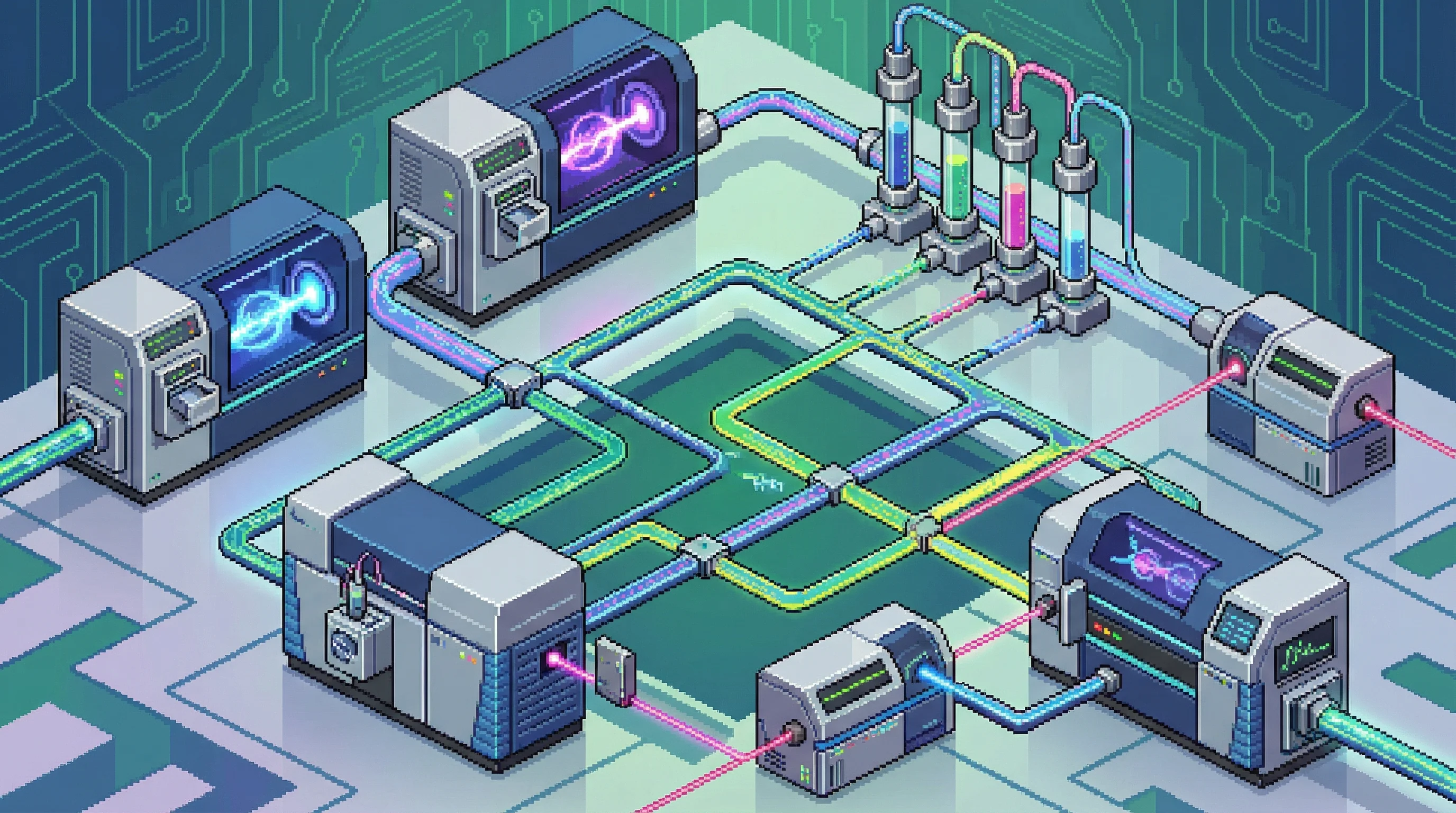
The future of protein characterization infrastructure will likely pivot on three axes: integration, automation, and AI-native workflows.
Integration means unified data systems spanning mass spec, chromatography, light scattering, biophysical assays, and functional readouts. Waters' Empower + MALS integration offers an early glimpse; expect vendors to extend this concept to multi-attribute methods that pull peptide mapping, glycan analysis, aggregation profiles, and charge variant data into a single analytical framework. Regulatory tailwinds from ICH Q14's lifecycle approach create space for multivariate analytics and real-time release—but only if software can handle validation, audit trails, and change control at the pace biologics companies demand.
Automation addresses the manual bottleneck 10x Science is targeting. Current workflows require expert analysts to interpret spectra, flag anomalies, cross-reference against critical quality attribute specifications, and compile reports. These tasks can stretch into weeks for a single batch characterization or comparability study. Open-source tools like the AlphaPept ecosystem—including alphapeptdeep for retention time and MS2 predictions, and alphaDIA for DIA analysis—demonstrate that deep learning can accelerate identification and quantitation. De novo sequencing models like Casanovo and DeepNovo, along with ranking frameworks like NovoRank, improve confidence in assignments without requiring spectral libraries. A 2026 preprint on DIA-CLIP introduced zero-shot identification for data-independent acquisition, potentially reducing reliance on matched standards.
The question is whether these capabilities consolidate into vendor platforms (Thermo, Bruker, Waters) or fragment into a layer of third-party AI software that sits atop instrument outputs. Protein Metrics' vendor-neutral positioning suggests demand for the latter. 10x Science's "AI-native" framing hints at a software-first approach that could integrate data from multiple instruments—middleware for proteomics, essentially.
AI-native workflows represent the longer arc. Thermo Fisher's partnership with GenNext to validate AI-generated protein structures with experimental footprinting + MS exemplifies closing the loop between prediction and reality. As protein design models become more predictive, characterization platforms will need to answer increasingly specific, hypothesis-driven questions: Does this computationally-optimized antibody variant exhibit the predicted viscosity reduction? Are the glycosylation patterns consistent with in silico glycoengineering? Does the bispecific engage both targets with expected affinity and specificity?
These aren't "characterize everything" questions. They're targeted. Which means the analytics can be faster and more automated—if the software knows what to look for.
Market growth projections support continued investment. Even conservative estimates put the protein characterization segment at $5 billion by 2034, while broader proteomics may exceed $160 billion by 2035. Biologics' share of pharma approvals and sales remains robust despite a small-molecule resurgence in recent FDA cohorts. Gene therapies, cell therapies, and next-generation antibody formats—tri-specifics, nanobodies, ADCs—all demand characterization that goes beyond traditional peptide mapping.
The consolidation pattern indicates that large vendors see value in comprehensive portfolios. But startups like 10x Science, Quantum-Si, Refeyn (which passed 500 installations and released StreamlineMP software for automated analysis last year), and Encodia point to unmet needs that incumbents haven't fully addressed. Speed, cost, and accessibility remain friction points, particularly for smaller biotech companies juggling multiple programs in parallel.
The $40 Billion Question

10x Science's ultimate success will hinge on whether their AI can actually collapse weeks into minutes at scale, across diverse modalities, without sacrificing regulatory rigor. That's a tall order for a three-person team with half a million in funding and no publicly validated case studies.
But perhaps that's missing the point. The tailwinds are undeniably real: AI-designed biologics flooding pipelines, regulatory frameworks demanding better analytics, and a proteomics market infrastructure that's ripe—maybe overdue—for a software-layer innovation. The bottleneck exists. Everyone in the industry acknowledges it. The question is whether a scrappy YC startup can solve it before the well-capitalized incumbents get there first.
If 10x Science can demonstrate that the platform works—and works faster than current solutions—the $40 billion-plus addressable market they're targeting may prove conservative. After all, the bottleneck isn't going anywhere on its own. Someone will solve it eventually.
Whether it's three people in San Francisco with Stanford credentials and $500,000 from Y Combinator, or Thermo Fisher's army of engineers and multi-billion-dollar acquisition budget, remains to be seen. But for now, the race is on.


