

There's a peculiar asymmetry at the heart of modern drug development. AI can now dream up entirely novel protein therapeutics in a matter of days—full molecular designs, ready for synthesis. But proving those same molecules are what you think they are? That still takes weeks. Sometimes longer.
For an industry generating $229.8 billion in annual biologics sales, this isn't just inefficient. It's expensive in ways that make CFOs wince. The Tufts Center for the Study of Drug Development pegged the cost of clinical trial delays at roughly $800,000 per day in analysis published in August 2024. And the gap between design speed and characterization speed? It's getting wider.
Consider the economics. Protein therapeutics now represent about 51% of U.S. drug spending despite accounting for only 5% of prescriptions, according to recent FDA figures. The market rewards innovation—but it doesn't reward companies that can't move fast enough to capitalize on it. Particularly not when AI-generated drug candidates are piling up faster than analytical labs can process them.
This is the bottleneck that 10x Science, a startup fresh from Y Combinator's most recent batch, says it can break wide open.
When the Instruments Outpaced the Analysis
The characterization problem stems from biological messiness. Protein therapeutics aren't like small-molecule drugs—tidy chemical structures you can fingerprint with relative ease. They're sprawling macromolecules with post-translational modifications, glycosylation patterns, aggregation tendencies, and trace contamination from the cells that produced them. Proving a therapeutic protein is what its label claims requires exhaustive analysis across multiple techniques: mass spectrometry, chromatography, spectroscopy. Each generates terabytes of data.
Someone has to make sense of all that. Usually, that someone is a highly trained scientist armed with sophisticated software from Waters, Thermo Fisher, or Bruker—companies that have spent years refining both the instruments and the analysis tools that accompany them.
Yet here's where it gets interesting. A Deloitte survey from 2025 found that only 6% of biopharma labs had achieved what the consultancy termed "high digital maturity." A quarter of respondents thought they might get there in two or three years. Maybe. The hardware has evolved dramatically; the software layer that interprets what the hardware sees has lagged behind.
That lag wasn't catastrophic when drug discovery itself moved slowly. But AI-powered design has changed the tempo entirely.
EvolutionaryScale's ESM3 model, published in Science early this year, demonstrated a generative approach that designed a functional fluorescent protein from scratch—no template, just learned patterns from protein sequences. Multiple startups are now compressing timelines for target identification and lead optimization from years into months. Some claim weeks.
The analytical bottleneck, meanwhile, remains stubbornly analog. As Drug Target Review noted in a January assessment, data interpretation at scale continues to lag despite rapid advances in sequencing and molecular design. The publication declared that "2026 is the year AI stops being optional in drug discovery"—a bold claim, though one that implicitly acknowledged the gap between designing molecules and actually characterizing them.
The Complexity Tax
The disconnect creates friction in exactly the places biopharma can least afford it. Bispecific antibodies, antibody-drug conjugates, protein degraders—the next generation of biologics all strain conventional characterization workflows precisely because they're so complex. Variable drug-to-antibody ratios in ADCs alone have become a recurring delay, according to industry reporting from late last year.
You can design the molecule faster. Verifying it meets regulatory specifications? That still crawls.
The proteomics services market tells the story in numbers. Valued at $8.77 billion in 2025, it's projected to reach $16.46 billion by 2030—a compound annual growth rate north of 13%. Companies are outsourcing characterization work for a simple reason: internal capacity can't keep pace with pipeline velocity.
Enter the startups.
The Y Combinator Pitch
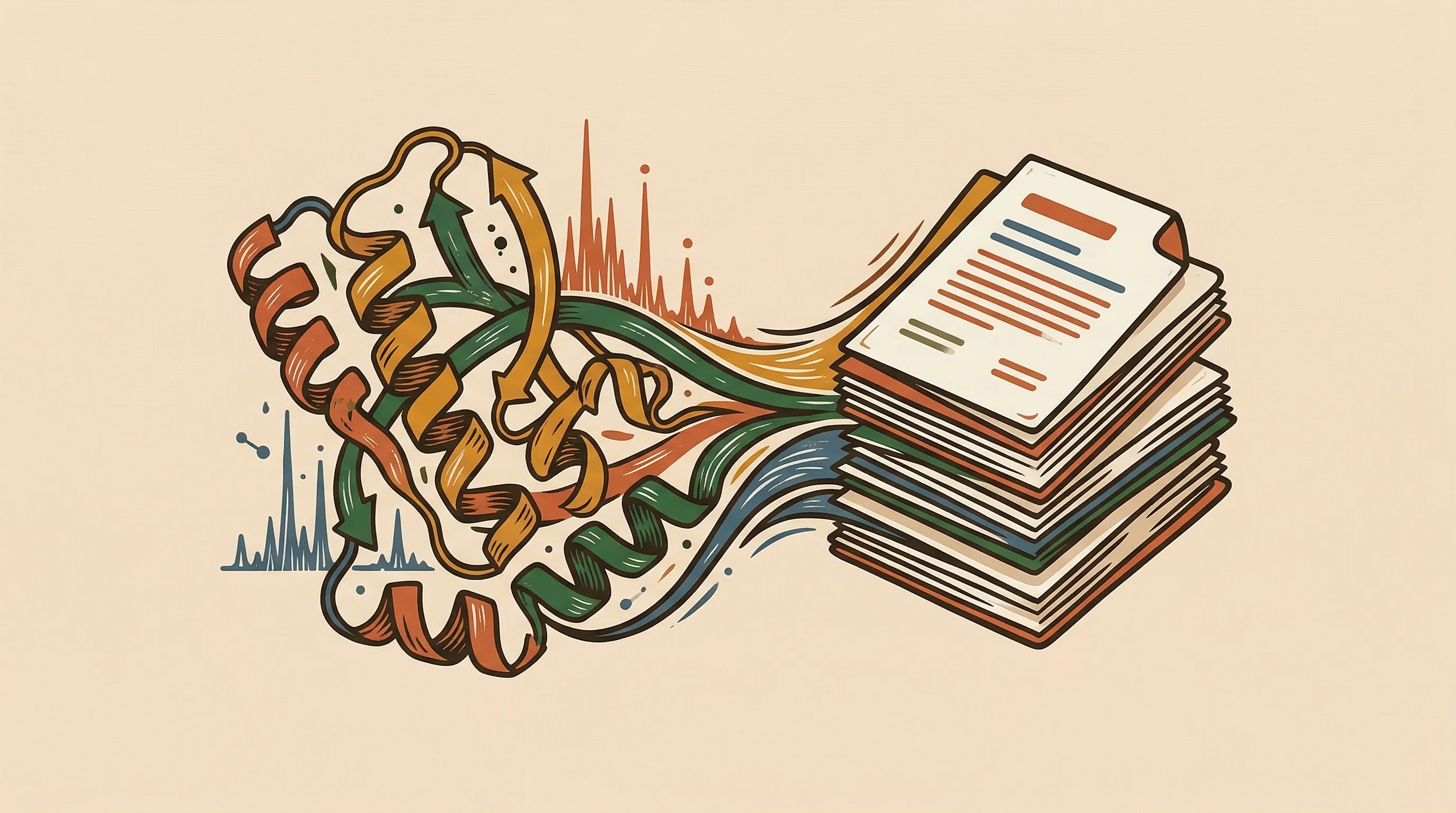
10x Science emerged from Y Combinator's Winter 2026 cohort with a direct value proposition: compress weeks of protein analysis into minutes through an AI-native platform that ingests raw mass spectrometry data and generates publication-ready reports. The founding team brings academic credentials—CEO David Roberts did postdoctoral work in Carolyn Bertozzi's Stanford lab as a Damon Runyon Fellow, racking up north of 37 peer-reviewed publications along the way. COO Andrew Reiter worked in Steven Carr's proteomics operation at the Broad Institute before pursuing a Stanford Biology PhD as an NSF fellow. CTO Vishnu Tejus is a twice-backed YC founder who previously served as a founding engineer at Nooks and logged lab time at UW, UCSF, and Stanford.
The economics they cite are eye-catching. The company's launch materials claim the platform can deliver upward of $150,000 in monthly time savings per team through automation. That's framed against the "$1M+ per day of clinical delay" cost—a figure that runs slightly hotter than the Tufts benchmark but lands in the same neighborhood of industry pain.
What sets 10x Science apart from incumbent software providers, at least in positioning, isn't just speed. It's the instrument-agnostic angle. Bruker's BioPharma Compass, Waters' waters_connect platform, Thermo Fisher's Orbitrap-Chromeleon ecosystem—all offer workflow automation for what's called multi-attribute method analysis, an emerging standard for comprehensive protein characterization. But these are fundamentally tied to their respective hardware ecosystems. 10x Science is aiming for the layer above: the interpretation and report generation that currently requires expert configuration of specialized tools like Spectronaut, DIA-NN, or Proteome Discoverer.
They're not the only ones who've spotted this opening. Matterworks raised a Series A in mid-2025 to apply machine learning to "unstructured molecular data" from raw LC-MS, though their pitch leans more toward predictive biology than regulatory-focused characterization. Illumina launched its Protein Prep workflow in September 2025 and within months reported more than 40 customers and 40,000 samples processed, integrating AI-enabled analysis through its DRAGEN and Connected Multiomics platforms.
The space is getting crowded, in other words. Which raises the question of timing.
The Regulatory Wildcard
Regulatory developments might actually accelerate demand for automated, validated characterization platforms—though "might" is doing a lot of work in that sentence.
The FDA issued draft guidance in October 2025 aimed at streamlining biosimilar development by reducing or waiving many comparative efficacy studies. Follow-up communications early this year reiterated the agency's intent to cut time and cost in biosimilar pathways while acknowledging that biologics drive a disproportionate share of drug spending.
This shift places heavier emphasis on analytical comparability—demonstrating that a biosimilar matches its reference product structurally and functionally through characterization data rather than extensive clinical trials. Platforms that can generate reproducible, audit-friendly analytics and templated reports become more valuable under that paradigm. Theoretically.
Multi-attribute method acceptance is following a parallel trajectory. The U.S. Pharmacopeia published research in January 2026, funded by the FDA's Biosimilar User Fee Act III program, supporting MAM as an alternative or complement to conventional methods for biologics and biosimilars. The European Federation of Pharmaceutical Industries and Associations identified MAM as a focus area for engagement with EU regulators on its potential as a quality control tool.
As MAM transitions from research applications toward lot release and stability testing, sponsor demand should grow for automated, validated MAM analytics that satisfy ICH Q14 method development and Q2(R2) validation requirements. Recent work published in ACS Omega in February demonstrated a dual-integrated MAM approach enabling simultaneous evaluation of post-translational modifications and host cell proteins in unpurified harvest—a step toward process analytical technology in quality-by-design frameworks.
Should. The regulatory science doesn't always move as quickly as the technology.
Infrastructure, Not Tooling
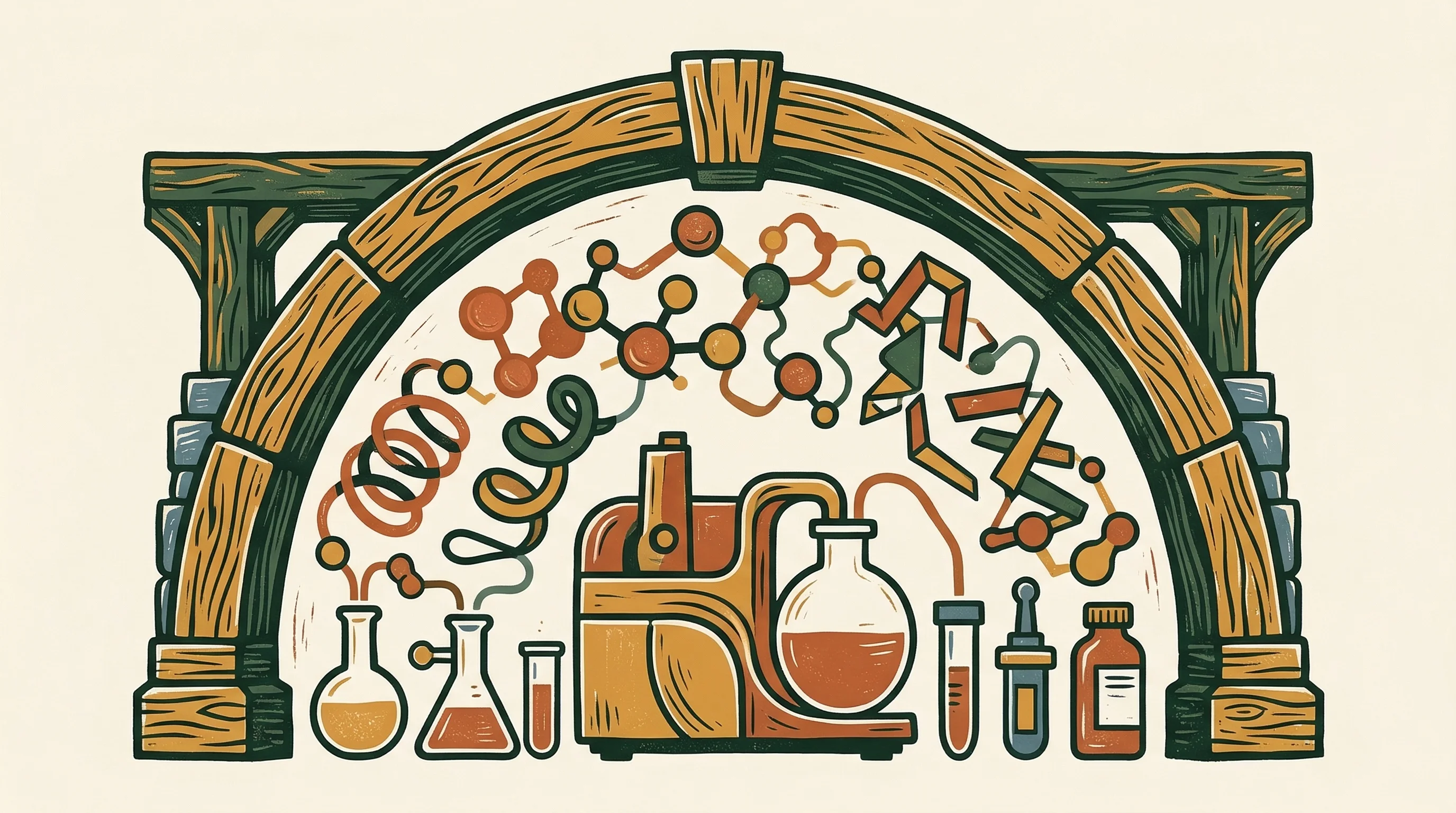
The protein characterization landscape is reorganizing around software capability rather than capital equipment—at least, that's the emerging pattern. Instrument vendors will continue advancing mass spectrometry sensitivity and throughput. The mass spec market alone is projected to grow from $6.6 billion in 2024 to $10.65 billion by 2030, according to Grand View Research figures from earlier this year. But the value creation may be shifting to the software layer that makes those instruments' output actionable at industrial scale.
For biotech founders and pharmaceutical executives, the strategic question isn't whether to adopt AI-enabled characterization. Drug Target Review's assessment that AI is no longer optional appears directionally correct, even if the framing was a bit breathless. The real question is which platforms actually deliver reproducibility, regulatory compliance, and genuine time compression versus incremental improvements dressed up in machine learning language.
Early-stage companies face particular pressure here. A venture-backed biotech advancing multiple candidates through IND-enabling studies can't afford weeks-long characterization cycles for each iteration. The unit economics favor platforms that maintain scientific rigor while eliminating manual bottlenecks. Whether 10x Science or another entrant ultimately captures this market remains to be seen. But the direction is clear enough: protein characterization is becoming a software problem with hardware inputs, not the other way around.
What remains uncertain—and this matters—is regulatory acceptance velocity. USP's January data supporting MAM is encouraging. But watch the FDA's and EMA's positions as companies submit characterization packages leveraging these newer methods over the next year. The technology may be ready before the regulatory science catches up. Or the FDA's biosimilar streamlining efforts may signal a more pragmatic stance on analytical innovation than the agency typically exhibits.
The most telling indicator, perhaps, is who's building on top of these platforms. Genedata's 2026 partner symposium included an AstraZeneca presentation titled "Biologics and Data Governance as backbone of AI/ML," suggesting major pharma views data infrastructure as foundational to AI strategies rather than ancillary tooling. When Big Pharma treats your category as infrastructure, you've identified a genuine bottleneck rather than a feature request.
The protein therapeutics market will keep growing. AI will design increasingly complex molecules. And somewhere in the space between those two certainties, the companies that solve high-throughput, high-confidence characterization stand to capture disproportionate value.
The gap is widening. But probably not for long.


