

The temperature matters more than you'd think.
AmpliSi, a startup spun out of the University of Sheffield, is betting that a manufacturing process running below 400°C—notably cooler than the industrial furnaces typically required—can crack one of the battery industry's more stubborn problems: how to swap graphite for silicon without burning through capital or creating a production nightmare.
On March 12, 2026, the company announced it had raised £2 million in pre-seed funding, co-led by Northern Gritstone and Clean Growth Fund. It's the first disclosed investment from Clean Growth Fund's second vehicle, and for AmpliSi, a relatively young company incorporated only last August, the capital represents a runway to prove its process can work beyond the benchtop.
The promise is compelling, if not exactly novel: silicon anodes that pack up to four times the energy density of graphite while slashing costs by roughly 30% per kilowatt-hour. Those figures come from techno-economic modeling and lab-scale tests. What AmpliSi doesn't yet have—what none of these silicon hopefuls have in abundance—is data from industrial-scale production. Independent validation data at pilot scale is not yet publicly available.
The Process, Minus the Hazardous Chemistry
At its core, AmpliSi's approach hinges on magnesiothermic reduction, a method that transforms abundant silica into porous silicon without relying on silane. For those unfamiliar, silane is both hazardous and energy-intensive, the kind of chemical that makes manufacturing engineers wince. By sidestepping it and keeping temperatures sub-400°C, AmpliSi's founders believe they've designed something that can integrate into existing battery production lines without requiring a complete overhaul.
The intellectual property traces back to Professor Siddharth V. Patwardhan at Sheffield. A patent application covering the porous silicon manufacturing method was filed in October 2023 and surfaced publicly in April 2025; the application is still pending. Dr. Gwen Chimonides, AmpliSi's chief technology officer, previously worked as a postdoctoral researcher at Sheffield and has presented techno-economic analyses at industry conferences—the kind of detailed cost modeling that venture investors scrutinize before writing checks.
The Faraday Institution, a UK battery research consortium, supported the early work through seed funding and an Industry Sprint collaboration with the University of Warwick's WMG. In a March success story, the institution spotlighted the sub-400°C operating temperature and projected cost savings, though it stopped short of endorsing commercial viability.
What the Money Buys

The £2 million will fund the shift from laboratory curiosity to something approaching industrial relevance. AmpliSi plans to focus initially on mobility applications—electric vehicles, presumably, though the company hasn't named specific customers or disclosed pilot agreements. Early customer engagement is the stated priority, but letters of intent remain conspicuously absent from public filings.
Northern Gritstone, which had already supported AmpliSi through its NG Studios deep-tech venture-building program, now holds a stake significant enough to appear as a Person with Significant Control in Companies House records, effective March 4. On the same date, Stephen Price from Clean Growth Fund and Gareth Llewellyn joined the board, the kind of director appointments that signal hands-on involvement rather than passive capital.
"This investment will enable us to accelerate our scale-up activities and engage with early customers in the mobility sector," said Ruth Sayers, AmpliSi's CEO, in the funding announcement. Sayers comes from Faradion, a sodium-ion battery company that was acquired in 2022, bringing the kind of commercialization experience that pre-seed investors value—someone who has navigated the gap between prototype and product before.
The Graphite Problem No One Can Ignore
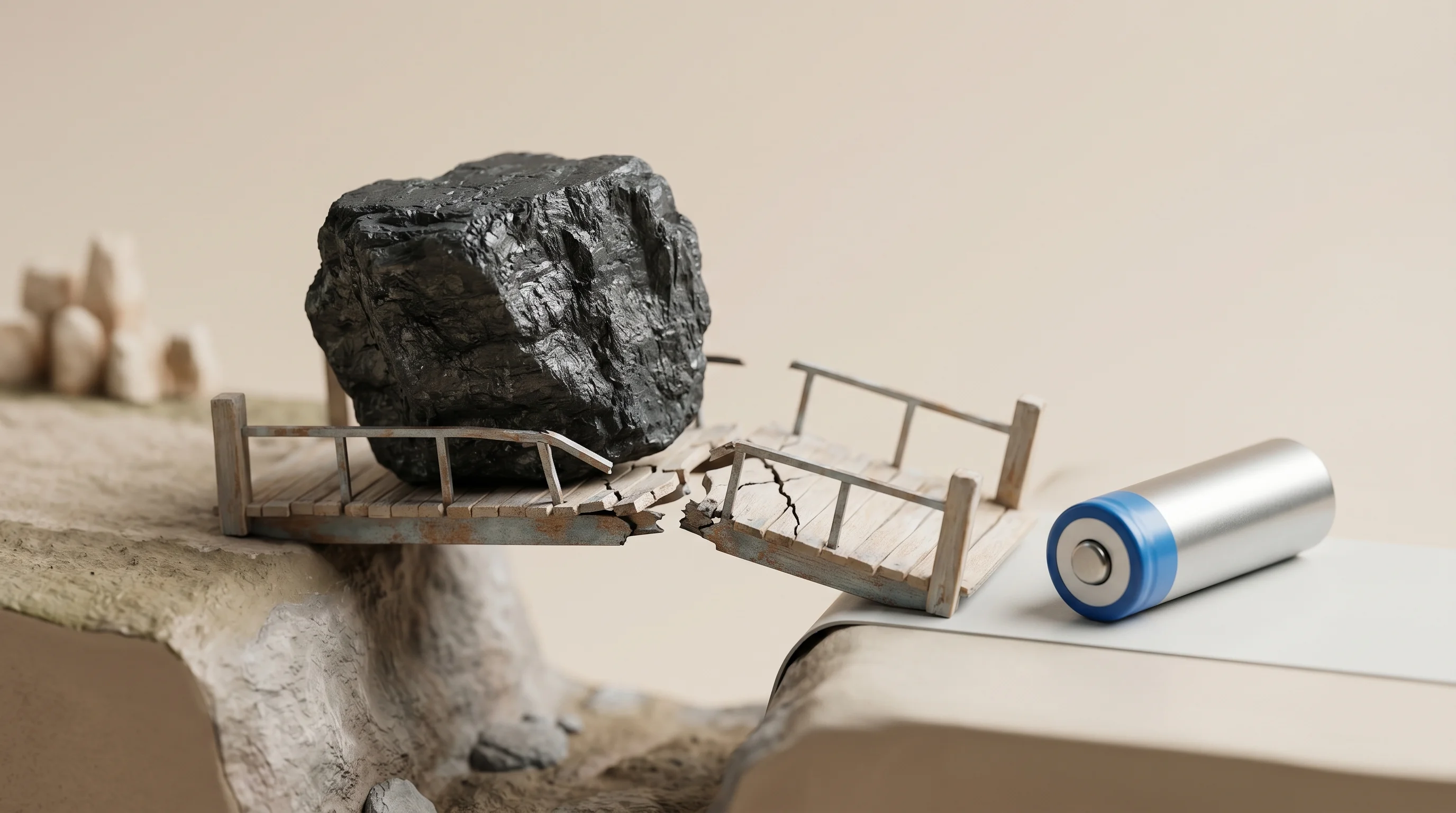
Silicon anodes aren't a new idea. What's new is the urgency.
China's December 2023 decision to implement export licensing for certain graphite products sent ripples through the battery supply chain, exposing vulnerabilities that Western governments and automakers would prefer not to think about. An October 2025 report from the UK's Advanced Propulsion Centre made the case explicitly: localize silicon anode production, build domestic capabilities, reduce dependence on graphite sources that may not always flow freely.
AmpliSi is hardly alone in chasing this opportunity. In the United States, Group14 Technologies has secured up to $300 million in Department of Energy backing for silicon-carbon anode manufacturing facilities. Sila Nanotechnologies has inked supply agreements with Panasonic and announced automotive partnerships with Mercedes-Benz. Closer to home, UK-based Nexeon raised over $200 million in 2022 for its silicon anode technology, a reminder that capital has been flowing into this space for years—and that proving out the technology at scale remains the hard part.
The gap between what works in a university lab and what functions reliably in a commercial production environment is wide, sometimes depressingly so. AmpliSi's energy density and cost claims rest on modeling and benchtop results. Independent third-party data at pilot or production scale? Not yet publicly available.
What Happens Next

AmpliSi operates out of Sheffield's Innovation Centre with a team of somewhere between two and ten employees—exact headcount unclear, as is often the case with early-stage companies guarding their burn rate. The company has been making connections through Innovate UK's Germany Battery Tech program, meeting with research institutions like MEET, Fraunhofer, and RWTH Aachen, and industrial players including BMW and VARTA. These remain exploratory, not formal partnerships. Conversations, not contracts.
The company filed its first set of accounts with Companies House in early June, covering the period through March 31, 2026. With £2 million in hand, AmpliSi's immediate challenge is straightforward in concept, complex in execution: demonstrate that the process scales. That it works not just in controlled conditions but in the messy reality of industrial production. And that customers—battery manufacturers, automakers, someone with purchasing power—will actually pay for the output.
Perhaps they will. The tailwinds are certainly favorable: geopolitical anxiety, government incentives, a sector desperate for alternatives to graphite. But pre-seed funding is just that—pre-seed. The real test comes when AmpliSi has to deliver silicon at volume, at cost, at quality. That's when the techno-economic models meet reality, and when we'll learn whether cooler temperatures really do make all the difference.


