

The retirement lasted all of five years—if you can call it that.
Jeff Bezos stepped down as Amazon's chief executive in 2021, transitioning to executive chair, married Lauren Sánchez in a Venice ceremony that made headlines for weeks, decamped to Florida, and settled into what looked like a classic billionaire wind-down: rockets, philanthropy, the occasional headline-grabbing yacht purchase. The executive chair role at Amazon gave him room to breathe—strategy without the daily chaos, capital allocation without the constant firefighting.
Then last November, he did something unexpected. He became a startup CEO again.
Prometheus, the industrial AI venture Bezos co-founded with former Google X executive Vikram Bajaj, emerged with a $6.2 billion Series A—the kind of round that makes even jaded Sand Hill Road partners blink twice. Seven months later, on June 11, the company closed a $12 billion Series B at a $41 billion valuation. That's $18.2 billion in total capital raised for a company that has yet to ship a commercial product beyond a test deployment at Blue Origin, name a paying customer, or explain in any detail how its technology actually works.
The investor list reads like a who's who of institutional capital: JPMorgan Chase, Goldman Sachs, BlackRock, DST Global, Arch Venture Partners. Bezos himself put in more money—he's the largest backer in both rounds, though the company won't break out individual check sizes. At a reported net worth of $288 billion as of May, according to the Bloomberg Billionaires Index, he can afford to underwrite a bet that would terrify most venture portfolios.
Still, the scale of the wager is striking. Even in an era defined by frothy AI valuations and FOMO-driven dealmaking, $41 billion pre-product feels audacious.
The Artificial General Engineer
What exactly is Prometheus building? The short answer: not robots. Bezos made that point emphatically during a May 20 interview on CNBC's Squawk Box, taped at Blue Origin's facility in Merritt Island. "Nothing to do with robotics," he said, keen to distinguish Prometheus from the parade of humanoid bot makers and warehouse automation startups cluttering the AI landscape.
Instead, the company is pursuing something it calls an "artificial general engineer," or AGE. Think of it as hyper-advanced CAD software—computer-aided design on steroids, powered by machine learning models trained to compress the "dream-to-manufacturing" cycle by a factor of ten or more. The idea is to let engineers iterate faster on complex systems—aircraft components, rocket engines, electric vehicle assemblies, medical devices—without the months or years typically required to move from sketch to prototype.
It's targeting the unglamorous but critical phase where ideas become physical objects, where trade-offs in materials, cost, and performance get hashed out through endless rounds of simulation and testing. If AGE works as advertised, it could shave years off development timelines for industries that move at glacial speed by Silicon Valley standards.
Bezos and Bajaj—who previously co-founded Verily, Alphabet's life sciences arm, before spending time at Google X—started with a specific thesis: manufacturing and industrial engineering are ripe for an AI revolution, just not the kind most people imagine. Not autonomous drones or factory-floor robots, but design intelligence. The layer above the hardware, where human ingenuity meets the brutal realities of physics and economics.
Whether that thesis holds up remains to be seen. Prometheus employs around 150 people across offices in San Francisco, London, and Zurich as of mid-June, but the company has disclosed almost nothing about timelines, pricing, or go-to-market strategy. Blue Origin is serving as what Bezos calls a "case study customer," which makes sense given his dual role as founder of both ventures. There's no formal corporate tie between Prometheus and Amazon, according to Axios.
The $100 Billion Industrial Play
There's a bigger ambition lurking in the background, one that suggests Bezos sees Prometheus as more than just a software company. In March, The Wall Street Journal reported that he was exploring the creation of a roughly $100 billion fund to acquire legacy industrial and manufacturing firms, then retrofit them with Prometheus's AI tools. The reporting remains unconfirmed speculation, and Prometheus has declined to comment. But the idea fits the pattern: Bezos doesn't do incremental.
The pitch, if the Journal's reporting is accurate, would be transformative. Buy up traditional manufacturers—companies with decades of expertise but inefficient design processes—then inject them with AI that collapses development cycles and unlocks new product categories. It's vertical integration on a scale that would make Amazon's early logistics buildout look quaint.
Of course, industrial companies don't move like tech startups. They're risk-averse, conservative with capital, and deeply skeptical of software that promises to upend entrenched workflows. Proving out AGE in a controlled environment like Blue Origin is one thing; convincing Boeing or Lockheed Martin to bet their next product line on it is another.
Type 2 Fun

During that May interview on CNBC, Bezos used a phrase that resonated with anyone who's ever founded a company: he called being CEO again "Type 2 fun." The term, borrowed from backpackers and ultramarathoners, describes experiences that are miserable in the moment but rewarding in retrospect—summiting a peak in freezing rain, running a hundred-miler on shredded legs.
It's a revealing admission. Bezos spent 27 years running Amazon, building one of the most operationally complex enterprises in modern business history. He knows the grind: the all-hands meetings, the constant firefighting, the relentless pressure to hit numbers while navigating regulatory scrutiny and internal politics. Returning to that life, even at a much smaller company, isn't purely nostalgic. It's hard, often tedious work.
But he also said he "wanted to jump in with both feet," according to secondary accounts summarizing the interview. Something about Prometheus—the technical challenge, the greenfield opportunity, maybe just the novelty of building from scratch again—pulled him back. At 62, he's old enough to recognize what he's signing up for. And apparently still hungry enough to do it anyway.
The Series B and Mega-Round Math
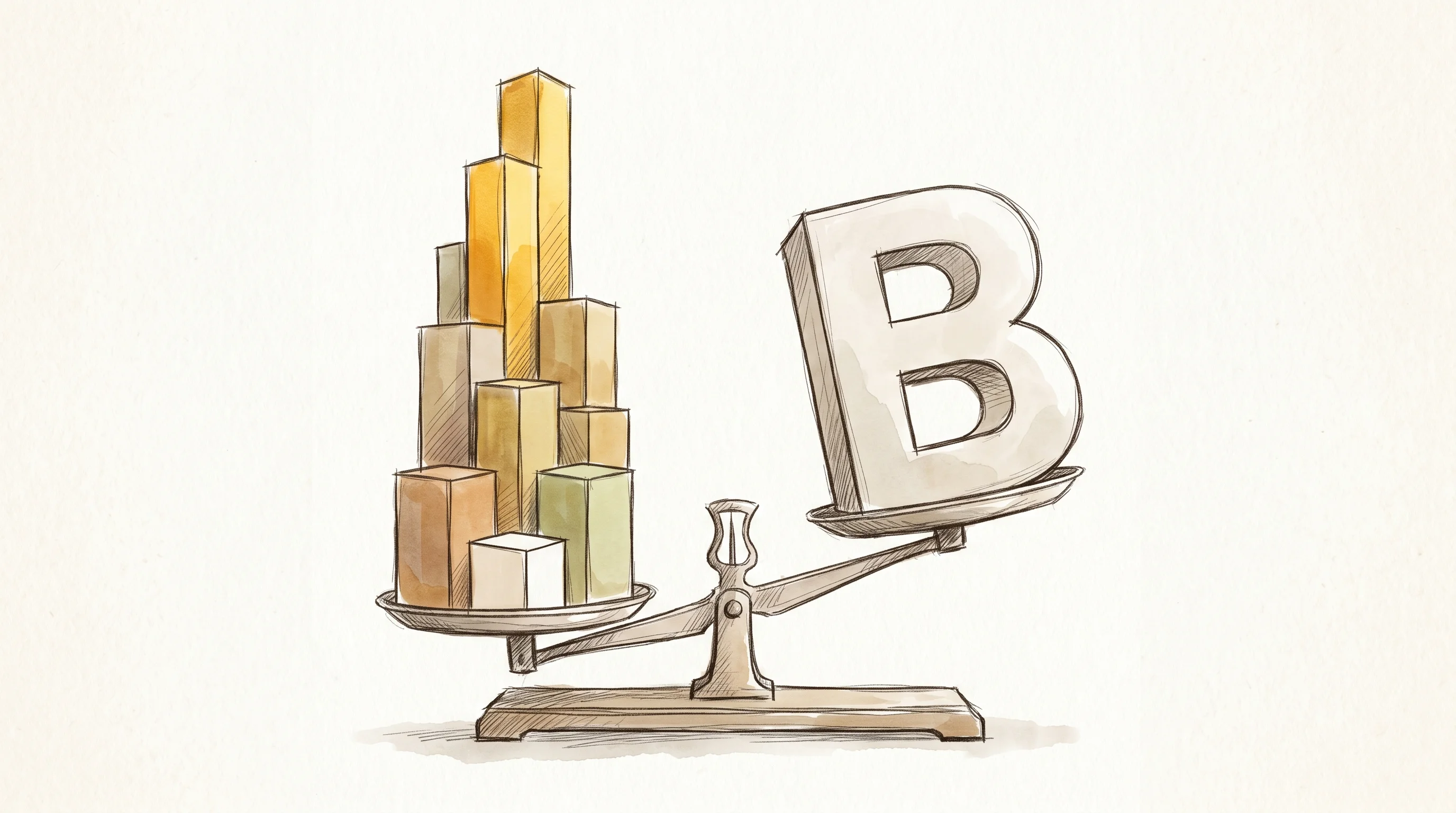
The $12 billion Series B puts Prometheus in exceptionally rare company. Startups raising that kind of capital pre-revenue aren't unheard of—OpenAI's funding rounds over the past two years have reset expectations—but they're still unusual enough to raise eyebrows. The $41 billion valuation implies extraordinary confidence, not just in Bezos's track record but in the fundamental premise that industrial AI represents a massive, underexploited market.
It's worth noting how quickly the numbers climbed. In April, Bloomberg and the Financial Times reported that Prometheus was nearing a $10 billion round at roughly $38 billion. By June, the final figures had ticked upward—the kind of last-minute revision that suggests competitive tension among investors scrambling for allocation. When Jeff Bezos is personally underwriting a deal and the pitch involves "reinventing manufacturing," institutional capital tends to show up.
Whether that capital translates to defensible product-market fit is the open question. Prometheus has money, talent, and a founder who's proven he can build at scale. What it lacks is proof—actual customers, revenue, case studies beyond its in-house testing ground.
Bezos has been publicly bullish on AI more broadly, recently stating that the technology will create "multiple golden ages" and generate more jobs than it eliminates. That's a rosy view, one many labor economists would contest. But it's clear he sees Prometheus as central to that wave, not peripheral.
The Blue Origin Backdrop

Meanwhile, Blue Origin—the other company demanding Bezos's attention—continues to provide both inspiration and a testing ground for Prometheus's tools. New Glenn, Blue Origin's heavy-lift rocket, reached orbit for the first time in January 2025, a milestone that felt long overdue after years of delays. Subsequent missions have included booster reuse and progress toward operational service.
But the road has been bumpy. An April upper-stage anomaly forced delays, and a late-May ground test mishap damaged a launch pad, pushing timelines further right. Bezos has pledged to keep flying through 2026, but the path to reliable cadence remains uncertain. The rocket business, as SpaceX has proven, rewards persistence and deep pockets. Bezos has both, though whether Blue Origin can close the gap with Elon Musk's operation is still very much in question.
Prometheus, in a sense, represents a parallel bet: that AI can smooth out the brutal physics and economics of building complex hardware. If it works, the payoff extends far beyond rockets—into aerospace, defense, automotive, energy, infrastructure. If it doesn't, Bezos will have spent a couple of years doing Type 2 fun on someone else's capital, then moved on.
Either way, he's back in the arena. Running a startup with a $41 billion valuation, no revenue, and a thesis that industrial engineering is about to get faster, cheaper, and smarter. The skeptics are watching. So are the believers. And Bezos, perhaps more than anyone, knows how this story could go either way.


