

The next time a hostile submarine prowls too close to undersea cables or critical infrastructure, the U.S. Navy may get its first warning from a network of bobbing sensors built in a Hawthorne, California workshop by a startup most people have never heard of.
Andrenam, a maritime sensing company founded by SpaceX and Sierra Space alumni, closed an $18 million Series A round in late July, led by Upfront Ventures. The funding—joined by Valor Equity Partners, Also Capital, and First Round Capital—comes on the heels of successful Navy trials that have defense industry watchers quietly taking notice.
What the company makes sounds deceptively simple: buoys. But these aren't the kind that mark shipping lanes. Andrenam's Pearl systems are distributed acoustic sensors designed to detect submarines, unmanned underwater vehicles, and surface threats in real time, transmitting data via satellite to shore-based analysts. Pair them with the company's Obsidian AI software, and you have what co-founders Matej Cernosek and Alex Chu describe as a deployable undersea surveillance network that doesn't require operators to be sonar experts.
Whether that promise holds up at scale remains an open question. But the Navy appears interested enough to have deployed three of Andrenam's latest-generation Pearl buoys during a 2.5-week exercise with the Unmanned Underwater Vehicle Group One (UUVGRU-1) at a confidence course in Keyport, Washington. The buoys successfully tracked unmanned underwater vehicles during the trials—a notable validation for hardware that, until recently, existed mostly in prototype form.
Moving Fast, Maybe Breaking Things
There's a familiar pattern here. Cernosek and Chu, both Colorado School of Mines graduates, started Andrenam in 2024 and quickly staffed up with talent pulled from SpaceX, Palantir, Anduril, and Saronic. The recruiting strategy feels almost too deliberate: hire people who've already built hardware at breakneck speed for Elon Musk or Palmer Luckey, then point them at an unsexy but strategically critical problem—in this case, the fact that the U.S. has let its undersea sensing capabilities atrophy even as adversaries expand their submarine fleets.
The company raised its $10 million seed round from First Round Capital in June 2025, reportedly closing the deal in 36 hours. (Whether that timeline reflects genuine urgency or savvy storytelling is hard to say, though venture investors love a founder who moves decisively.) Also Capital, Long Journey, Banter, Homebrew, Wavefunction, and the Colorado School of Mines Venture Fund also participated.
Now, with publicly confirmed funding totaling $28 million, Andrenam is racing to scale production. The Series A will fund manufacturing expansion and, perhaps more importantly, the hiring spree needed to turn prototypes into production systems. As of this summer, the company was actively recruiting senior electrical engineers, firmware developers, and infrastructure software specialists—roles that suggest they're gearing up for something larger than a few dozen buoys.
Not Alone in the Water
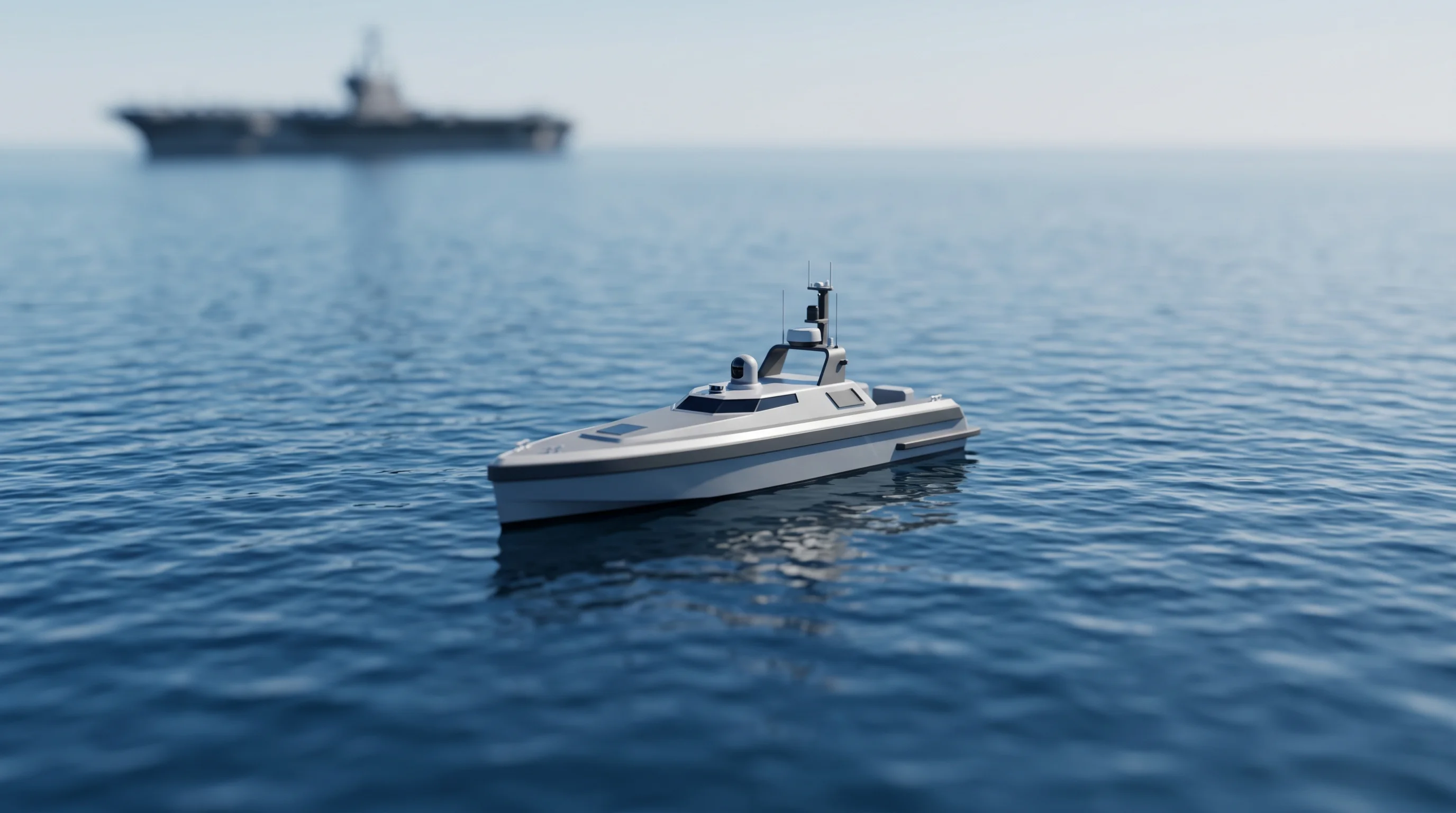
Andrenam isn't operating in a vacuum, exactly. The maritime sensing market—long dominated by legacy defense contractors and their decades-old systems—has seen a flurry of startup activity lately. ThayerMahan, which builds autonomous surface vessels for undersea surveillance, raised $20 million in a Series C extension back in January 2024. Ocean Power Technologies recently delivered its first PowerBuoy under a $6.5 million Department of Homeland Security contract. Even Europe is waking up to the opportunity: Denmark's Triton Depth announced a €1 million pre-seed round just days ago for passive acoustic monitoring nodes.
What's driving the sudden interest? Partly, it's geopolitics—China's expanding submarine fleet, Russian activity near undersea cables, the growing threat of cheap unmanned systems. But there's also a technological shift underway. Modern AI can process acoustic signatures faster and more accurately than older sonar systems, and satellite connectivity means you can deploy sensors without laying expensive cables or stationing ships nearby.
Andrenam has also participated in civilian research, deploying buoys roughly 17 nautical miles south of San Clemente Island as part of the Artemis II re-entry acoustics campaign, working with researchers from Scripps Institution of Oceanography. It's the kind of dual-use opportunity that venture investors find appealing—Defense Department contracts today, commercial infrastructure monitoring tomorrow.
The company lists anti-submarine warfare, counter-unmanned maritime vehicles, and critical infrastructure protection as primary use cases. Obsidian, the AI layer, is designed to integrate with existing command-and-control systems, translating raw acoustic data into actionable alerts without requiring specialized training. In theory, a port security officer could monitor undersea threats using the same kind of dashboard interface they'd use for cameras or radar.
The Hard Part Comes Next

For now, Andrenam remains a small operation with big ambitions. The company previously secured a $150,000 Phase I Small Business Innovation Research grant from the Department of Defense in 2024—a modest sum, but one that signals early government interest. Whether that translates into the kind of multi-million-dollar contracts needed to sustain a hardware business is the next test.
Defense procurement moves slowly, even when the need is urgent. And while Navy trials are encouraging, they're a long way from full-scale deployment. Andrenam will need to prove its systems can survive harsh ocean conditions, operate reliably for months at a time, and scale production without sacrificing quality—all while navigating the bureaucratic maze of military contracting.
Still, if the company can deliver on its promise of "SpaceX pace" for maritime hardware, it may find itself in a market hungry for alternatives to Cold War-era technology. The ocean, after all, is getting more crowded. And someone needs to be listening.


