

When Astribot shipped its first T1 humanoid robots to Chinese customers on June 1, barely a week after opening orders, the company wasn't just moving boxes. It was testing a theory that has bedeviled the robotics industry for decades: whether dropping the price low enough can finally pull machines out of research labs and factory cages and into the messier world of everyday commerce.
The T1—a wheeled, dual-arm robot standing just over five feet tall—carries a price tag of RMB 89,900, or roughly $12,500 to $14,000 depending on exchange rates. That puts it within striking distance of Unitree's viral G1, which starts at $13,500 and has garnered attention more for its backflipping acrobatics than its utility. But Astribot, a startup barely three years old, isn't chasing YouTube views. It's chasing volume. And judging by the Series B round the company closed days after launch—more than RMB 1 billion at a valuation exceeding RMB 10 billion, or about $1.4 billion—investors think it might be onto something.
For a sector long dominated by six-figure industrial systems and carefully tended research prototypes, the T1 represents a gamble that the humanoid robot market is ready to move from science project to actual product. Whether that gamble pays off depends on questions far stickier than the engineering.
Built for Manipulation, Not Spectacle
The T1 doesn't walk. It rolls, gliding on an omnidirectional wheeled base that trades the terrain versatility of legs for the kind of stability that matters in warehouses, hotel lobbies, and nursing home corridors. At 1.55 meters tall and 66 kilograms, it's compact enough to navigate standard doorways but substantial enough to feel like a piece of capital equipment rather than an expensive toy.
The machine packs 23 degrees of freedom: seven in each arm, four in the torso, two in the head, and three in the base. That excludes the articulation in its swappable end-effectors, a design choice that signals Astribot's intent to make the hardware adaptable rather than specialized. Each arm can lift 5 kilograms—modest by industrial standards, but sufficient for the dexterous household and light commercial tasks the company is targeting.
Astribot carried over the cable-driven actuation system from its flagship S1, a higher-end model aimed at research institutions and priced around $100,000. The approach uses tendon mechanisms instead of motors at every joint, yielding smoother motion and, crucially, cleaner force-control data. That matters if you're trying to train embodied AI models, which is precisely what Astribot says it's doing. Launch videos showed the T1 frying steak, folding laundry, mixing cocktails, and performing basic chemistry tasks. It also plugged itself into an EV charger before autonomously docking to recharge—a demo clearly aimed at logistics and service environments where downtime equals lost revenue.
The modularity extends to a "compute backpack" that lets developers reconfigure processing power and I/O on the fly. It's the kind of feature that appeals to engineers rather than end users, which may be the point. Astribot has framed its design philosophy as "Design for AI," positioning the hardware less as a turnkey solution and more as a data-generation platform for embodied foundation models. That's a bet that whoever builds the best training infrastructure today will own the applications tomorrow.
The Price War Nobody Asked For (But Everyone's Watching)
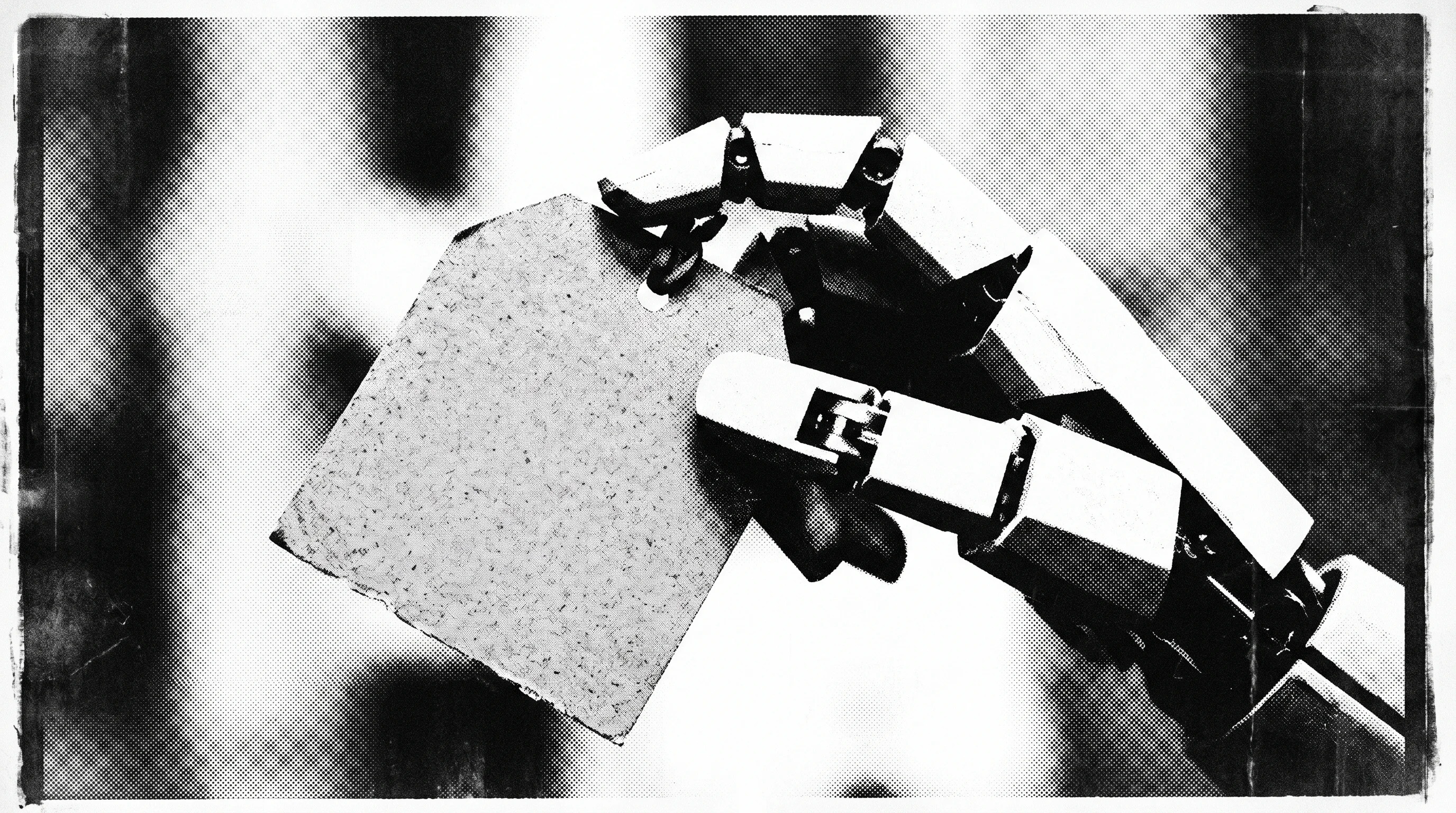
At roughly $12,500 to $14,000, the T1 slots into an increasingly crowded and ruthlessly competitive tier. Unitree's G1, with its bipedal locomotion and viral backflip demos, has become something of a benchmark. But the pricing landscape is messier than headlines suggest. Unitree's earlier R1 model launched in July 2025 at under $6,000, though configurations and regional pricing vary wildly. By mid-2026, Chinese listings for the R1 AIR ranged from RMB 26,900 to 29,900 (around $3,700 to $4,400), while export variants ran closer to $4,900 to $5,900. The spread reflects spec differences, yes, but also the channel complexity of scaling a hardware product globally—and the uncomfortable reality that no one has quite figured out how to price these things yet.
Astribot's pitch centers on manipulation fidelity over locomotion spectacle. Where Unitree emphasizes agile bipedal movement, the T1 leans into whole-body coordination for precision tasks. That trade-off matters more in a service counter than on uneven terrain, but it also narrows the addressable market. You can't sell a wheeled robot to a construction site, no matter how good the arms are.
The company is either compressing margins aggressively or banking on a volume play that assumes per-unit costs will collapse as production scales. Given that the T1 retains expensive components—cable drives, rich sensors, modular payloads—the second explanation seems more likely. But it's still a hell of a bet in a market where "scale" remains more aspiration than reality.
Strategic Capital and Supply-Chain Signals
The June 3 Series B disclosed a roster that tells its own story: Liangxi Sci-Tech Innovation Phase II, managed by Bohua Capital; Yangzhou Longtou/Chiplet; Zhongbo Juli; ThunderSoft; Kede Education. ThunderSoft, a publicly traded middleware and embedded systems firm, was flagged not just as a financial backer but as a strategic partner with plans to collaborate on operating systems, VR-based control interfaces, and global channel development. Translation: Astribot is building not just a robot but an ecosystem.
The round came less than four months after earlier follow-on capital. Chinese media and investor blogs have attributed participation in prior rounds to Ant Group, CASIC Investment, and Times Brilliance, though some of those claims remain investor-sourced rather than officially confirmed. Shougang Century, a Hong Kong-listed materials supplier, announced a strategic framework with Astribot back in November 2025 to co-develop tendon cable materials and explore standards. That's the kind of unsexy, supply-chain-level partnership that suggests the company is preparing for serious production ramps rather than pilot-scale tinkering.
A Market Moving Faster Than Anyone Expected
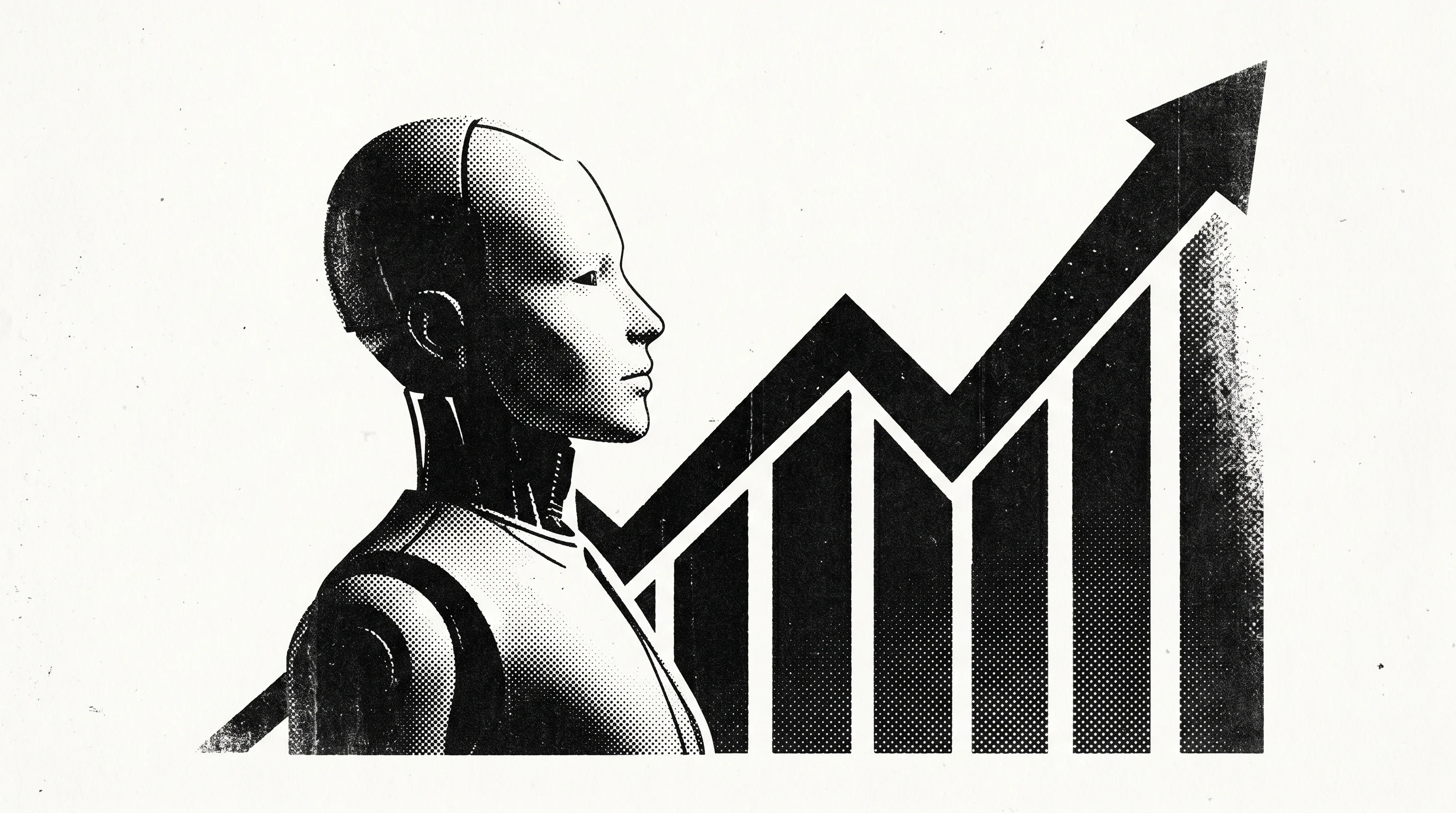
The timing is deliberate. Global humanoid shipments hit roughly 13,000 units in 2025, with about 90 percent coming from Chinese manufacturers, according to data from Omdia cited across industry outlets. TrendForce projected Chinese output would surge 94 percent year-over-year in 2026, with Unitree and AgiBot alone accounting for nearly 80 percent of domestic volume. The sector is sprinting from lab curiosity to logistics pilot, propelled by falling component costs, improving AI models, and pricing aggression from startups racing to lock in market position before Western incumbents catch up.
Astribot was founded in December 2022 by Lai Jie, who was employee number one at Tencent Robotics X and previously led consumer robot projects at Baidu. The team is stacked with alumni from Tencent, Google, Huawei, and DJI—the kind of talent density that in China often precedes either spectacular success or spectacular failure. The S1 platform served as proof-of-concept for the cable-drive architecture and whole-body manipulation stack the team detailed in a July 2025 arXiv preprint. The T1 distills that technical foundation into something smaller, cheaper, and—crucially—shippable.
Chinese tech outlets reported that Astribot claims "thousands of units on hand" from early orders, including customers like Jinma Amusement and SEER. These figures are company-attributed and haven't been independently verified. But the June 1 shipment date suggests at least some volume is moving, which is more than can be said for most humanoid announcements. International availability hasn't been formally announced, keeping the initial rollout domestic.
What Happens When the Demos End
The rapid-fire sequence of announcements—product launch, immediate shipments, substantial funding—reads like a startup hitting a commercialization inflection point. Maybe. Whether the T1 finds traction beyond early adopters depends on the unglamorous realities: software maturity, after-sales support, the infinite ways machines break when deployed in uncontrolled environments. Astribot's emphasis on modularity and developer-friendly architecture suggests the company is positioning the hardware as a platform for third-party applications, not a turnkey appliance. That's probably smart. It's also an admission that the company can't solve every use case itself.
For enterprise buyers, the calculus is shifting in real time. A sub-$15,000 wheeled humanoid with seven-degree-of-freedom arms and swappable tooling starts to make economic sense for tasks that previously required custom automation or manual labor. For researchers, capable platforms at this price point accelerate experimentation on embodied AI and whole-body control. And for investors, the succession of funding rounds at rising valuations signals belief that the commercial humanoid market isn't five years out—it's here, and the window to establish platform dominance is closing fast.
Astribot's bet is straightforward, even if the execution will be anything but: that the path to scale runs through price compression, modular design, and an AI-first architecture treating the robot as much a data-generation tool as a functional machine. The T1 is both a product and a stress test of that hypothesis. In a few years, we'll know if $13,000 was the floor that broke open the market—or just another data point on the long road to figuring out what humanoid robots are actually for.


