

Axonnic, a San Francisco startup in Y Combinator's Fall 2026 batch, has launched a forearm sleeve that records electrical muscle activity as people perform tasks, with the aim of training dexterous robots. The company did not disclose how much funding it has raised.
The sleeve relies on electromyography, or EMG, a technique that picks up the electrical signals muscles produce when they contract. Maxim Williams, Axonnic's chief executive, laid out the thinking in a LinkedIn post announcing the product. "Cameras capture movement, but they miss the muscle activity, effort, and preparation behind it," he wrote. "Axonnic's sleeve captures those signals directly from the human body, creating richer data for training robots."
How the sleeve works
The company's website calls the product "the missing data layer for dexterous robotics." Workers wear the sleeve while doing their jobs on site, and Axonnic then aligns the EMG signals with video and hand-pose data to assemble task datasets. Those datasets are used to train robot policies, the software rules that govern how a machine acts.
The muscle data matters only during training. According to the site, a deployed robot runs on its own sensors.
Axonnic lists sewing, delicate assembly, tool use and construction fieldwork as target tasks. Its site also shows a benchmark demonstration that compares Apple Vision Pro hand tracking against a robotic hand driven by forearm EMG alone; the clip is dated October 24, 2026.
The FAQ makes the pitch plainly. "A robot's sensors tell it what it is doing," it says. "They can't tell it how a skilled human does the task… EMG captures that from the worker, and we use it to teach the robot the parts of the skill a camera can't explain."
Team, backers and pilots
Williams holds an Oxford MBiol degree, and his Y Combinator profile lists him as an author of research on high-density surface EMG. He previously worked on internal tools at Skyscanner and was an early employee at Voxblock.
Arsh Patankar, the chief technology officer, studied at Oxford from 2022 to 2026, according to his YC profile, which also lists earlier affiliations with J.P. Morgan and Mayo Clinic. Aaron Epstein is the company's primary partner at Y Combinator.
The site names Y Combinator, Boost VC, Sterling Road and Oxford Seed Fund as backers but gives no round sizes or terms. Axonnic's LinkedIn page showed two employees and a company-size band of 2 to 10.
As of October 28, 2026, Axonnic's site mentions a letter of intent with a European manufacturer for force-sensitive sewing and describes construction data capture with electricians, plumbers and demolition workers; it does not list signed customer deployments or purchase commitments. A letter of intent is a statement of interest rather than a purchase commitment.
The data gap behind the pitch
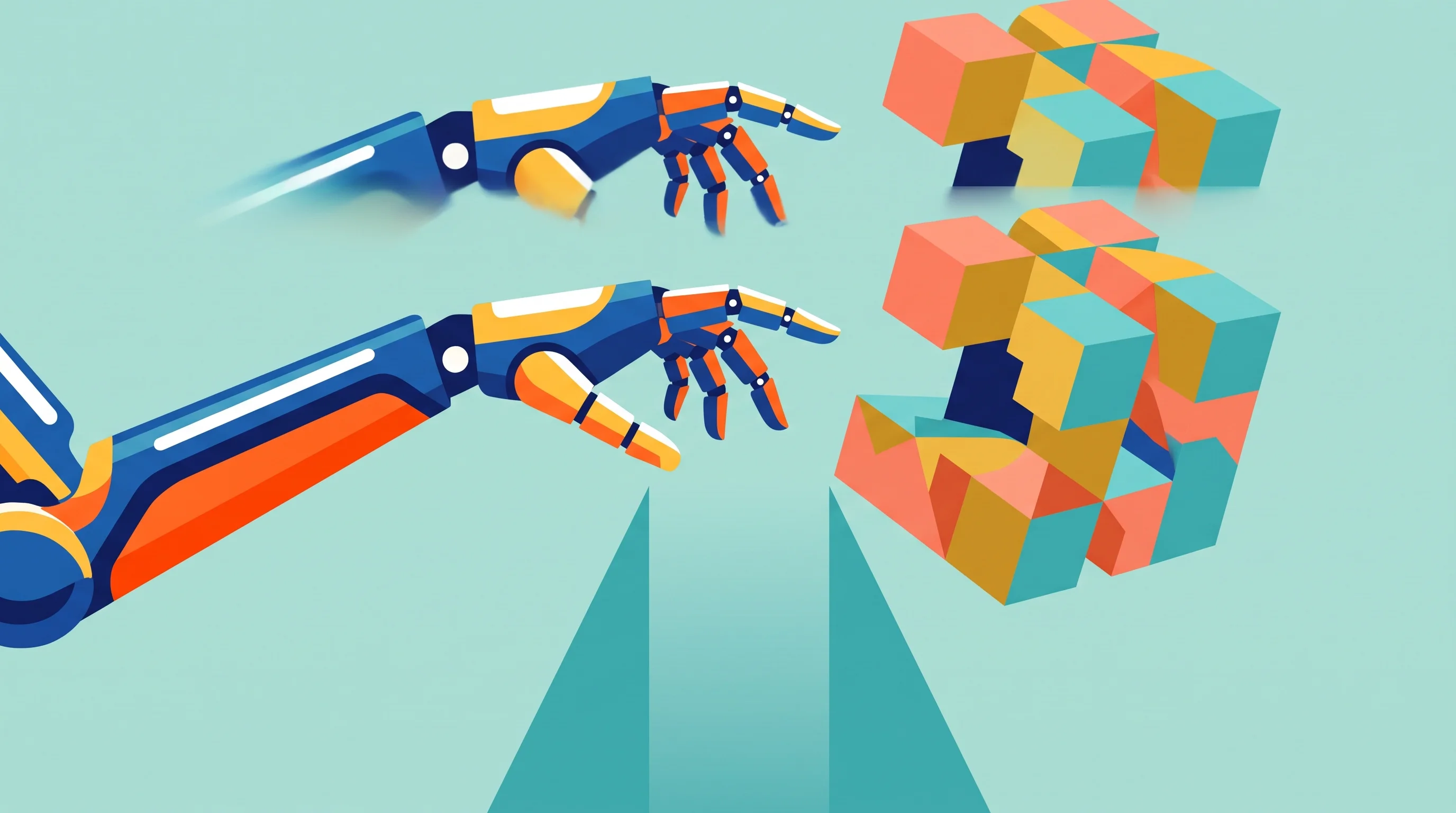
Axonnic is entering a field defined by a shortage. Surveys published in 2025 and 2026, among them an IEEE Robotics & Automation Magazine survey dated April 17, 2026, identify scarce data on contact-rich, long-horizon hand skills as a bottleneck in dexterous manipulation.
Figure, the humanoid robot maker, described the problem in an August 25, 2026 blog post. "The data needed to scale a truly general purpose robot doesn't exist on the internet," the company wrote. "It has to come from the real world." Figure said its Index creator pipeline had received more than 16 million videos and had 44,000 weekly active users. It said it had paid $15 million to creators and was committing more than $1 billion over the next 12 months to data and compute.
Deepu Talla of NVIDIA struck a similar note in early 2026, saying that "training foundation models that can reason and act requires overcoming the scarcity of diverse, real-world data."
Public datasets help, though they remain modest. Open X-Embodiment holds more than 1 million episodes across 22 embodiments, according to its paper. DROID contains 76,000 trajectories, roughly 350 hours.
A crowded field of wearables
Axonnic is not the only company pairing EMG with robot learning. Encord announced EMG-1 on October 20, 2026, describing 307 hours of field wrist EMG with synchronized egocentric (first-person) video, plus a 10.4-hour lab set captured with optical motion tracking. Encord's data came through a collaboration with Wearable Devices, maker of the Mudra band, which a WLDS 6-K filing says includes revenue sharing for each hour of qualifying data.
Academic and corporate researchers are active here too. Meta's emg2pose dataset covers 193 users and 370 hours of wrist EMG paired with motion-capture hand pose, according to its NeurIPS 2024 paper. A May 2026 arXiv dataset, EgoEMG, covers 53 subjects and more than 18 hours. Wetour Robotics demonstrated its "Conductor" sEMG wristband on June 30, 2026.
Glove makers are chasing the same problem from another angle. A February 26, 2026 post said MANUS gloves were used to teleoperate Apptronik's Apollo humanoids at Mercedes-Benz in Berlin. HaptX sells glove-based haptic teleoperation, and Scale AI markets a physical AI data platform.
Reading muscle signals is hardly new. Prosthetics firms such as Coapt and Ottobock already decode intent from them.
Why the timing matters
Demand for capable robots is rising. Counterpoint Research put first-half 2026 humanoid shipments at roughly 22,000, up about 300% from a year earlier. The International Federation of Robotics said 2025 installations topped 600,000, with 5 million robots operating in factories worldwide.
Labor shortages add pressure. Deloitte projects that U.S. manufacturing may need 3.8 million new workers by 2033, with about 1.9 million of those roles potentially going unfilled.
Cost, though, cuts the other way. A March 2026 report from the SVR Center, which has not been peer reviewed, estimated fully loaded teleoperation data for manipulation at about $118 per hour, down from roughly $340 in early 2024. Cheaper teleoperation sets a bar that a sleeve-based service will have to clear.
What to watch
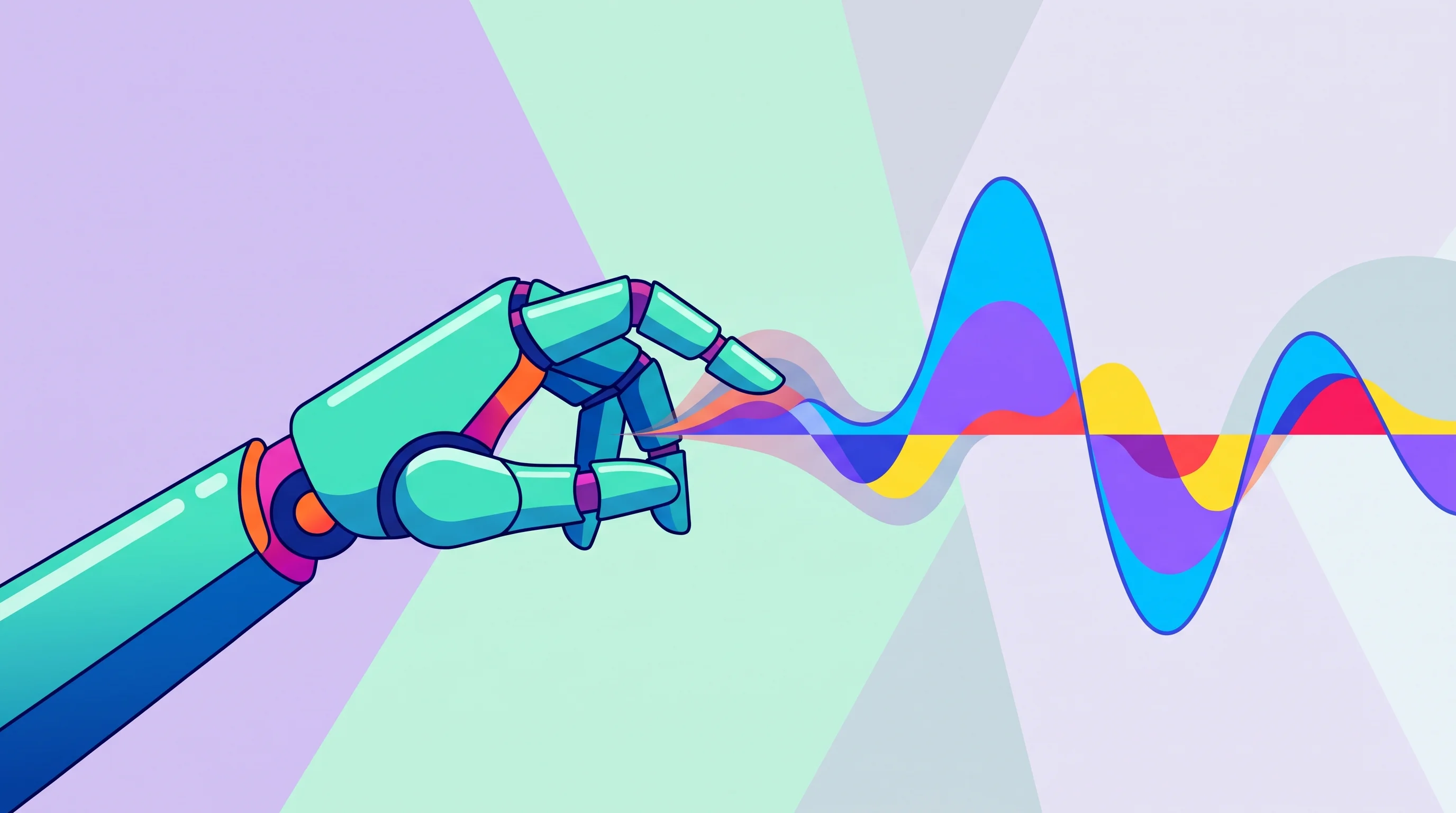
As of the October 28, 2026 crawl of Axonnic's site, we found demonstrations but no published task results; whether EMG-derived signals improve production robot policies remains to be shown.
There is also the matter of the data itself. The company collects what could be called biometric-adjacent information from workers, a category that California's CCPA/CPRA treats as sensitive when used for identification.
The next tests are the European sewing pilot and the construction captures. When Axonnic's site was crawled on October 28, 2026, the team numbered two.


