

The math is unforgiving. By one estimate, 99 cents of every dollar spent on genetic medicine never reaches its destination. It's not a financing problem—Beacon Intelligence counted 5,554 active RNA therapeutic programs across 2,544 trials in early 2025, up 13% since January alone. The issue is more fundamental: most of the genetic cargo injected into a patient gets trapped in cellular dead ends called endosomes, where it breaks down before doing anything useful. What does escape tends to pile up in the liver, which works if you're targeting metabolic disease but proves less helpful when the tumor sits in a lung or pancreas.
Lipid nanoparticles—the microscopic fat bubbles that carried mRNA vaccines into hundreds of millions of arms—bridged the gap from lab curiosity to commercial reality. As of late 2024, nineteen small nucleic acid drugs had cleared FDA review, predominantly liver-directed treatments using either GalNAc chemical tags or LNP wrapping. But the same delivery vehicle that made Pfizer and Moderna household names now struggles in oncology. Academic reviews peg endosomal escape rates at 1-4% of the nucleic acid payload, while 30-90% of systemically dosed LNPs park themselves in the liver, regardless of where you need them. Cancer demands something different: the ability to target tissues beyond the liver, penetrate hostile tumor environments, and break into the cytoplasm where RNA machinery actually operates.
Enter peptides—short chains of amino acids that can be engineered to navigate biological barriers LNPs stumble over.
A Market Searching for Solutions
The RNA therapeutics market sits somewhere between $10.9 billion and $13.3 billion in 2024, depending on whose accounting you trust. Oligonucleotide therapies specifically hit an estimated $7.19 billion in 2025. Growth projections vary by methodology—market researchers love their compound annual growth rates—but the clinical pipeline tells a more concrete story. Twenty-four RNA-based drugs have secured global approval as of mid-2023, including the COVID vaccines that demonstrated regulatory pathways could move at pandemic speed when necessary.
Most approved small nucleic acids treat conditions where the liver is either the target or an acceptable waypoint. Eleven antisense oligonucleotides, six siRNAs, and two aptamers have made it through FDA review. The majority hijack receptors on liver cells using GalNAc (N-acetylgalactosamine) ligands; one siRNA relies on LNP encapsulation. This concentration isn't coincidence. It reflects how genuinely difficult it is to steer nucleic acids anywhere else in the body.
Oncology applications flip that script entirely. They require systemic delivery to tumors in the lung, pancreas, brain—often surrounded by hostile microenvironments that actively resist drug penetration. Interestingly, the peptide therapeutics sector (a separate market estimated at $51.8 billion in 2025) has accumulated manufacturing expertise, regulatory experience, and contract development capacity that's now being repurposed for nucleic acid delivery. Peptide carriers aren't about to replace LNPs wholesale. But they're addressing specific, high-value failure modes.
The Endosome Problem That Won't Go Away
The technical barrier is both mechanical and chemical, a kind of cellular trapdoor. When an LNP or peptide-RNA complex enters a cell, it gets swallowed into an endosome—a membrane-bound bubble that acidifies as it matures, preparing to fuse with a lysosome, essentially a cellular garbage disposal. If your genetic cargo doesn't escape before that fusion happens, enzymes shred the RNA into useless fragments. LNPs rely on ionizable lipids that theoretically destabilize endosomal membranes at low pH. In practice? The efficiency is poor. A 2025 review in Nature Reviews Materials called endosomal escape "the central unsolved barrier" limiting nucleic acid drugs. Not "a" barrier. The barrier.
Expert perspectives published in PNAS and ACS Nano through 2024 and 2025 echo the same frustration: we've gotten pretty good at getting RNA into cells, but we're terrible at getting it out of endosomes. Academic groups and companies have turned to peptides partly because amino acid sequences can be designed for pH-responsive membrane disruption. Histidine-rich peptides protonate in the acidic endosome, triggering conformational shifts that puncture membranes. Fusogenic sequences borrowed from viral fusion proteins—melittin from bee venom, for instance—insert directly into lipid bilayers. Some peptides multitask, handling cell targeting, endosomal escape, and cargo condensation on a single molecule.
The second major limitation is anatomical and just as stubborn. After intravenous dosing, LNPs preferentially accumulate in the liver because of interactions with serum proteins and uptake by Kupffer cells, the liver's resident immune sentries. Redirecting that distribution requires active targeting ligands. Peptides offer modular options: tumor-homing sequences that bind integrins overexpressed on cancer blood vessels, pH-sensing peptides that insert specifically into acidic tumor microenvironments, or immune-cell-targeting motifs for cancer vaccines.
Engineering Around Biology's Defenses

Peptides bring something LNPs don't: tunability that's almost surgical. Unlike polymers or lipids, where structure-function relationships can be maddeningly opaque, peptide sequences are programmable. A 2025 review in RSC Chemical Biology consolidates the design strategies: cell-penetrating peptides (CPPs) for membrane crossing, pH-responsive histidine or glutamic acid residues for endosomal escape, targeting motifs for organ or cell specificity. The challenge—and there's always a challenge—is balancing function with stability. Peptides can be chewed up by serum proteases, bind nonspecifically to serum proteins, or trigger immune responses if they resemble foreign antigens too closely.
Several design archetypes have crystallized from the research. RALA, a pH-responsive peptide, forms nanocomplexes with mRNA and triggers strong CD8+ T-cell responses in preclinical models, outperforming conventional lipid formulations like DOTAP/DOPE. LAH4-derived peptides improve mRNA delivery even in serum-containing conditions, a practical advantage for systemic dosing that matters more than it sounds. Melittin-derived constructs such as p5RHH have shown anti-metastatic effects in animal models when delivering siRNA against oncogenic targets like AXL.
Tumor-penetrating peptides represent a different tactical approach. iRGD (also known as CEND-1 or certepetide) binds integrin receptors on tumor vessels, gets cleaved by tumor-associated proteases, and exposes a C-end Rule motif that engages neuropilin-1 receptors—driving transcytosis, the active transport through vascular and stromal barriers. You can co-administer it as an enhancer or conjugate it directly to nanoparticles. Phase 1b data in pancreatic ductal adenocarcinoma, published in Lancet Gastroenterology & Hepatology, showed tolerability and survival signals when combined with standard-of-care chemotherapy. Not a cure, but a signal.
pHLIP (pH Low Insertion Peptide) takes a simpler, almost elegant approach: it's unstructured at neutral pH but folds and inserts across cell membranes when it detects acidity, a hallmark of tumors and inflamed tissues. pHLIP doesn't need a receptor. It responds directly to the local environment.
Three Companies Betting on the Shift
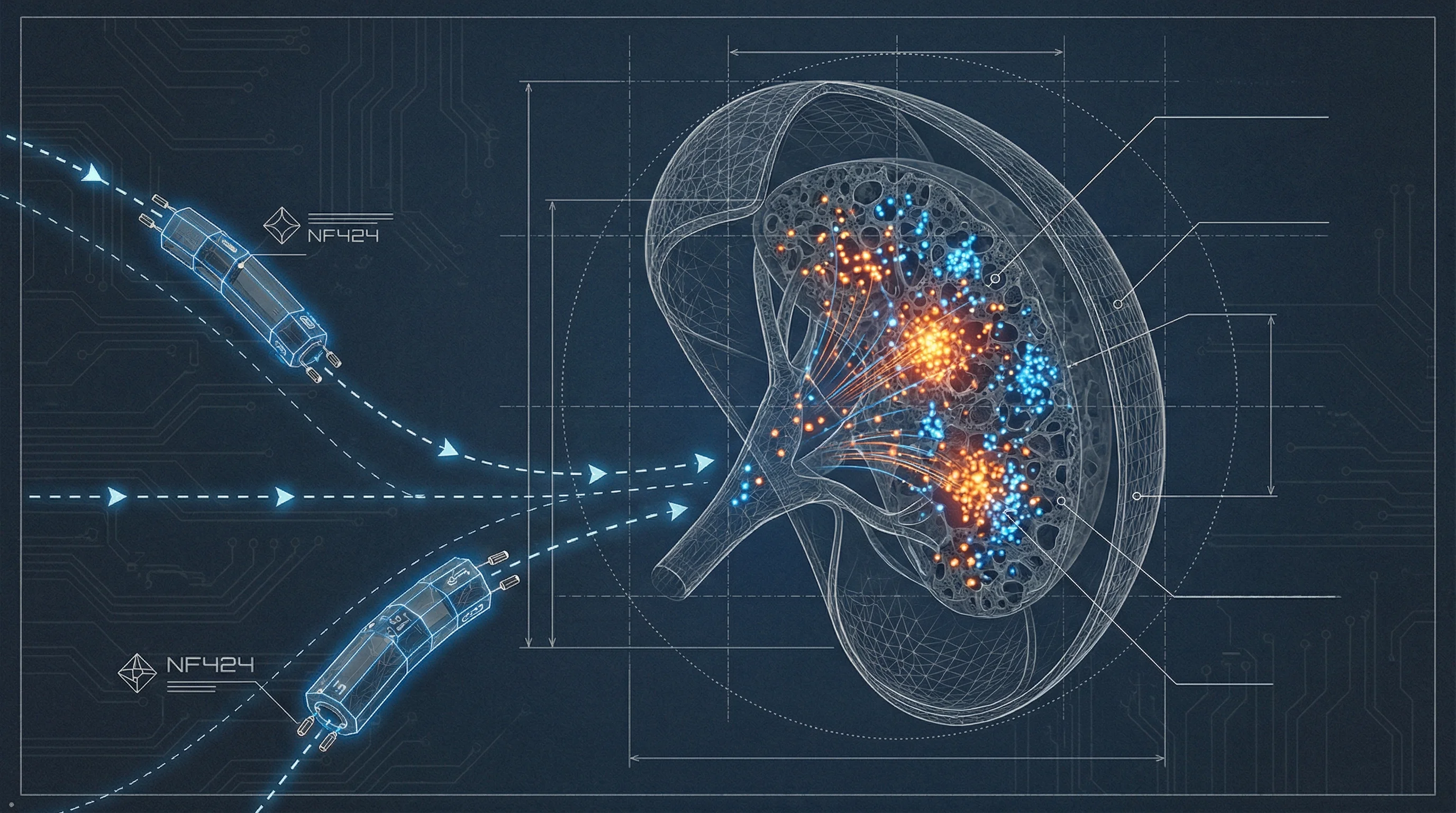
Vectiopep is chasing immune-organ targeting for cancer vaccines, a niche that might not stay niche for long. The Estonian company's cell-penetrating peptides, NF424 and NF436, deliver mRNA preferentially to the spleen—more than 95% of expression localizes there after intravenous dosing in preclinical models, with strong dendritic cell uptake. Internal benchmarks claim greater than 99% spleen delivery versus less than 3% for standard LNPs, though independent validation is pending.
Founders Kaido Kurrikoff and Piret Arukuusk spent 15 years refining CPP chemistry before spinning out in 2024 with €450,000 in pre-seed financing. The company filed patents (WO2024074553A1) and entered national phases in Australia, China, Japan, and Canada. First-in-human trials are roughly 3.5 years out, assuming funding holds. The value proposition is straightforward, if unproven in humans: cancer vaccines work better when you transfect the immune system's command centers—lymph nodes and spleen—directly, rather than hoping LNPs drift there from a deltoid muscle injection.
Sirnaomics has already taken its polypeptide nanoparticle (PNP) platform into patients. STP707, a dual siRNA targeting TGF-β1 and COX-2, completed a Phase I systemic trial in multiple solid tumors with no dose-limiting toxicities and 74% stable disease in evaluable patients (results announced August 31, 2023). A mechanism-of-action paper published in NAR Cancer in January 2024 showed the PNP carrier remodels the tumor immune microenvironment and synergizes with checkpoint inhibitors—noteworthy because it suggests the delivery vehicle isn't just inert packaging.
In January 2026, the company published data on STP355, a dual siRNA against TGF-β1 and VEGFR2, demonstrating tumor growth inhibition and reduced metastasis in melanoma models when combined with immunotherapy. The PNP addresses both endosomal escape and systemic distribution, critical for oncology applications where the target is nowhere near the liver. Sirnaomics also developed a Peptide Docking Vehicle (PDoV) to enhance GalNAc conjugates for liver-directed siRNA, indicating they see peptides as a modular solution across different delivery contexts, not just an oncology play.
pHLIP, Inc. partnered with CordenPharma in 2024-2025 to combine pHLIP's acidity-sensing insertion with LNP encapsulation. CEO Yana Reshetnyak described the platform as enabling peptides to "insert across membranes of acidic cells and promote efficient intracellular delivery"—which, if it works as advertised, could be a genuine game-changer for LNP-based drugs struggling with endosomal release. The alliance gives pHLIP access to CordenPharma's contract manufacturing infrastructure, addressing the scale-up challenge that's stalled many academic peptide delivery projects before they reach clinical trials.
pHLIP's technology is tumor-agnostic: any cancer with an acidic microenvironment (which is most of them) becomes a potential target. The company's earlier CEND-1/iRGD program demonstrated pharmacokinetic and pharmacodynamic advantages in animal models and humans, with tumor-selective accumulation and penetration. Not blockbuster efficacy, but proof-of-mechanism.
Academic Labs Push Boundaries, Too

Peptide-guided LNPs are expanding into territories LNPs couldn't reach alone, sometimes in unexpected ways. Academic groups at the University of Pennsylvania published work in late 2024 showing peptide-decorated LNPs crossing the blood-brain barrier and targeting neurons, published in Nano Letters. That's not a cancer application, but it demonstrates the modular potential. MIT researchers reported redesigned LNPs that better reach antigen-presenting cells and lymph nodes in 2025, though they used composition tweaks rather than peptide additions—evidence that multiple paths toward extrahepatic delivery are converging, not all of them peptide-based.
Hybrid systems are proliferating in academic literature. RGD-lipid LNPs use integrin-targeting peptide-lipid conjugates to achieve 90% knockout efficiency in gene editing experiments. RALA and LAH4 derivatives are being mannosylated to enhance dendritic cell uptake for vaccine applications. Even older systems like CureVac's protamine-complexed mRNA (RNActive, used in CV9201 and CV9202 oncology vaccine trials) demonstrated that peptide-based mRNA delivery can elicit immune responses and tolerable safety profiles in NSCLC and prostate cancer, including combinations with radiotherapy and checkpoint inhibitors.
The question isn't whether peptides can deliver RNA—preclinical data is abundant, even overwhelming. The gap is translational: scale, biodistribution in larger animals, immunogenicity risk, and manufacturing consistency. Many peptide carriers show impressive efficacy in mice but hit roadblocks in primate or human pharmacokinetics. Serum stability remains an issue across platforms. Melittin-derived systems require careful tuning to avoid hemolysis. LAH4 and RALA derivatives improve serum resistance but still need toxicity and PK validation in the clinic. "Works in mice" has burned investors before.
Regulatory Frameworks Catch Up
Regulatory pathways are clarifying, though perhaps not as quickly as companies would prefer. FDA released clinical pharmacology guidance for oligonucleotide therapeutics in June 2024, covering QTc effects, immunogenicity, and drug-drug interaction considerations. A draft nonclinical safety guidance followed in November 2024. The European Pharmacopoeia adopted general texts on mRNA vaccines and components at a November 2024 meeting (published April 2025), setting analytical and chemistry/manufacturing/controls precedents that will inevitably ripple through peptide-RNA hybrid systems. EMA opened consultation on quality aspects of mRNA vaccines in March 2025, running through September.
While these guidances are vaccine-oriented, they establish benchmarks for purity, stability, and characterization that any peptide-enhanced platform will need to meet—or at least address in regulatory filings. The immunogenicity pressures on LNPs, particularly anti-PEG antibodies and complement activation from PEGylated lipids, create commercial openings for non-PEG systems. Literature on anti-PEG responses and strategies like cleavable or branched PEG suggests the field is actively hunting for alternatives. Peptide-forward or peptide-hybrid carriers that avoid PEG entirely could sidestep those issues, though peptides bring their own immunogenicity risks if sequences resemble foreign antigens.
AI-assisted design is accelerating discovery cycles, at least in theory. Frameworks like PepTune and CreoPep, reported in 2024 and 2025, use diffusion models and machine learning to optimize peptides for binding affinity, membrane permeability, solubility, and hemolysis simultaneously. This is particularly useful for endosomal escape peptides, where small sequence changes can swing wildly between inactivity and toxicity. Computational tools won't replace experimental validation—biology has a way of humbling even the best algorithms—but they should compress the time from hypothesis to lead candidate.
Manufacturing alliances signal growing confidence, or at least growing recognition that confidence alone won't scale production. The pHLIP-CordenPharma deal isn't just a licensing agreement—it's an acknowledgment that peptide-LNP hybrids need integrated CMC expertise in both modalities. More such partnerships are likely as companies seek to de-risk clinical programs by securing CDMO capacity early, before a Phase II readout creates a manufacturing scramble.
What Comes Next
The market will almost certainly segment by application, each with different risk-reward profiles. Tumor-targeted penetration enhancers like iRGD and pHLIP may first succeed as co-administered agents added to existing RNA or small-molecule therapies—a lower regulatory bar than a fully novel delivery system, and potentially faster to revenue. Immune-organ-targeting peptides like Vectiopep's CPPs are tightly coupled to cancer vaccine strategies. If personalized mRNA vaccines gain traction (and that "if" is doing a lot of work), demand for DC-targeting delivery will follow. Systemic siRNA carriers like Sirnaomics' PNP face the highest bar: demonstrating safety, efficacy, and manufacturing consistency for chronic or repeat dosing in oncology, where patient populations are sicker and regulatory scrutiny is intense.
Endosomal escape remains the defining technical challenge, the Gordian knot nobody's cleanly cut yet. Peptide chemistries—histidine-rich, fusogenic, amphipathic—offer tunable solutions, but "tunable" also means "not yet optimized." The next 18 to 36 months will clarify which peptide architectures translate from rodent models to human efficacy with acceptable toxicity windows. If clinical data from Sirnaomics, Vectiopep, or pHLIP partnerships shows meaningful therapeutic windows and manageable side effects, the 5,500-plus RNA assets in development will have a new set of delivery tools beyond LNPs. If the data disappoints—if endosomal escape rates stay stubbornly low, or immunogenicity flares, or manufacturing costs make products uncommercial—peptides will remain a niche academic interest rather than an industry standard.
The race isn't to replace LNPs entirely. It's to go where LNPs can't, and do it profitably. The physics problem remains unsolved. Whether peptides solve it is the multibillion-dollar question.


