

The pitch sounds almost comically ambitious. Two engineers—Mitchell Fogelson from NASA's experimental research wing, and Pele Collins who helped design SpaceX parachutes—claim they've cracked a problem that has bedeviled orbital infrastructure for decades: how to generate serious power in space without eating your entire launch budget just getting the hardware up there.
Beyond Reach Labs surfaced from Y Combinator's Winter 2026 cohort in March with $175 million in letters of intent trailing behind them. That's a remarkable figure for a company that hasn't yet flown hardware, though anyone familiar with Silicon Valley's enthusiasm for audacious technical promises knows LOIs and signed contracts are very different animals. Still, the core technical claim deserves attention. Mitchell Fogelson and Pele Collins say their solar arrays can expand from something roughly the size of a dining table to a football field once deployed in orbit—a hundredfold increase in area with no corresponding bump in mass or stowed volume.
If that works, it matters. A lot.
Power generation in space is a straightforward constraint that ripples through every mission design decision. More watts means more mass. More mass means higher launch costs. Pack more capability into less volume and suddenly missions that looked economically absurd start making sense. Whether Beyond Reach Labs can actually deliver, and whether the market they're betting on exists in the shape they imagine, remains very much an open question.
The Orbital Power Grid Runs on a Shoestring
Consider the entire power budget for every satellite, space station, and orbital platform currently circling Earth. By the founders' estimate, it totals around 50 megawatts. That's less electricity than a single mid-sized wind farm generates on the ground.
The International Space Station—after years of upgrades that saw Redwire install eight Roll-Out Solar Array wings between 2021 and 2026—produces enough power to run perhaps thirty American homes continuously. NASA's Lunar Gateway, the small station planned for orbit around the Moon later this decade, will carry arrays generating 50 to 60 kilowatts, mostly to feed electric propulsion systems and keep the lights on in its modules.
Fogelson and Collins project demand surging to more than 10 gigawatts by 2030, possibly 500 gigawatts by 2035. Those numbers, disclosed in the company's YC profile this past March, represent their market thesis rather than independently validated forecasts. Take them with appropriate skepticism. But the directional pressure is real enough.
Euroconsult's 2023 outlook anticipated four tons of spacecraft launching daily by 2032, feeding a $558 billion market for satellite manufacturing and launch services. Novaspace separately forecast nearly 6,000 Earth observation satellites entering service through 2034. Each one needs power. And many emerging applications—electric propulsion, high-throughput communications, the orbital data centers that exist mostly in investor pitch decks—demand kilowatts or tens of kilowatts per platform, not the few hundred watts typical of older smallsats.
The industry's buying metrics have crystallized around two figures: specific power (watts per kilogram) and stowed power density (watts per cubic meter). Redwire's ROSA technology, now flying on the ISS and selected for Axiom Space's commercial station, delivers roughly 100 to 120 watts per kilogram and approximately 40 kilowatts per cubic meter when packed for launch, according to vendor figures published last July. Those numbers represent a meaningful leap over rigid panel arrays. They also define the competitive benchmark Beyond Reach Labs needs to beat.
Their claim of a tenfold length increase without additional mass or volume—enabled by a patented deployment mechanism—would, if validated, push specific power and stowage density into territory no one has reached operationally.
From CMU Robotics Lab to San Francisco
Fogelson's technical pedigree traces directly through NASA's experimental research ecosystem. His doctoral work at Carnegie Mellon's Robotics Institute focused on High-Expansion-Ratio Deployable Structures, a concept backed by NASA's Innovative Advanced Concepts program. The premise: kilometer-scale space structures deployable from a single rocket fairing, using mechanisms that expand dramatically without the mass penalties you'd expect.
CMU published microgravity test results last August showing the approach's viability. The university confirmed Fogelson's involvement in forming the company, though the usual academic-to-commercial pathway applies—lots of promising lab work doesn't survive contact with the aerospace qualification process.
Collins brings a different flavor of credibility. His résumé includes parachute engineering at SpaceX, work that demands obsessive attention to deployment dynamics and failure modes under high loads, and a stint at Commonwealth Fusion Systems, where plasma confinement and material stress converge in particularly unforgiving ways. The pairing isn't accidental. Deployable space structures succeed or fail based on managing dynamic loads and preventing jamming during unfurling as much as on elegant static design.
The two applied to YC's Winter 2026 batch and relocated to San Francisco in early 2026, according to Collins' LinkedIn activity from roughly a month before the March 20 Demo Day. As of the YC directory listing published that month, Beyond Reach Labs remained a two-person operation.
The $175 million in letters of intent signals customer interest, though seasoned industry observers know LOIs represent expressions of intent, not signed purchase orders. The gap between the two can be... substantial. The company has targeted late second quarter 2027 for its first in-space demonstration flight. That timeline, if met, would put hardware on orbit about sixteen months after their YC debut. Possible, but aerospace schedules have a way of slipping.
A Crowded Field Getting More Competitive
Beyond Reach Labs is entering a sector that has quietly professionalized over the past five years.
Redwire, the publicly traded successor to multiple heritage space companies, has effectively standardized roll-out arrays for high-power applications. Their ROSA wings now fly on the ISS, NASA's DART asteroid mission, and are contracted for Gateway and Axiom Station. Last September, Axiom selected Redwire to supply arrays for its Payload Power Thermal Module, cementing ROSA's position as the default architecture for commercial station power. Thales Alenia Space ordered ROSA wings for its Space Inspire satellite line in 2024, marking the technology's crossover into the geostationary communications market.
Rocket Lab has pursued vertical integration, acquiring SolAero to control everything from multi-junction gallium arsenide cell production through complete wing assembly. In late February or early March of this year, Rocket Lab announced silicon-based solar arrays explicitly pitched at orbital data centers—a market segment that exists more in pitch decks than operational spacecraft, but one several players are chasing. The company's IMM-β space solar cells, introduced in 2022, target roughly 33 percent conversion efficiency in production.
State-of-the-art, for now.
Solestial, a U.S. startup focused on flexible silicon arrays with radiation hardening, raised a $17 million Series A last May and secured a $1.2 million SpaceWERX contract in July to develop rapid-build array wings for smallsats. The company claims it's scaling toward one megawatt per year manufacturing capacity—a figure that would make it a meaningful supplier if realized, though scaling solar array production has humbled more than a few ambitious startups.
DCUBED, operating under the Araqys brand, is pursuing in-space manufacturing of solar arrays to bypass fairing volume constraints entirely, with demonstration missions on the books for 2026 and 2027. Orbital flight schedules being what they are, those dates should be taken as aspirational.
International competition is sharpening, too. GalaxySpace in China unveiled rollable flexible solar wings exceeding ten meters in length last July, demonstrating that Chinese manufacturers are tracking—and in some cases matching—Western deployable array technology. Beyond Gravity, a European supplier of array drive mechanisms, expanded production capacity in late 2025, citing growing order books from ESA programs and commercial satellite builders.
The competitive dynamic is nuanced. Established players like Redwire bring flight heritage and manufacturing scale, assets that matter deeply to risk-averse satellite operators and NASA program managers. Nobody gets fired for buying Redwire. Startups like Beyond Reach Labs can move faster on novel architectures but face the cold reality that space customers rarely buy unproven technology for flagship missions, no matter how compelling the paper specifications look.
The letters of intent suggest at least some buyers are willing to consider the risk-reward calculus. But the path from LOI to purchase order is long and littered with expired commitments.
Betting on Applications That Don't Quite Exist Yet
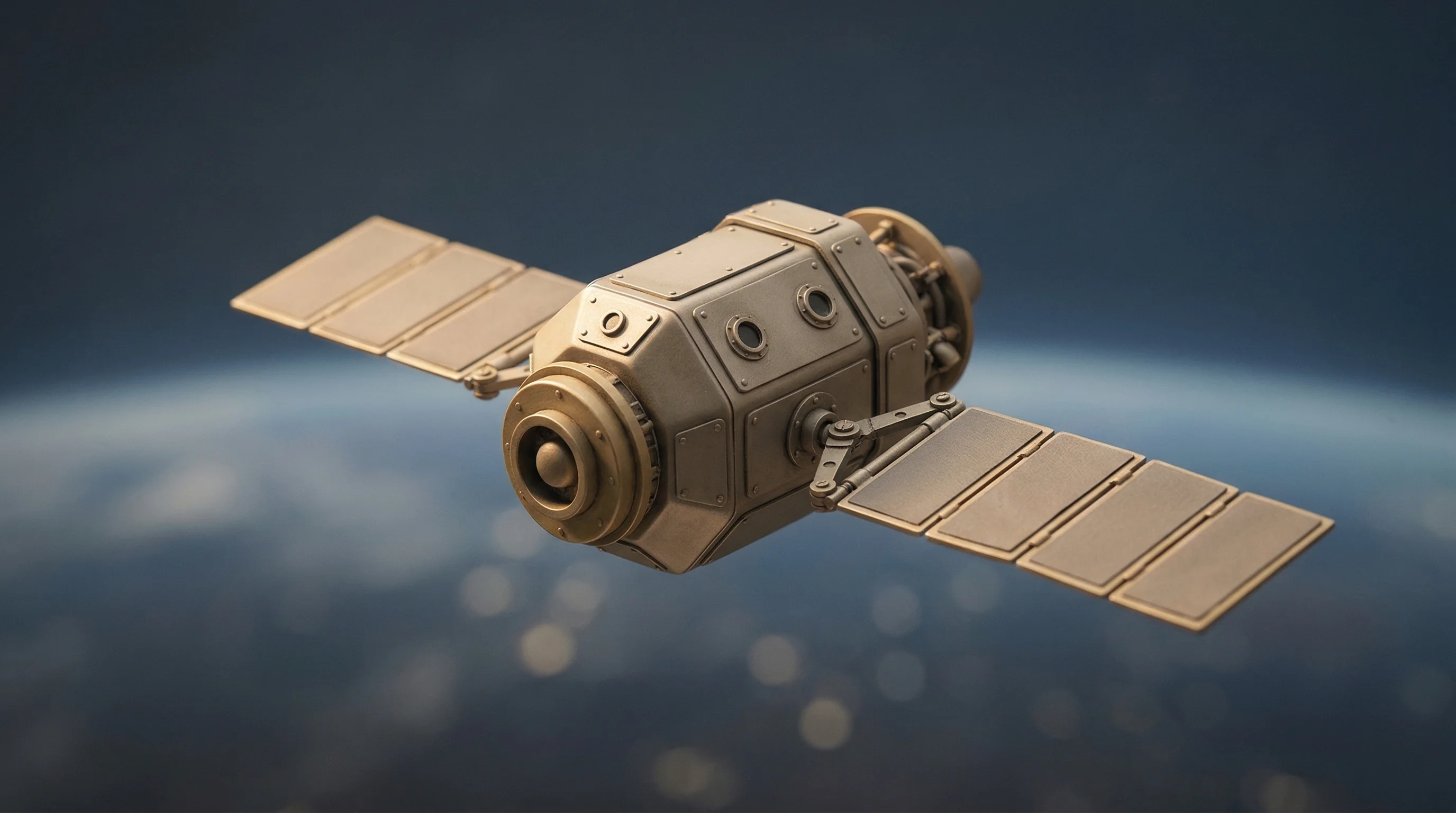
Part of Beyond Reach's pitch—and the broader bull case for next-generation space power—rests on applications that don't yet exist at scale but are drawing serious engineering attention.
Orbital data centers represent the most speculative category. The concept envisions compute infrastructure in low Earth orbit leveraging abundant solar power and the natural cooling of space, beaming results back to terrestrial users via laser or RF links. Rocket Lab's product positioning this past March explicitly targets this market. Whether the economics work remains unproven, but the power requirements would be steep. Think tens to hundreds of kilowatts per facility, not the few kilowatts typical of current satellites.
Commercial space stations offer a nearer-term market, or at least one with signed contracts and metal being cut. Axiom Space's facility, scheduled for initial module launches in the latter half of this decade, will operate independently after the ISS retires. Its power budget will dwarf legacy station architectures. Blue Origin and Sierra Space's Orbital Reef venture, still in formative stages, would similarly demand large-area, high-output arrays.
NASA's Gateway sets a baseline. The Power and Propulsion Element features arrays feeding 12-kilowatt and 6-kilowatt Hall thrusters, with total bus power in the multi-ten-kilowatt range as of its integration milestone last September.
Electric propulsion is quietly remaking mission design across satellite classes. Hall thrusters and gridded ion engines enable higher delta-V for station-keeping, orbit raising, even interplanetary trajectories. But they devour power. NASA's Small Spacecraft Technology State of the Art report, released in February 2025, catalogs propulsion units operating at kilowatt and multi-kilowatt levels—power demands that body-mounted rigid panels struggle to satisfy. Deployable arrays that pack efficiently for launch then unfurl to deliver sustained kilowatt-class power are becoming mission-enabling rather than nice-to-have.
Space-based solar power, the long-discussed concept of beaming energy from orbit to terrestrial receivers, remains on the technological horizon rather than the operational landscape. Caltech's Space Solar Power Demonstrator mission, which completed its in-space phase in January 2024, successfully demonstrated microwave power beaming and deployable structure performance. But the economics remain, to put it mildly, daunting.
The Air Force Research Laboratory's SSPIDR and Arachne programs continue maturing power beaming for space-to-space and potentially space-to-ground applications. European Space Agency feasibility studies under the SOLARIS umbrella are ongoing. IEEE Spectrum published a sobering analysis in September 2024 questioning whether the cost curves and efficiency gains needed to make space-based solar power competitive with terrestrial renewables are even plausible. The question isn't whether the physics work—they do—but whether anyone can build and operate these systems at a price point that makes economic sense.
The Engineering Reality Check

Beyond Reach Labs' technical claims merit scrutiny, not dismissal.
Kilometer-scale deployable structures have been studied extensively under NASA NIAC funding, and Fogelson's doctoral work at CMU explicitly addressed jamming-resistant mechanisms and high-expansion-ratio designs. The challenge lies in translating laboratory demonstrations and subscale prototypes into flight-qualified hardware that survives launch loads, deploys reliably in vacuum, and maintains structural stiffness under thermal cycling and dynamic disturbances.
That last part is trickier than it sounds.
Roll-out arrays, the category Beyond Reach's technology fits within, have matured significantly but carry engineering tradeoffs. Research published in 2026 highlights that large, flexible arrays exhibit low-frequency vibration modes post-deployment, complicating attitude control and potentially coupling with spacecraft dynamics in undesirable ways. Deployment mechanisms must manage tremendous stored elastic energy without jamming, a failure mode that has plagued other large deployables. Contamination from outgassing materials or thruster plumes can degrade solar cell performance over time, though deployable arrays positioned away from the spacecraft body fare better than body-mounted panels in this regard, according to a particle-tracking study published last October.
The regulatory environment imposes constraints too. The FCC's five-year post-mission deorbit rule, formalized in 2022 and effective for new LEO missions filed after October 2024, means spacecraft with large solar arrays must account for increased atmospheric drag or carry propulsion systems to ensure timely disposal. Large-area arrays increase cross-sectional area, accelerating orbital decay in low Earth orbit—a feature that aids compliance but also limits operational altitude flexibility.
ITAR and EAR export controls continue to gate international collaboration on advanced space hardware, affecting cell sourcing, manufacturing partnerships, and customer access.
Funding volatility presents another headwind. NASA's OSAM-1 mission, an ambitious on-orbit assembly and servicing project, was canceled in March 2024 due to cost overruns and schedule delays. The cancellation reverberated through the in-space manufacturing community, a sector adjacent to advanced deployables. Beyond Reach Labs is betting on a future where orbital infrastructure scales rapidly enough to justify specialized, high-performance hardware. If launch cadences slow, if commercial station schedules slip, or if data center economics don't materialize, the market they're designing for shrinks.
The late Q2 2027 demonstration flight, if it occurs on schedule, will be an inflection point. Flight heritage matters immensely in space. Redwire's ROSA didn't dominate the high-power array market on paper specifications alone; it earned credibility through repeated successful deployments on high-profile missions.
Beyond Reach Labs needs that validation. And the path from benchtop prototype to flight-ready hardware is littered with startups that discovered aerospace qualification timelines are measured in years, not quarters.
What They Have Going for Them
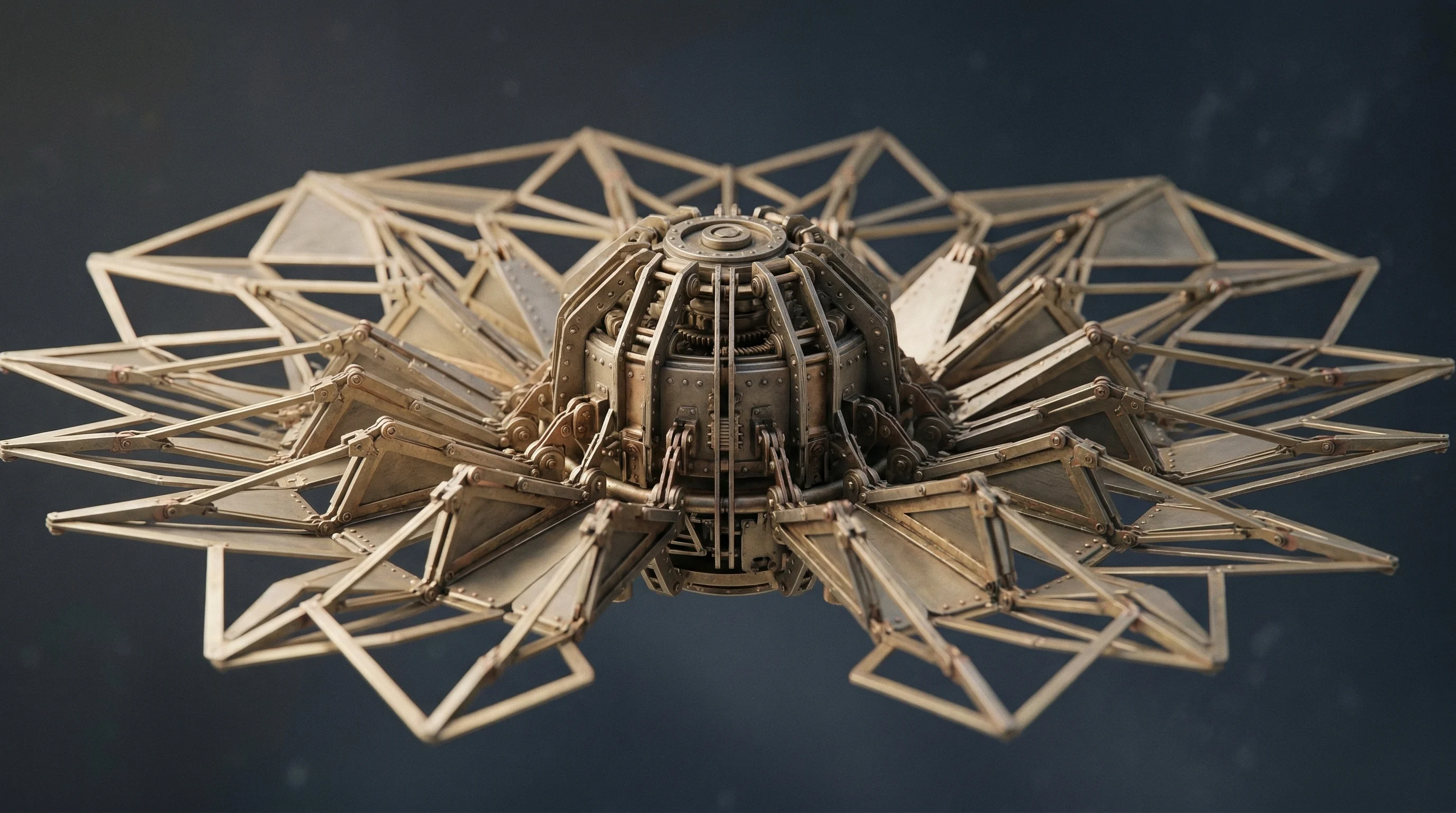
What Beyond Reach Labs possesses—and what justifies attention despite the early stage—is a technical approach aligned with a plausible trajectory for orbital infrastructure.
If the company can deliver arrays that genuinely achieve football-field scales from compact stowage without mass penalties, they unlock mission architectures that are cost-prohibitive today. The founders bring credible technical depth. The YC network provides access to capital and early adopters. And the $175 million in letters of intent, however tentative, suggests at least a subset of potential customers see value in the concept.
Whether that's enough to compete against entrenched suppliers with flight heritage and manufacturing scale is another question entirely.
The space power market is expanding, that much is clear. Whether it expands fast enough, and in the directions Beyond Reach Labs anticipates, will determine whether dining-table-to-football-field arrays become the industry standard or an interesting footnote in the history of deployable structures. The company has perhaps eighteen months to prove their concept works in the environment that matters—not in a lab, not in a vacuum chamber, but 400 kilometers up, where there are no second chances and customers are watching closely.
Fogelson and Collins are betting they can pull it off. The market, such as it is, will render its verdict soon enough.


